
What Fenestration Actually Means for a Monstera
In the wild, Monstera deliciosa climbs toward gaps in the forest canopy, and the openings in its leaves aren't decorative — they let wind pass through without tearing the heavy foliage and allow light to pass down to lower leaves. That original purpose matters, because it shows that fenestration isn't a simple light switch that turns on overnight. It's a developmental response to specific growing conditions, and a juvenile plant simply hasn't built up the physical momentum to produce it yet.
Understanding Splits Versus Holes
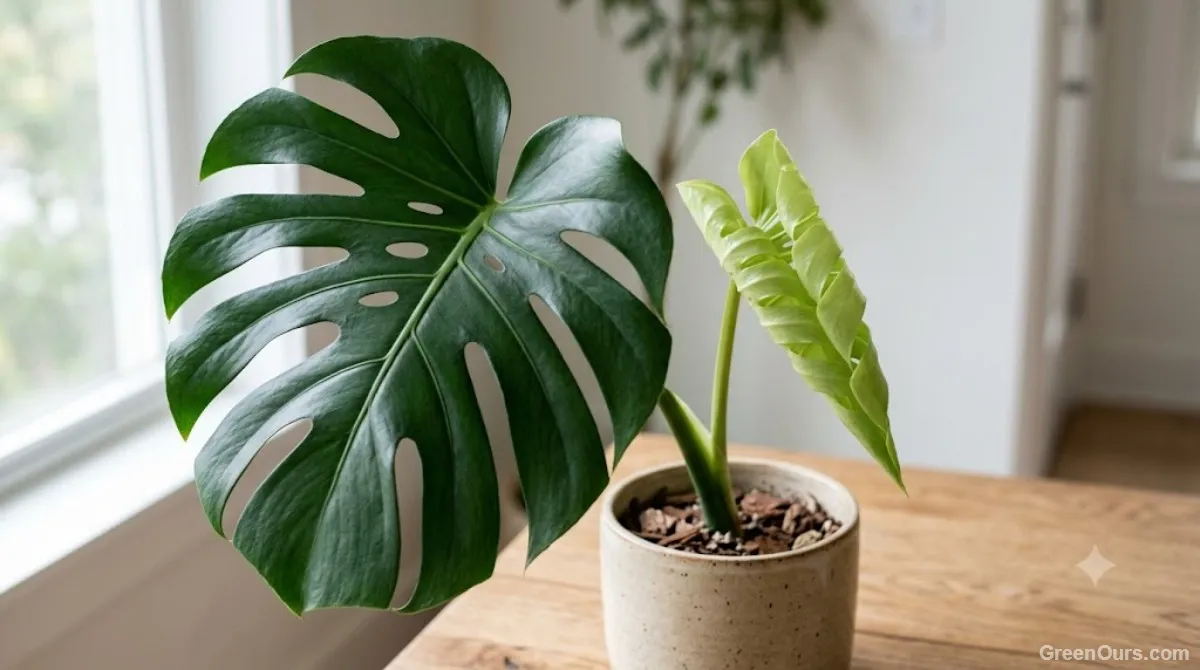
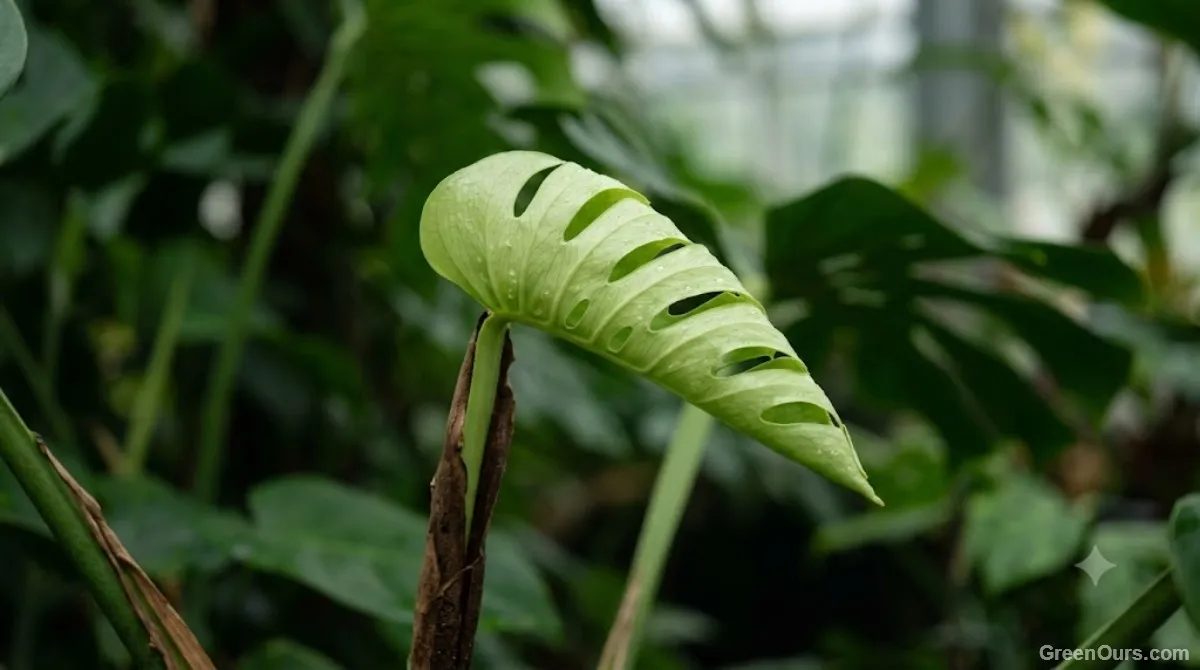
It helps to know that fenestration actually happens in stages. Early fenestrations usually show up as edge splits — deep cuts extending inward from the outer margin of the leaf. As a Monstera becomes significantly more mature and receives abundant light, it begins producing internal fenestrations: enclosed holes near the central leaf vein alongside those outer cuts. Seeing a few simple side splits is often the first sign that your plant is transitioning out of its juvenile phase.
Every new leaf on a Monstera forms tightly rolled inside the sheath of the previous stem long before you see it. By the time a leaf unfurls, its shape (solid, split, or hole-punched) was already decided weeks earlier. That's why a care adjustment you make today won't show up in tomorrow's leaf, making patience the most important part of the process.
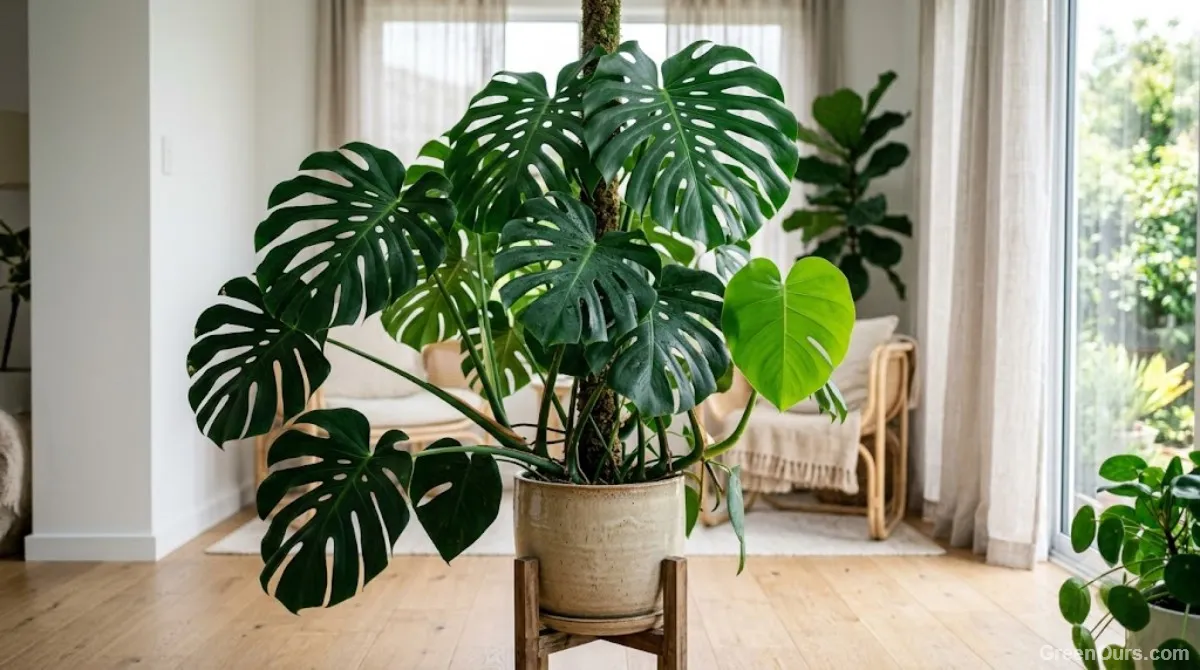
If your Monstera is still producing its initial set of juvenile leaves, solid foliage isn't a warning sign. It's just where the plant is in its developmental timeline.
Light Is the Primary Engine for Growth
While light isn't the only factor, it supplies the energy that fuels larger, more complex leaves. A Monstera kept in dim conditions several feet back from a window can survive for years producing solid leaves, simply because it lacks the surplus energy required to build intricate leaf shapes. It's not necessarily dying — it's maintaining, but survival and thriving look very different on a Monstera.
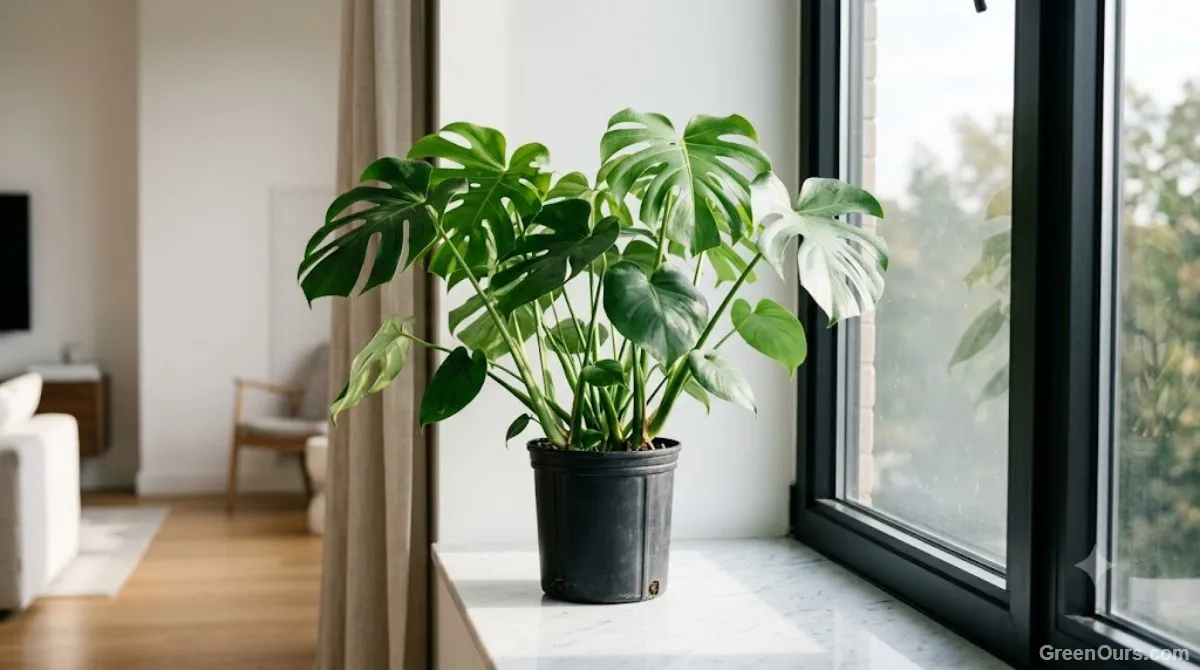
Bright, indirect light is the ideal target: a spot near an east-facing window, or a few feet back from a south- or west-facing window with a sheer curtain to diffuse harsh rays. When light increases, leaves come in broader, glossier, and with stronger stem structure. If your plant has been sitting in a dark corner, moving it closer to a quality light source is often the most effective environmental change you can make.
Maturity and Climbing Support
When Does Splitting Typically Begin?
Fenestration usually appears as a Monstera matures, often after it has produced several rounds of increasingly large juvenile leaves, but there isn't a strict leaf-number cutoff. Indoors, where light levels are naturally lower than in tropical canopies, a young nursery plant with a few small leaves may need a season or two of steady, active growth before its first split leaf emerges. This isn't a defect — it's simply the natural transition from juvenile to adult foliage.
Giving Your Monstera Something to Climb
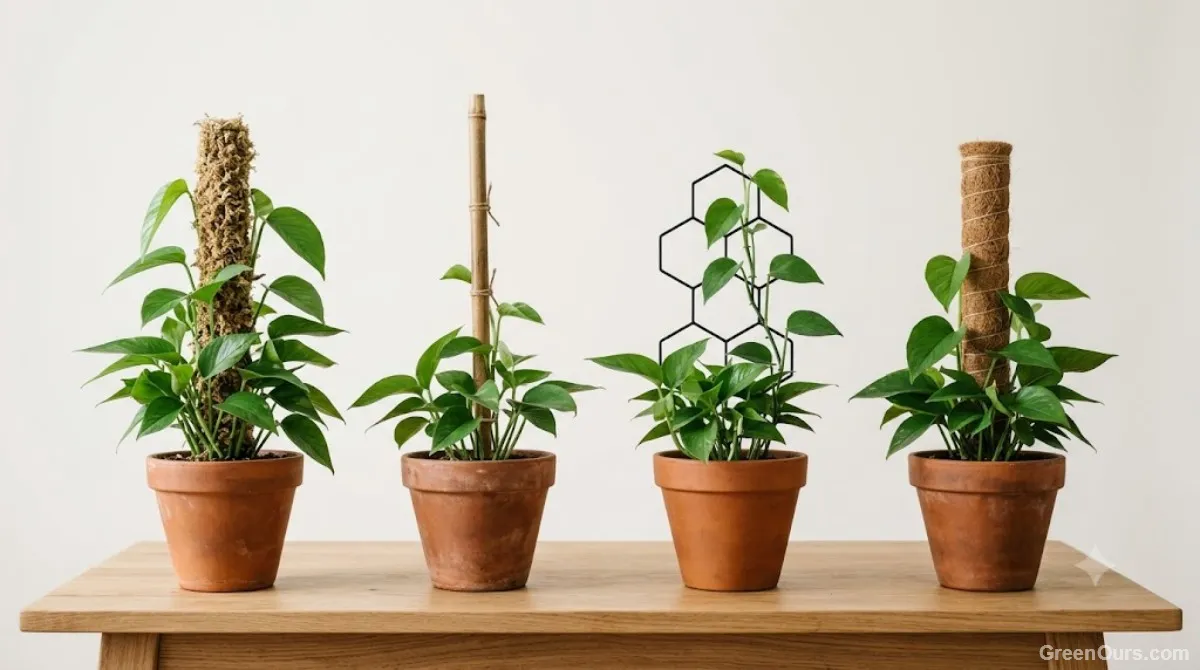
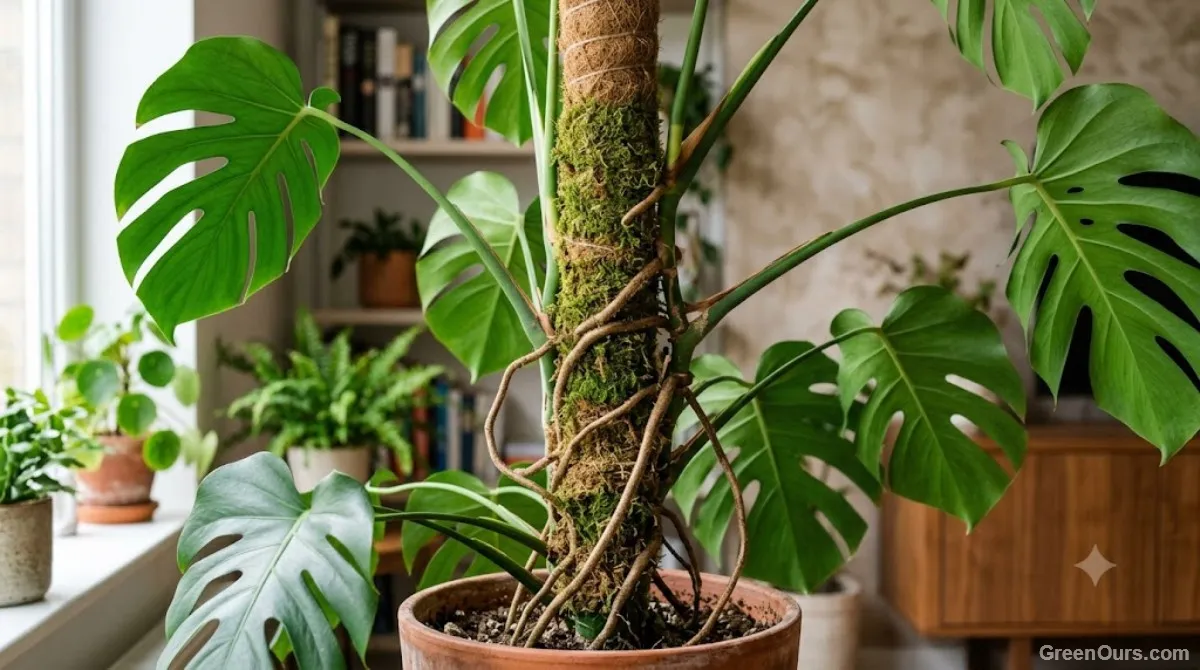
Monsteras that are anchored to a sturdy support like a moss pole or trellis tend to develop splits earlier and more consistently than those left to trail over the side of a pot. Vertical climbing mimics the plant's natural growth habit against tree trunks, signaling to the vine that it is ascending toward higher light and encouraging larger, mature foliage.
Watering, Feeding, and Overall Vigor
Consistent watering provides the foundation for healthy expansion. A Monstera that repeatedly oscillates between bone-dry soil and waterlogged conditions experiences growth setbacks, which often results in smaller, simpler new leaves. Allowing the top few inches of soil to dry out between waterings keeps root systems healthy and growth steady.
Nutrition also plays a supportive role. Applying a diluted, balanced houseplant fertilizer during active spring and summer growth supplies essential macronutrients for cell expansion. While missing a feeding won't stop fenestration on its own, chronically depleted soil can slow down overall vigor and delay the arrival of larger, split leaves.
When It's Fine to Relax
If your plant is young, receives adequate light, and regularly produces firm, green leaves that grow progressively larger, solid foliage simply means it's still maturing. Even established plants occasionally push out a smaller or less-fenestrated leaf after environmental stress like a repotting or seasonal shift in light.
The time to evaluate your setup is if a plant with a well-developed root system and a history of large growth produces smaller, unsplit leaves over several consecutive months. That pattern usually points to insufficient light or constrained roots rather than normal youth. For most growers, the remedy is straightforward: provide brighter indirect light, offer vertical support, maintain steady moisture, and let the plant grow at its own pace.
What to Do Next
There's a particular satisfaction in watching a new Monstera leaf unfurl slowly over a few days, especially when you catch the first glimpse of a split along its edge. Until then, the solid leaves aren't a setback — they are the vital structural foundation your plant is building on its way to mature foliage.
Explore more beginner-friendly houseplant guides