
Why Support Type Depends on Growth Habit
Climbing plants fall into three mechanical categories, and each one interacts with support differently. Aerial-root climbers like monstera, philodendron, and pothos anchor themselves by pushing roots into a moist surface. Twining vines like mandevilla or jasmine wrap their stems around a narrow vertical form. Sprawling or tendril plants like ivy or passionflower spread laterally and grip with tendrils rather than roots.
Match the wrong mechanism to the wrong support and the plant simply won't attach. A twining vine placed against a flat trellis with wide gaps has nothing to wrap around. An aerial-root climber placed against dry bamboo gets zero moisture and produces short, weak roots that never anchor.
Moss Poles: Best for Aerial-Root Climbers
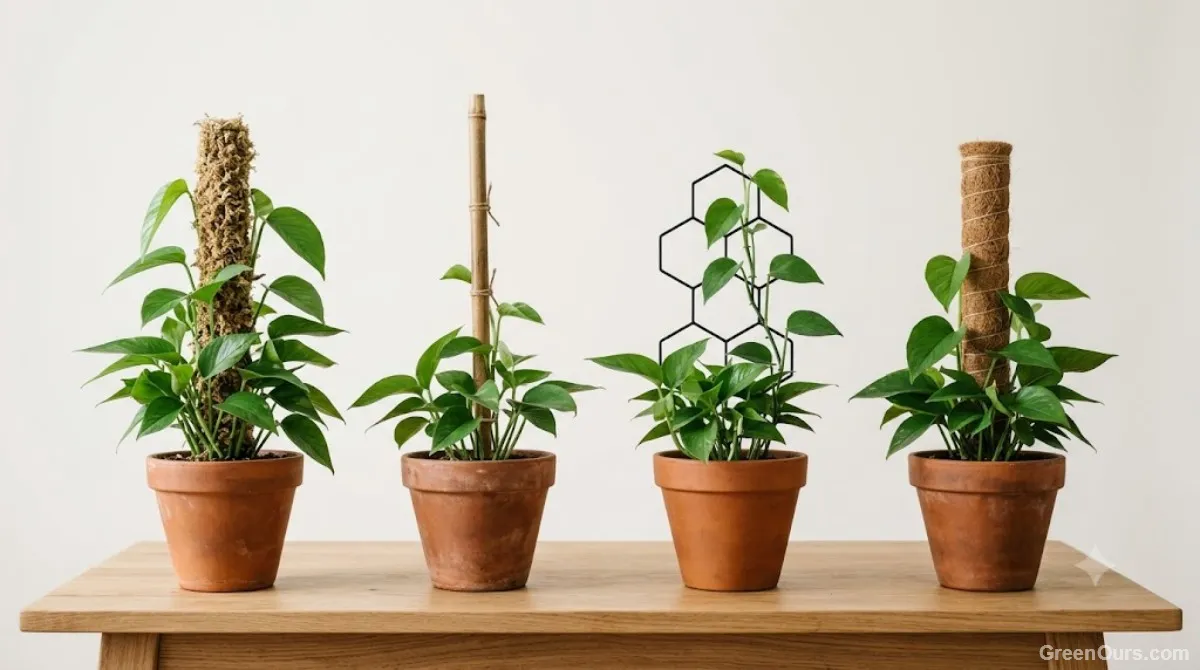
Moss poles work by staying damp. Sphagnum moss packed around a central frame holds water long enough for aerial roots to sense moisture and push into the surface. This is the only support type built specifically around root attachment rather than mechanical wrapping.
Expect to mist a moss pole two to three times a week in average household humidity, more often if your home runs below 40% relative humidity. Roots typically make visible contact within 3 to 6 weeks on a healthy, actively growing plant. If nothing has attached after 8 weeks, the moss is likely drying out faster than the plant can respond.
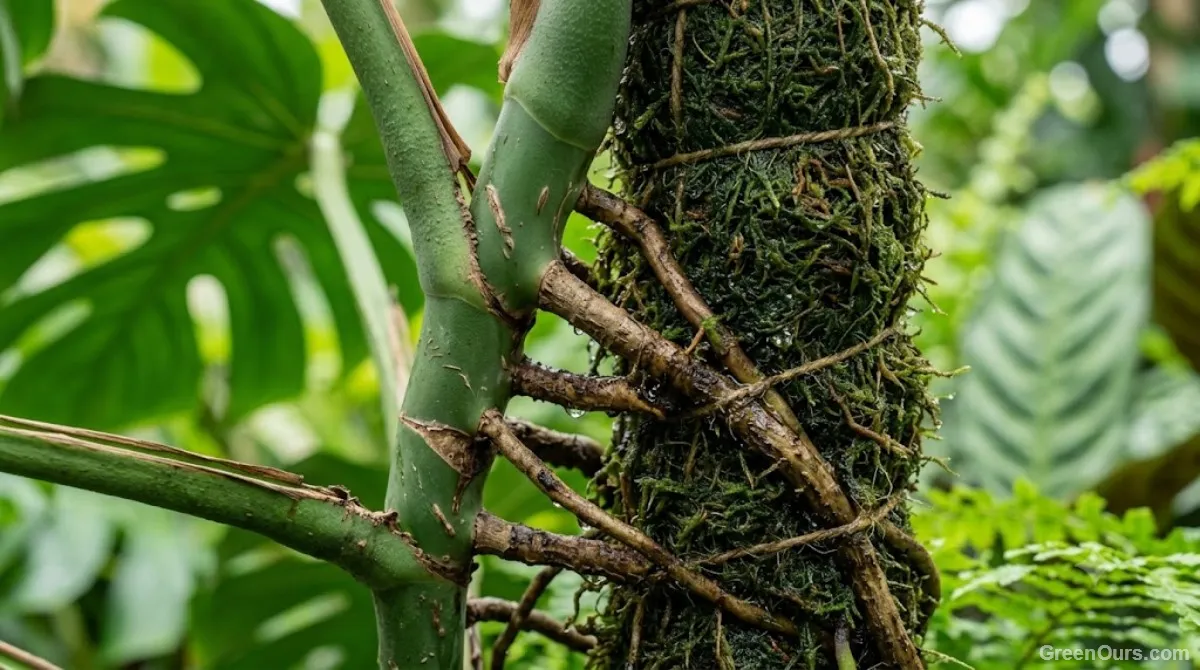
Soak a new moss pole in water for 20 minutes before installing it. A dry pole straight out of the packaging won't hold moisture long enough for roots to respond.
Bamboo Stakes: Rigid, Dry Support
Bamboo stakes don't climb anything and they don't retain moisture. They exist to hold up plants that need mechanical stability rather than a surface to attach to — top-heavy peace lilies after repotting, young ficus trunks, or fruiting tomato-family houseplants with heavy foliage.
When Bamboo Works
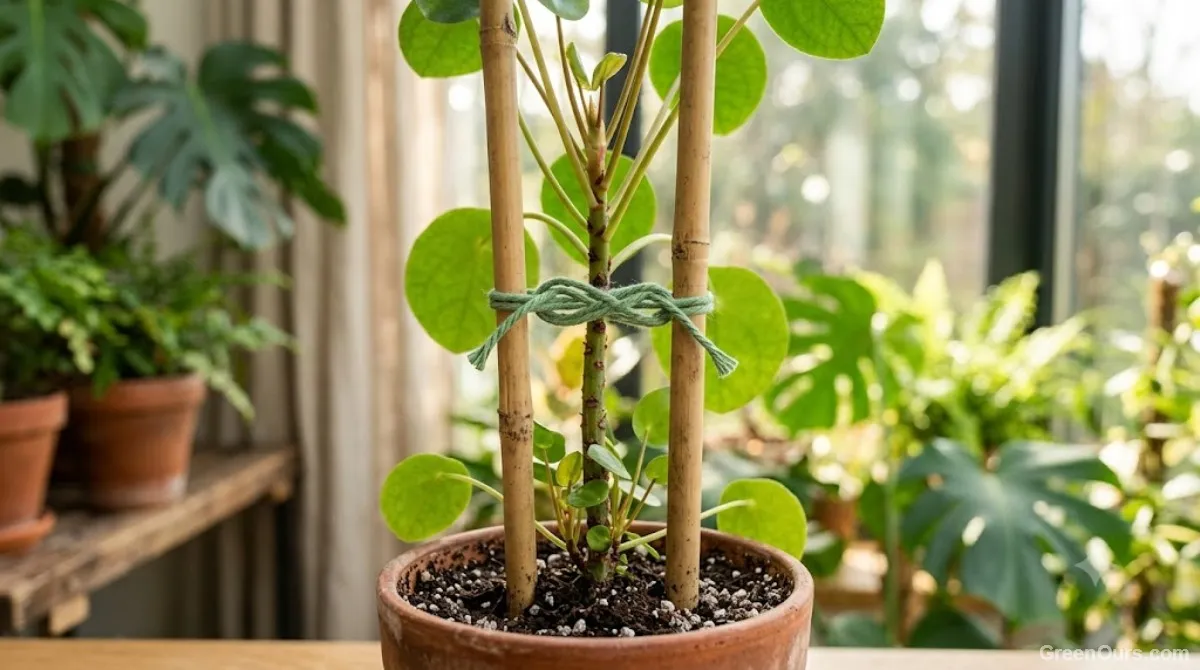
Use bamboo when the plant's main problem is gravity, not growth direction. Tie the stem loosely with soft garden twine in a figure-eight pattern, never a tight loop that can girdle the stem as it thickens.
When Bamboo Fails
Bamboo has no texture for aerial roots to grip and no lattice for tendrils to wrap. Using it for a climbing aroid just gives the plant something to lean against, not something to grow onto.
Trellises: Built for Vining and Sprawling Growth
Trellises solve a different problem than poles: lateral coverage. A flat or fan-shaped trellis gives tendril plants and twining vines a wide surface with multiple attachment points, which matters for plants like ivy, jasmine, or climbing pothos varieties trained flat against a wall or window.
Trellis spacing matters more than material. Gaps under 2 inches suit fine tendrils; anything wider works better for plants that twine with their whole stem. Wood and metal trellises last years with no maintenance; plastic versions become brittle in direct sun within two seasons.
Coco Poles: A Middle Ground on Moisture and Rigidity
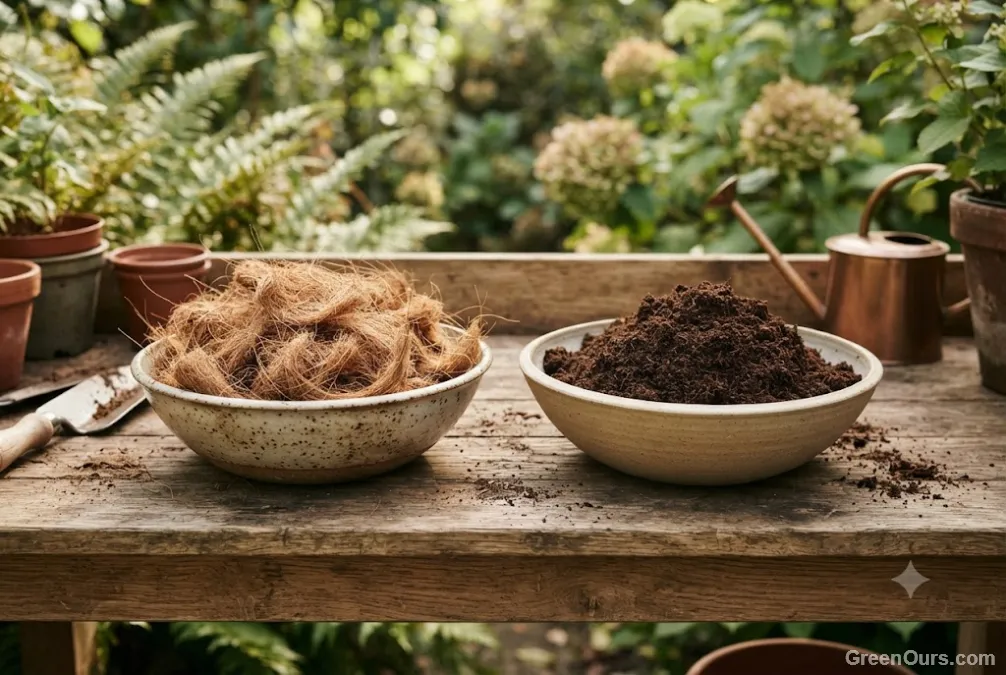
Coco poles use coconut coir wrapped around a rigid core instead of loose moss. The result sits between bamboo and moss poles: coir holds moisture longer than bare bamboo but dries out faster than packed sphagnum, and the compressed fiber gives roots a stable surface without the sagging that loose moss can develop over time.
Coco poles typically need watering once every 5 to 7 days rather than the 2-to-3-times-a-week schedule a moss pole demands, which makes them a reasonable option for plant owners who travel or forget frequent misting. The tradeoff is slower initial root attachment — expect closer to 6 to 8 weeks before visible aerial root contact on most aroids.
| Support Type | Climbing Mechanism | Moisture Retention | Maintenance | Typical Lifespan |
|---|---|---|---|---|
| Moss Pole | Aerial root anchoring | High, needs frequent misting | 2-3x weekly | 1-2 years before refilling |
| Bamboo Stake | Mechanical lean support | None | Occasional retying | 3-5 years |
| Trellis | Tendril/twining wrap | None | Minimal | 5+ years (wood/metal) |
| Coco Pole | Aerial root anchoring | Moderate, slower drying | Weekly | 2-3 years |
How to Choose Based on Your Plant
Start with growth habit, not aesthetics. Aerial-root aroids need moss or coco. Top-heavy non-climbers need bamboo. Tendril and twining vines need a trellis. If you're unsure which category your plant falls into, check the stem: visible root nodules along the stem mean aerial-root climber; smooth stems with no nodules mean it's a lean-support or twining case.
A plant that's outgrowing its current support usually shows it through weak, elongated new leaves rather than obvious wilting. Undersized new growth on an established climber is often the first sign it needs a taller or wetter support, not more fertilizer.
Common Mistakes to Avoid
Installing support too late is the most common error. Add support when a climbing plant produces its first aerial roots, not after the vine has already sprawled across the floor for months — redirecting an established trailing habit onto a vertical pole rarely works well.
Overtightening ties is the second. Twine or clips that don't allow for stem thickening will cut into growth within a season. Check ties every 4 to 6 weeks and loosen as needed.
Undersizing the support is the third. A pole or trellis that tops out below the plant's mature height just means repotting the entire support system later. Buy for the plant's expected size in 18 months, not its current size.
Support choice isn't about following whatever's trending in plant care content. It's a mechanical decision based on how your specific plant actually grows. Get that match right once, and you won't be troubleshooting a floppy vine or a bare pole again next season.
Setting up support for a plant you're about to repot? Check the repotting tools worth having on hand.