
Why Tool Choice Changes Repotting Outcomes
Repotting stresses a plant even when it's done correctly. Roots get disturbed, moisture levels shift, and the plant has to re-establish contact with new soil. The goal of every tool in the kit is to reduce that stress window — not eliminate it, since some disruption is unavoidable, but shorten it.
Blunt or improvised tools extend that window. A dull edge crushes root tips instead of severing them. Oversized scoops compact soil around the root ball, cutting off the air pockets roots need to resume growth. Small differences in tool design translate directly into how fast a plant recovers.
That difference usually shows up within a week or two, not months. A plant repotted with the right tools tends to push new growth close to schedule. One repotted with torn roots and compacted soil often doesn't wilt or drop leaves dramatically — it just sits. No obvious symptom, just a longer pause before the next leaf.
The Core Five: What Every Repotting Kit Needs
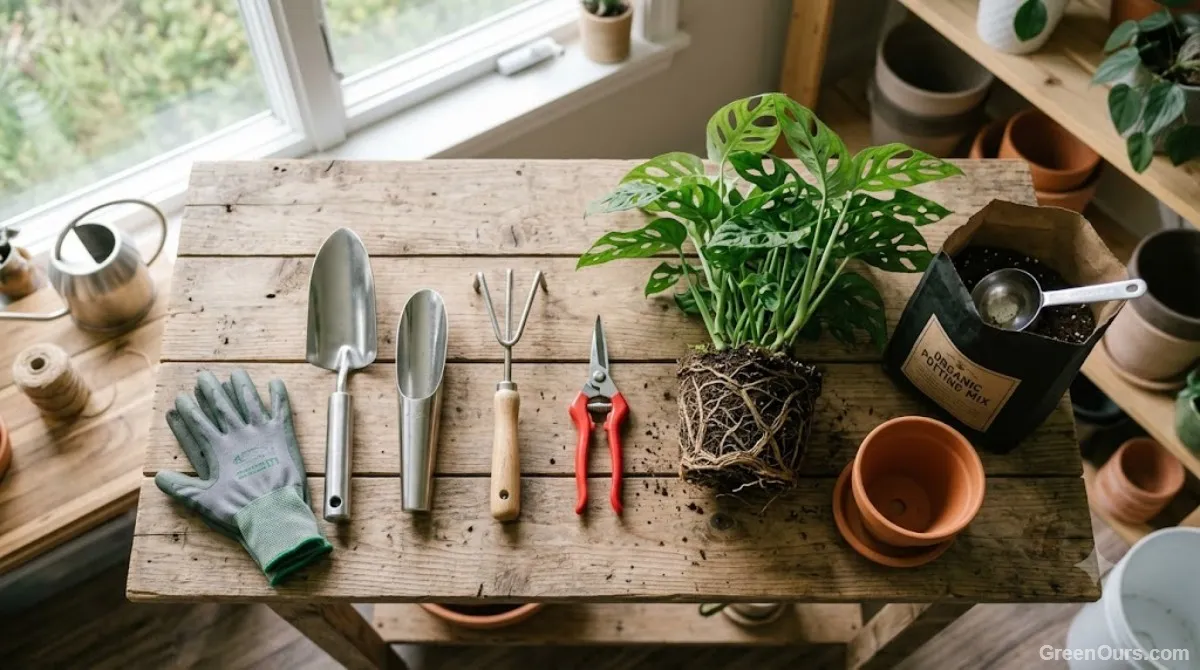
Five tools cover nearly every standard repot. Buy these first, and treat everything else as optional until a specific plant demands it.
Digging and Extraction
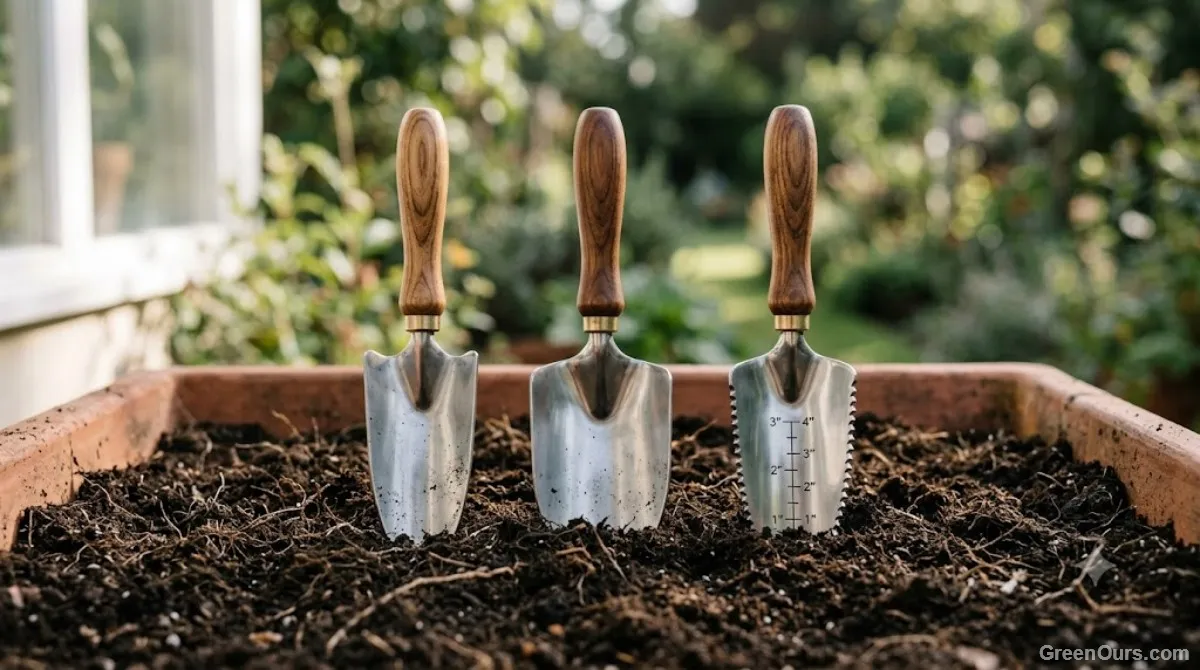
A narrow hand trowel does one job well: loosening a plant from its current pot without excessive force. Look for a slim profile that can slide down the inside wall of a nursery pot. Wide garden trowels built for outdoor beds are the wrong tool here — they don't fit the tight margins of container work.
Soil Handling
A soil scoop with a narrow spout controls exactly how much mix goes in and where. Pouring straight from a bag creates air gaps and uneven settling. A scoop lets you build soil around roots in layers, pressing gently as you go instead of compacting everything at once.
Root Care
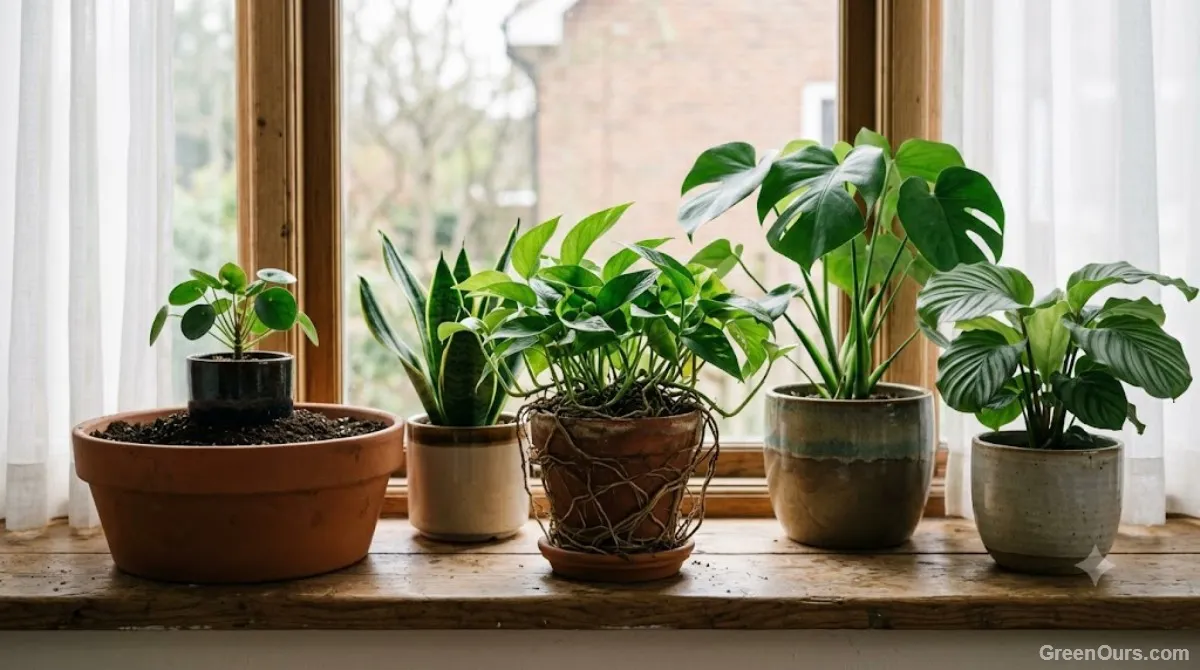
A root rake or hook — a small, curved metal tool — separates circling or matted roots without shredding them. This step matters most on rootbound plants, where roots have wrapped into a dense spiral. Skipping it means those roots keep circling in the new pot instead of spreading outward.
Hand Protection
Nitrile gloves protect against soil-borne bacteria and reduce the chance of transferring oils or residue from your hands onto sensitive root tissue. They also make it easier to grip wet roots without your hands slipping, which matters more than most beginners expect.
Drainage Prep
A mesh screen or coarse coffee filter, sized to the pot's drainage hole, keeps soil from washing out without blocking water flow the way a stack of rocks does. This is a small addition, but it prevents two of the most common repotting mistakes — soil loss and drainage-hole blockage — in one step.
If roots resist gentle separation, stop pulling and switch to cutting. Torn roots heal slower than clean cuts and are more likely to rot at the tear point.
- Narrow hand trowel for extraction
- Soil scoop with a narrow spout
- Root rake or hook for matted roots
- Nitrile gloves for hand protection
- Mesh screen or coffee filter for drainage prep
Beginner Kit vs. Experienced Grower Kit
A beginner kit needs four items: a narrow trowel, a soil scoop, gloves, and a drainage screen. That covers the majority of repotting jobs on standard houseplants without rootbound conditions.
- Narrow hand trowel
- Soil scoop
- Nitrile gloves
- Drainage screen
When to Upgrade Your Kit
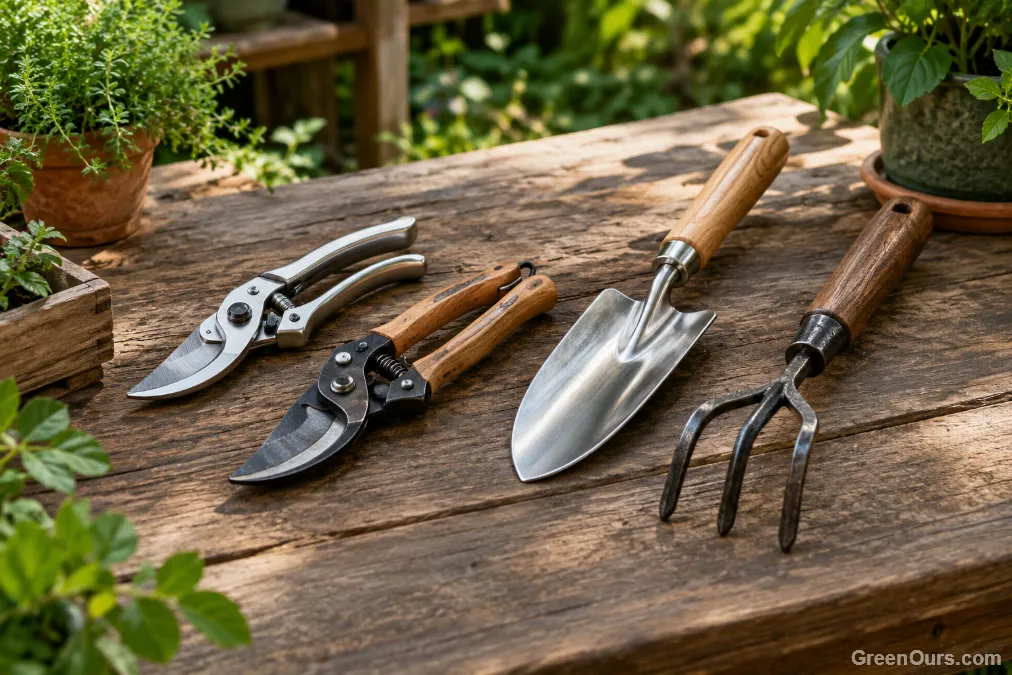
Once you're repotting several plants a season, or running into rootbound specimens regularly, add a root rake, a second pair of fine-tipped snips for precision root trimming, and a moisture-testing tool to confirm soil dryness before you start.
Tools You Can Skip (Until You Can't)
Repotting mats exist mainly to protect furniture, not plants — a spare towel does the same job. Specialty root-ball loosening forks duplicate what a root rake already does. Decorative scoops sold in matching sets rarely outperform a single well-designed utility scoop.
The one tool worth adding earlier than expected: a second, dedicated pair of pruning snips reserved only for root work. Using the same blade on roots and foliage increases the chance of transferring pathogens between plant tissue types.
None of these skip-worthy tools fail because they're poorly made — they fail because they solve a problem the Core Five already solves. If you're choosing between a duplicate tool and better soil or a properly sized pot, the soil and pot will make a bigger difference every time.
Keeping Tools From Becoming a Contamination Risk
Unsterilized tools are one of the most overlooked sources of root rot and fungal spread between plants. Wipe blades and scoops with isopropyl alcohol before and after each repot — not just when a plant shows visible disease. Root rot pathogens can survive on tool surfaces without any visible residue.
Dry tools fully before storage. Damp metal corrodes faster and can develop surface pitting that traps organic material between uses, undermining the sterilization step entirely.
Use 70% isopropyl alcohol, not a stronger concentration — it needs a few seconds of contact time to work, and a wipe that flash-dries too fast can leave pathogens behind.
A 90-Second Pre-Repot Checklist
Run through this before you touch the plant. It takes under two minutes and removes most of the mid-repot scrambling that leads to rushed, damaging decisions.
- Confirm soil is on the dry side — wet soil clumps and resists clean separation.
- Lay out all five tools within reach so the plant isn't left half-exposed while you search for something.
- Wipe blades with 70% isopropyl alcohol.
- Size the drainage screen to the new pot.
- Pre-measure fresh soil rather than scooping mid-repot from an open bag.
What to Do Next
A repotting kit isn't about owning more tools. It's about owning the right five and using them the same way, every time, so root stress stays predictable and recovery stays fast.
Before your next repot, do a five-minute inventory: do you have all five core tools, cleaned and within reach?
Check your kit before your next repot — small tool choices add up.