
Why Tool Hygiene Matters More Than You'd Guess
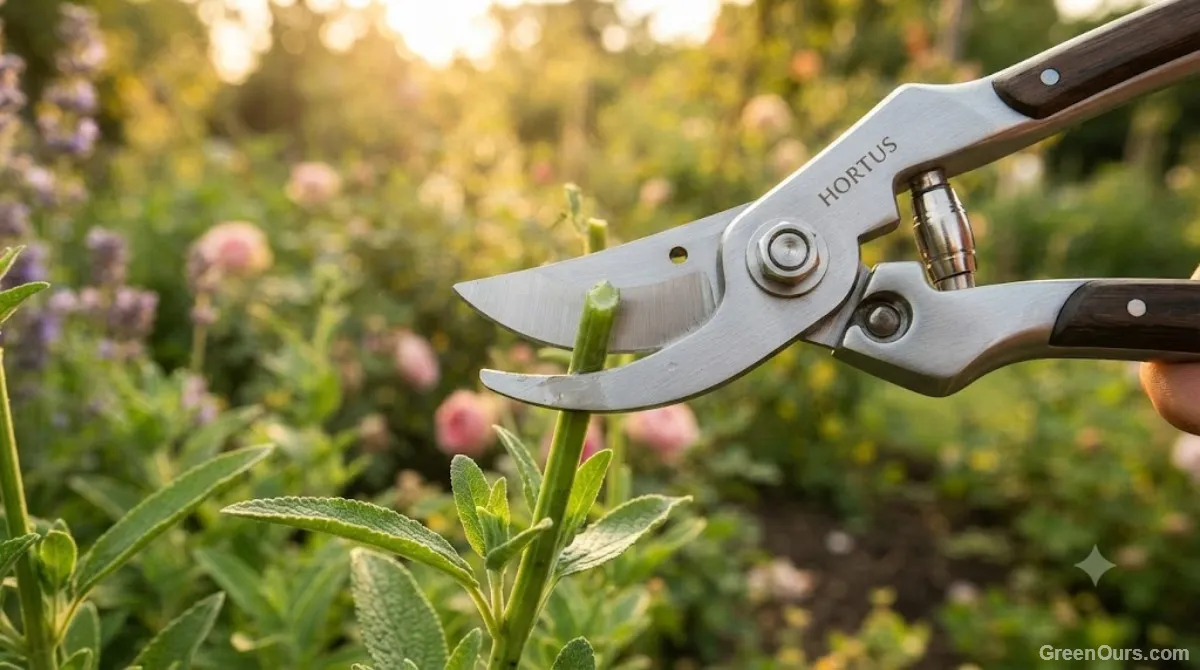
A single cut through a plant infected with fire blight, verticillium wilt, or a mosaic virus can leave enough pathogen residue on a blade to infect the next several plants you cut afterward, assuming the tool goes untreated in between. Bacteria and fungal spores don't need much surface area to survive — a hairline scratch in the metal or a film of dried sap is enough shelter. For roses, fruit trees, and tomatoes in particular, an unclean blade is one of the more common and least suspected ways disease moves through a garden season to season.
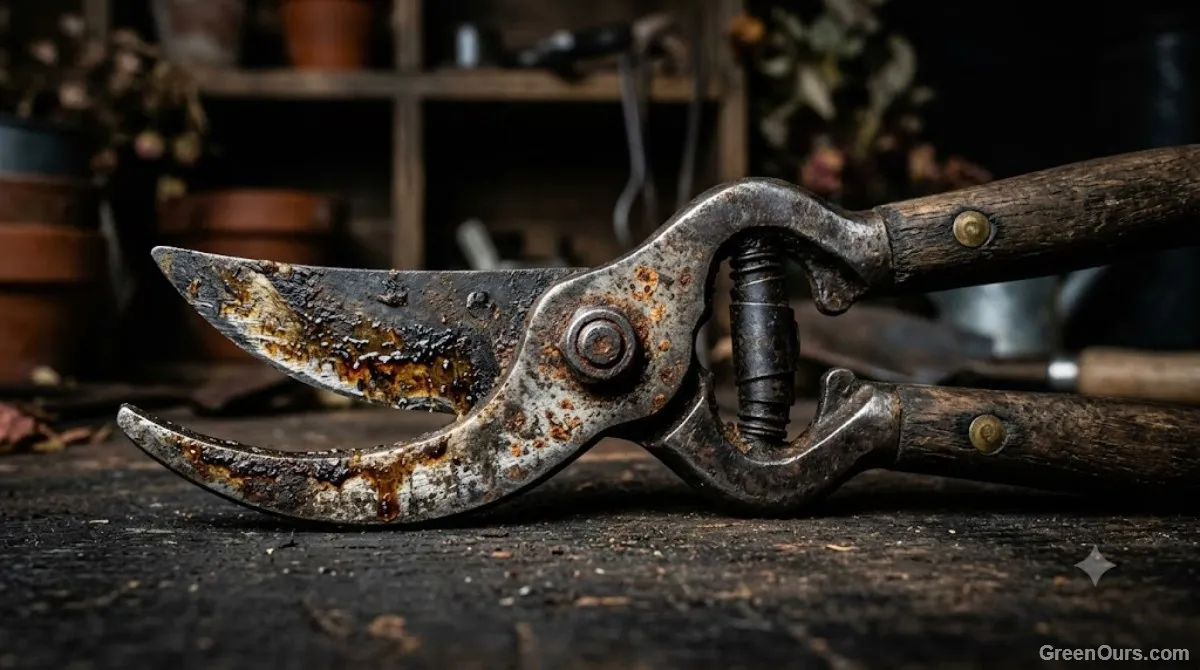
Rust does separate damage. Once oxidation starts at the pivot point or along the cutting edge, it doesn't stay contained. It spreads under the surface, pits the steel, and eventually throws off the alignment of the blades — which is why a rusted pruner starts crushing stems instead of slicing them cleanly, even after a sharpening.
If you're pruning anything showing signs of disease — cankers, wilting, discolored wood, powdery patches — disinfect the blade between every single cut, not just at the end of the session. One missed cut is enough to carry the problem to the next plant.
What You'll Need Before You Start
- Dish soap and warm water
- A stiff-bristled brush or an old toothbrush for hinges and serrations
- 70% isopropyl rubbing alcohol, or a 10% bleach solution (1 part bleach to 9 parts water)
- Clean microfiber cloths — at least two
- Light machine oil or food-safe mineral oil
- Fine steel wool (000 grade) or a rust eraser block for stubborn spots
Skip full-strength bleach and skip regular steel wool on stainless finishes — both are harsher than the job requires and will scratch or discolor the metal over time.
Step-by-Step: Cleaning the Metal
- Rinse off loose soil under running water immediately after use. Thirty seconds now saves ten minutes of scrubbing later, once the soil has dried and hardened into the hinge.
- Wash with dish soap and warm water, working the brush into the pivot joint and any serrated sections where debris hides.
- Remove sap with a cloth dampened in rubbing alcohol or a citrus-based degreaser. Sap left untreated hardens into a shellac-like coating that traps moisture underneath it.
- Scrub embedded rust spots with 000-grade steel wool or a rust eraser, working in the direction of the grain rather than in circles.
- Dry immediately and completely with a clean cloth. Carbon steel left even slightly damp can start showing flash rust within the hour.
Removing Sap and Resin
Sap is the most common reason blades stop cutting cleanly, and it's often mistaken for dullness. If a pruner is catching or tearing instead of slicing, wipe the flat of the blade before reaching for the sharpening stone — half the time, the edge was fine and the sap was the actual problem.
Scrubbing Off Rust and Soil
Soil left in the hinge does more damage than soil on the blade face, because it holds moisture directly against the pivot pin — the part most likely to seize or wear unevenly. Work the brush into that joint every time, not just when the tool visibly needs it.
Disinfecting Without Damaging the Blade
Rubbing alcohol at 70% concentration is the gentler option for routine disinfecting. It evaporates on its own, needs no rinsing, and won't touch most finishes. Wipe the blade thoroughly, let it air-dry for about thirty seconds, and move on.
A 10% bleach solution kills a broader range of fungal pathogens but is harder on tools. If you use it, limit the blade's contact time to around 30 seconds, then rinse with clean water, dry completely, and oil the metal right away — bleach residue left on steel accelerates corrosion faster than almost anything else on this list.
Disinfect between every cut when working on diseased material. For routine pruning of healthy plants, disinfecting once between different plant species — rather than after every single snip — is enough to prevent cross-contamination without turning the job into a chore.
Rust Prevention After Every Clean
Once a tool is clean, dry, and disinfected, a few drops of light oil on the pivot pin and along the blade seals out moisture before it has a chance to settle in. Wipe off the excess with a dry cloth — a thin film is enough, and a heavy coat just attracts dust and soil on the next use.
Storing Tools So They Stay Ready
Even a perfectly cleaned tool will rust again if it goes back into a damp shed corner or a bucket with wet soil still clinging to other tools. Store pruners and knives in a dry spot, ideally hung rather than laid flat, and use a blade sheath or guard if the tool has an exposed cutting edge. Humid climates benefit from a small silica packet tossed into the tool box or drawer.
Want more ways to keep your garden gear in working order?
Five minutes of cleanup after each session is the real difference between tools that last for decades and ones that get replaced every other year. Build the routine in at the end of the job rather than treating it as a separate task, and it stops feeling like maintenance at all — it just becomes the last cut of the day.