
Why Most Pruning Shears Fail Within a Year
Check the return-and-replace pattern at any garden center and you'll see it: cheap shears come back constantly, usually for one of three reasons. The pivot bolt loosens and the blades wobble. The spring snaps after repeated flexing. Or the blade edge rolls over — meaning it bends rather than holds a true edge — after contact with a single woody stem thicker than a pencil.
None of these failures are random. They trace back to two decisions made at the factory: what steel the blade is stamped from, and whether the pivot uses a proper bolt-and-nut assembly or a cheap rivet. A rivet can't be tightened once it loosens. A bolt can. That distinction alone explains why some $15 pairs outlast $40 ones.
Quick check before buying: Look at the pivot. If you can see a hex-head bolt and matching nut, you can adjust blade tension for years. If it's a smooth rivet head, the shears are disposable the moment they loosen.
Bypass, Anvil, and Ratchet: What Actually Cuts Best
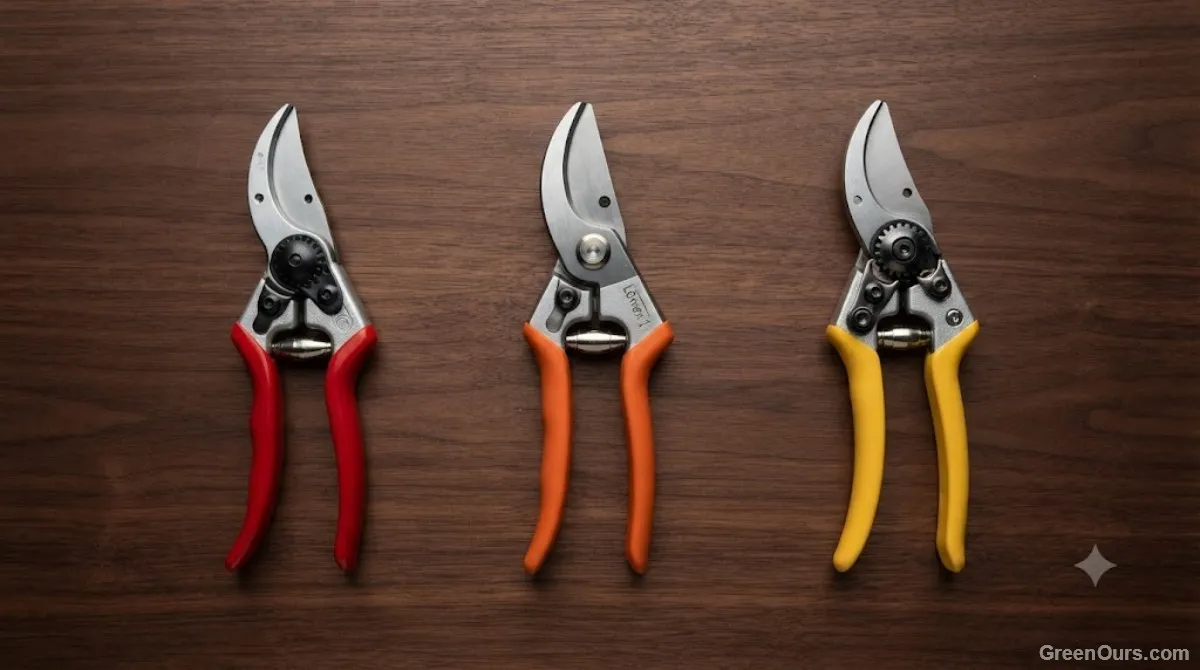
The blade mechanism matters more than the brand printed on the handle. Each type is built for a different job, and using the wrong one is the single most common mistake home gardeners make.
Bypass Shears
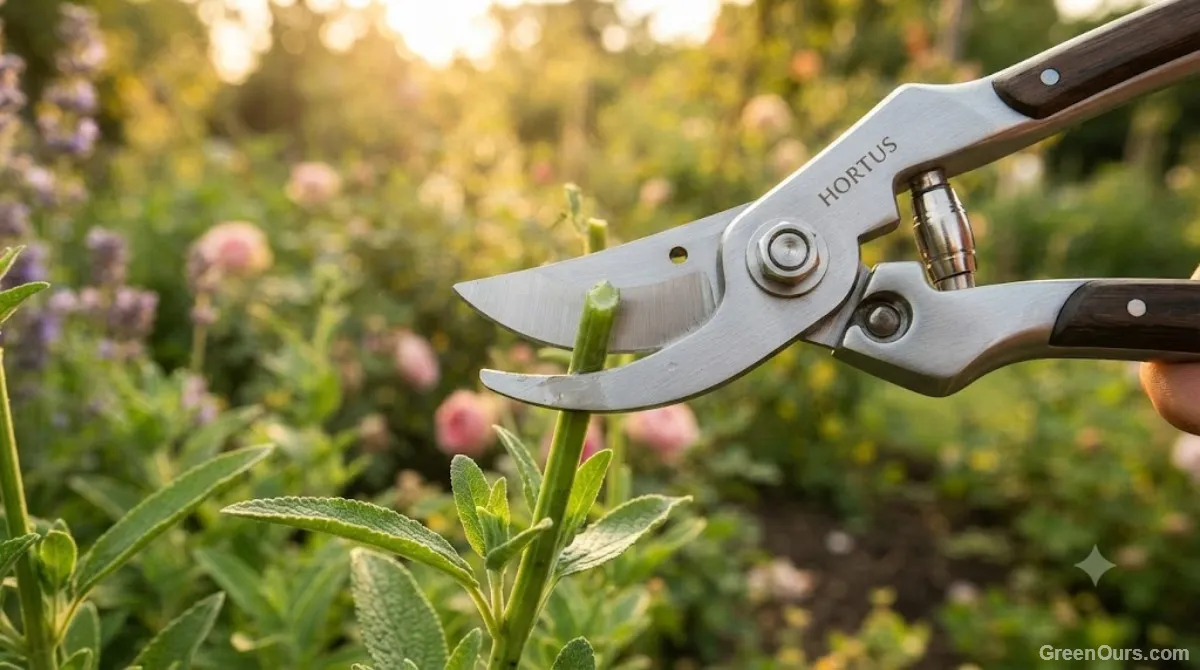
Two curved blades slide past each other like scissors. This shearing action makes a clean cut on live, green growth — roses, herbs, soft perennial stems — without crushing the tissue on either side of the cut. Bypass is the default choice for anything you want to keep growing. Because the blades scissor so closely together, alignment is critical. If the pivot loosens even a fraction of a millimeter, stems will bend and slip between the blades rather than being cut cleanly. This is why high-grade bypass models always feature precision adjustment nuts to maintain microscopic tolerances over years of heavy use.
Anvil Shears
A single sharp blade closes onto a flat metal plate, like a knife on a cutting board. That crushing action is fine on dead wood, where you don't care about tissue damage, but it mangles live stems. Keep an anvil pair around specifically for deadheading and removing dry, brittle branches. Anvil pruners exert massive mechanical force right at the point of contact, making them ideal for woody debris that would otherwise bind up bypass blades. However, because the blade repeatedly strikes an anvil surface—often made of softer brass or heavy nylon—that lower plate will wear down over time and eventually require replacement or reshaping.
Ratchet Shears
Built for people with limited hand strength or arthritis, ratchet shears cut thick stems in two or three smaller squeezes instead of one hard grip. They're slower, section by section, but they let you cut half-inch branches without straining your hand. As you squeeze, a stepped mechanism catches and holds the blade in place, allowing you to release your grip slightly, open your hand, and squeeze again with maximum mechanical advantage. They take a bit of getting used to if you are accustomed to continuous cutting, but for clearing dense brush or tackling winter wood, they reduce hand fatigue significantly.
| Type | Best For | Avoid For |
|---|---|---|
| Bypass | Live stems, roses, herbs | Thick deadwood over 3/4 in. (19mm) |
| Anvil | Dry, dead branches | Live, soft growth |
| Ratchet | Thick stems, limited grip strength | Fast, repetitive light pruning |
Blade Steel and Sharpness: What to Check Before Buying
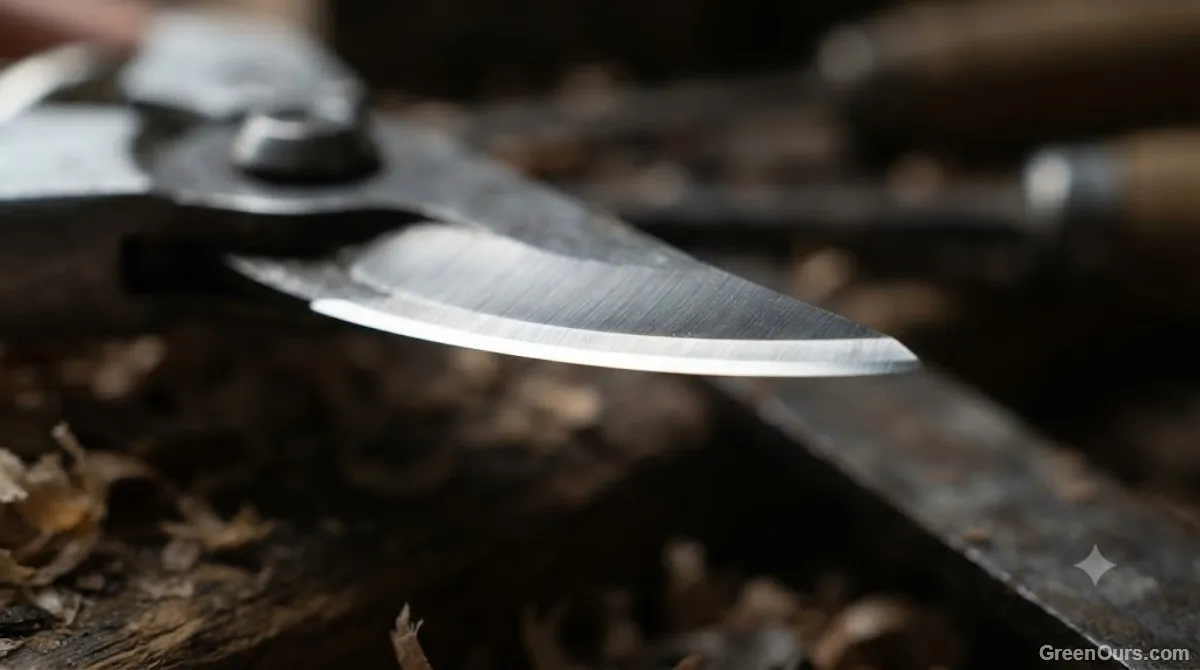
Carbon steel takes a sharper edge and holds it longer than stainless, but it needs a wipe-down after every use or it spots with surface rust within a week in humid climates. High-carbon alloys provide incredible structural rigidity, meaning the thin edge won't fold over when slicing through stubborn fibrous stems. Stainless resists rust with almost no maintenance but dulls faster and needs more frequent sharpening. Neither is universally better — it's a tradeoff between upkeep and edge retention, and which one suits you depends on whether you're the type who cleans tools after use or the type who tosses them in a bucket by the shed door.
If you want a benchmark for high-carbon durability and razor-like edge retention, look for a forged (not stamped) carbon-steel blade — that forging process is what lets high-grade steel hold a true edge through years of heavy use.
Run a thumbnail lightly across the edge before you buy, if the store allows it. A sharp blade will catch slightly on your nail. A dull one slides straight across with no resistance at all. That thirty-second test tells you more than any spec sheet on the packaging. Additionally, look closely at the finish of the steel itself. Premium blades feature precision grinding marks perpendicular to the edge, showing that the bevel was ground evenly on factory wheels rather than stamped out en masse in a blanking press.
Sizing and Grip: Matching Shears to Your Hand and Plants
A shear that's too large for your hand forces you to over-grip, which tires your forearm within twenty minutes of pruning. Measure your palm width against the handle spread before buying — most manufacturers list a cutting capacity in millimeters, and that number should match the actual stems you cut most often, not the thickest branch you might someday encounter. When holding the pruner in your dominant hand, you should easily be able to reach the locking latch with your thumb without shifting your grip entirely.
If you're mostly deadheading and trimming herbs, an 8-inch bypass pair with a narrower blade will feel far less fatiguing than a full-size 9-inch pair built for orchard work. For smaller hands or prolonged lightweight pruning, look for a compact-span model with a narrower blade — it cuts fatigue without sacrificing cutting force. Weight matters too — aluminum handles shave a few ounces off steel ones, which adds up over an hour of deadheading a large rose bed.
Maintenance That Extends Blade Life
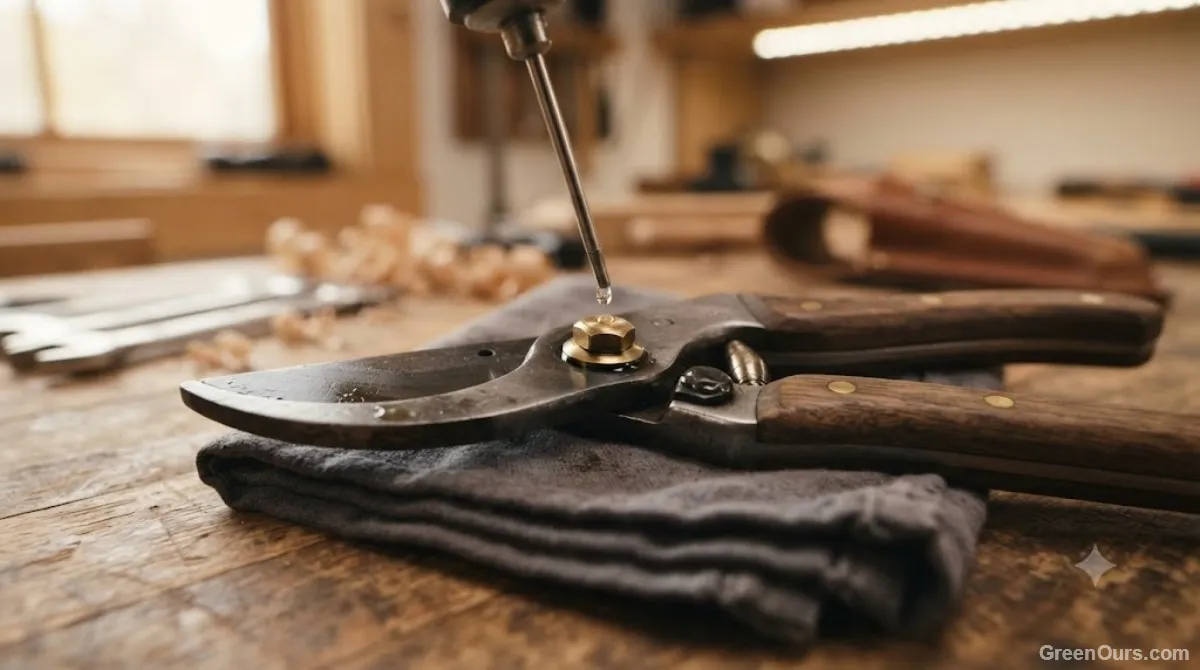
Wipe the blades after every session — sap left overnight hardens into a sticky film that dulls the edge faster than actual cutting does. Plant sap contains organic acids that slowly pit unprotected metal over time, eating away at the refined cutting edge. Keep a small rag saturated with mineral oil or boiled linseed oil in your tool kit to quickly wipe down the steel before putting your pruners away. Every few weeks, add a drop of light oil to the pivot bolt and work it back and forth a few times. That single habit is the difference between shears that last ten years and ones that seize up after two seasons.
Sharpen with a diamond file or whetstone at the factory bevel angle — usually between 20 and 25 degrees. A quality diamond sharpening stone makes routine touch-ups effortless. Five or six light strokes along the beveled edge, always in the same direction, is enough for routine care. Save the full resharpening for once or twice a season, and always dry the blades completely before storing them. When filing, never rub the flat backside of a bypass blade except to gently stroke away any metal burr raised during the sharpening process. Altering the flat inner face ruins the tight tolerances needed for clean scissoring action.
When to Replace vs Sharpen
Sharpening fixes a dull edge. It won't fix a bent blade, a stripped pivot bolt, or a spring that's lost its tension. If the blades don't close flush against each other anymore, even after tightening the pivot, the metal itself has warped — replace the pair rather than fighting it with a file. Warped blades create uneven friction points that rapidly dull freshly sharpened steel and place excessive strain on your wrist joint during every stroke.
Test the spring separately from the blades. Open and close the handles ten times without cutting anything — if the shears don't snap back to a full open position every time, the spring is fatigued and no amount of sharpening will fix that. While replacement springs are available for high-end professional tools, inexpensive shears rarely offer modular spare parts. Surface rust that wipes off with an oiled cloth is cosmetic. Pitting — small dark craters in the metal that catch a fingernail — means corrosion has eroded into the steel itself, and that section of the blade will always hold an edge poorly, even after sharpening.
What to Do Next
Good bypass shears with a bolt-and-nut pivot and carbon steel blades will outlast several cheaper pairs combined. Buy once, maintain it, and you'll spend less over five years than someone replacing an $8 pair every spring. Investing in quality metal and modular design ensures that every part—from the wire-cutting notch to the thumb lock—works smoothly season after season.
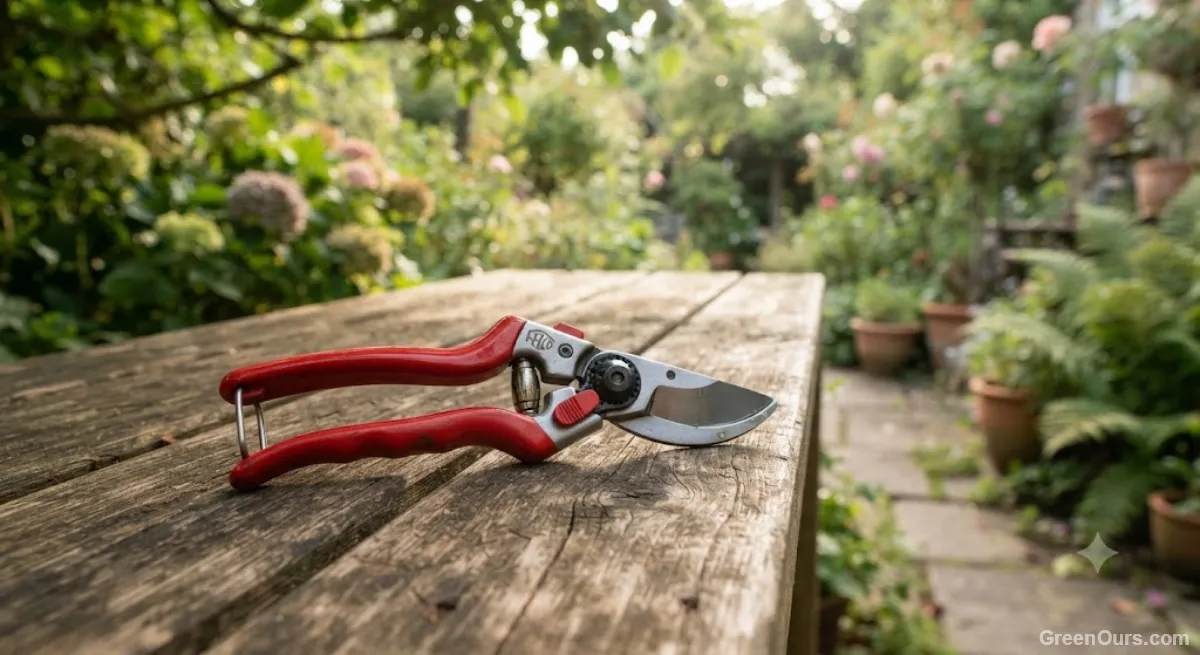
Keeping your tools sharp matters as much as choosing the right ones. Pairing a quality lifetime tool with a proper diamond stone is what actually separates a shear that lasts a decade from one that's back in a drawer by next spring.
The right shears won't make you a better gardener overnight, but the wrong ones will actively work against you — crushing stems, wobbling mid-cut, seizing up by midsummer. Pick the blade type that matches what you actually grow, check the pivot before you buy, and keep a rag and a drop of oil within reach. That's most of what separates a decade-long tool from a drawer full of rusted regrets.