
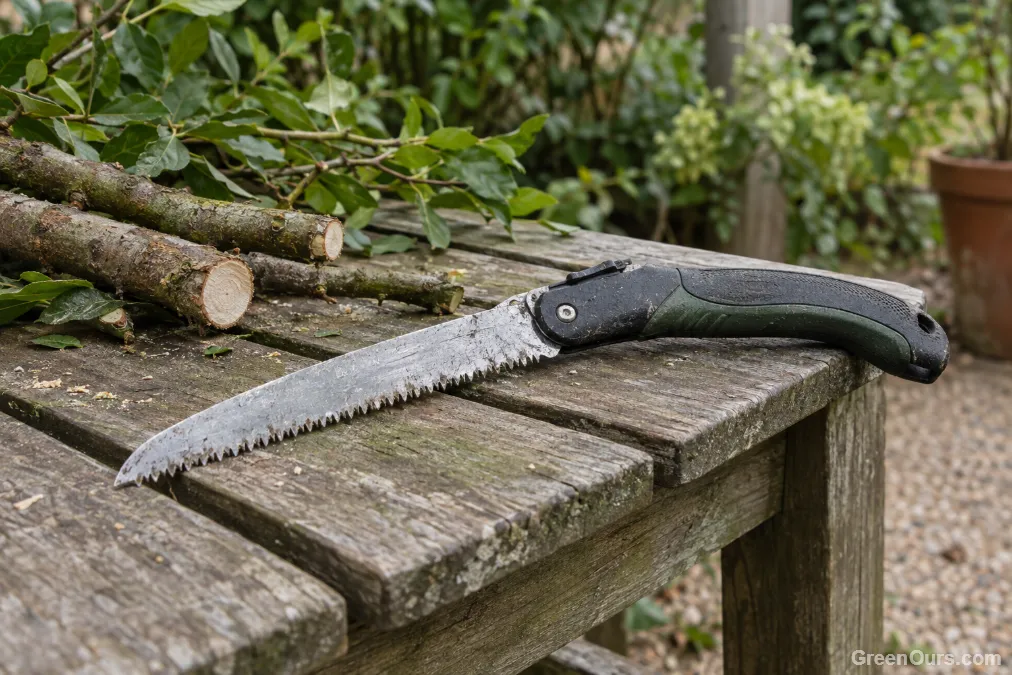
What a Worn Blade Actually Does to a Cut
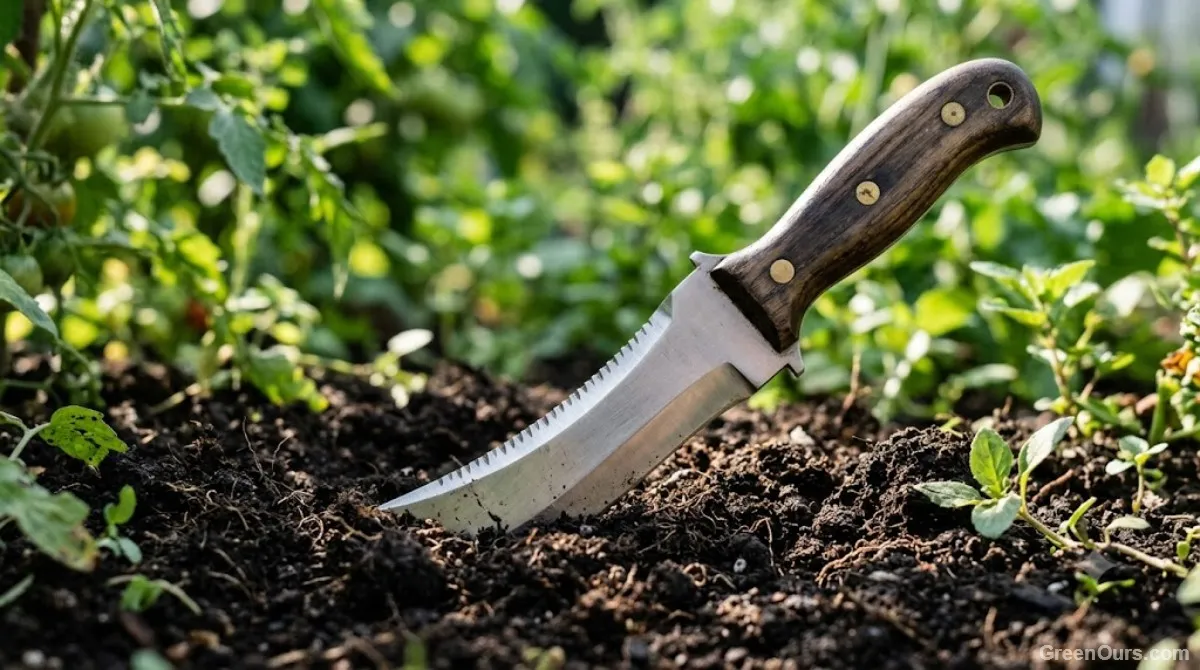
Every pruning saw tooth is bent slightly outward in an alternating pattern called the set. That set carves a channel — the kerf — that's wider than the blade's body, so the saw can move through wood without binding. Wear down that set, and the kerf narrows until the blade's own body is dragging against the sides of the cut. That's why a saw that used to glide suddenly feels like it's fighting you.
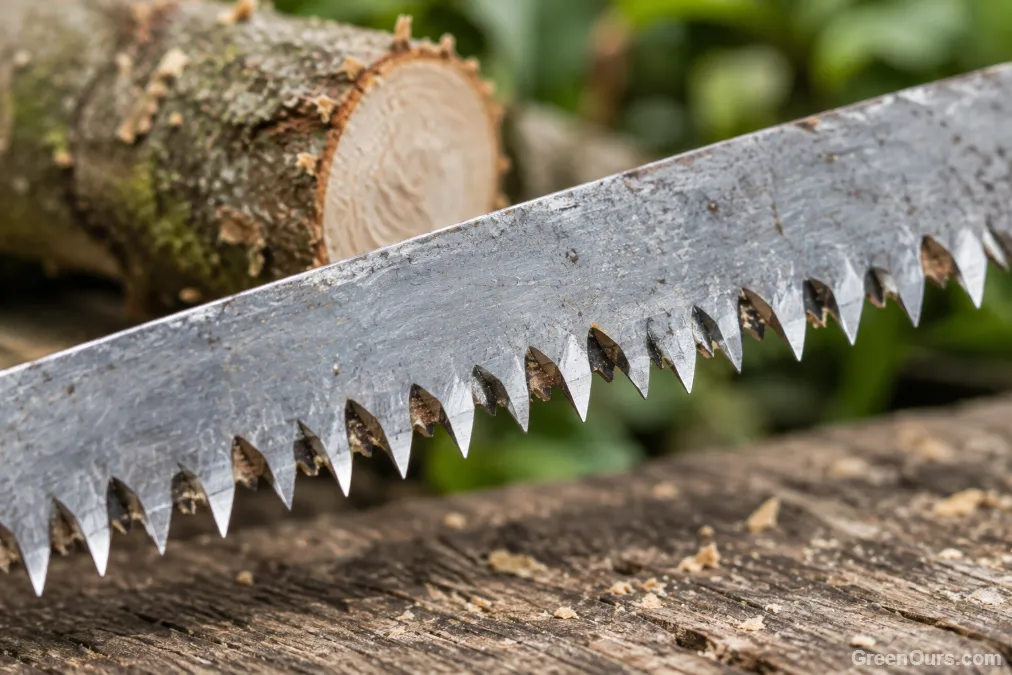
The teeth themselves change too. Impulse-hardened steel holds an edge for years under normal use, but friction and rust eventually round the tips into something closer to a blunt hook than a point. A rounded tooth doesn't slice fibers — it tears them, which is the difference between a clean pruning cut and a wound that takes a tree twice as long to seal over.
Six Signs It's Time for a New Blade
None of these show up in isolation for long. Once one appears, the others usually follow within a few uses.
- You're leaning into every stroke. A sharp blade needs guidance, not force. If you're putting body weight behind the saw to get through a branch you'd normally clear in seconds, the teeth have stopped biting.
- Cut count has roughly doubled. Track it once — a two-inch branch that took four or five strokes with a fresh blade shouldn't take ten or twelve now. That gap is a direct measure of how much cutting edge you've lost.
- Sawdust has turned to powder. A sharp tooth removes wood in small curls or coarse shavings. A dull one grinds it into fine dust, because it's crushing fibers instead of severing them.
- Cuts come out ragged instead of flat. Torn, splintered wound edges heal slower and give pathogens more surface area to work with — a real problem on live branches, not just a cosmetic one.
- Teeth are visibly chipped, missing, or flattened. Hold the blade up to the light and look down the row of teeth. Any gap, flat spot, or rust pit along the edge is permanent — no amount of use will smooth it back out.
- The blade wobbles or flexes mid-cut. Loose rivets, a bent body, or a warped spine will make the saw wander off your cut line no matter how sharp the teeth are. This one isn't fixable with a file at all.
Run a thumbnail lightly across three or four teeth near the middle of the blade. Sharp teeth catch and grip almost immediately. A worn blade lets your nail slide right past without resistance — the same reason it's sliding through wood without actually cutting it.
Sharpening vs. Replacing: How to Decide
When Sharpening Still Works
If the teeth are intact and simply dull across the board, if the blade body is straight, and if you're not seeing rust pitting along the edge, a triangular or diamond file can restore real performance. This works best on older or premium hand-set blades designed with softer steel that a file can actually bite into.
When Replacement Is the Only Fix
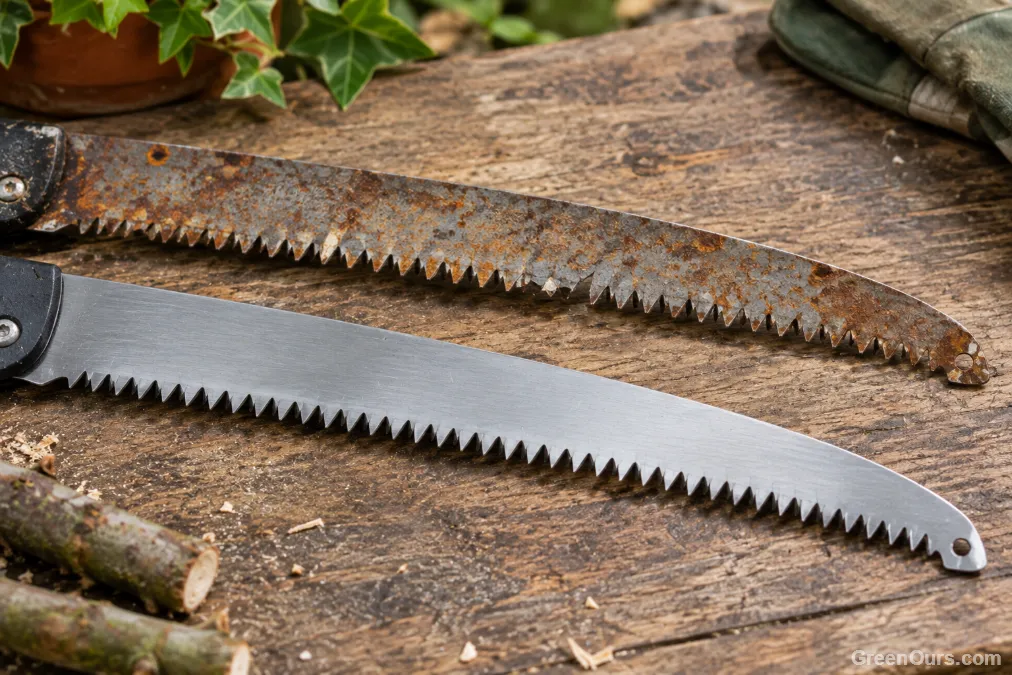
Most folding and curved pruning saws sold today use impulse-hardened teeth — steel hardened past the point where a standard file can touch it. Run a file across one of these blades and it skates without cutting. If that's what you're feeling, sharpening was never an option to begin with. The same goes for blades with several chipped or missing teeth, visible rust pits, or any bend or wobble in the body. At that point, a new blade costs less than the time you'll spend fighting the old one.
Choosing a Replacement Blade
Match the blade length to your saw's handle first — most folding saws run 7 to 10 inches, while bow saws can take blades up to 13 inches or more. After that, look at teeth per inch, or TPI. Lower TPI, around 5 to 7, clears green wood faster with more aggressive teeth. Higher TPI, 8 and up, leaves a cleaner cut on smaller branches and drier wood, at the cost of cutting speed.
Check the mounting system before you buy. Some manufacturers use a proprietary tang or locking tab that only fits their own handles, while others sell universal blades compatible across brands. A replacement blade typically runs $12 to $25, against $35 to $60 for a whole new saw — replacing just the blade usually gets you several more years out of a handle that's otherwise still sound.
Making the Next Blade Last
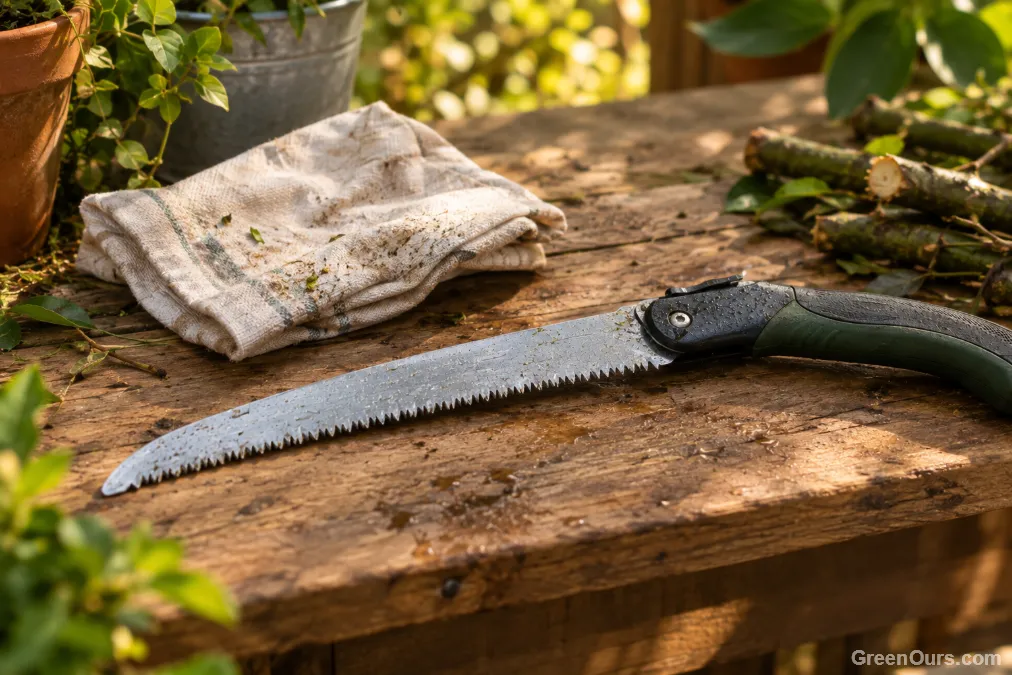
Wipe the blade dry after every use. Sap and moisture left on the steel are what start rust pitting in the first place, and pitting is the one kind of damage that never sharpens out. Avoid twisting the saw to free a binding cut — that flexes individual teeth out of their set and creates the exact wobble that ends a blade's life early. Store it in its sheath or a dedicated slot rather than loose in a tool bucket, where it'll knock against pruners and trowels and chip teeth one at a time. If resin builds up along the blade, wipe it down with a rag and a little mineral spirits — buildup adds friction that feels a lot like a dull blade, even when the teeth underneath are still fine.
Read our latest tools and equipment guides
A pruning saw blade doesn't fail all at once. It gives six separate warnings first, and by the time you're forcing every cut, you've likely already worked past three or four of them. Replace it before the next branch, not after — your arm, and the tree on the other end of the cut, will both recover faster for it.