
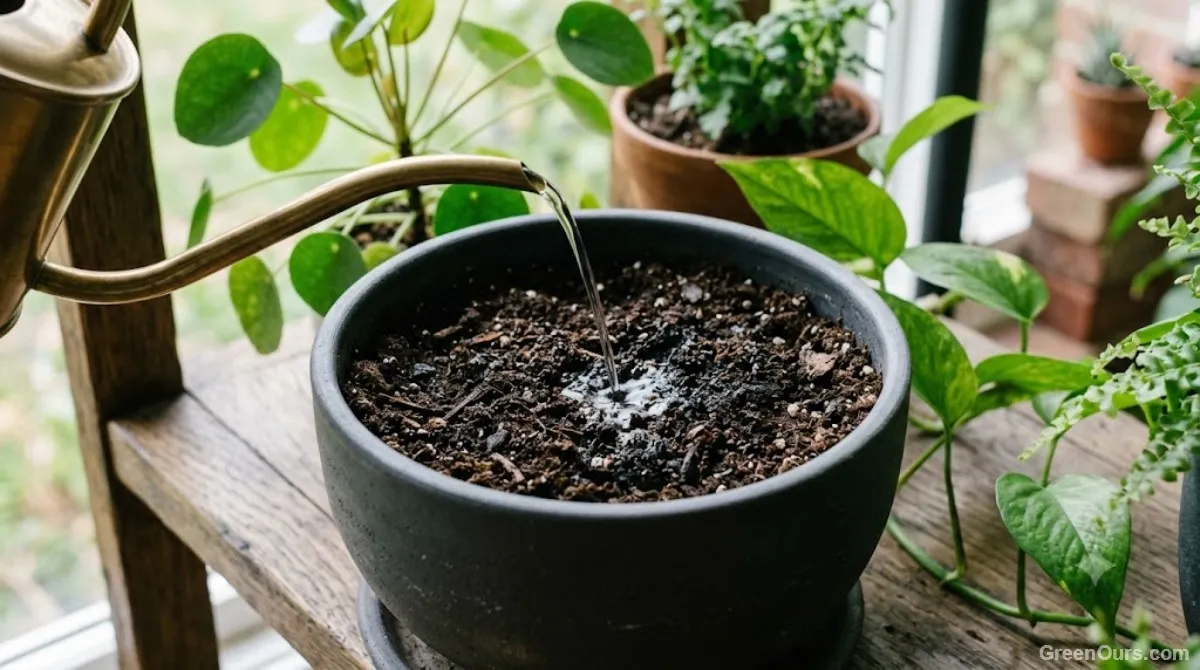
Why the Can Matters More Than the Watering Schedule
Most plant care guides focus on frequency: water once a week, twice a week, when the top inch is dry. That advice assumes consistent delivery. In practice, it rarely is.
The same "one watering" can mean 200ml through a controlled spout or 600ml through a wide-mouth pour in the same 10 seconds. Root systems don't respond to your intention. They respond to the volume and speed of water that actually reaches the soil.
A poorly designed can turns every watering session into a variable you can't track. A well-designed one turns it into a repeatable, measurable action — and repeatability is what lets you catch problems early instead of guessing after the leaves start yellowing.
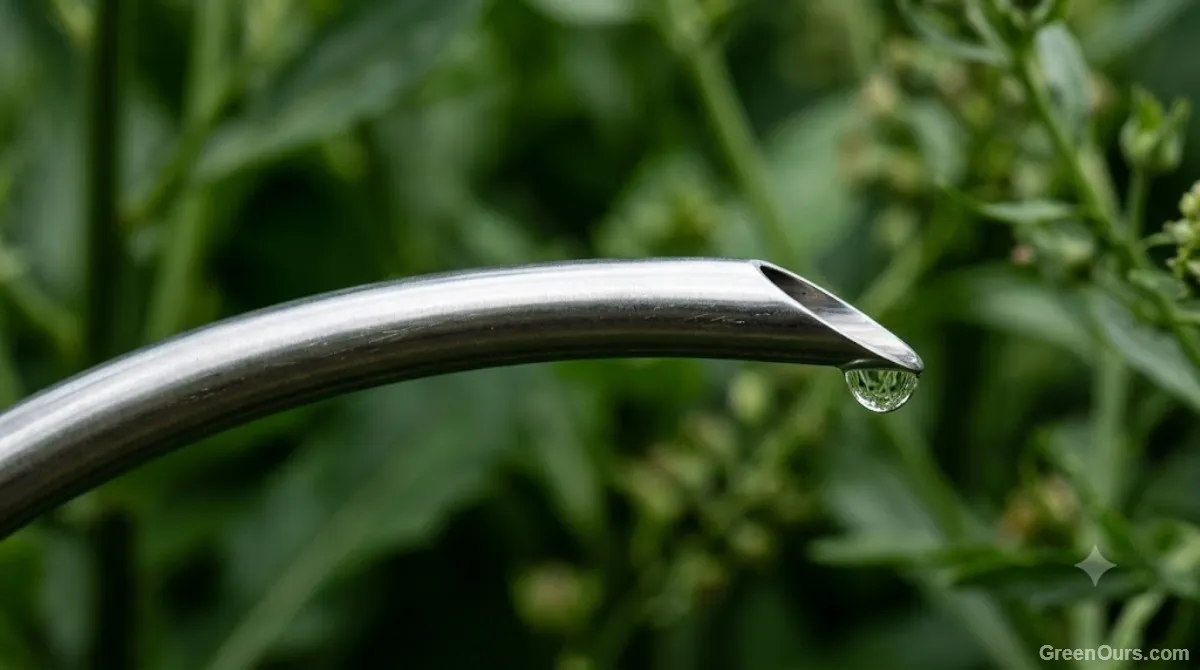
Test pour control before you buy. Fill the can with water and tilt it slowly over a sink. If the flow surges the moment you pass a 30-degree angle, the spout is too wide for precision watering.
Spout Design: The Feature Most Buying Guides Skip
Spout shape determines flow rate, and flow rate determines whether water penetrates soil evenly or channels straight through the gap between the root ball and the pot wall.
Long, Narrow Spouts
A spout with a small diameter — 8mm to 12mm — restricts flow to a thin, steady stream. This gives you time to redirect the can as soil absorbs water, and it reaches under dense foliage without soaking leaves. Long spouts, 12 inches or more, also let you water plants set back on shelves without lifting anything out of the way.
Wide, Short Spouts
Wide spouts move more water per second — often two to three times the output of a narrow spout at the same tilt angle. That's useful for large floor plants with wide root zones, but it's the wrong tool for a 4-inch succulent pot. Match spout width to pot size, not to your whole collection.
Capacity and Balance: Matching the Can to Your Collection
Capacity decides how often you refill. Balance decides how much control you have while pouring.
A 1-liter can suits a small windowsill collection — three to six pots under 6 inches. A 2-liter can covers a mixed collection of 10 to 15 plants without constant refill trips. Beyond 2.5 liters, most cans become too heavy to tilt precisely once full, and that's where overwatering accidents happen: your wrist compensates for the weight instead of the pour.
Check the handle position relative to the body. A handle mounted directly over the center of gravity keeps the can level as you pour, so the flow rate stays consistent from full to empty. A handle set too far back forces your wrist to overcorrect, and that's when the pour angle jumps and dumps excess water in a single motion.
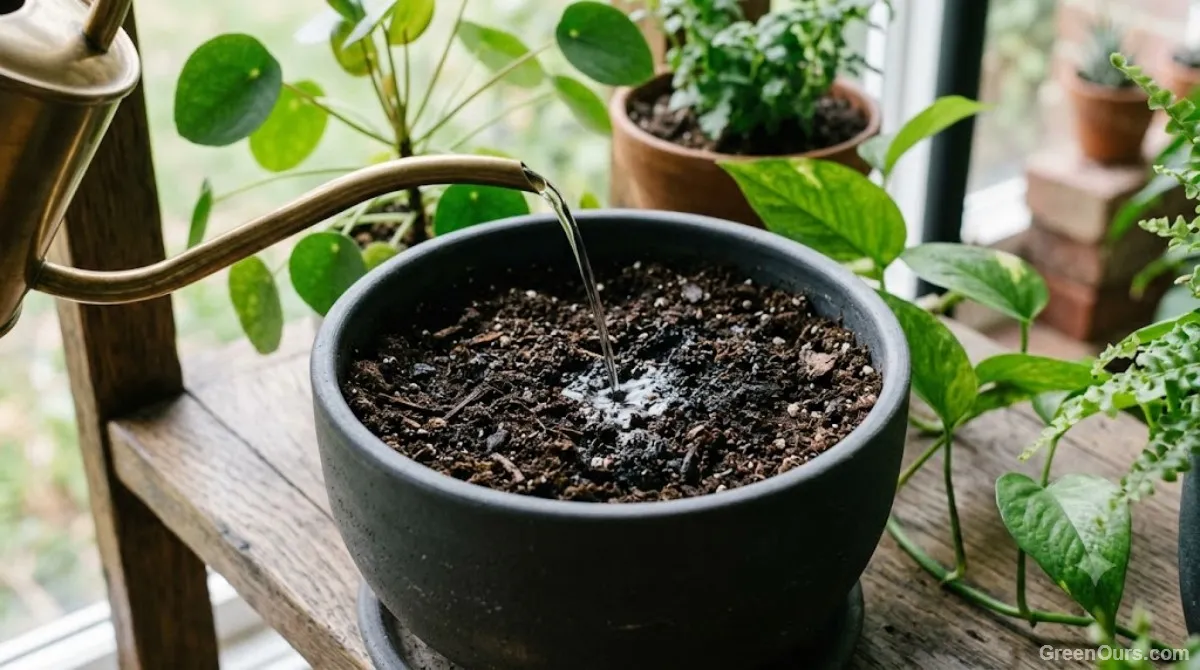
Materials and Build Quality
Material affects weight distribution, durability, and how the can performs after months of regular use.
Metal Cans
Galvanized steel and powder-coated aluminum hold their shape and resist the dents that come from being knocked around a plant shelf. They're heavier per liter than plastic, which shifts the balance point once filled — factor this into the capacity you choose. Metal also won't develop the algae film that can build up inside plastic cans left damp between waterings.
Plastic and Resin Cans
Lightweight and often cheaper, but spout seams can develop weak points that alter flow over time. Check for a single-molded spout rather than a glued or screwed attachment. Attachment points are the first thing to degrade, and a degraded seam is the first thing to throw off your pour control without you noticing.
Four Features Worth Paying For
- A tapered spout tip. Reduces drip-back after you lift the can away from the pot, which keeps water off leaves, shelves, and windowsills.
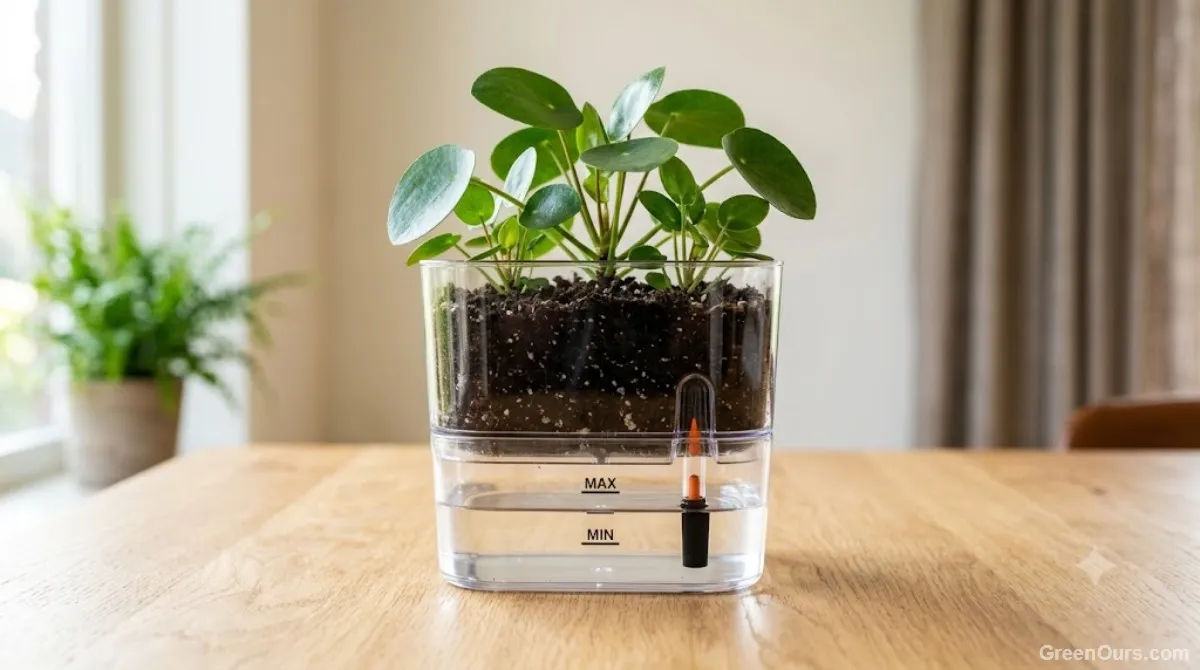
- A see-through body or fill line markings. Lets you measure output instead of guessing, which matters if you're tracking specific volumes for different pot sizes.
- A rounded, non-slip handle. Reduces wrist fatigue on a full can and keeps your grip steady through the entire pour, especially past the halfway point.
- A removable rose or sprinkler head. Useful for seed trays and top-watering seedlings, but skip it for mature houseplants — a rose disperses water too widely for targeted root-zone watering.
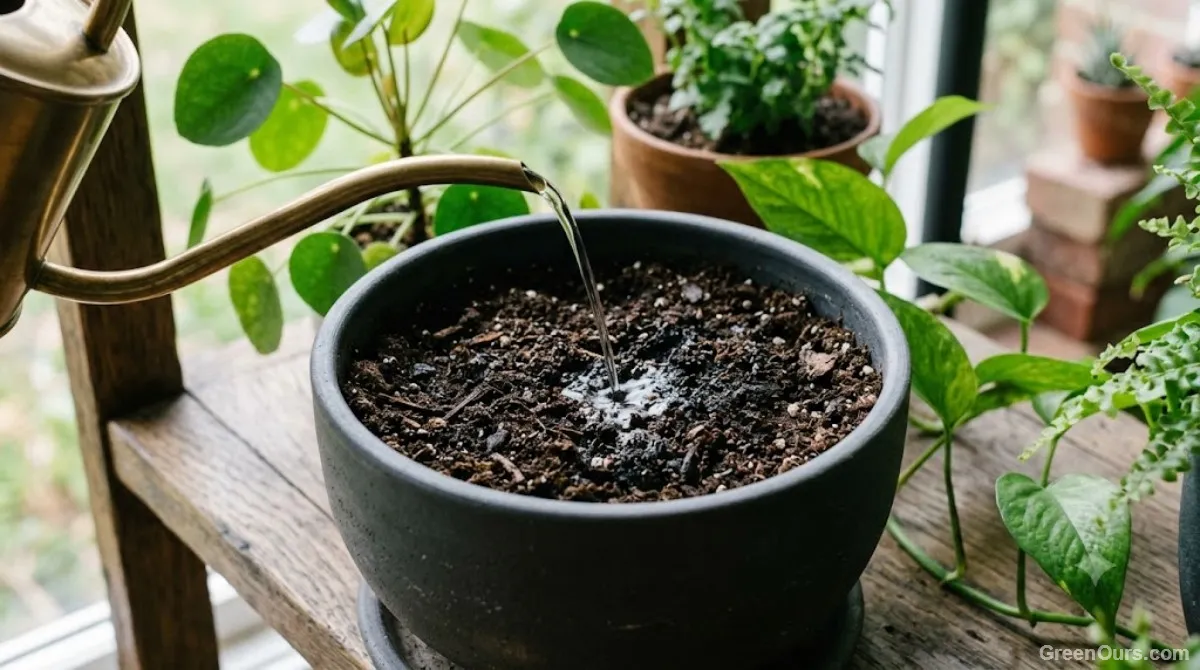
How Poor Pour Control Leads to Overwatering
Overwatering isn't always about how much water a plant gets over a week. It's often about how much lands in a single pour.
A wide-spout can might deliver a plant's entire weekly water requirement in eight seconds, saturating the root zone faster than the soil can distribute it. Water pools at the bottom of the pot, oxygen gets pushed out of the remaining pore space, and roots sit in standing moisture until the excess drains or evaporates — a process that can take 24 to 48 hours in a pot without adequate drainage holes.
A controlled, narrow pour spreads that same volume over 30 to 45 seconds. Soil has time to absorb water as it's applied, so you're less likely to overshoot what the pot can actually hold before drainage kicks in.
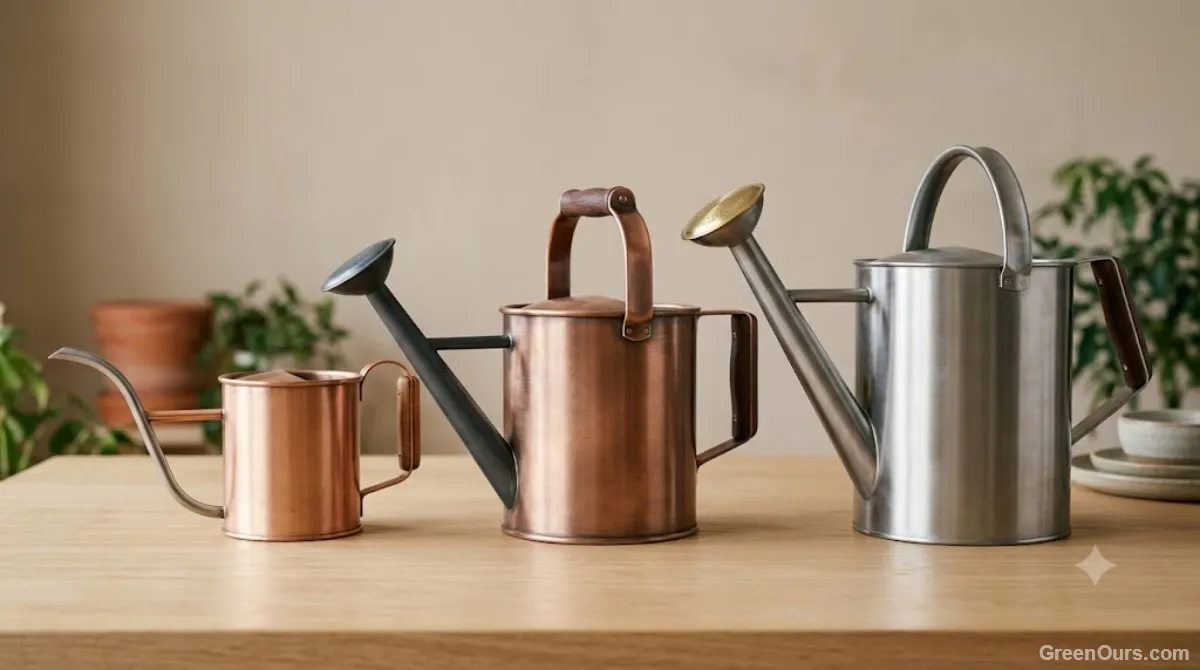
Match the can to your pots, not the other way around.
The watering can isn't a decorative accessory. It's the interface between you and every plant's root zone, and its design decides how much margin for error you actually have. Choose the spout and balance that match your pots, and the rest of your watering routine gets easier to get right.