
Why Cucumbers Love to Climb
Vining cucumbers send out tendrils looking for anything to grab onto. When you give them a trellis, you're working with their instincts instead of against them.
The biggest benefit is airflow. Cucumber leaves can be prone to powdery mildew and other fungal issues, and those problems tend to favor still, humid conditions close to the soil. Lifting the vines up and off the ground lets air move around the leaves, which can reduce how long they stay damp and may lower the risk of some fungal diseases. It won't make plants immune, but it stacks the odds in your favor.
There's a space advantage too. A sprawling cucumber vine can easily spread 6 feet (1.8 m) across a garden bed, while the same plant trained vertically might need only 18 inches (45 cm) or so of ground space. That's a real win in a small backyard or a raised bed shared with other crops.
The good news is that cucumbers don't need to be forced onto a trellis the way some plants do. Their tendrils will actively seek out the structure once it's in place, so your job is mostly just guiding them in the right direction early on.
Which Cucumbers Work Best on a Trellis
Not every cucumber climbs the same way, so it's worth checking the seed packet before you build anything. Growth habit and fruit size vary a lot between varieties, and both affect what kind of support you'll need.
- Vining varieties: long-vined types are the best candidates, since climbing is what they do naturally.
- Compact or bush types: shorter vines can suit a smaller trellis or a container, and they're useful when space is limited.
- Large-fruited slicers: heavier fruit puts more strain on the vine and the structure, so plan on a sturdier trellis.
- Small-fruited types: lighter cucumbers are generally easier on a lightweight trellis.
Choosing a Trellis That Fits Your Space
You don't need anything fancy here, and you definitely don't need to buy the most expensive option at the garden center. What matters is sturdiness, height, and something the tendrils can actually grip.
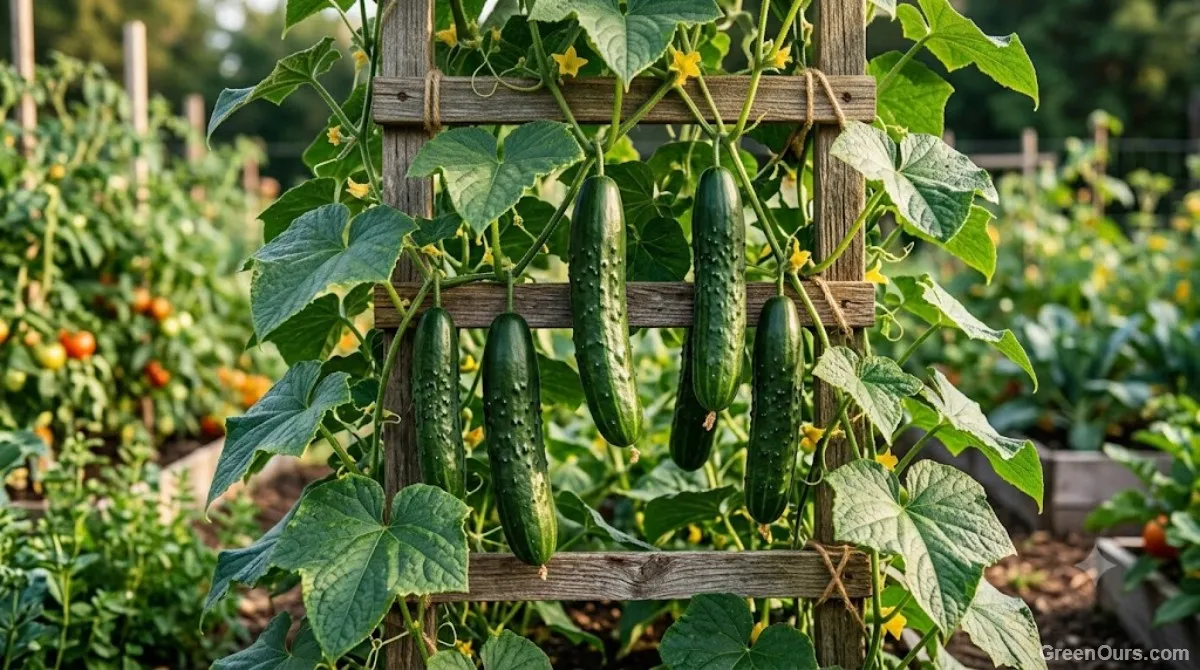
An A-frame trellis works well for cucumbers because it creates a tunnel-like structure that's easy to harvest from both sides. Lean two cattle panels or wooden lattice frames together in a peak, and you've got a stable support that can hold up under the weight of a full vine.
A flat panel against a fence or wall is another solid choice, especially if space is tight. Cattle panel, welded wire fencing, or even a simple grid of garden twine strung between stakes will all give tendrils something to latch onto.
Whichever you choose, look for these traits:
- Sturdy enough to handle wind and the weight of a full vine, with posts anchored firmly in the ground
- At least 5 to 6 feet (1.5 to 1.8 m) tall, or taller for very vigorous varieties
- Thin supports or mesh that tendrils can wrap around
- Openings wide enough to reach through when you're picking fruit
- Positioned so you can reach the fruit from at least one side
Height matters more than it looks. Cucumber vines grow fast once they get going, and a trellis that's too short means watching vines flop over the top with nowhere left to go.
Getting Started: Planting and Training
Planting Near the Trellis
Set your trellis up before you plant, or at the very least before your seedlings have more than a couple of true leaves. Follow the spacing on your variety's seed packet. When you're growing vertically, many cucumbers can sit closer together than sprawling plants (around 12 inches / 30 cm is a common starting point), but avoid crowding the foliage.
Tying the First Vines
Tendrils will eventually grab the trellis on their own, but young vines often need a little encouragement. Once a vine reaches 6 to 8 inches (15 to 20 cm) tall, gently guide it toward the nearest support and loosely tie it in place with soft garden twine or plant clips. Loose is the key word here. You're not securing the plant permanently, just pointing it in the right direction so its own tendrils can take over.
Keeping Vines on Track
Check your plants every few days early in the season. If a vine has wandered off in its own direction, gently redirect it toward the trellis rather than pulling it back forcefully, which can snap the tendrils or bruise the stem.
Watering and Feeding Vertical Cucumbers
Because a trellised plant may have more foliage exposed to sun and moving air, its water needs can vary from a sprawling plant. Check the soil regularly… Water deeply whenever the top inch (2.5 cm) of soil starts to feel dry, adjusting for rainfall, temperature, soil type, and container size. The goal is consistently moist soil, not soggy or bone dry. During hot weather or heavy fruiting, cucumbers may need water more often.
Try to keep water off the leaves when you can. Overhead watering can splash soil-borne fungal spores up onto lower leaves, which somewhat defeats the purpose of improving airflow in the first place. A soaker hose or a watering can with a long spout aimed at the soil line works well.
Feed with a balanced vegetable fertilizer once plants start flowering, following the label directions, then again about a month later if they're still fruiting actively. Consistent nutrition supports steady growth and production once plants are flowering and setting fruit, especially when they're growing vigorously.
Harvesting Cucumbers Regularly
This is where trellising pays off. Hanging fruit is easy to spot, so you can pick cucumbers at the size your variety recommends. Check the vines often, because fruit can seem to double in size over a weekend.
Use scissors or pruning snips to cut the stem rather than pulling hard on the vine, which can damage the plant. Picking regularly also matters because fruit left to over-mature can slow the plant's production of new cucumbers.
Mistakes That Trip Up New Trellis Growers
Setting the trellis up too late is a common one. If you wait until vines are already sprawling, you'll spend far more time untangling and redirecting than you would have if the structure had been in place from day one.
Overcrowding is another. It's tempting to pack in extra plants when you know they're growing up instead of out, but each cucumber plant still needs airflow and root space. Crowding them along the trellis just recreates the same humidity problems you were trying to avoid.
Tying too tightly can also cause trouble. As stems thicken through the season, twine that was fine early on can start cutting into the plant later. Check your ties periodically and loosen or replace them as the vines mature.
Finally, don't ignore heavy fruit. Some varieties, especially larger slicing types, can weigh enough to strain a thin attachment point. If you notice a section sagging under fruit, a simple sling made from soft fabric can take the pressure off without harming the plant.
Where to Start
Once your trellis is up and your vines start climbing, you may wonder why you ever let cucumbers sprawl across the ground. The plants tend to stay healthier, the harvest is easier on your back, and there's something genuinely satisfying about walking down a row of cucumbers hanging clean and ready to pick.
Ready to grow more vegetables that thrive with a little structure? Explore more beginner vegetable growing guides.