
Why Garden Pests Aren't the Enemy You Think They Are
It's tempting to see every insect on your vegetables as a threat, but a healthy garden is never going to be completely bug-free — and that's actually a good sign. A few aphids or a nibbled leaf here and there usually means your garden is part of a living ecosystem, not that something has gone wrong.
The goal with natural pest management isn't zero insects. It's balance: keeping populations low enough that your harvest isn't seriously affected, while letting the garden's own checks and balances do a lot of the work for you.
A garden with some pest activity is often healthier than one that looks untouched — it means there's food for the beneficial insects that will eventually help control those pests for you.
Getting to Know the Culprits in Your Vegetable Patch
Before you treat anything, it helps to know exactly who you're dealing with. Different pests call for different responses, and misidentifying the problem is one of the most common reasons a treatment doesn't work.
Aphids
These tiny, soft-bodied insects cluster on new growth and the undersides of leaves, often in shades of green, black, or yellow. You'll notice curled or yellowing leaves and sometimes a sticky residue called honeydew.
Caterpillars
Look for ragged, irregular holes in leaves, especially on brassicas like cabbage and kale. You may spot the caterpillars themselves, or small dark droppings on the leaves below the damage.
Slugs and Snails
These show up mostly at night or after rain, leaving smooth-edged holes and telltale silvery slime trails across leaves and soil.
Whiteflies
Brush a leaf and a small cloud of tiny white insects lifts off — that's your sign. They cluster on the undersides of leaves, especially on tomatoes and squash, and can leave the same sticky honeydew residue as aphids.
Flea Beetles
Tiny, dark, and quick to jump when disturbed, flea beetles leave a scatter of small round holes that make leaves look like they've been hit with buckshot. Seedlings are especially vulnerable.
Cutworms
If a young seedling is simply gone one morning, severed right at the soil line, a cutworm is usually the culprit. They hide in the soil by day and feed at night, so you're more likely to see the damage than the pest itself.
Spider mites are worth watching for too, especially in hot, dry weather — look for fine webbing and stippled, dusty-looking leaves once conditions turn warm.
Which Pest, Which First Step?
Once you've identified what you're dealing with, this table gives you a reasonable starting point before you move to anything more involved.
| Pest | What You'll Notice | Try First | If It Continues |
|---|---|---|---|
| Aphids | Curled leaves, clusters on new growth | Strong spray of water | Insecticidal soap |
| Caterpillars | Ragged holes, dark droppings | Handpicking | Row covers or a targeted biological treatment |
| Slugs & Snails | Smooth holes, slime trails | Night inspection and removal | Physical barriers |
| Whiteflies | Tiny insects that scatter when disturbed | Inspect leaf undersides | Insecticidal soap or removing affected leaves |
| Flea Beetles | Small round "shot holes" in leaves | Row covers on seedlings | Reassess if seedlings are being lost faster than they establish |
| Cutworms | Seedlings severed at the soil line | Collars around stems | Evening soil check to remove them by hand |
Prevention Starts Before the Pests Arrive
The most effective pest control happens before you ever see a problem. A garden that's set up thoughtfully from the start needs far less intervention later.
Companion Planting That Actually Works
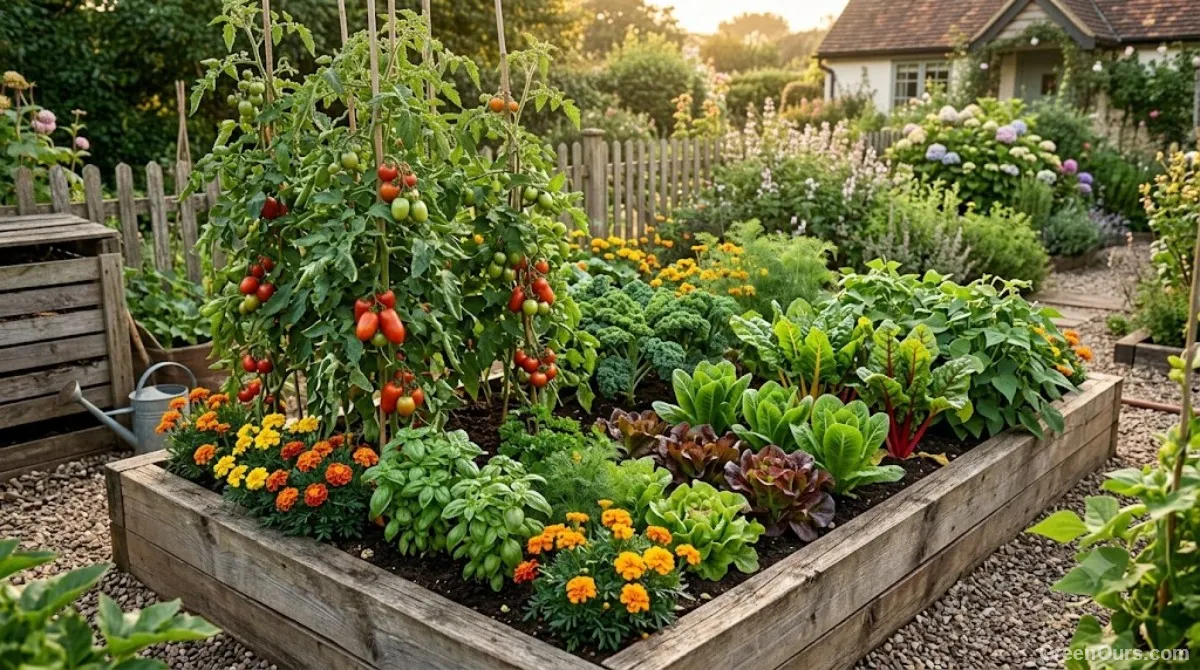
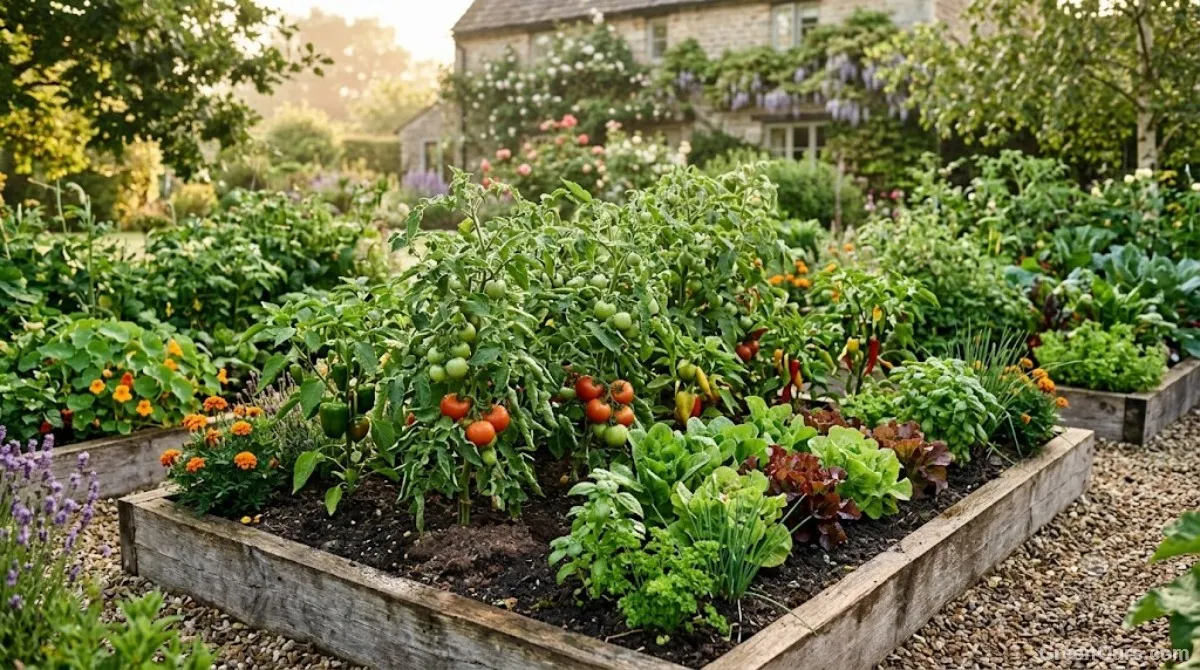
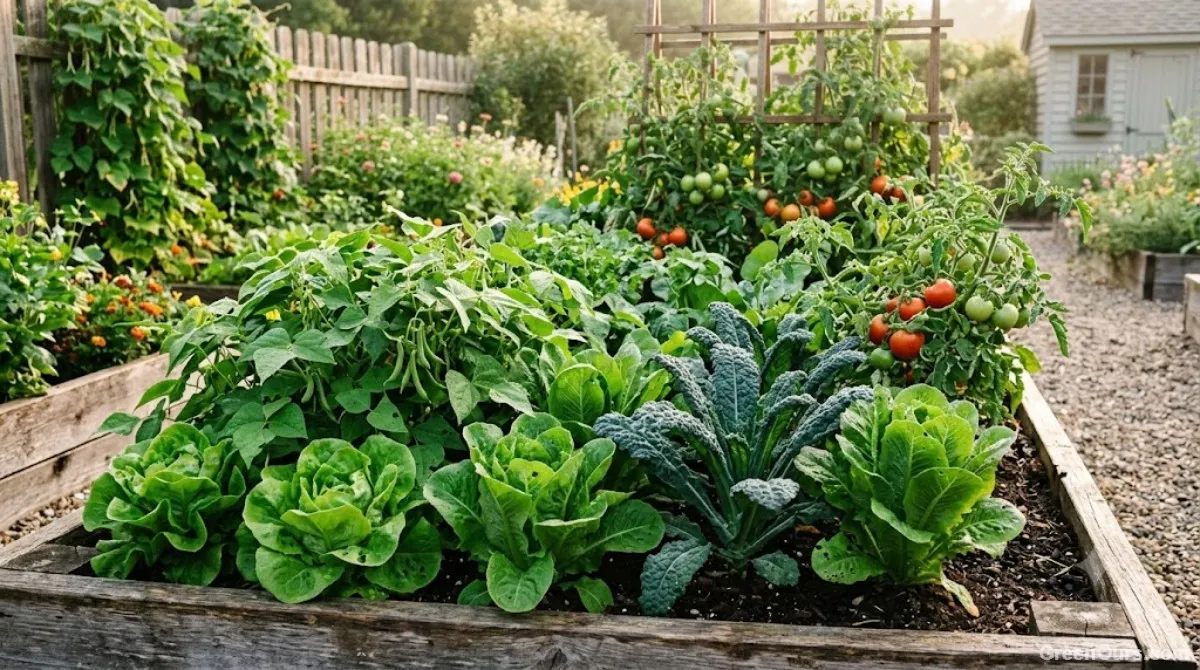
Some gardeners plant marigolds, nasturtiums, and strong-scented herbs like basil and dill alongside their vegetables as part of a broader pest-management approach. The evidence on companion planting varies by pest, plant, and growing conditions, so think of it as one layer rather than a guaranteed fix — many gardeners still find nasturtiums useful as a sacrificial crop that draws aphids away from beans and squash, and a few marigolds tucked between tomato plants rarely hurts.
Encouraging the Helpers
Ladybugs and lacewings prey on aphids and other soft-bodied pests, while many parasitic wasps help control caterpillars or their eggs. Encouraging these beneficial insects can help keep pest populations in check before they become a serious problem. Attract them by planting small-flowered plants like alyssum, dill, and yarrow near your vegetables, and avoid broad-spectrum pesticides that would kill these helpful insects along with the pests you're targeting.
Keep Plants Growing Steadily
A stressed plant is a more attractive target. Inconsistent watering weakens a plant's natural defenses, which is part of why aphids and spider mites often show up hardest during a hot, dry spell or right after a plant's been allowed to wilt.
Gentle Treatments for When Pests Show Up Anyway
Even with good prevention, you'll likely need to step in sometimes. These treatments target the pest without harming the rest of your garden.
Neem Oil, Done Right
Neem oil can help manage soft-bodied pests like aphids, but it's not a universal fix, and it's easy to use in a way that does more harm than good. Always follow the product label instead of assuming one neem formulation behaves like another. Apply in the early morning or evening, never in direct midday sun or heat, which can scorch leaves. Avoid spraying open flowers or anywhere pollinators are actively foraging, and test a new product on one or two leaves first before treating the whole plant.
Insecticidal Soap for Aphids and Whiteflies
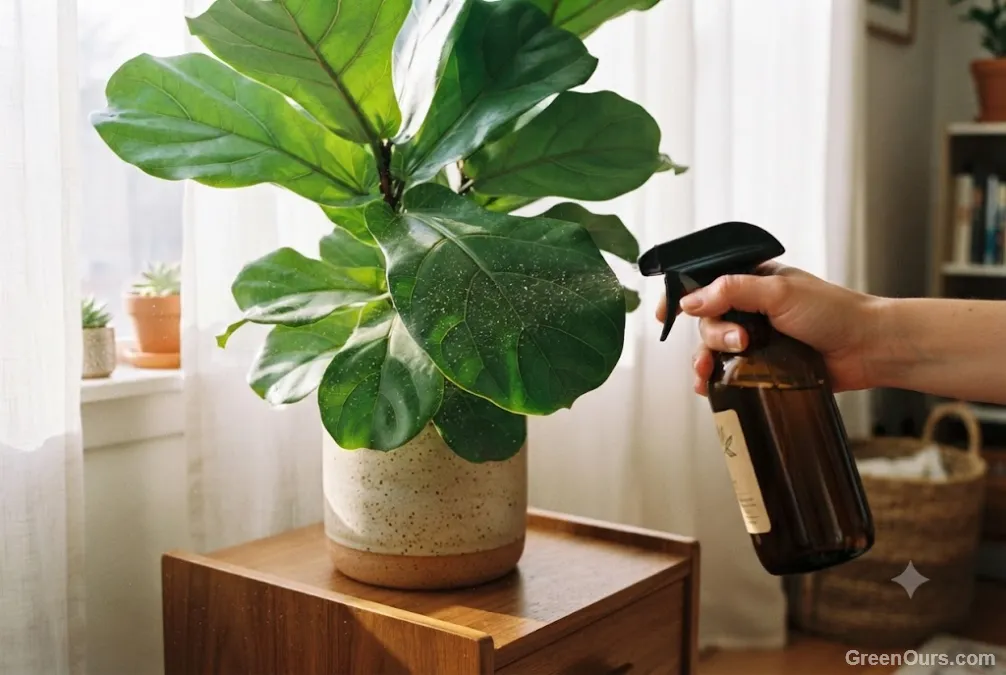
A commercial insecticidal soap labeled for plants is a safer bet than an improvised dish soap mix — ordinary dish soap isn't formulated for foliage and can strip a plant's protective waxy coating, leading to leaf burn. Spray directly onto the insects, focusing on leaf undersides, and repeat every few days until the population drops.
Barriers for Slugs and Caterpillars
For caterpillars, a quick daily check and handpicking is often all you need on a small vegetable patch. For slugs, physical barriers around vulnerable plants can help, though effectiveness varies by pest and conditions and none of them work as a dependable standalone fix. Diatomaceous earth is one option worth trying, but it only works while dry and loses its effect after rain or watering, so it needs reapplying often to stay useful.
When Natural Control Isn't Enough
Most vegetable garden pests respond to the gentle approach above, but not every situation resolves that way. If a plant has lost most of its leaves, is wilting despite adequate water, or shows spreading signs of disease alongside the pest damage, it may be past the point where treatment makes sense.
In that case, removing the badly affected plant is often the better call — it protects the rest of your bed from a pest or disease that's already established, and it's not a failure on your part. If you've tried the gentle options here and a specific pest keeps coming back despite your best efforts, it's worth troubleshooting what might be going wrong before reaching for something stronger.
Where to Start When You Spot a Problem
- Identify the pest using the table above — treatment only works when it matches the actual problem.
- Assess the damage. A few holes or a handful of aphids rarely need more than watching.
- Start with the gentlest option that fits — handpicking, a water spray, or a barrier — before reaching for neem oil or insecticidal soap.
- Give it a few days, then recheck. Most gentle treatments need repeating rather than a single application.
- Keep pollinators and beneficial insects in mind at every step — spray in the evening, avoid open flowers, and skip broad-spectrum products.
If You Only Do One Thing
Check your plants every few days rather than waiting for a problem to become obvious. Early aphid clusters and the first few caterpillar holes are far easier to manage than an established infestation.
Building a Garden That Bounces Back
The vegetable gardeners who deal with pests most calmly aren't the ones with a perfect, untouched garden — they're the ones who've built in enough diversity and resilience that no single pest can do lasting damage. A mix of plant types, a welcoming spot for beneficial insects, and healthy soil to start from will handle far more than any single spray ever could.
Give it a season, and you'll likely find yourself reaching for treatments less and less — not because the pests disappeared, but because your garden learned to handle them on its own.
Ready to build out your pest-resistant garden plan? Explore more beginner garden guides.