
What Diatomaceous Earth Actually Is
Only one type belongs anywhere near your plants: food-grade DE. Pool-grade diatomaceous earth is heat-treated and contains high levels of crystalline silica, which is hazardous to inhale and unsafe for garden use. Food-grade DE is untreated, made of amorphous silica, and safe to handle with basic precautions. Check the bag. If it doesn't say "food grade" explicitly, don't use it on plants.
The powder itself is inert. It has no smell, no active ingredient in the chemical sense, and no expiration date as long as it stays dry. That last point matters more than any other fact in this article.
How It Kills Pests
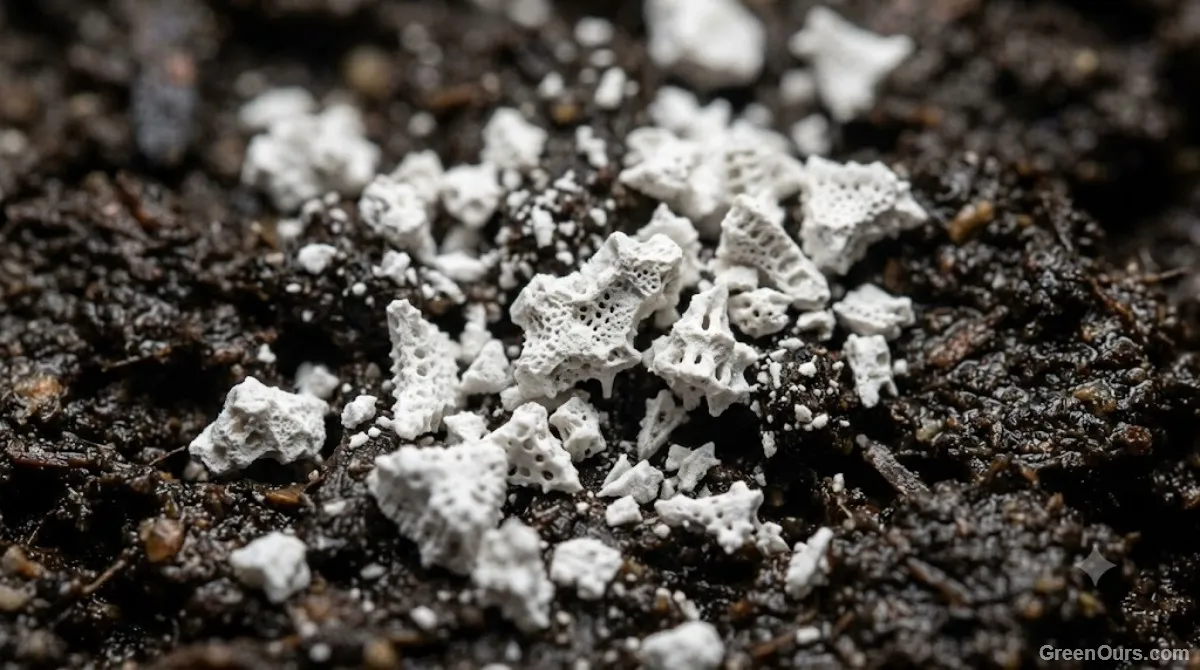
Each diatom particle is coated in microscopic sharp edges, invisible to the naked eye but devastating to an insect's exoskeleton. When a crawling pest moves across treated soil or a treated surface, the particles scratch through the waxy outer layer that keeps its body from losing moisture. Once that layer is compromised, the insect dehydrates and dies, typically within 24 to 48 hours.
DE has zero effect once it gets wet. Water causes the particles to clump and lose their abrasive edges. Reapply after every watering, rainfall, or humidity spike that leaves the surface visibly damp.
Which Pests It Controls — and Which It Doesn't
Crawling Insects It Stops
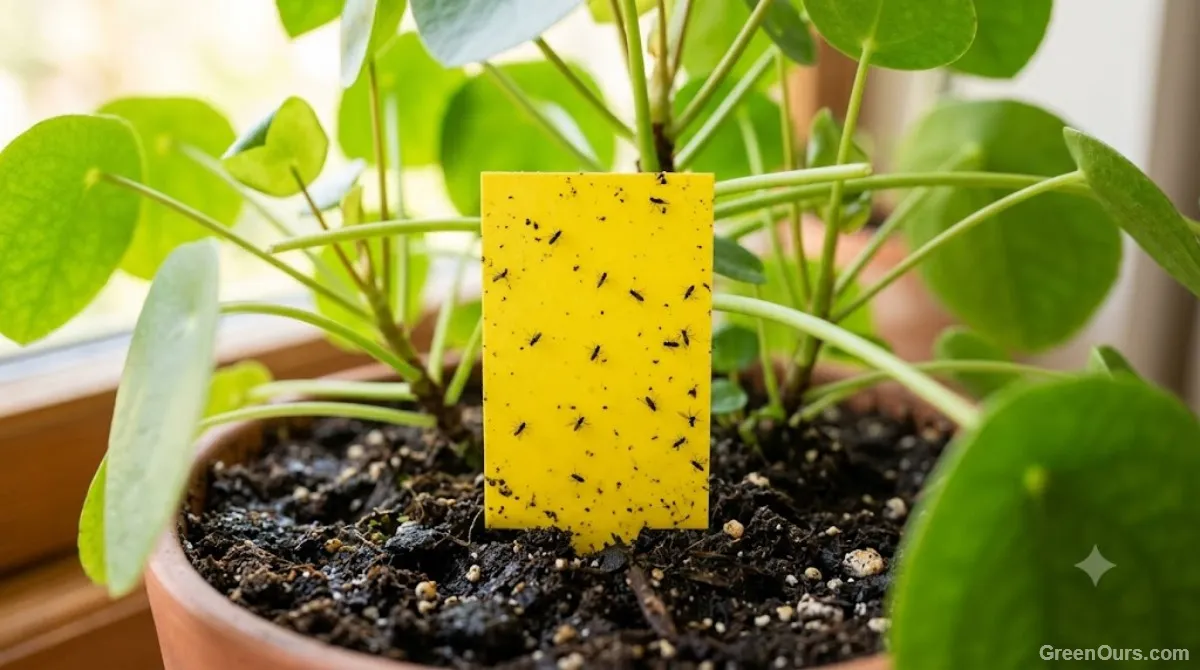
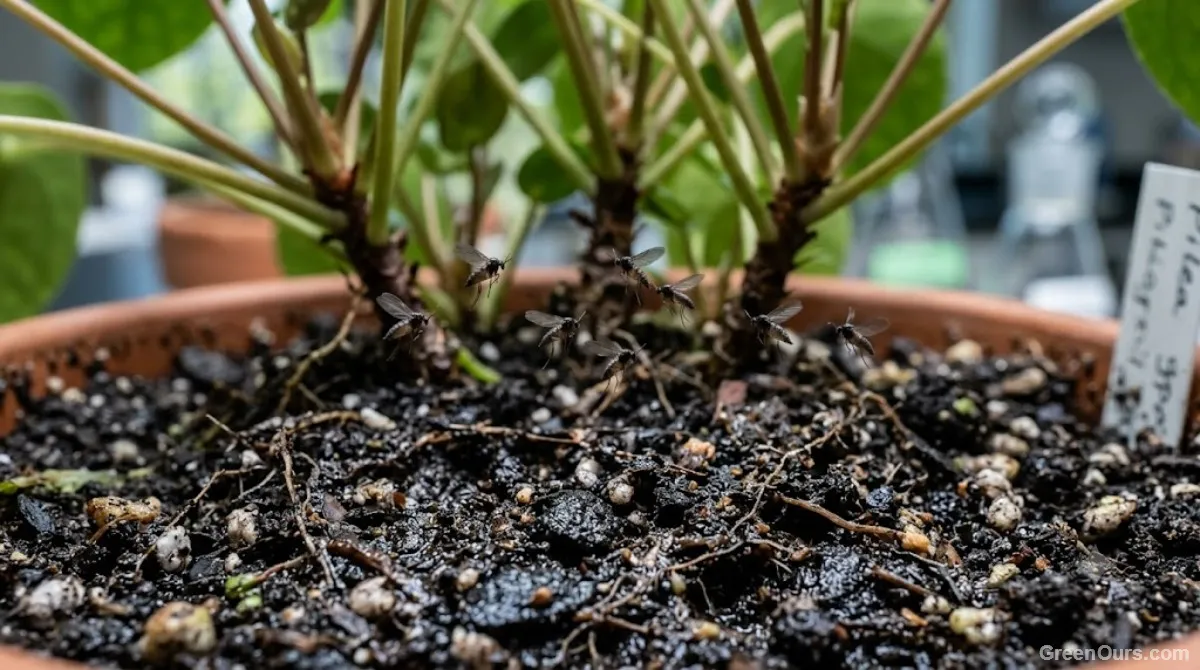
DE works against pests that physically walk across a treated surface: ants, earwigs, pill bugs, slugs, crawling beetle larvae, and fungus gnat larvae in the top layer of soil. Apply a thin layer to the soil surface and around the pot's rim, and reapply every 3 to 5 days until activity stops.
Pests It Won't Touch
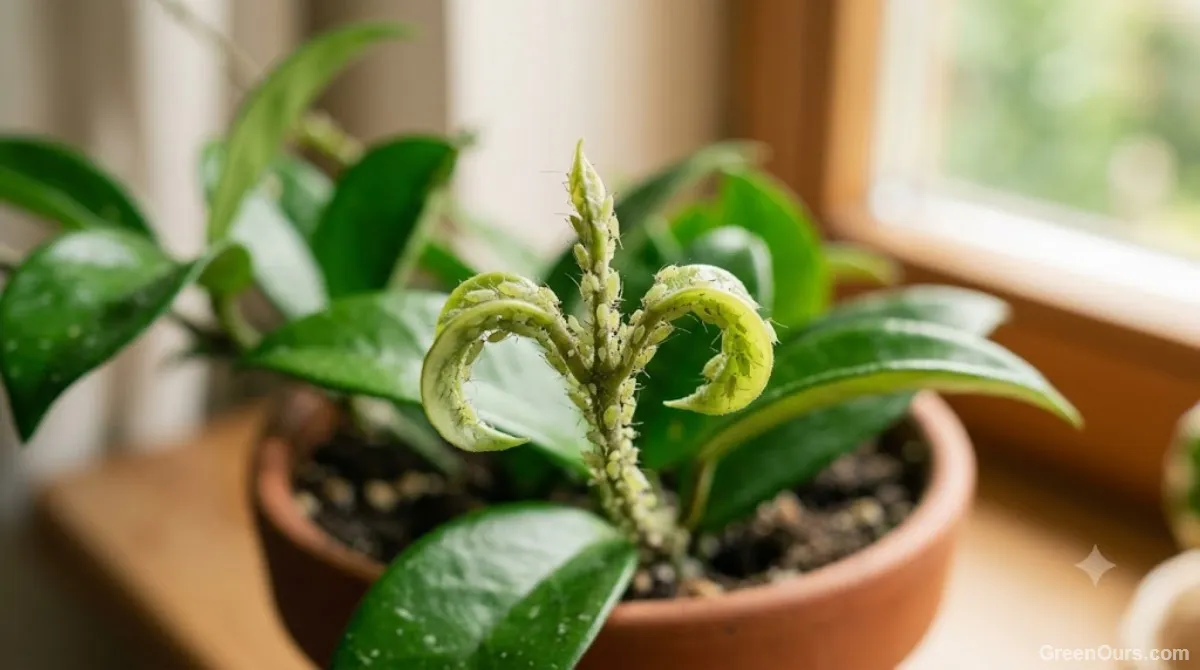
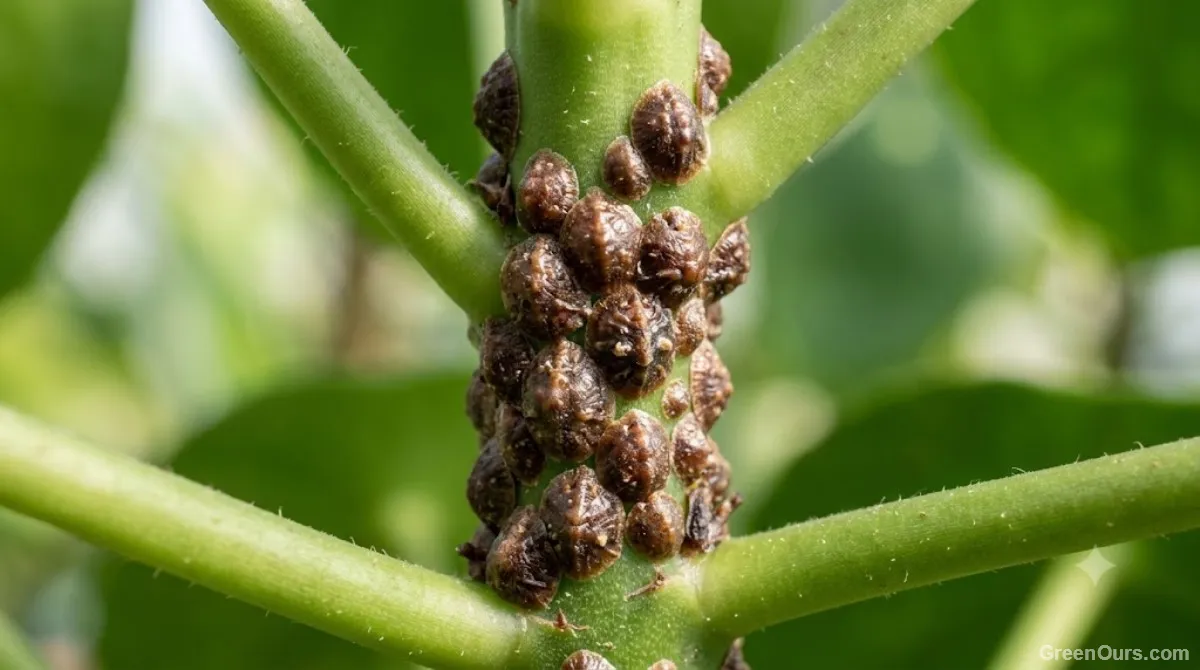
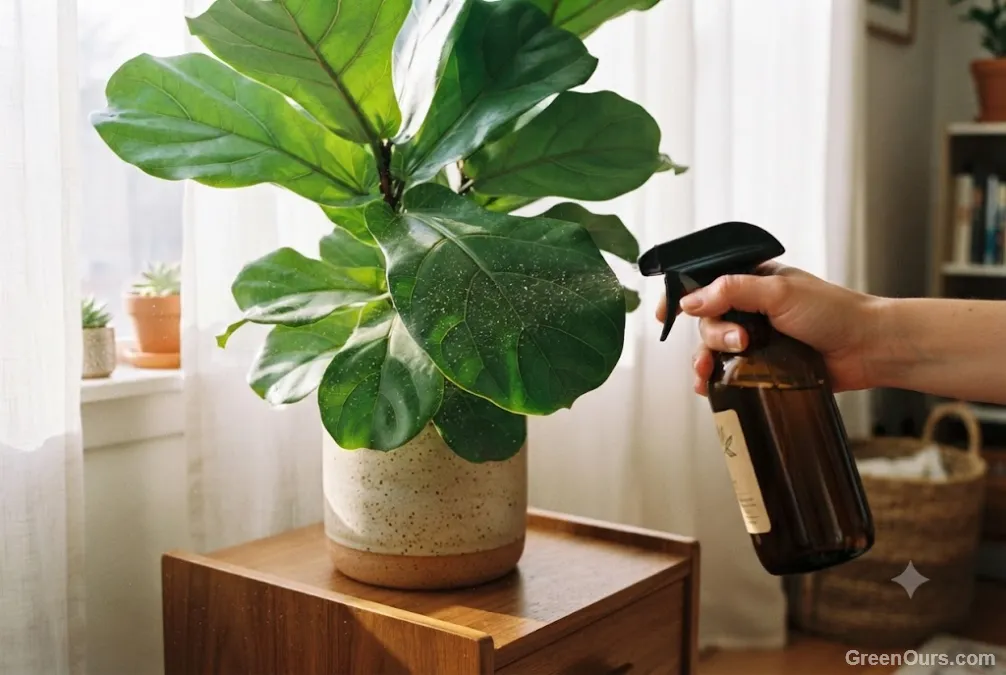
DE does nothing for aphids, spider mites, whiteflies, or thrips feeding on the underside of leaves — those pests rarely make contact with a dusted surface long enough for the mechanism to work. It's also useless against pests already inside plant tissue, like leaf miners or vine borers. Don't rely on it as a standalone treatment for a mixed infestation; pair it with a targeted insecticidal soap for sap-feeding insects.
How to Apply DE Correctly
- Wait for a dry day. Never apply to wet soil or damp foliage — the powder needs to stay dry to stay effective.
- Wear a dust mask. Food-grade DE is safe for plants, but the fine particles can still irritate lungs during application.
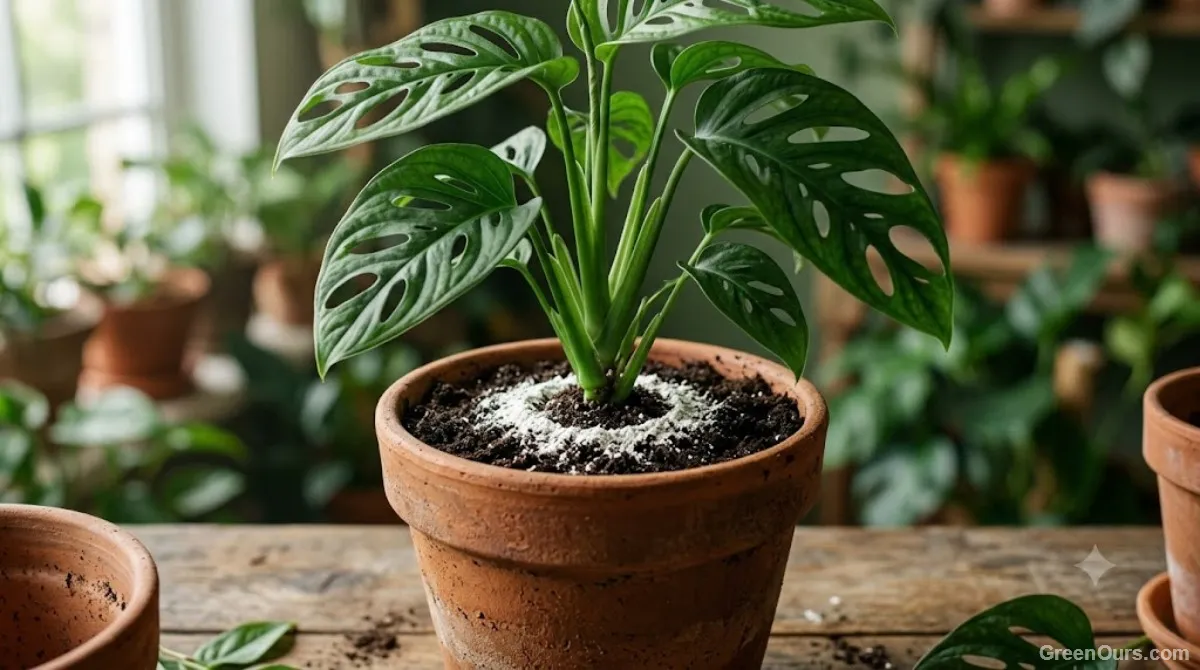
- Dust a thin, even layer directly onto the soil surface, focusing on the top inch where gnat larvae live and around the base of the stem where crawling pests enter.
- For ant trails, apply a continuous line along their path — a broken line lets them route around it.
- Avoid dusting flowers or open blooms. Save that detail for the next section.
- Check the treated area every 2 to 3 days. Reapply immediately after any watering or rain.
Used this way, diatomaceous earth for plant pests remains effective while limiting unnecessary exposure to beneficial insects.
Protecting Pollinators and Beneficial Insects
DE doesn't distinguish between a fungus gnat and a honeybee. The same mechanical damage that kills pests will harm bees, ladybugs, and other beneficial insects on contact. Keep application to soil and stem bases, never on open flowers, and never during active bloom on plants that pollinators are visiting. If a plant is flowering, treat the soil in the early morning or evening when pollinator activity is lowest, and brush any stray powder off petals before bees arrive for the day.
Common Application Mistakes
Applying too thick a layer wastes product without improving results — a light, even dusting is all the mechanism needs. Spraying DE mixed with water defeats the purpose entirely; keep it dry, always. Treating only the pot's surface while ignoring the saucer and the area directly beneath it leaves an untreated entry point for crawling pests. And skipping reapplication after watering is the single most common reason gardeners conclude DE "doesn't work" — it's not failing, it's just wet.
What to Do Next
Diatomaceous earth isn't a cure-all, and it was never meant to be one. Used correctly, on the right pests, kept dry, and kept away from blooms, it's one of the most reliable tools available for crawling insect control without introducing a single chemical to your growing space.
Read our latest pest and disease diagnostics for more plant problems solved.