
Neem Oil Isn't Broken — Your Application Usually Is
Neem oil works through azadirachtin, a compound that disrupts insect feeding and reproduction on contact and through ingestion. It isn't a fast knockdown pesticide. It needs repeated exposure over 10 to 14 days to break a pest's reproductive cycle.
When a spray looks like it's failing, the product itself is rarely the issue. The failure sits in one of eight places: how much you're using, when you're spraying, where you're spraying, what you're spraying it on, whether it's mixed correctly, how often you reapply, how old the bottle is, or whether you're facing a pest neem was never built to handle.
Reason 1: Your Dilution Ratio Is Off
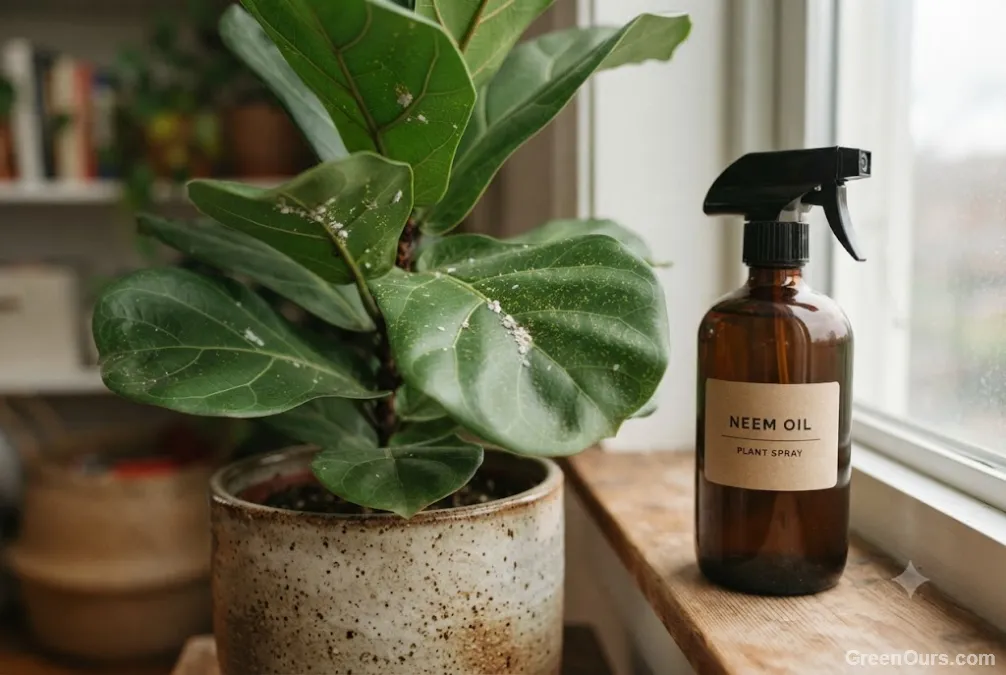
Most cold-pressed neem oil concentrates list a working ratio of 5 ml — about 1 teaspoon — per liter of water, delivering roughly 0.5% to 1% azadirachtin content at the leaf surface. Readers eyeballing "a splash" instead of measuring end up anywhere from 0.1% to 3%, either too weak to affect the pest or strong enough to scorch foliage.
Measure with a syringe or marked spoon, not a free pour. Under-dosing is the single most common reason neem oil looks ineffective after multiple applications.
If your spray bottle looks cloudy and separated after mixing, the ratio isn't the issue — the emulsification is. See Reason 5 before you adjust dilution again.
Reason 2: You're Spraying at the Wrong Time of Day
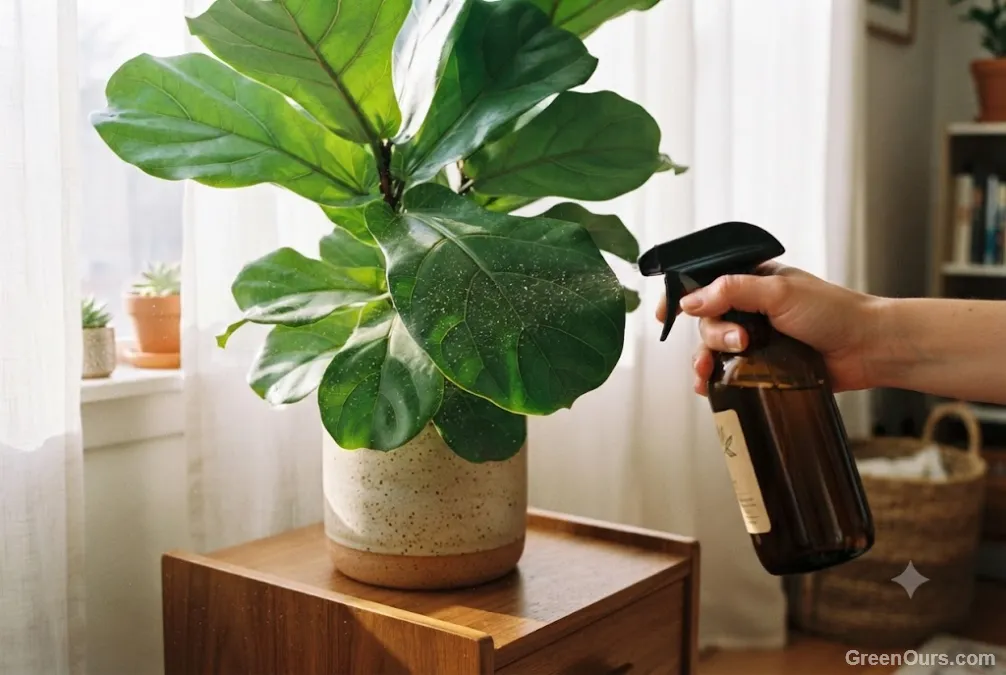
Neem oil breaks down fast under direct sunlight and heat above 85°F (29°C). Spraying at midday wastes most of the application within an hour and raises the risk of leaf scorch on sun-exposed foliage.
Apply in the early evening, after direct sun is off the plant. This gives the oil 8 to 12 hours of cooler, darker conditions to coat the leaf surface before UV exposure starts breaking it down.
Reason 3: You're Missing the Underside of the Leaves
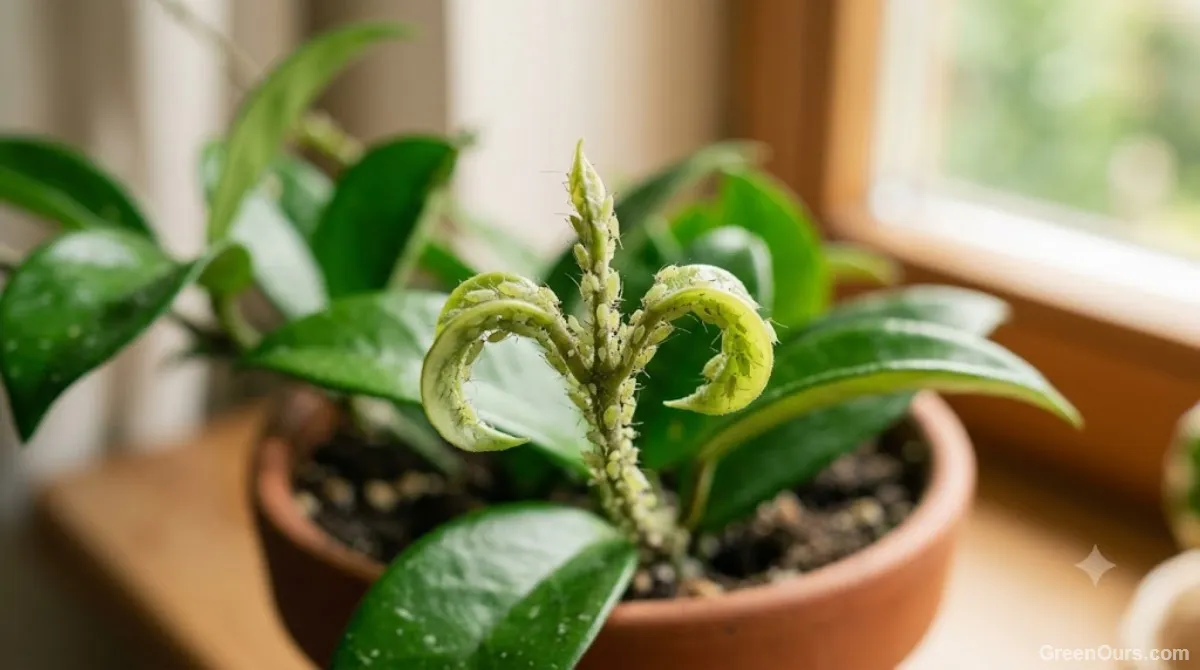
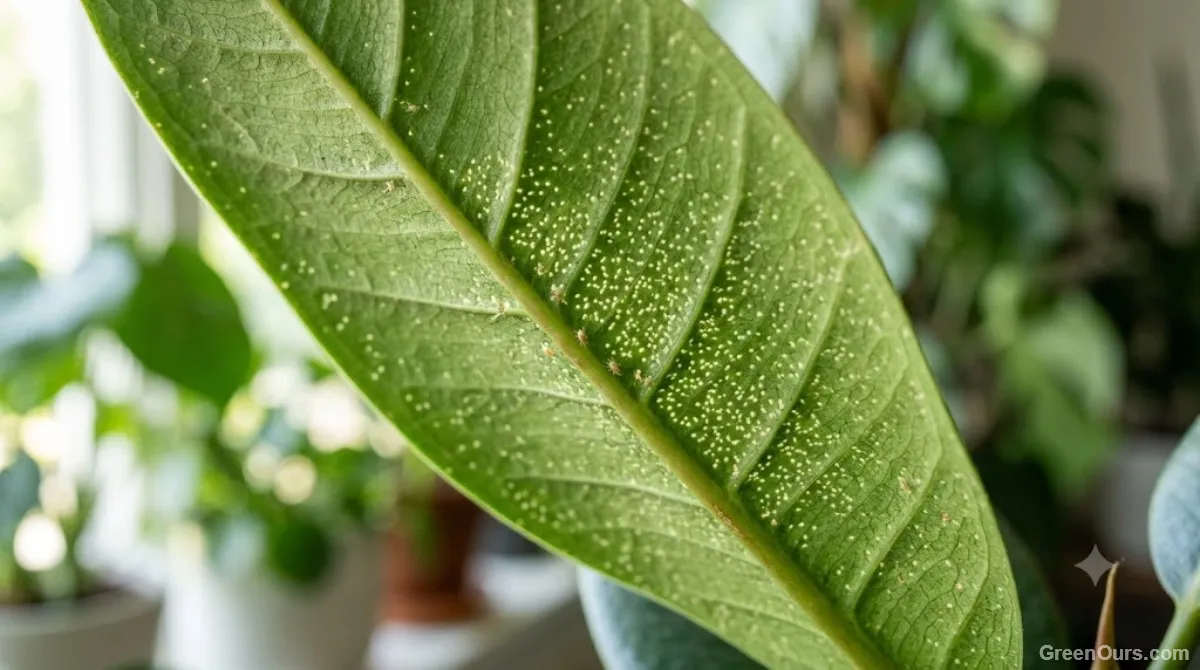
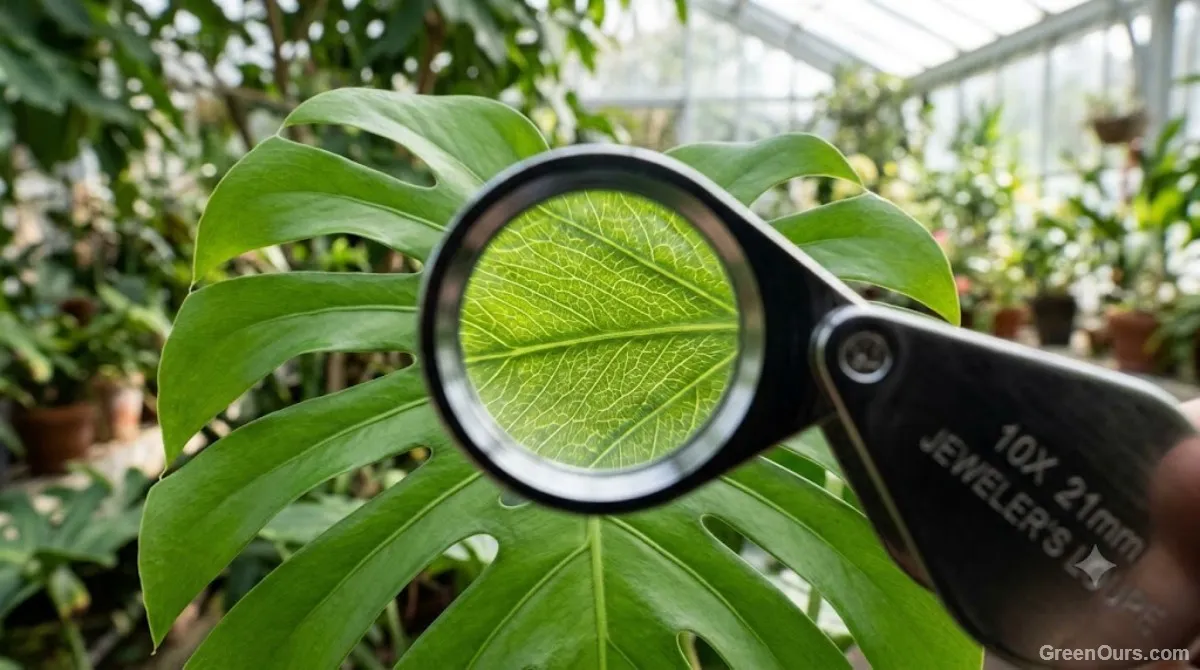
Aphids, spider mites, and whitefly nymphs concentrate on the underside of leaves, not the top. A spray pass that only covers the visible upper canopy leaves 60% to 70% of the pest population untouched.
Getting Full Coverage
Tilt the plant or angle the sprayer upward. Spray until the underside of each leaf is visibly wet, not just misted. Work stem joints and new growth tips too — both are common shelter points for young insects.
Signs of Incomplete Coverage
If pests reappear on the same 2 to 3 leaves every week while the rest of the plant stays clear, coverage — not product strength — is the problem.
Reason 4: You're Treating a Pest Neem Can't Reach
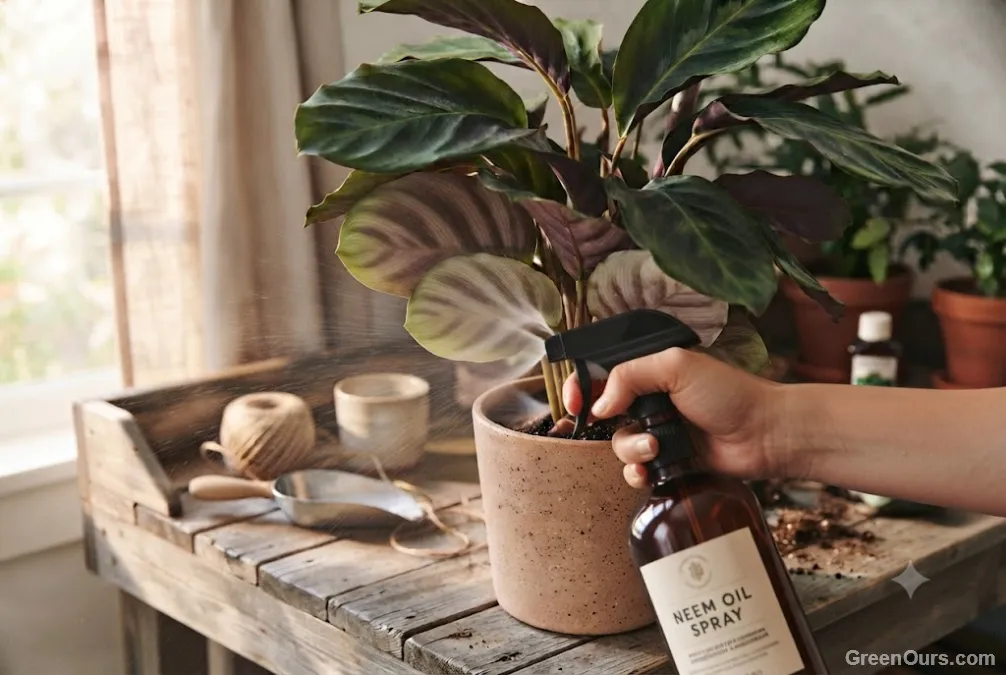
Neem oil is effective against soft-bodied insects: aphids, whiteflies, spider mites, and young mealybugs. It struggles against pests with a protective shell or waxy armor.
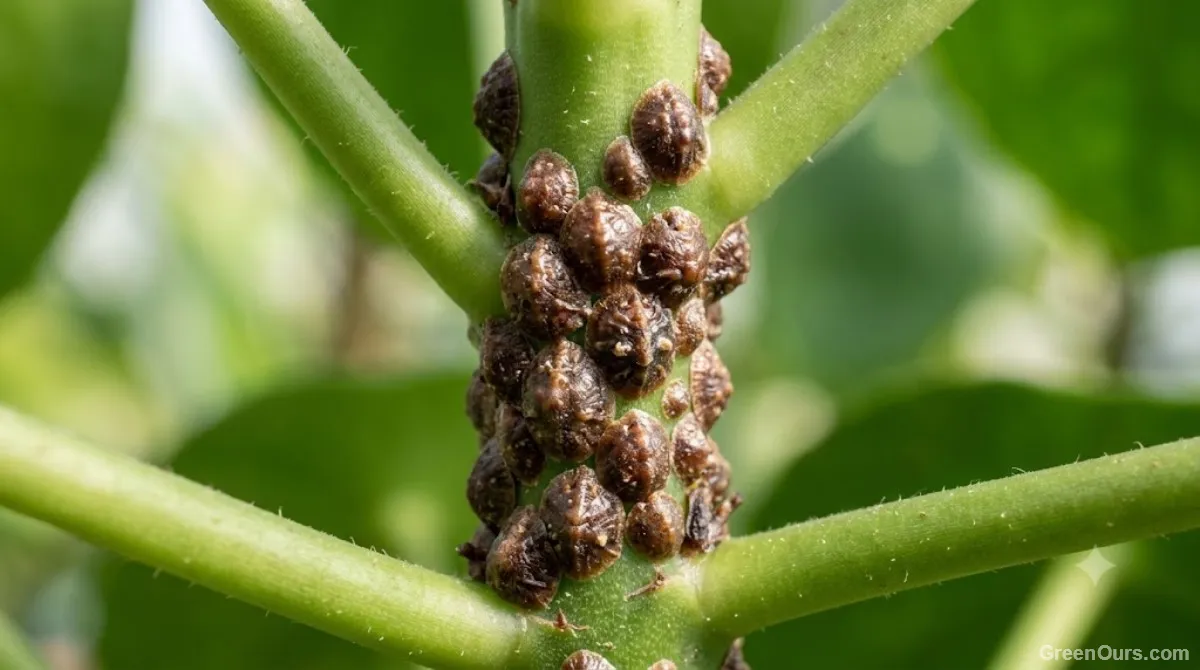
Armored Scale
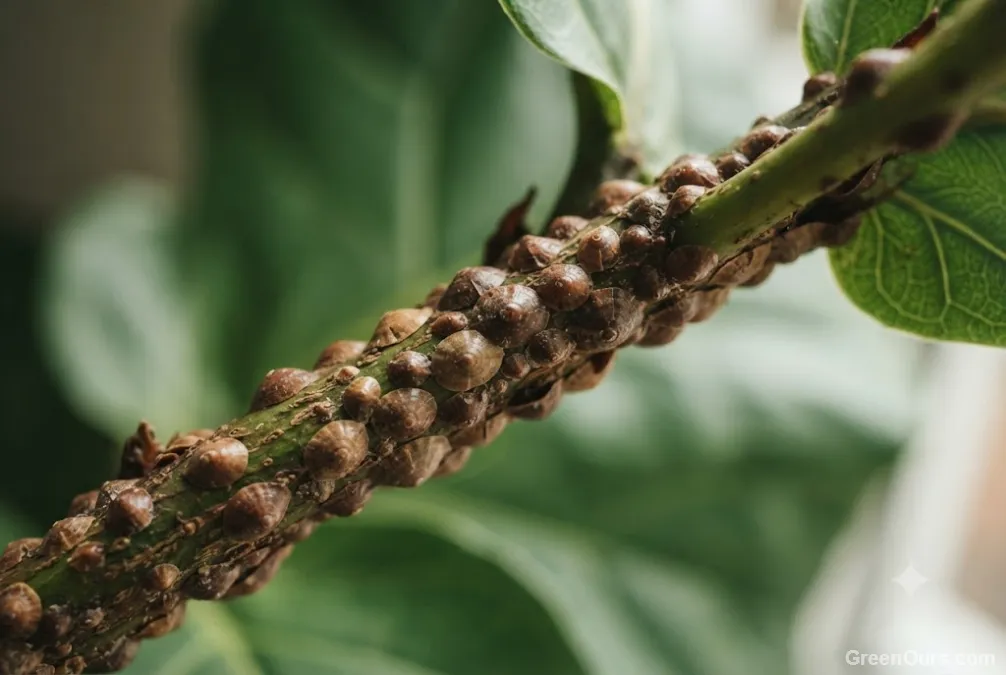
Adult armored scale insects are covered by a hard, waxy shield that blocks contact pesticides almost entirely. Neem oil only affects the crawler stage, in the first 1 to 2 weeks after hatching, before the shell forms.
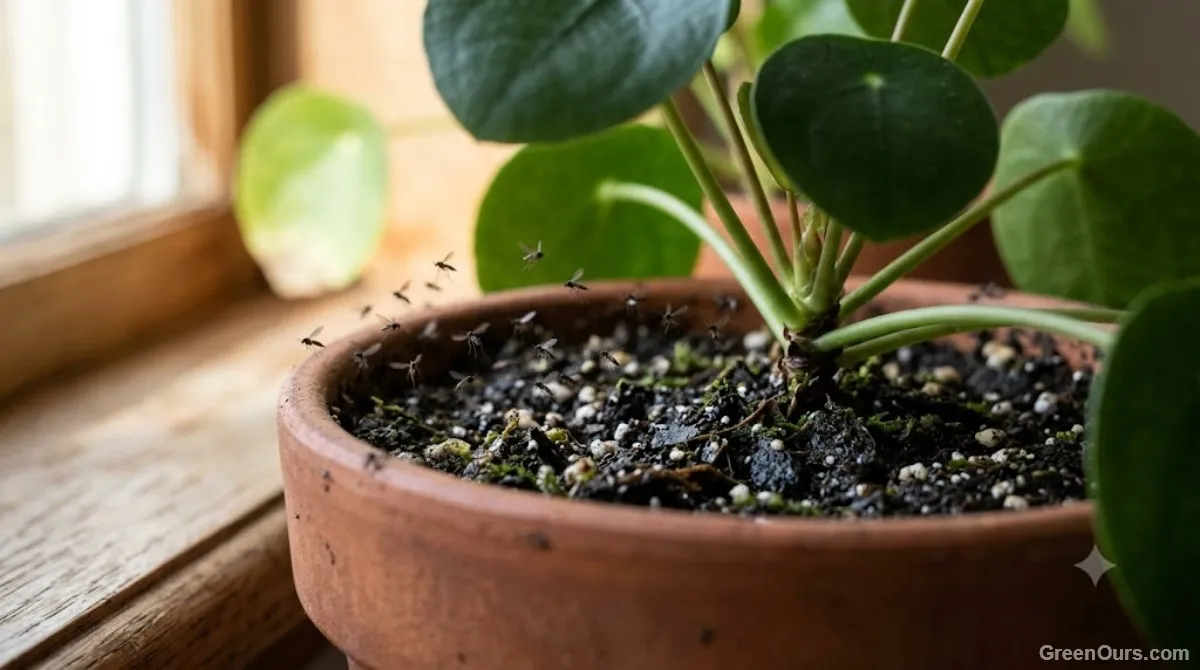
Fungus Gnat Larvae
Fungus gnat larvae live in the soil, not on leaf surfaces. A foliar neem spray never reaches them — a soil drench or beneficial nematode treatment targets that stage instead.
Reason 5: The Oil and Water Aren't Actually Mixing
Neem oil doesn't dissolve in water on its own. Without an emulsifier — a few drops of mild liquid soap, not detergent — the oil separates into surface droplets within minutes, leaving most of your spray as plain water by the time it reaches the plant.
Add 2 to 3 drops of pure castile soap per liter, then shake the mixture every few minutes during application. If the liquid in the bottle looks clear rather than milky, the oil has already separated back out.
Reason 6: You're Not Reapplying Often Enough
Neem oil has no residual killing power once it dries. It needs to be reapplied every 7 to 10 days for at least 3 to 4 cycles to interrupt egg-to-adult development, since a single spray only affects the insects present at that exact moment.
One application, or two applications spaced a month apart, will look like a failed product. It's actually an interrupted treatment schedule that never got the chance to work.
Reason 7: The Product Has Degraded
Cold-pressed neem oil loses potency over time, particularly once opened. Azadirachtin content can drop by roughly half within 8 to 12 months of exposure to air, heat, or light, even in a bottle stored past its shelf date unopened.
Check the bottle date. A rancid smell, a color shift toward dark brown, or visible sediment at the bottom are signs the product is no longer effective at label-strength dilution.
Reason 8: The Real Problem Isn't Resistance — It's Misdiagnosis
Documented pesticide resistance to neem oil is uncommon among typical houseplant pests. When neem "stops working" after initial success, the more likely explanation is a secondary infestation the first treatment never touched, or reinfestation from a nearby untreated plant.
Inspect neighboring plants before assuming resistance is the issue. Isolate any new arrivals for 2 weeks before placing them near an existing collection.
When Neem Oil Isn't the Right Tool
If dilution, timing, coverage, and frequency are all correct and the pest population hasn't dropped after 3 full cycles, move to a targeted alternative: insecticidal soap for soft-bodied insects, horticultural oil for scale, or a systemic treatment for infestations that have outpaced contact sprays entirely.
Get the dilution, timing, and coverage right first.
Neem oil rewards precision, not persistence alone. Get the dilution, timing, and coverage right, and most infestations break within three to four weeks — no guesswork required.