
Check Your Soil Before You Change It
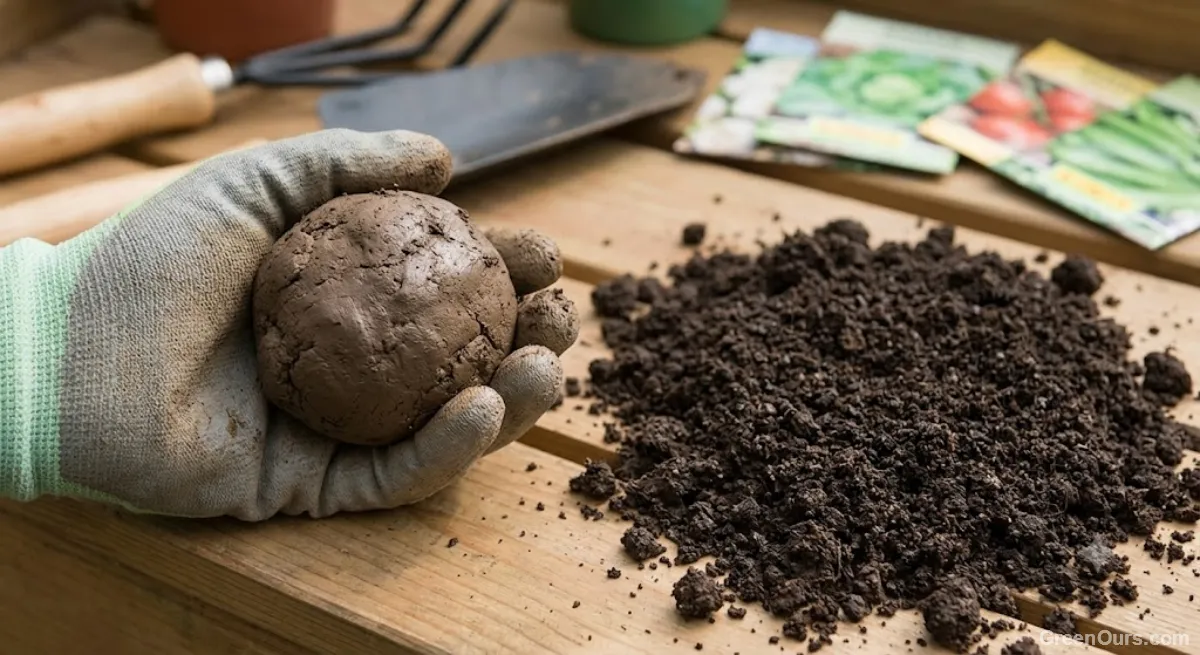
Before you add a single bag of anything, spend five minutes getting to know your dirt. Grab a handful from a few inches down, dampen it slightly if it's dry, and squeeze it into a ball in your palm.
If it falls apart the second you open your hand, you're likely dealing with sandy soil. It drains fast but doesn't hold water or nutrients long. If it holds its shape and feels slick or sticky, almost like modeling clay, that's clay soil, which tends to stay soggy and compact easily. If it forms a loose ball that crumbles with a gentle poke, that's loam, the kind of loose, well-structured soil that works well for many vegetables.
Most home gardens land somewhere between sandy and clay, and that's completely normal. You're not chasing a textbook sample. You're just working out which direction your soil needs a nudge.
Wait Until the Soil Isn't Soggy
Digging wet soil, clay especially, can squash out the air spaces roots rely on and leave you with hard clods that dry like bricks. Try the squeeze test again before you dig. If the ball stays sticky and won't crumble when you press it gently, give the bed a few dry days first.
Soil texture matters more than soil color. Dark soil looks rich, but a dark, dense clay can still smother roots. Texture tells you how water and air move through the ground, and that's what your plants actually feel.
Checking Drainage and Compaction
Dig a hole about 12 inches (30 cm) deep, fill it with water, and see what happens. Water that has soaked away within a few hours is a good sign. Water still standing the next day points to a drainage problem worth solving before you plant. Treat it as a rough guide, because recent rain and soil type both change the result.
Slow drainage isn't always the same problem, so it helps to work out which one you have. A compacted top layer needs loosening and organic matter. Heavy clay needs compost and patience. A low spot where water collects after every rain is a site problem, and a raised bed may suit it better than digging. If the hole empties almost instantly, you may be dealing with very sandy or gravelly soil.
Should You Test Your Soil?
Your hands can tell you about texture and drainage, but not about pH or nutrients. A basic soil test, from a garden center kit or a local extension service or soil lab, shows both. Many common vegetables do well in slightly acidic to neutral soil, often around pH 6.0 to 7.0, though preferences vary by crop, so a test result is most useful read alongside what you plan to grow.
It's also the best defense against adding things you don't need. Don't add lime or fertilizer just in case. Lime only helps soil that's too acidic, and extra nitrogen can push leafy growth at the expense of fruit. If you'd rather skip testing in your first season, that's fine. Add compost, watch how your plants do, and test if problems appear.
Feeding the Soil With Compost
Vegetable soil isn't something you set once and forget. It's more like a pantry that needs restocking, because every tomato and zucchini you grow pulls nutrients out of it.
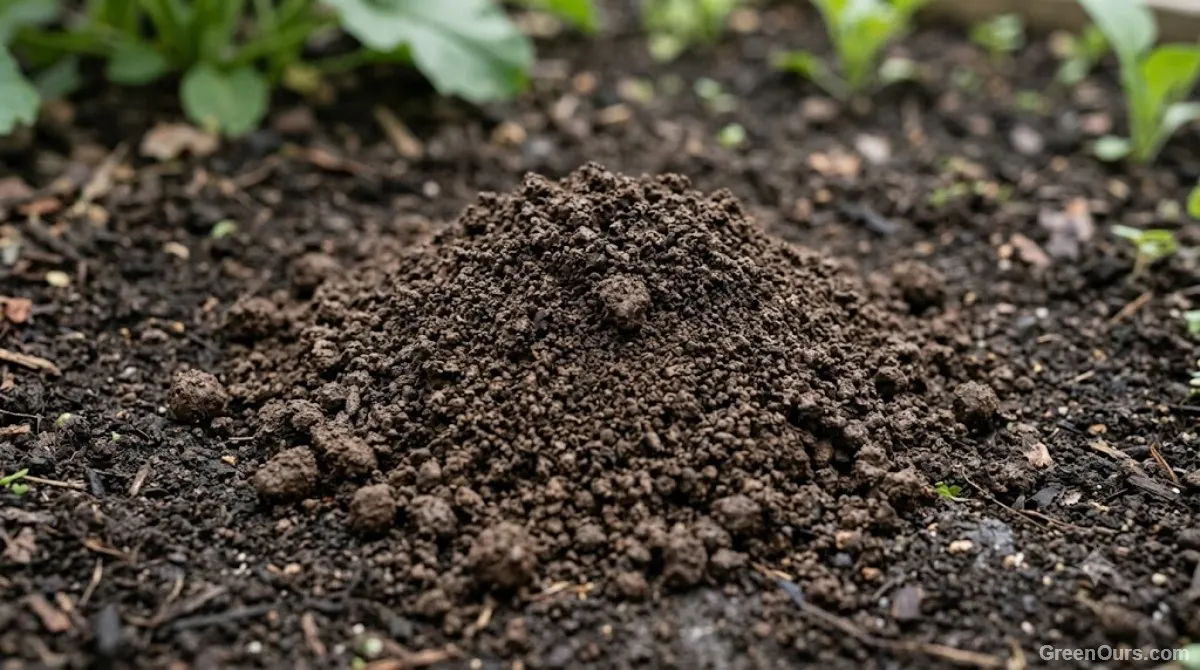
For many beginner gardens, finished compost is one of the simplest ways to improve soil structure and organic matter. It loosens tight clay so roots and water can move through, and it helps sandy soil hold onto moisture. Bagged compost from a garden center works fine. Look for something dark, crumbly, and earthy-smelling rather than sour or still recognizably kitchen scraps.
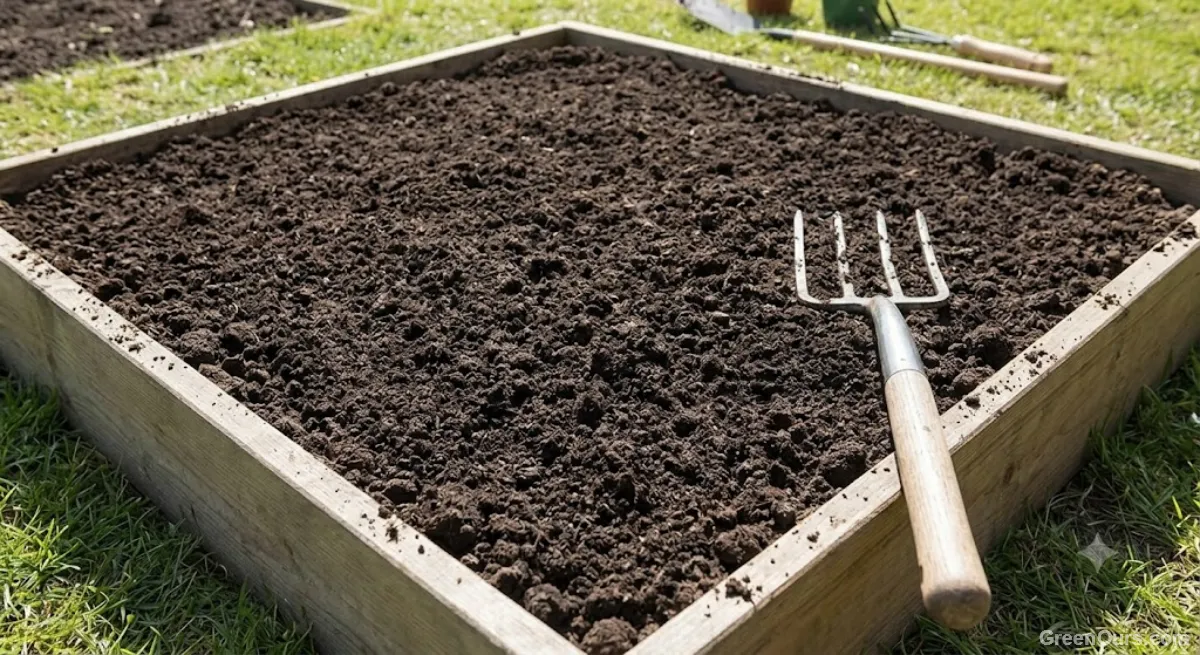
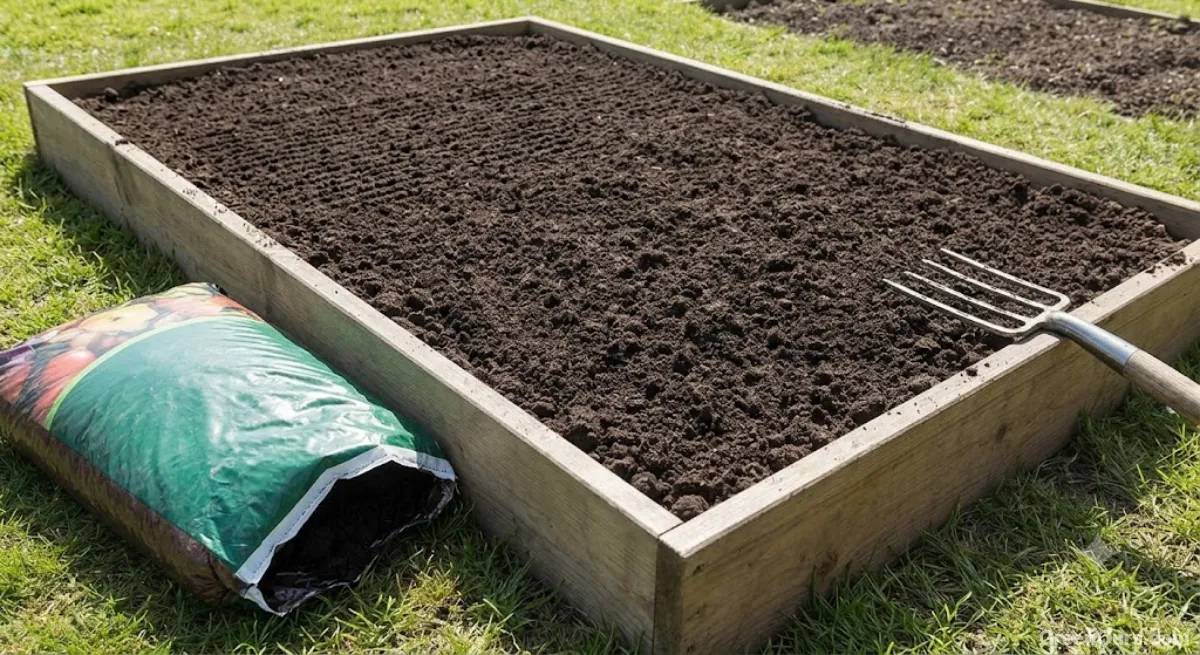
As a starting point, spread roughly 2 to 3 inches (5 to 8 cm) deep over the bed. In a new bed, mix it into the upper few inches of soil with a fork rather than burying it deep. In an established bed, you can often leave it on the surface and let rain, roots, and soil life draw it down. Compost improves soil, but it isn't a substitute for every nutrient decision, which is where a soil test comes in.
Adjusting for Your Soil Type
If you're not sure which problem you have, this table is a starting point. Real beds often show a mix of these, so treat it as a first move rather than a diagnosis.
| What you notice | Likely cause | First thing to try |
|---|---|---|
| Falls apart in your hand; water vanishes fast | Sandy soil | Compost, then mulch after planting |
| Sticky, holds a slick ball; drains slowly | Heavy clay | Compost, and avoid digging while wet |
| Hard on top; a fork barely goes in; water runs off | Compacted ground | Loosen with a fork, then add compost on top |
| Water pools in one spot after rain | Low spot or poor site drainage | Consider a raised bed |
Sandy Soil
Sandy soil needs more organic matter to slow water down and give roots something to hold onto. Compost does most of the work here, plus a layer of mulch once your plants are in.
Clay Soil
Compost is the safer beginner fix. Skip the sand: mixing small amounts into clay can leave it firmer, closer to concrete than garden soil. Organic matter builds a crumbly structure gradually, so expect improvement over a season or two rather than overnight.
Compacted Ground
If your bed used to be lawn or a building site, push a garden fork in, rock it back and forth to crack the soil open, and move on without turning it over. Then add compost on top. It loosens compaction with far less effort than digging everything out.
When a Raised Bed Makes More Sense
Sometimes what you're starting with is more rubble and compacted clay than anything resembling garden soil, and that's okay. If digging feels like fighting concrete, or the spot holds water after rain, don't force it. A raised bed filled with a quality soil blend gets you growing much sooner.
If you'd rather work with what's there, badly compacted or rocky ground can improve over a season or two of regular compost additions. That's a normal part of the process, not a sign you're doing something wrong.
A Simple Weekend Plan to Prep Your Bed
You don't have to do this all in one sitting, but if you've got a free weekend, here's a realistic order:
- Clear the area of weeds, grass, and debris. Pulling by hand works, and so does smothering with cardboard for a couple of weeks beforehand.
- Do your texture and drainage checks. If you want a soil test, send off a sample early, since results can take a while.
- Wait until the soil isn't sticky or soggy.
- Spread your compost and work it into the top few inches of a new bed, breaking up large clumps as you go.
- Rake the surface level and water it lightly.
- If you have the time, let the bed rest for a day or two before planting so the compost can start settling in. It isn't essential, and planting straight away works fine when the weather is right.
Where to Start
Start with the squeeze test tomorrow morning, before you buy a single bag of anything. What your hands tell you decides most of what comes next. Once the bed is prepped, watering, feeding, and watching those first seedlings push up through the surface all get easier, because the ground underneath is already working in their favor.
Ready for what comes after the soil prep? Explore more beginner vegetable growing guides.