
Why Some Vegetables Are Simply More Forgiving
Not every vegetable asks the same amount of you. Some need precise watering schedules, specific soil pH, or weeks of steady warmth before they'll even think about producing anything. Others are simply more forgiving for a first attempt — they tolerate a wider range of conditions, shrug off an occasional missed watering, and don't demand much beyond decent light and loose soil.
The difference usually comes down to how quickly a plant moves from seed to harvest, and how much margin it gives you along the way. A vegetable that's ready in three weeks gives you less time to accidentally get something wrong. A plant that tolerates a wide range of temperatures won't punish you for planting a little early or a little late. That built-in slack is exactly what makes a crop beginner-friendly.
If you're not sure where to start, pick one fast crop and one steady crop. A quick win keeps you motivated while the slower one is still growing.
Four Vegetables That Forgive Common Beginner Mistakes
Radishes: The Fastest Win in the Garden
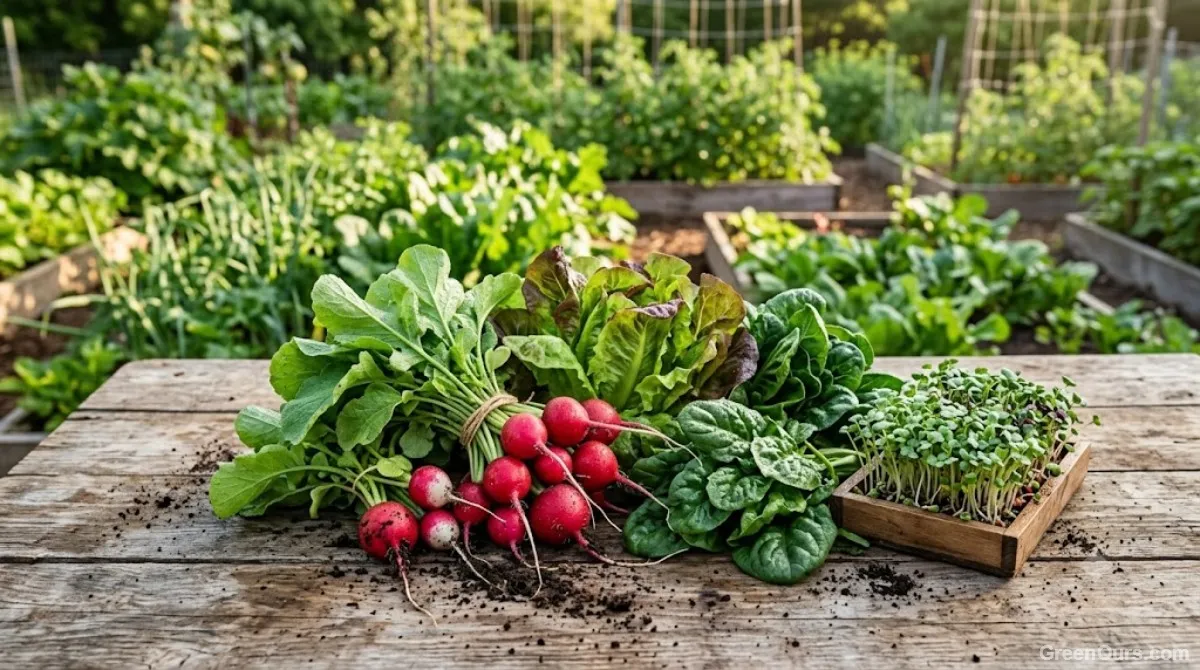
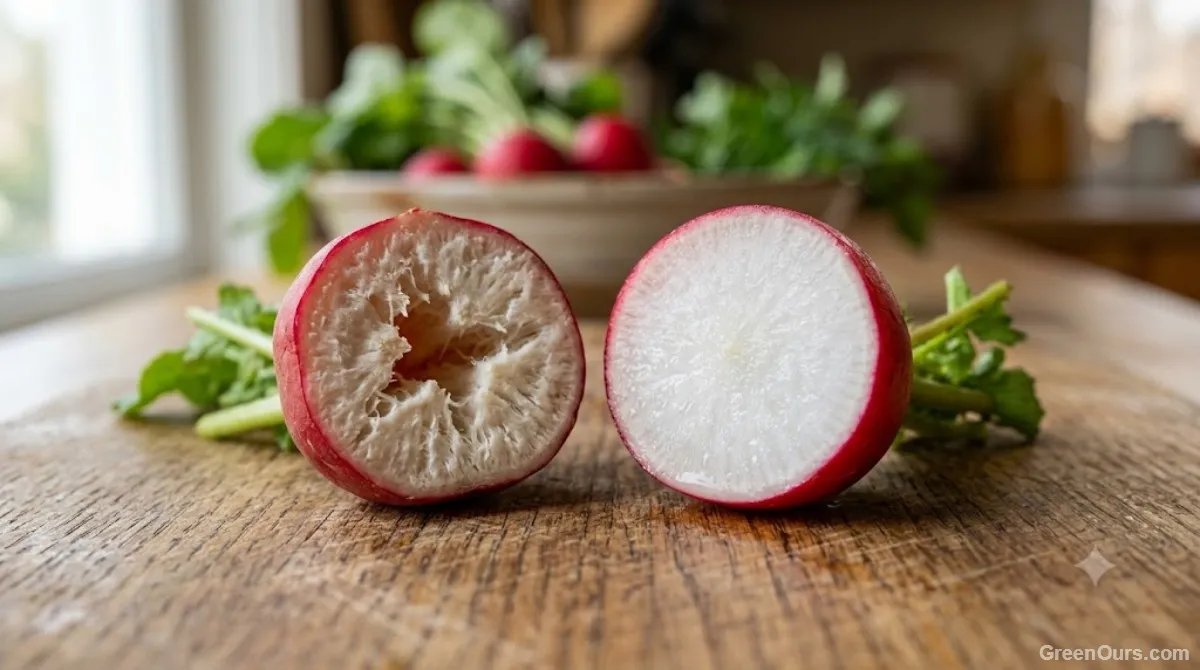
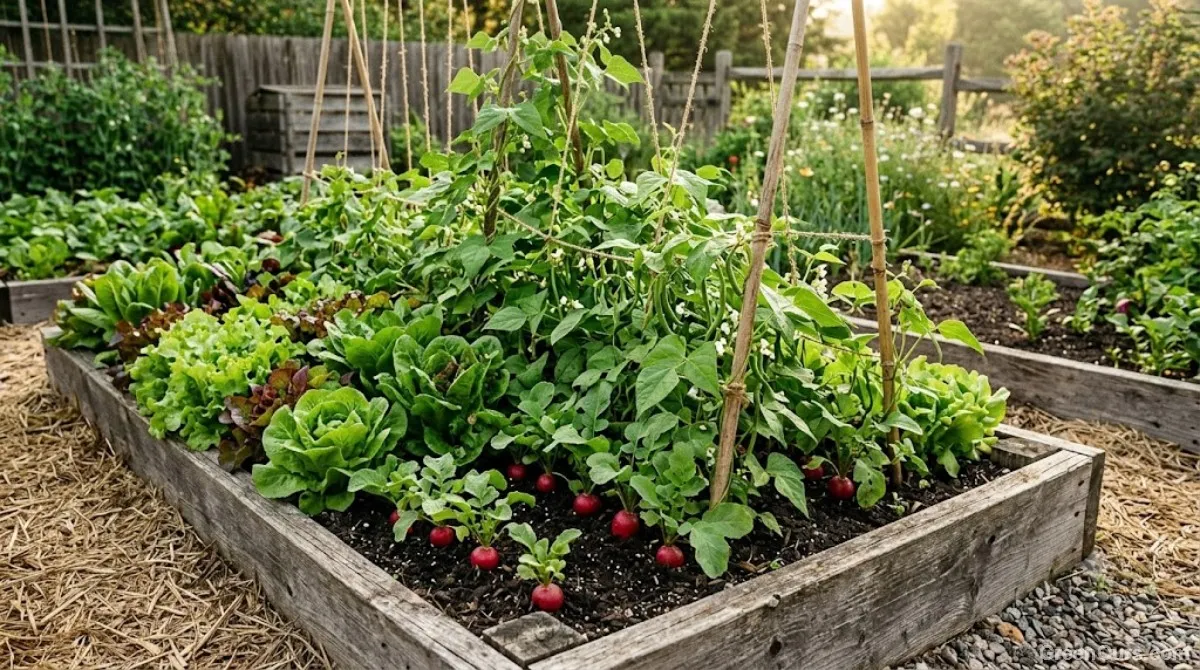
Radishes are, without much competition, the quickest confidence boost you can plant. Many varieties are ready to pull in as little as three to four weeks. Sow the seeds directly where you want them to grow, keep the soil lightly moist, and you'll notice green tops pushing up within days. Radishes don't require especially rich soil, but they do appreciate loose soil that lets the roots expand — compacted ground tends to produce stunted or misshapen ones. There's something genuinely satisfying about pulling your first radish and realizing you actually did that.
Lettuce and Other Leafy Greens
Loose-leaf lettuce, spinach, and similar greens are another forgiving choice for beginners. Rather than waiting for one big harvest, you can snip outer leaves as they mature and let the plant keep producing for weeks. They prefer cooler weather and a bit of shade in the height of summer, but they're remarkably tolerant of inconsistent watering and don't need rich, heavily amended soil to perform well.
Green Beans: Steady and Generous
Bush bean varieties are a beginner favorite for good reason. They germinate reliably, need minimal support compared to their climbing cousins, and once they start producing, they keep going for weeks with regular light harvesting. If you've ever worried about a plant simply not growing at all, beans are reassuring — the seeds are large, easy to handle, and sprout with a consistency that smaller seeds rarely offer.
Snap Peas: A Beginner's Best-Kept Secret
Snap peas don't get talked about as often as tomatoes or peppers, but they deserve more attention from first-time growers. They thrive in cool spring weather, need only a simple trellis or fence to climb, and produce pods you can eat straight off the vine. Because they're commonly grown during the cooler parts of the season, they may avoid some of the pest and heat pressure that affects warm-season crops later in the year.
Four Beginner Vegetables at a Glance
Here's the practical shorthand version of everything above, side by side. Treat the harvest windows as typical, not guaranteed — cultivar and local conditions can shift them either way.
| Vegetable | Typical harvest | Light | Container-friendly | Main thing to watch |
|---|---|---|---|---|
| Radishes | ~3–5 weeks | Full sun to partial shade* | Excellent | Dry soil, overcrowding |
| Leafy greens | ~4–8 weeks | Full sun to partial shade* | Excellent | Heat and bolting |
| Bush beans | ~6–8 weeks | Full sun | Good | Cold soil at planting |
| Snap peas | ~6–10 weeks | Full sun | Good | Heat, lack of support |
*Light needs vary with season and climate. In hot weather, some leafy greens benefit from afternoon shade.
Timing Matters More Than Skill
One of the quietest reasons beginner gardens struggle has nothing to do with skill at all — it's timing. Planting a heat-loving crop too early, or a cool-season one too late, sets a plant up to fail before it's had a fair chance. The vegetables above are forgiving partly because each can perform well when planted during the part of the season that suits it.
Radishes, lettuce, and snap peas generally prefer cooler conditions, which makes them useful choices for early spring or, where conditions allow, early fall planting. Beans want warmer soil to germinate well, so they're better suited to late spring once the risk of frost has passed. A simple trick that removes a lot of guesswork: sow radishes and lettuce every couple of weeks in small batches rather than all at once. This staggered approach, often called succession sowing, means you're never stuck with an entire harvest ripening on the same day — or an entire failed batch if one round doesn't take.
Your Easiest Choice Depends on the Season
The easiest vegetable isn't the same everywhere, because weather changes what a plant can tolerate. In a cool spring, radishes, lettuce, and snap peas may be your simplest choices. Once the soil and air become reliably warm, bush beans become a better fit. If you're gardening somewhere with hot summers, it's worth checking your local planting calendar rather than following a generic spring-or-fall schedule.
- Want the fastest harvest? Go with radishes.
- Have very little space? Lettuce or radishes are particularly well suited to containers with relatively shallow soil.
- Want a generous, steady harvest? Bush beans keep producing for weeks.
- Want something climbing and low-maintenance? Try snap peas.
- Already hot where you live? Check your local season before choosing.
Setting Yourself Up Without Overthinking It
You don't need raised beds, expensive soil amendments, or a full irrigation system to grow any of these crops successfully. A sunny patch of ground, a large container with drainage holes, or even a window box can work well for radishes and lettuce. What actually matters more than your setup is consistency — checking on your plants every day or two, even if it's just a quick glance, so you notice dry soil or early pest activity before it becomes a bigger problem.
If space is tight, radishes and lettuce are especially container-friendly, since neither needs deep soil to thrive. Beans and snap peas need a bit more room and something to climb or lean against, but a simple trellis made from garden stakes and twine works just as well as anything store-bought.
The Worries That Aren't Worth Losing Sleep Over
New gardeners tend to worry about the wrong things. A few yellowing lower leaves on a bean plant usually isn't a crisis — it's often just the plant redirecting energy as it matures. Lettuce that bolts, or sends up a flower stalk, in a late-season heatwave isn't a sign you did anything wrong; it's simply reacting to temperature, and it happens to experienced gardeners too. And if a handful of radish seeds never sprout, that's not a referendum on your abilities — seed viability varies, and the fix is just sowing a few more.
The real skill in a first vegetable garden isn't perfection. It's paying attention, adjusting a little as you go, and picking crops patient enough to let you learn on the job. These four do exactly that.

Plant one of these when the season is right, and you'll soon have something real to show for it — not because you got lucky, but because you chose crops that give a beginner room to learn.