
Why Bush Beans Stop Producing (And What That Means for Your Planting Plan)
Many bush bean varieties have a fairly concentrated production period. Many bush bean varieties stay relatively compact, often reaching around knee height, flowers over a week or two, sets pods, and then puts more of its energy into ripening seed than into making new blossoms. Once a planting has produced most of its crop, production usually slows — and that's when a younger succession planting can take over.
This isn't a flaw in the plant or a mistake on your part. How tightly concentrated the harvest is varies by variety, but the fix is the same either way: rather than trying to stretch one planting, make sure a younger one is always a few weeks behind the one that's finishing up.
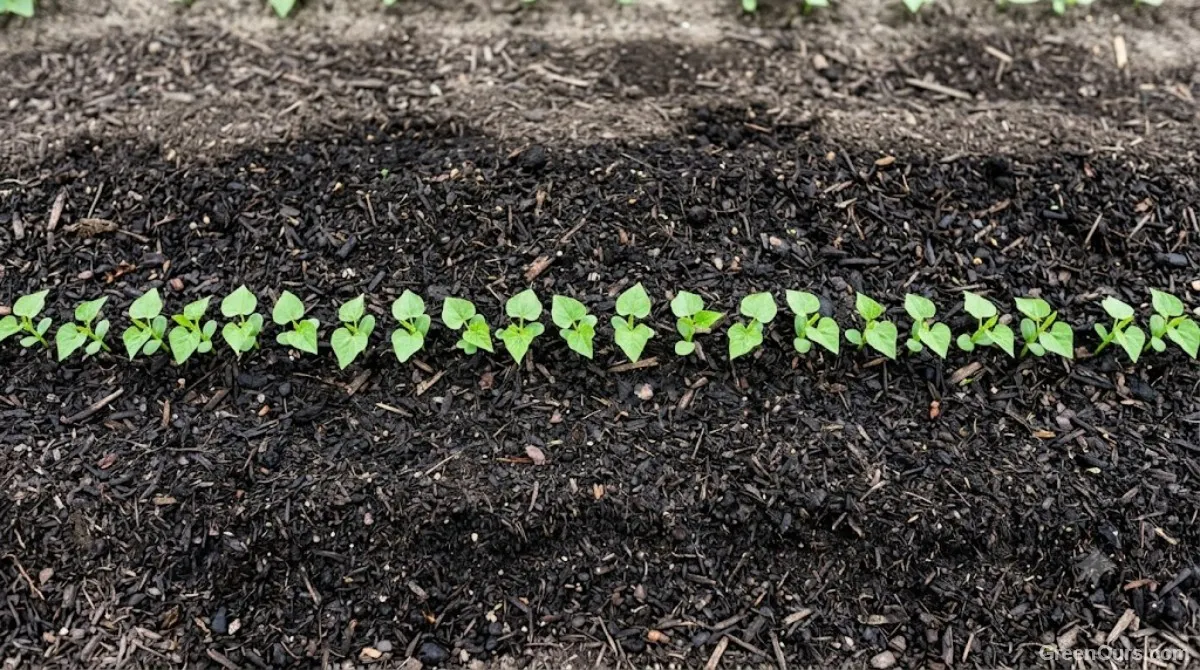
The single biggest shift for a continuous harvest isn't a product or a technique — it's treating bush beans as a crop you plant every two to three weeks, not a crop you plant once and forget.
Spacing That Sets You Up for Success
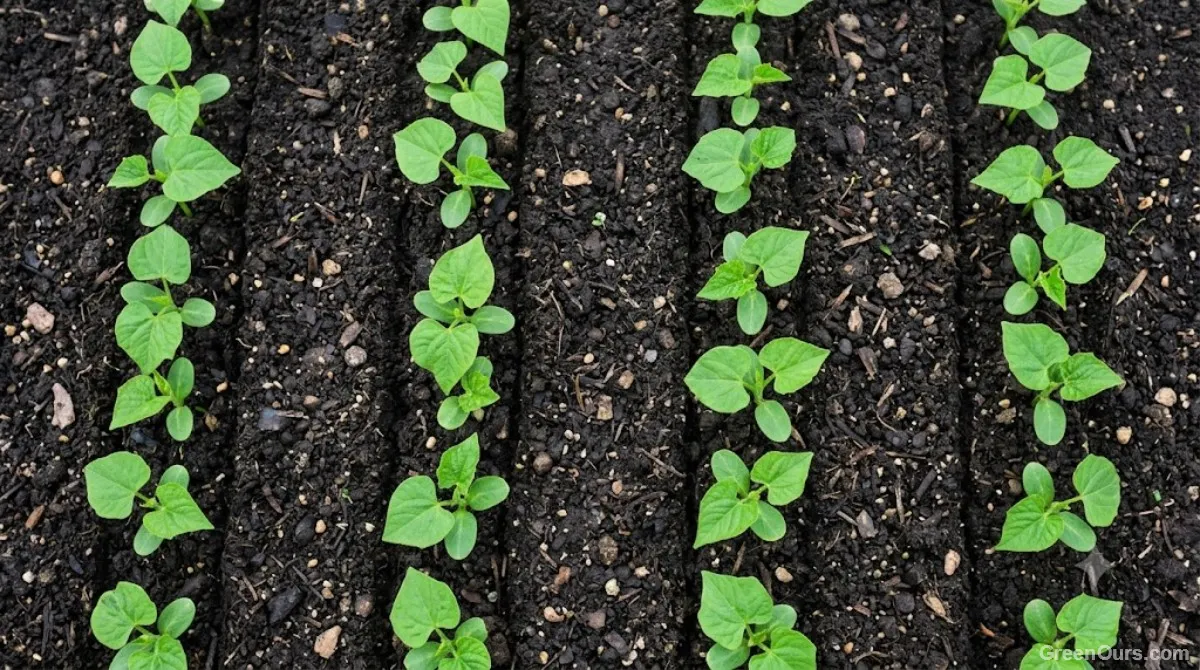
Bush beans don't need much room individually, but crowding them is one of the fastest ways to end up with a smaller, patchier harvest. Space seeds about 3 to 4 inches (8 to 10 cm) apart within a row, and leave 18 to 24 inches (45 to 60 cm) between rows. If you're working in a raised bed rather than traditional rows, a grid spacing of roughly 4 inches (10 cm) in every direction works well and makes efficient use of a small footprint.
Resist the urge to sow thickly and thin later — beans don't transplant or thin as gracefully as some other vegetables, and disturbing the roots of nearby seedlings can set both plants back. Sow at the spacing you want from the start, and you'll get sturdier plants with better airflow, which also cuts down on the fungal issues that crowded, damp foliage tends to invite.
Watering Bush Beans Without Overthinking It
Bush beans want consistent moisture, especially once they start flowering — that's the window where inconsistent watering does the most damage, often showing up as dropped blossoms or oddly shaped pods later on. Aim for roughly 1 inch (25 mm) of water per week as a starting point, then adjust for rainfall, heat, soil type, and how quickly the soil dries. During flowering and pod development, avoid letting the root zone swing from very dry to saturated. Water in one or two deep soakings rather than frequent shallow sprinkles, which encourages roots to grow down instead of staying near the surface and makes the whole plant more resilient during a stretch of hot, dry weather.
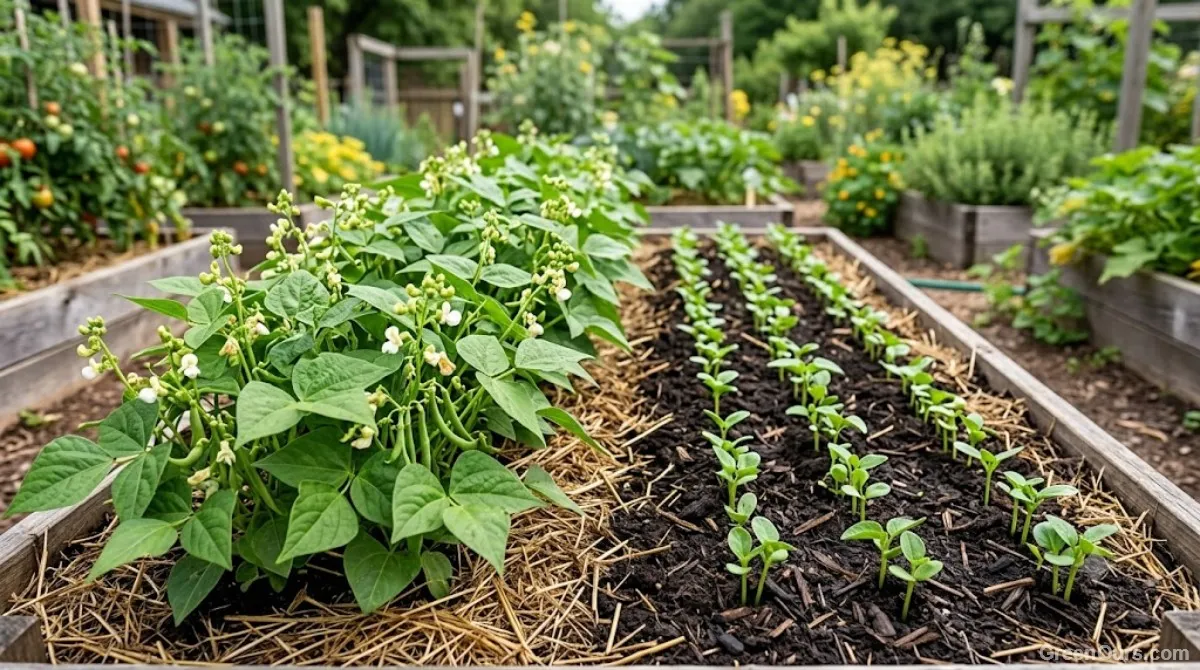
A layer of mulch around the base of your plants — straw, shredded leaves, or grass clippings all work — helps keep that moisture from evaporating too quickly and keeps soil temperature more stable. It also cuts down on the weeding you'll need to do, which matters more once you've got several staggered rows going at once.
The Succession Planting Rhythm That Keeps Beans Coming
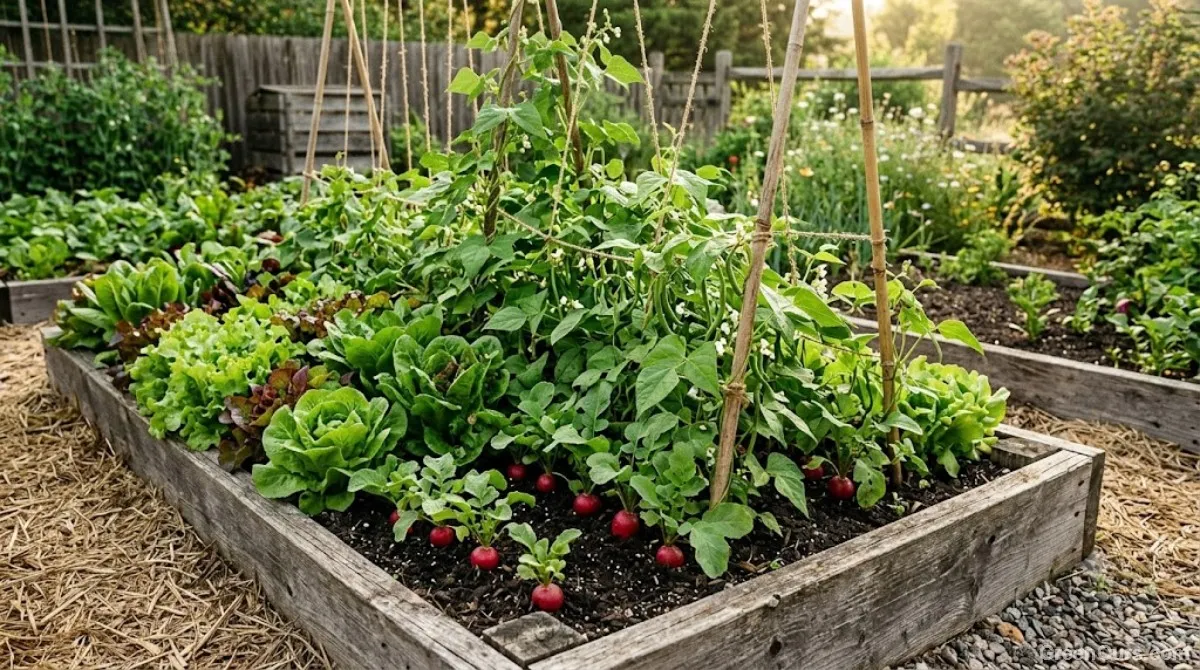
This is the piece that actually solves the feast-or-famine problem. Instead of planting your whole bean crop on one day in spring, you break it into smaller plantings spaced a few weeks apart. Each new sowing matures on its own timeline, so as one planting finishes up, the next is just coming into its own flush of pods.
How Often to Sow
A new round every 2 to 3 weeks works well for most home gardens. Many bush bean varieties reach their first harvest in roughly 50–60 days, although days to maturity vary noticeably by variety and growing conditions, so check your seed packet. A planting made in mid-May will be winding down right around the time a planting made in early June is hitting its stride.
Here's what a four-round season can look like in practice:
| Planting | Sow | Approximate first harvest* |
|---|---|---|
| Round 1 | Week 0 | Weeks 7–8 |
| Round 2 | Weeks 2–3 | Weeks 9–11 |
| Round 3 | Weeks 4–6 | Weeks 11–14 |
| Round 4 | Weeks 6–9 | Weeks 13–17 |
*Timing varies by variety and growing conditions, so treat these as a starting rhythm rather than a fixed calendar.
Where to Fit New Rows
You don't need a bigger garden to do this — you need a plan for reusing space. As an early planting finishes producing, pull it and use that same patch of soil for your next round of seeds. Working the soil surface lightly and adding a little compost between plantings keeps the bed productive instead of depleted.
How Many Bush Bean Plants Should You Sow?
There's no single right number, because it depends on how much your household actually eats and how much room you have. Start smaller than you think you need — you can always sow a bigger round next time.
- Small household: sow a modest row each round and see how quickly you work through it.
- Want beans every few days: make several smaller sowings rather than one big one.
- Limited space: pull finished plants and reuse the same patch for the next round.
- Hot weather: very hot spells can cause bean blossoms to drop, so you may want to shorten the gap between sowings or pause until it eases, depending on your local conditions.
Harvesting: Little and Often Beats Waiting
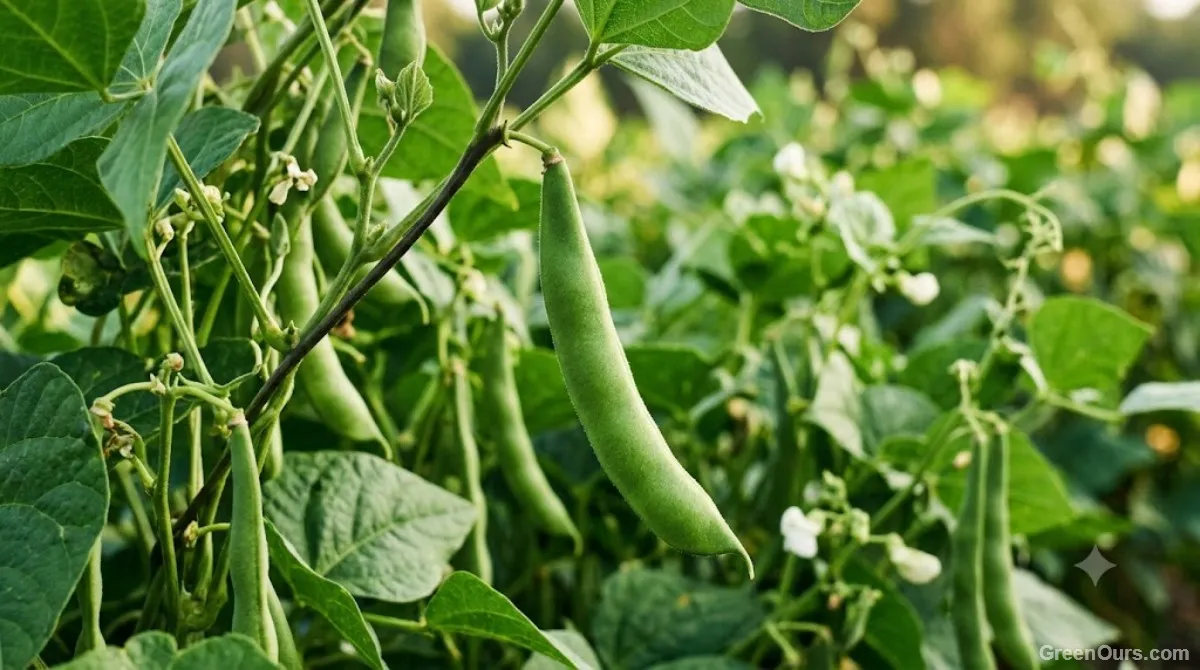
How you harvest affects how much you get. Bush beans are ready to pick once the pods are firm, snap cleanly, and are roughly the diameter of a pencil — waiting for them to get larger doesn't get you more bean, it just gets you a tougher one. More importantly, leaving mature pods on the plant can encourage it to put more energy into seed development rather than producing new tender pods.
Check your plants every day or two once they start producing, and pick anything that's ready, even if it's just a handful. Frequent harvesting helps encourage continued flowering and keeps you from leaving mature pods on the plant longer than necessary.
What Bush Beans Need to Get Started
If you're new to beans, the good news is that the basics are simple. Give them full sun (at least 6 hours of direct light) and well-draining soil, ideally with a pH between 6.0 and 7.0. Sow after your last frost, once the soil has warmed to at least 60°F (16°C), because cold, wet ground is the most common reason bean seeds rot before they sprout. Plant seeds directly where they'll grow, about 1 inch (2.5 cm) deep, since beans resent being transplanted.
Containers work well too, as long as the pot is at least 8–10 inches (20–25 cm) deep with drainage holes. As for feeding, beans partner with soil bacteria to make much of their own nitrogen, so a little compost at planting is usually plenty. Heavy nitrogen fertilizer tends to give you lush leaves and fewer pods.
Signs Your Planting Rhythm Needs Adjusting
If you notice a gap where you're not harvesting much of anything for a week or more, that's useful information, not a failure. It usually means your successive plantings are spaced too far apart, or a hot spell pushed one round to mature faster than expected. Tighten the interval between sowings to closer to two weeks, and keep a simple written record of your sowing dates — it makes the whole rhythm much easier to fine-tune the following season.
Weather will always nudge your timeline around a little, and that's fine. The goal isn't a perfectly even harvest every single week — it's making sure there's always something coming along behind whatever you're currently picking.
Where to Start
Bush beans reward a little planning more than they reward a lot of effort. Once you've got two or three staggered rows going at different stages, the rhythm mostly takes care of itself — you're just showing up every couple of days with a basket, and letting the plants do what they were always going to do anyway.
Ready for your next planting project? Explore more beginner vegetable garden guides.