
Start With an Onion That Matches Your Daylight
Variety and day-length suitability are among the first things to check, because onions need the right day-length signal to begin forming bulbs. Onions form bulbs based on day length, and they're grouped into three categories: short-day, intermediate-day, and long-day varieties. Short-day onions need about 10-12 hours of daylight to trigger bulbing, while long-day varieties need 14-16 hours. Plant a long-day onion in a southern climate with shorter summer days, and it simply won't get the light signal it needs to size up before the season ends.
If you're not sure which category your onions fall into, check the seed packet or the variety name—it's almost always listed. As a general rule, gardeners in the northern half of the country do best with long-day types, while those further south get better results from short-day or intermediate varieties. If you want a more precise answer than "northern" or "southern," look up your USDA hardiness zone and cross-reference it with the seed catalog's day-length recommendation, or check with your local cooperative extension office, which can usually point you toward varieties proven to perform well in your specific area.
A few names to know: 'Walla Walla' and 'Ailsa Craig' are long-day varieties that thrive where summer days stretch well past 14 hours. 'Texas Grano' and 'Red Burgundy' are short-day types bred for southern gardens with milder winters. Intermediate varieties like 'Candy' split the difference and tolerate a wider band of latitudes, which makes them a forgiving choice if you're not sure where your garden falls.
Timing Matters Too
Onions started too late in the season are racing against the calendar. They need a good stretch of leafy growth before the bulbing signal kicks in, so if your transplants or sets go in weeks behind schedule, they may start bulbing while the plant is still small—locking in a smaller onion no matter what you do afterward. Starting from sets tends to forgive a late start better than starting from seed, since the sets arrive with a head start already built in. If you're starting from seed, aim to get them going indoors about eight to ten weeks before your last frost date, so the seedlings have real size on them by the time it's warm enough to transplant outside.
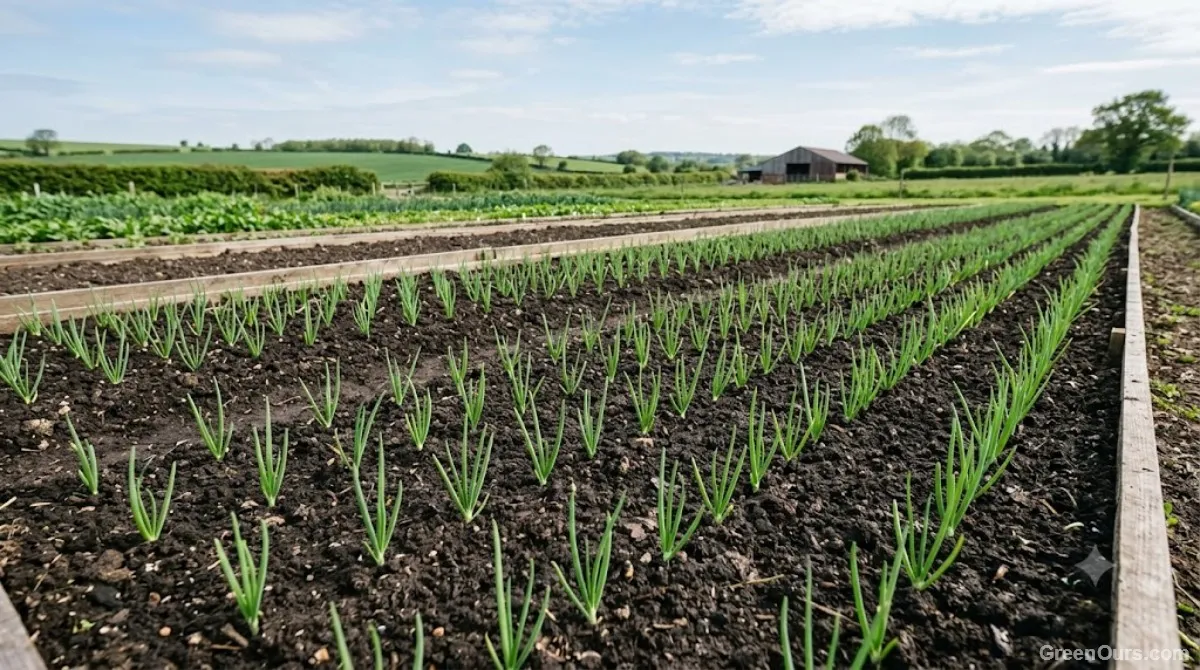
Knowing your average day length in June is a useful reference point—paired with your USDA zone and the variety's day-length label, it'll tell you more than a generic planting chart.
How Big Should an Onion Bulb Get?
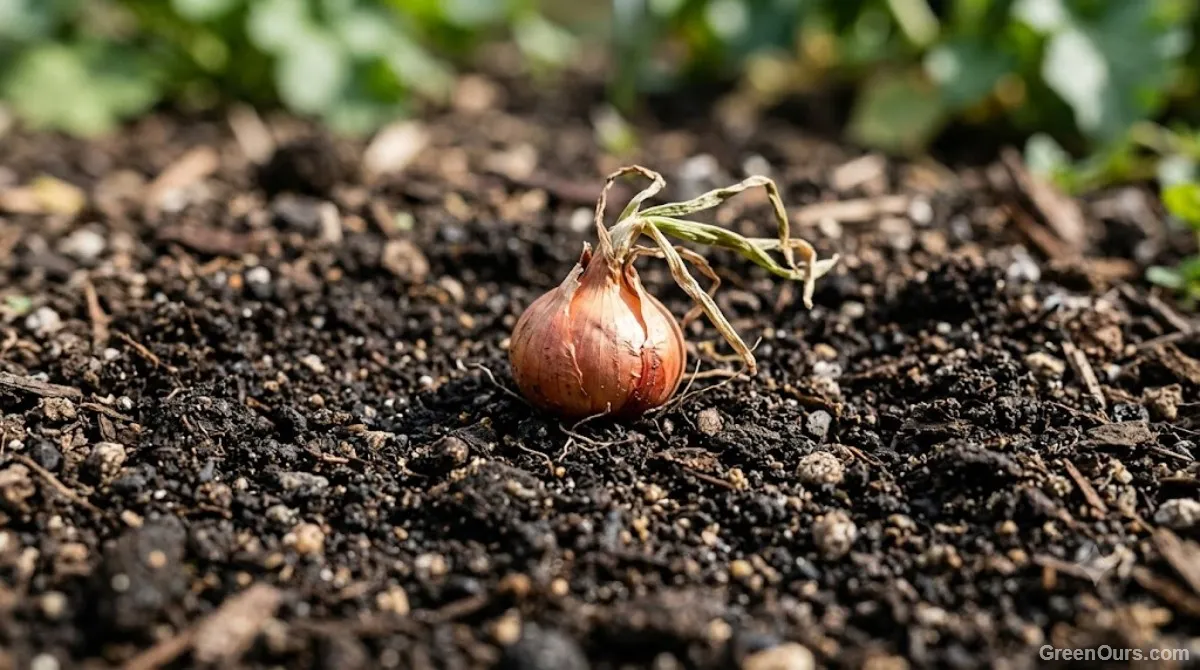
Before you assume something's gone wrong, it's worth asking what "normal" actually looks like for what you planted. Bulb size varies considerably by variety—some types are bred to stay compact, while others are known for producing large storage onions, and comparing the two isn't a fair test of your growing skills. Day-length type plays a role here too: a long-day onion grown in the right region tends to size up more than a short-day variety grown the same way, simply because of how each type is bred to behave.
Onions grown from sets and onions grown from seed can also behave differently, even within the same variety, since sets arrive with a head start but sometimes a slightly lower ceiling on final size compared to a seed-grown plant given a full season. And a smaller bulb isn't automatically a sign of poor health—if the variety is naturally compact, a modest bulb with firm, healthy layers is still a good result.
Give Each Bulb Enough Room to Expand
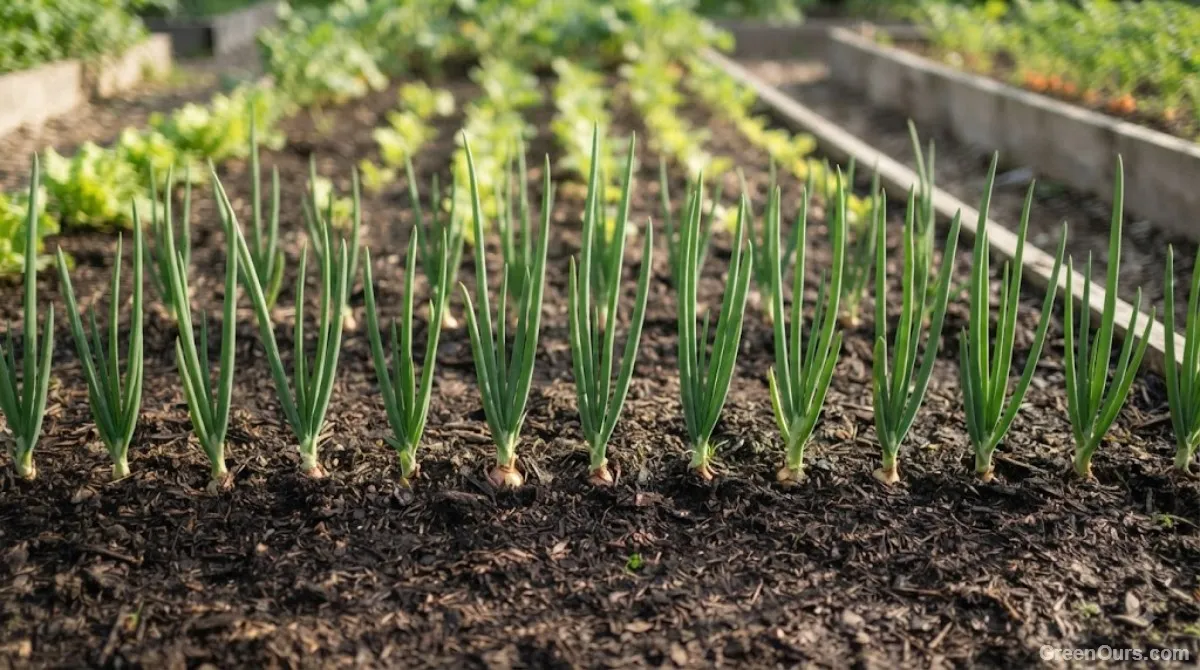
Onions are surprisingly territorial underground. Crowd them, and every bulb ends up competing for the same patch of soil, moisture, and nutrients—and they all come out smaller as a result. Space onion sets or transplants about 4 to 6 inches apart in every direction. It looks like a lot of empty space when they're young seedlings, but that gap is exactly what lets each bulb swell without bumping into its neighbor. In a raised bed or square-foot layout, that usually works out to about four onions per square foot—tighter spacing than it feels like it should be, but it still leaves each bulb its own patch of soil to expand into.
If your onions came up crowded this year, you can still help. Thin out every other plant while they're small and use the pulled ones as green onions in the kitchen—nothing goes to waste, and the ones left behind get the room they need to catch up.
Thin gradually rather than all at once if you can—pulling a few plants every week or two lets the remaining bulbs adjust to their new spacing without the shock of a sudden change in root competition. It also spreads out your green onion harvest instead of leaving you with a single big bundle to use up at once.
Feed at the Right Moment, Not the Whole Season
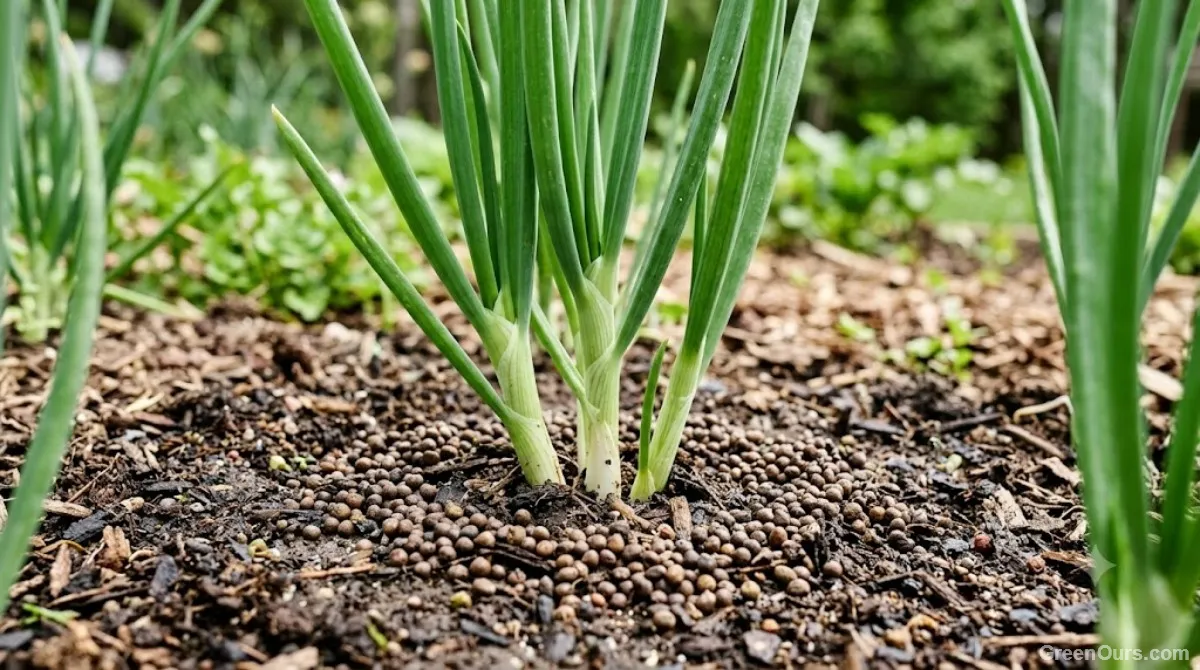
Onions have a specific window when feeding actually helps: the early leafy-growth stage, before bulbing starts. A balanced fertilizer with nitrogen supports strong leaf growth here, and since each leaf corresponds to a ring in the final bulb, more healthy leaves early on generally means a bigger onion later. You'll notice the difference in the plant itself—onions that aren't getting enough nitrogen early on tend to have pale, yellowish leaves and slow, thin growth, which is your cue to feed a little sooner rather than waiting it out. If your soil already contains adequate nitrogen, additional feeding may not be necessary and can produce excessive leafy growth instead of a bigger bulb.
Once bulbing begins, though, it's time to ease off nitrogen. Continuing to feed heavily at this stage tends to push leaf growth at the expense of the bulb itself. A light feeding every three to four weeks during the early growth phase, then tapering off as the bulbs start to swell, tends to give the best results.
Fish emulsion, blood meal, and a balanced granular vegetable fertilizer all work well during that early window—the specific source matters less than getting the timing right. Once you notice the bulbs starting to push up out of the soil, that's your cue to stop feeding altogether and let the plant finish on its own.
Keep the Soil Evenly Moist
Onions have shallow, somewhat sparse root systems, so they're more sensitive to inconsistent watering than you might expect. Long dry stretches followed by a heavy soak send mixed signals to the plant and can stall bulb development. As a rough starting point, onions often need around 1 inch of water per week from rainfall and irrigation combined, but adjust based on your soil, temperature, and how the plants are growing—try to keep the top few inches of soil consistently damp rather than letting it swing between bone-dry and soaked. If you're growing onions in containers or grow bags, this matters even more—containers dry out faster than garden soil, so you may need to check them every day or two during warm stretches rather than relying on a weekly schedule.
A layer of mulch around your onion bed helps enormously here—it evens out soil moisture between waterings and cuts down on how often you need to think about it. Straw and shredded leaves both work well and break down slowly enough to last most of the season. As bulbs mature and the tops start to yellow and flop over, you can ease off watering to help the onions cure properly for storage.
Common Missteps to Watch For
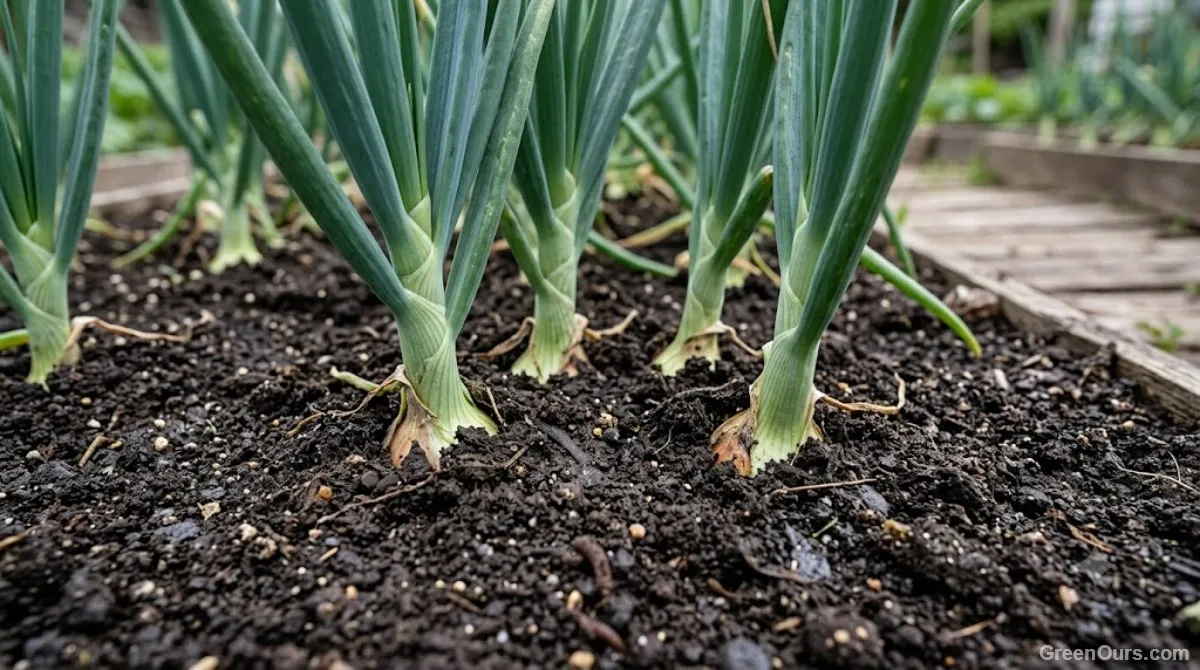
A few habits tend to show up again and again in beginner onion beds: planting sets too shallow so the developing bulb pushes itself out of the soil, letting weeds compete for root space early on, and harvesting too early out of impatience. Onions do most of their bulking up in the final few weeks before the tops naturally fall over, so pulling them early locks in a smaller harvest than you'd otherwise get. Skipping mulch is another common one—bare soil dries out and reheats faster, which makes the watering swings above even harder to avoid. And once the tops have started to yellow and flop over, resist the urge to keep watering out of habit—soggy soil at that stage encourages rot right at the point when the bulbs are trying to cure.
Explore more beginner vegetable growing guides
None of this requires a green thumb you don't already have—just a bit of attention to timing, spacing, and matching the right onion to your garden's daylight. Get those pieces lined up, and you'll find yourself pulling up bulbs worth bragging about at the end of the season.