
The Telltale Sign: Flies That Scatter When You Touch the Plant
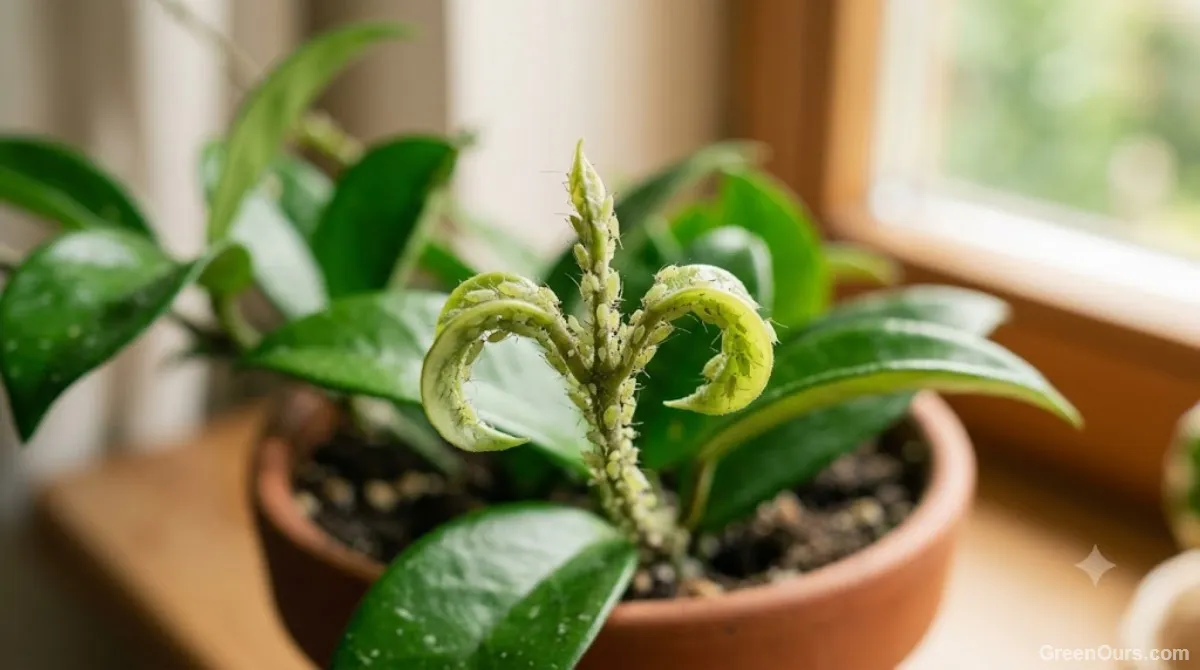
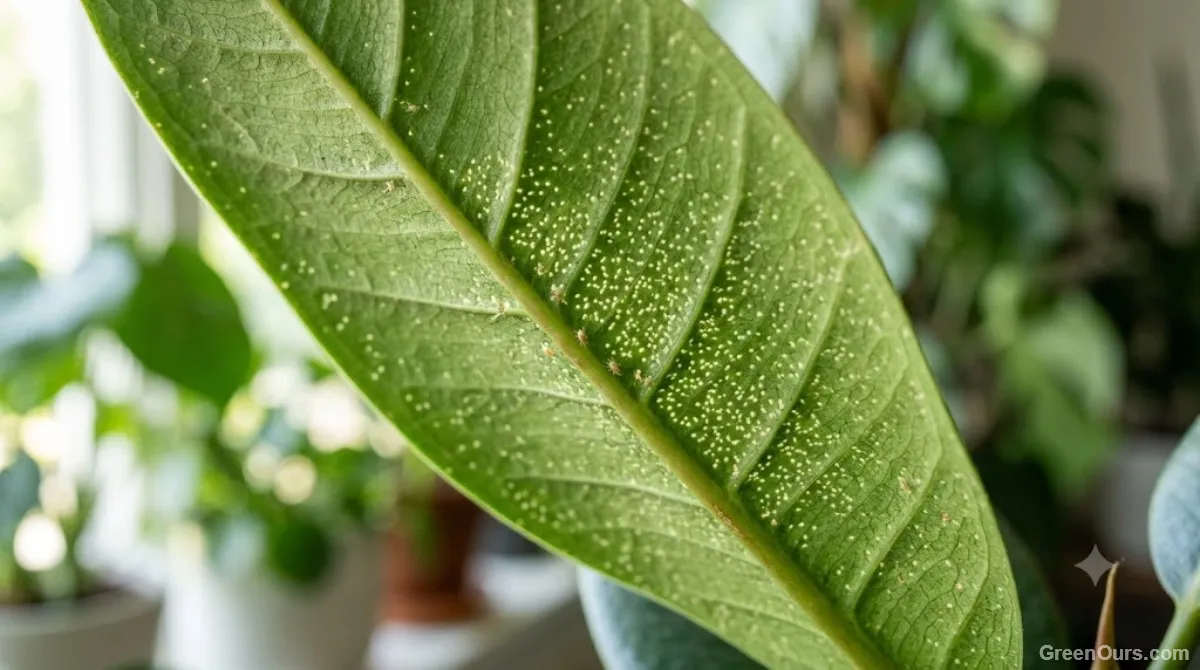
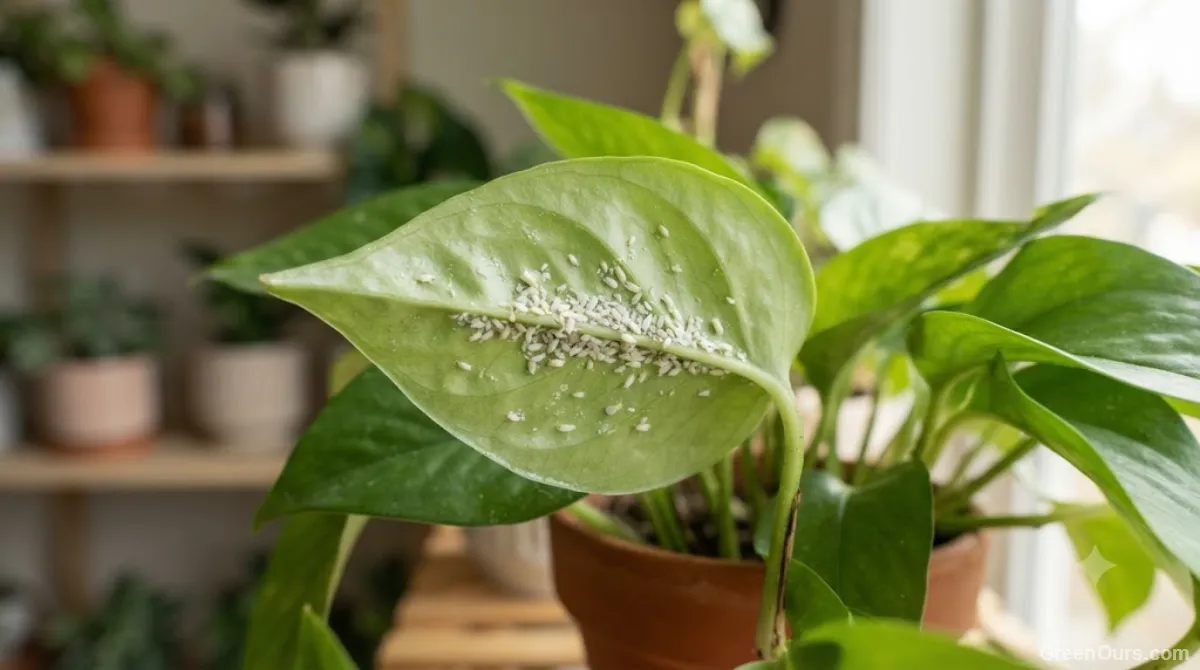
Whiteflies are soft-bodied insects roughly 1-2mm long, with a powdery white coating on their wings. They cluster on the underside of leaves in groups of a dozen or more. Disturb the foliage — a light tap or a shake — and they take flight in a visible cluster, then land again on the same or nearby leaves within 10-15 seconds.
That flight response is diagnostic. No other common houseplant or garden pest behaves this way. Aphids stay put when disturbed. Spider mites don't fly at all. Fungus gnats fly, but they favor the soil surface, not the leaf underside, and they don't cluster in groups on foliage.
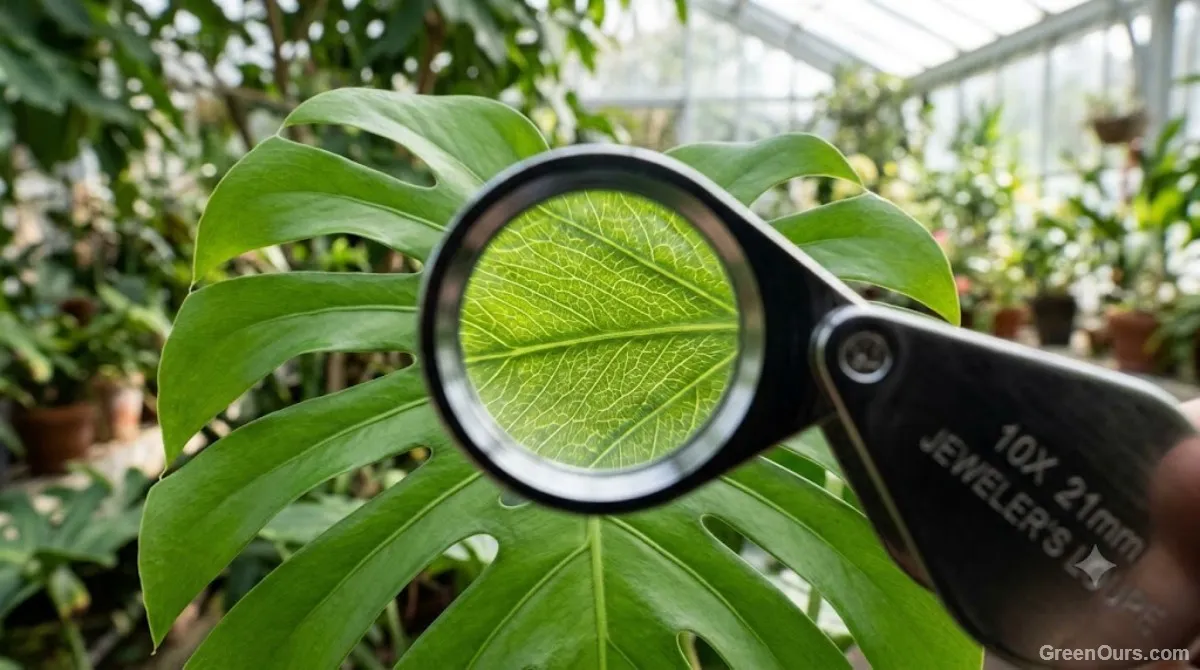
Check new growth and the undersides of mature leaves first. Whiteflies prefer tender tissue, and populations build fastest on the newest leaves near the growing tip.
Whitefly vs. Fungus Gnat vs. Spider Mite: How to Tell Them Apart
These three get confused constantly because all three show up as "tiny bugs near my plant." The distinctions matter because the treatments don't overlap.
Whiteflies
White, moth-like wings. Cluster on leaf undersides. Fly in a visible group when disturbed, then resettle quickly. Leave sticky honeydew residue on leaves and any surface below the plant.
Fungus Gnats
Dark, mosquito-like bodies. Hover near the soil line, not the leaves. Larvae live in the top inch of soil and feed on organic matter and roots. Adults are weak fliers that don't cluster on foliage.
Spider Mites
Barely visible without magnification. No flight response at all. Fine webbing appears between leaves and stems in heavy infestations. Stippled, dry-looking leaf damage is the giveaway, not sticky residue.
If you see sticky residue on leaves or on the floor beneath the plant, that's honeydew — a byproduct of whiteflies (or aphids) feeding, not fungus gnats or mites. Honeydew narrows your diagnosis fast.
The Whitefly Life Cycle (Why One Treatment Never Works)
Whiteflies pass through four stages: egg, nymph, pupa, and adult. Eggs are laid in small circular clusters on the underside of leaves and hatch in 5-10 days depending on temperature. Nymphs then feed on the leaf for two to four weeks before pupating.
Here's the practical problem. Most sprays — soap, oil, or contact insecticide — kill adults and active nymphs on contact. They do almost nothing to eggs, and pupae are often unaffected too. A single spray can look successful for a few days, then the population rebounds as the next wave of eggs hatches.
Because the full life cycle runs 3-4 weeks at typical room or summer temperatures, effective control requires repeat treatment on a 5-7 day interval for at least three to four weeks. This kills each new wave of nymphs before they reach reproductive maturity.
Treatment Sequence That Actually Works
Step 1: Isolate and Vacuum
Move the affected plant away from others immediately — whiteflies spread quickly between neighboring plants. Use a handheld vacuum on the leaf undersides in the early morning, when adults are sluggish from cooler temperatures. This physically removes a meaningful portion of the adult population before you spray anything.
Step 2: Apply Insecticidal Soap or Neem Oil
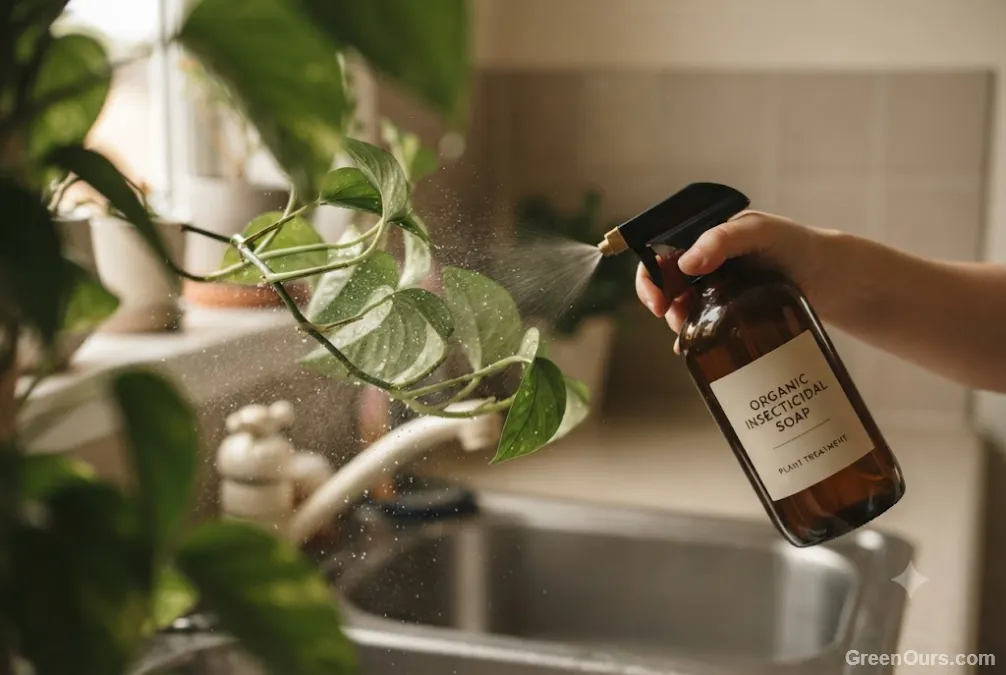
Spray the underside of every leaf until runoff, not just the top surface. Insecticidal soap works on contact and needs to touch the insect directly. Neem oil adds a growth-disruption effect on nymphs but takes longer to show results. Apply in the evening or early morning to avoid leaf burn in direct sun.
Step 3: Repeat Every 5-7 Days for 3-4 Weeks
This is the step most people skip once the visible adults disappear. Continue treatment through the full cycle length even if the plant looks clear after week one. Stopping early is the single most common reason whiteflies come back within a month.
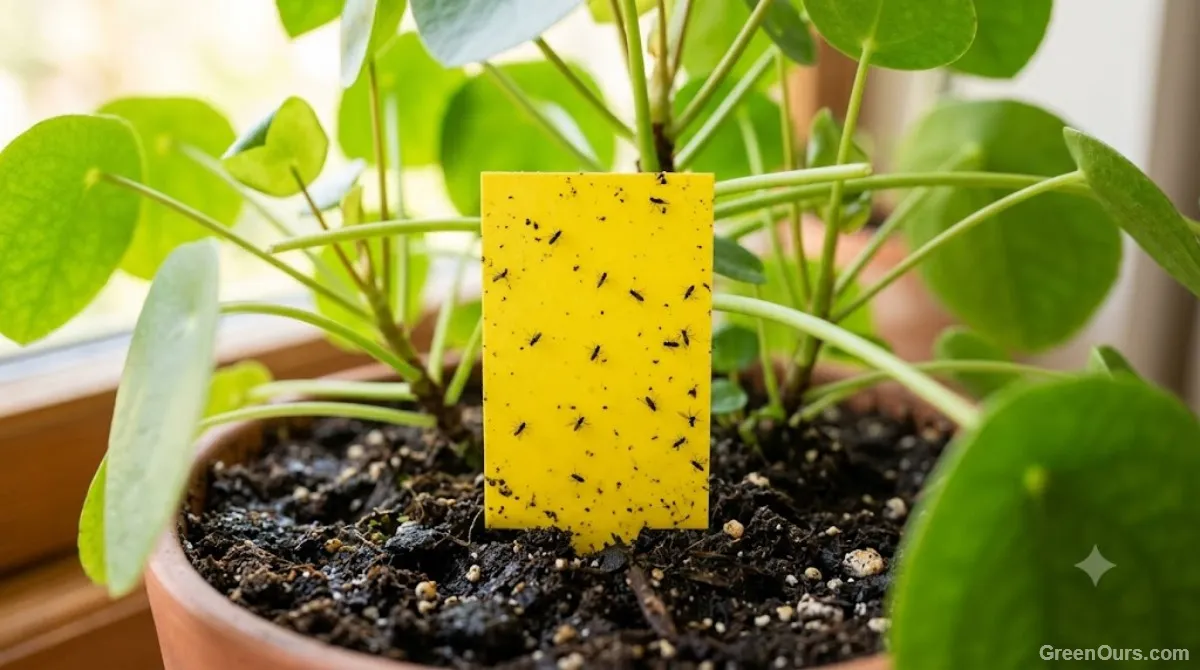
Step 4: Add Yellow Sticky Traps
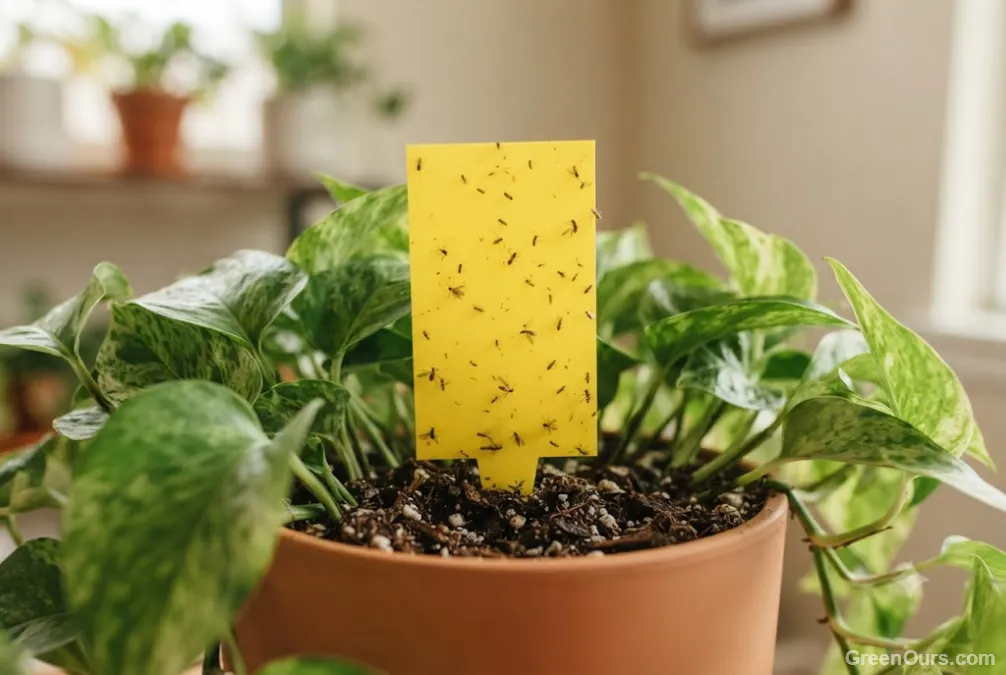
Whiteflies are strongly attracted to yellow. Place sticky traps just above the plant canopy to catch adults between spray sessions and to monitor whether the population is actually declining. A dropping trap count over two to three weeks confirms the treatment is working.
Outdoor vs Indoor Control Differences
Indoor infestations have no natural predators and no wind or rain to knock populations down, so they escalate faster and require stricter treatment discipline. Isolation is non-negotiable indoors — a single untreated plant on the same shelf reinfects everything else within days.
Outdoors, natural predators including lacewings and parasitic wasps provide some control on their own. Avoid broad-spectrum insecticides outdoors when possible, since they kill these beneficial insects along with the whiteflies and can make the underlying problem worse over a full season.
Preventing Reinfestation
Inspect new plants — especially anything purchased from a big-box store — before bringing them near your existing collection. A two-week quarantine period catches an infestation before it spreads.
Keep adequate spacing between plants to reduce leaf-to-leaf contact, and avoid overfeeding with high-nitrogen fertilizer, which produces the soft, tender new growth whiteflies prefer. Wipe leaves periodically to remove dust and check the undersides while you're at it — early detection means a two-week fix instead of a two-month one.
When Infestations Are Beyond DIY Control
If sticky trap counts aren't declining after three full weeks of consistent treatment, or if the infestation covers multiple mature plants and outdoor shrubs, a licensed pest control service with access to systemic treatments is the more reliable next step. Persistent whitefly populations can also indicate a nearby untreated source — a neighboring garden or greenhouse — that keeps reinfecting your plants regardless of how well you treat them.
What to Do Next
Whiteflies test patience more than skill. The insects themselves aren't hard to kill — the life cycle is what defeats half-hearted treatment. Stay on the 5-7 day schedule for the full three to four weeks, and the population has nowhere left to rebuild from.
Read our latest pest and disease diagnostics for more plant problems solved.