
Quick Takeaways
- Confirm the pest before you treat anything.
- Look for lace-like leaf damage and white side tufts.
- Match the control to the damage level.
- No method eliminates these beetles completely.
Identify Japanese Beetles
Don't treat anything until you've confirmed the beetle. Several insects chew leaves, and the fix differs for each.
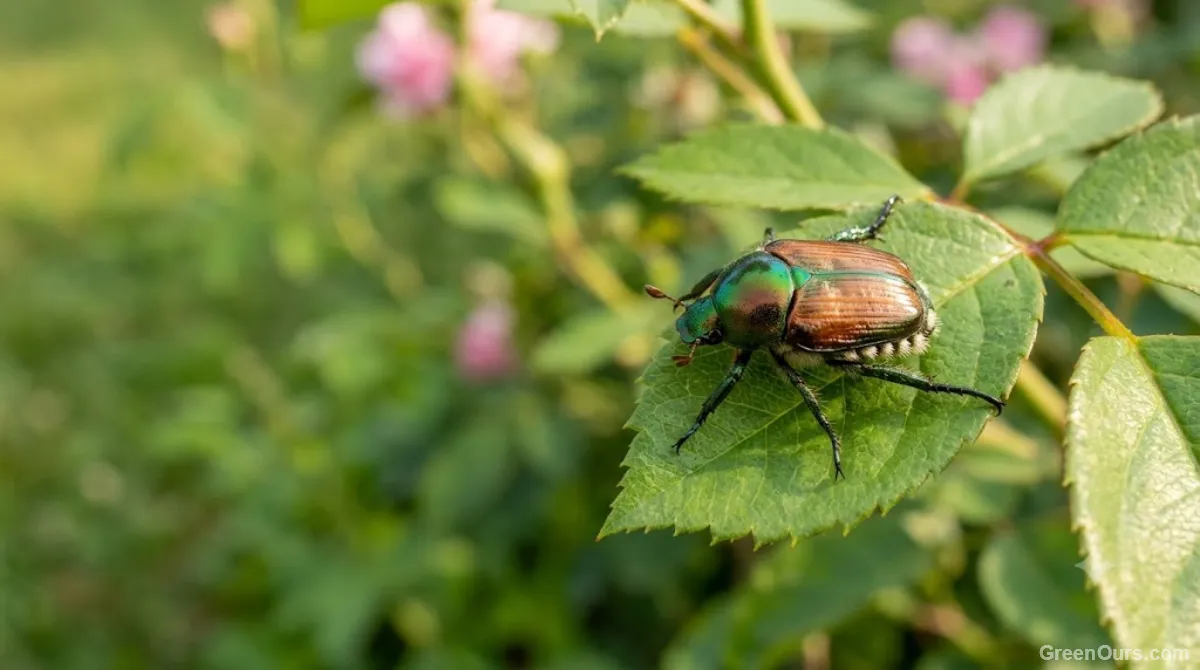
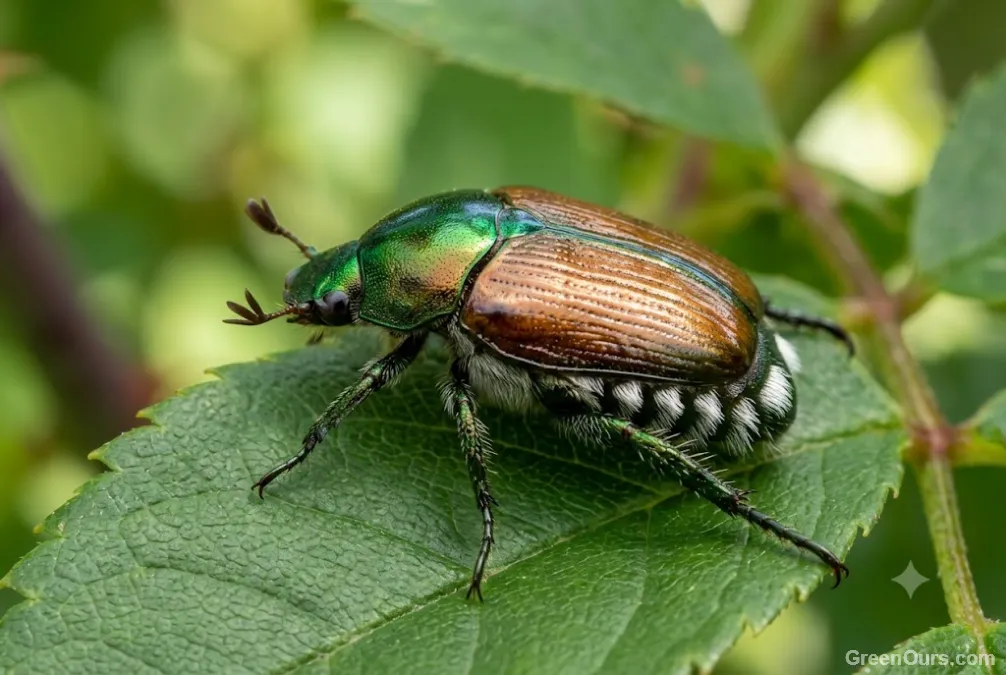
Adult Japanese beetles (Popillia japonica) are compact and hard to mistake once you know the features:
- Size: roughly 10–13 mm (slightly under ½ in.) long, with an oval body.
- Shiny metallic green head and thorax, with coppery-brown wing covers.
- A row of small white hair tufts along each side of the abdomen, plus a pair at the tip.
- Group feeding, often starting in the upper part of the plant.
Check the white tufts with a hand lens or your phone camera. The false Japanese beetle, also called the sand chafer, is a common lookalike. It lacks both the metallic green color and the white tufts.
Recognize Japanese Beetle Damage
Damage pattern is your fastest diagnostic. Japanese beetles eat the tissue between the veins and leave the veins intact. The leaf ends up looking like lace. This is called skeletonizing.
Leaf damage
Check the upper part of the plant first, where feeding often starts in full sun. Skeletonized leaves often turn brown and papery within days, and badly hit leaves may drop. Slugs and caterpillars usually leave ragged holes or chewed edges instead of a vein-only skeleton.
Flower and fruit damage
Beetles also eat petals, buds, and ripening fruit. Rose and hibiscus blooms can look shredded, and berries or grapes may be gnawed. Inspect flowers early in the day, before the beetles warm up and spread out.
How serious is it?
Many healthy, established trees and shrubs can tolerate heavy feeding in a single season without lasting harm. Tolerance still varies by species, how severe the feeding is, and the plant's overall condition.
Young plants and stressed plants are at greater risk. So are fruit, flower, and vegetable crops, where the damage costs you the harvest even when the plant survives. Don't treat tolerance as permission to ignore severe damage that repeats year after year.
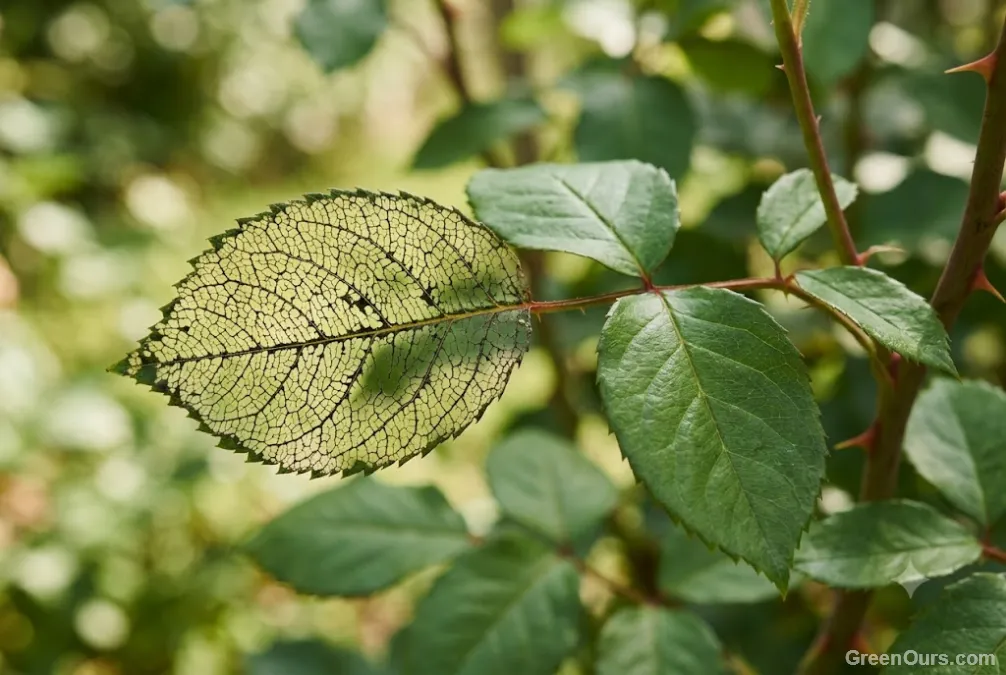
Beetles tend to gather. Feeding damage and the beetles' own pheromones can draw more of them to the same plant, so a plant that's already lacy is likely to get hit again. Check your favorites early and often.
When Beetles Arrive and What They Target
Season and timing
In the northern and central US, adults commonly begin emerging in late June or early July. Emergence follows soil and spring temperatures, so timing shifts by region and by year, and warmer areas may see beetles earlier. Your local extension office can tell you what's typical where you live.
Adults stay active for several weeks to a couple of months. Activity peaks on warm, sunny days. Cool mornings leave them sluggish.
Don't use your lawn to predict beetle numbers. Adults fly in from neighboring yards and fields, so treating your own turf rarely clears your plants.
Plants they hit hardest
Japanese beetles feed on hundreds of plant species. Extension lists commonly name these favorites:
- Roses, hibiscus, and hollyhock
- Grapes, raspberries, and blackberries
- Green beans
- Plum, crabapple, and other fruit trees
- Linden and Virginia creeper
Lilac, forsythia, dogwood, and juniper are often listed as less attractive. No plant is fully safe under heavy pressure, and susceptibility rankings vary by region. Check your state extension's list before choosing new plantings.
- Roses
- Hibiscus
- Grapes
- Berries
- Vegetables
- Ornamentals
Control Methods
Use a combination of methods for the best results. Choose by severity, not convenience, and start at the lowest rung that protects your plants.
Hand-picking
Works for small numbers, especially on shrubs and roses.
Traps
Catch beetles, but may draw more to your yard.
Broad-spectrum sprays
Can reduce beetles but also harm bees and predators.
Neem products
May reduce feeding; results vary by timing.
Row covers
Protect young plants and valuable crops.
| What you'll see | Start with |
|---|---|
| Light infestation | |
| A few beetles, minor lacing on mature plants | Hand-picking; accept some damage |
| Moderate infestation | |
| Groups on favorite plants, noticeable defoliation | Daily hand-picking plus covers on vulnerable plants |
| Heavy infestation | |
| Dozens per plant; young plants or fruit at risk | Exclusion covers first, then consider a suitable labeled treatment if damage continues (see the spray precautions below) |
Nothing here guarantees a beetle-free garden. The goal is plants that finish the season in good shape.
Hand-Picking and Exclusion Covers
Hand-picking
It's slow, but it can provide adequate control on small to moderate infestations affecting a few plants. Go in the cool morning, when beetles are sluggish.
- Hold a wide container of soapy water under the cluster.
- Tap or shake the branch so the beetles drop in.
- Repeat every day or two through peak season.
The beetles don't bite or sting, so gloves are optional. If a beetle carries a small white egg on its back, you can leave it. That egg belongs to the winsome fly, a natural parasite of Japanese beetles.
New beetles keep arriving. Repeated picking reduces feeding pressure while the beetles are active, but it won't clear the population.
Exclusion covers
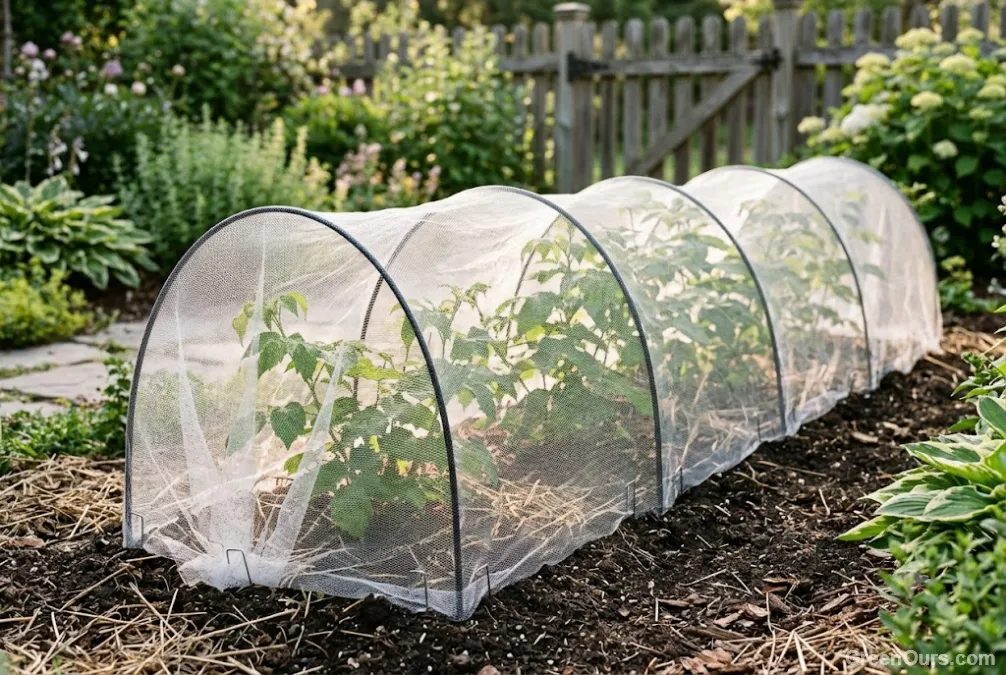
Fine insect netting or floating row cover blocks beetles physically. It suits young plants, small shrubs, and berry bushes you can cover completely. Choose a fine, lightweight fabric suited to your crop, and fit it snugly over the plant with room to grow.
Install it before beetles appear, and secure or bury the edges at ground level. Gaps let beetles in, so check the fit after wind or watering.
Covers also block pollinators. Remove them during bloom on crops that need insect pollination, then re-cover afterward.
Traps and Sprays: Where They Backfire
Traps
Commercial traps use floral and pheromone lures. They do catch beetles, but they also draw in more from the surrounding area. Many extension services discourage using them near susceptible plants, and some note that traps haven't been shown to reduce feeding damage.
A trap beside your roses can bring more beetles to your roses than you'd have had otherwise. If you still want one, keep it well away from the plants you're protecting and empty it often. Placement guidance varies by trap and landscape, so follow the product instructions and your local extension advice.
Sprays
Spray options vary widely in what they achieve, and products within a type aren't interchangeable:
- Neem-based products may reduce feeding in some cases, but results vary by formulation and timing. Follow the label directions for your plant.
- Insecticidal soap generally isn't effective on adult Japanese beetles.
- Broad-spectrum insecticides can knock beetles back, but they can also harm bees and natural predators. Systemic products in particular can affect pollinators.
Use only products labeled for Japanese beetles and for your specific plant. Follow every label restriction, including application timing, crop eligibility, pre-harvest intervals, and precautions for pollinators and other non-target insects.
Avoid open blooms that bees visit. Spraying outside bloom isn't automatically safe either, because some products can stay active on foliage and affect pollinators that visit later. If you're unsure, ask your local extension office.
Prevention Tips
- Inspect plants regularly, especially in early summer.
- Keep plants healthy and well watered.
- Keep traps away from the plants you want to protect.
- Cover young or valuable plants before beetles arrive.
- Follow every label rule on timing, crops, and pollinators.
- Combine methods, and don't rely on one solution.
Frequently Asked Questions
Are Japanese beetles dangerous to humans?
No. They don't bite or sting.
Can they be completely eliminated?
Not realistically. New beetles fly in from nearby yards and fields.
Do they come back every year?
Often, yes. Adults emerge each early summer where grubs lived in the soil.
What to Do Next
This week, check your most-eaten plant in the morning and count the beetles. A handful: drop them into soapy water and move on. A cluster on young plants: cover them before more arrive.
Expect some leaf lace regardless. A mature plant with ragged leaves in August often looks better by next season. Diagnose first. Fix second. Panic never.
Which plant in your garden gets hit first? Protect that one first.
Healthy plants, fewer pests, a greener tomorrow.Check your plants each morning through peak season.