
Quick Takeaways
- LECA vs PON: LECA uses inert clay pebbles with zero nutrients, while LECHUZA-PON is a pre-fertilized mineral mix of pumice, lava, and zeolite.
- Not a magic fix: Neither medium automatically eliminates root rot or fungus gnats; proper care and water management remain essential.
- Substrate characteristics: PON offers finer particle structure and consistent moisture contact, while LECA provides larger air spaces and macroporosity.
What Is Semi-Hydroponics for Houseplants?
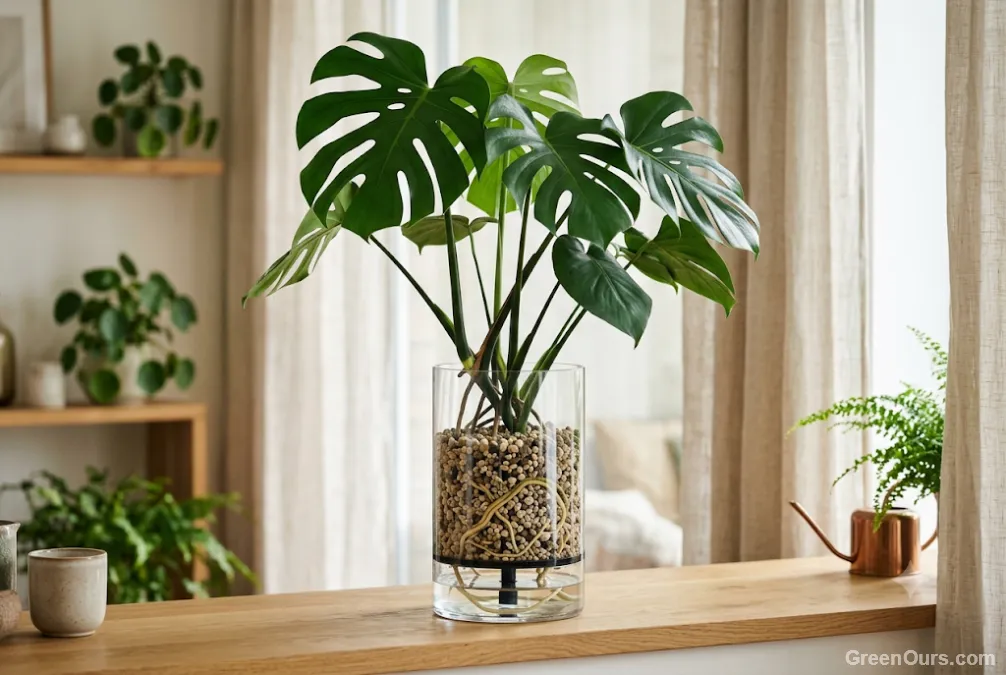
Semi-hydroponics is a growing technique where organic soil is replaced with an inert or mineral substrate. Instead of soaking organic matter that retains moisture, the plant sits in porous granules or clay spheres, drawing up water and dissolved nutrients from a shallow reservoir below via capillary action (wicking).
Because the media does not decompose, it allows higher root-zone aeration while keeping a steady moisture supply available to the plant. For beginners, LECHUZA-PON can be a convenient starting option because its pre-fertilized mineral mix reduces the need for immediate nutrient preparation. LECA offers a simpler inert medium but requires growers to manage nutrients separately once plants are established.
Pro tip: Semi-hydroponics does not automatically eliminate root rot or fungus gnats. Rot can still occur if water levels are set too high, oxygen is depleted, or decomposing debris remains around transitioning roots.
LECA vs. LECHUZA-PON: What’s the Difference?
While both substrates function under capillary wicking principles, their physical composition and nutrient delivery models differ substantially.
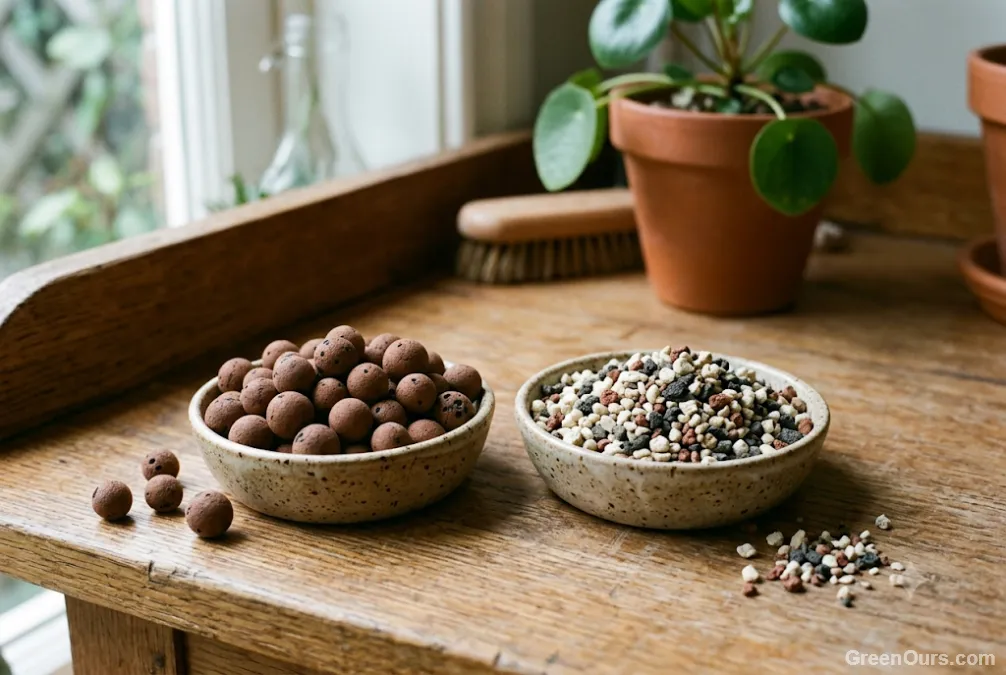
LECA consists entirely of expanded clay spheres baked at high temperatures. It is lightweight, highly porous, and completely inert, containing zero initial nutrients. LECHUZA-PON, by contrast, is a manufactured mineral composite consisting of pumice, lava rock, and zeolite, pre-fertilized with slow-release nutrients designed to supply plants for up to six months according to official LECHUZA product documentation.
| LECA (Expanded Clay) | LECHUZA-PON |
|---|---|
| Composition & Structure | |
| Composed of expanded clay spheres (common commercial grades average roughly 8–16 mm). | Mineral mix of pumice, lava rock, and zeolite; finer angular gravel mix (commonly 2–6 mm). |
| Moisture & Aeration | |
| Lower moisture retention; relies on strong macro-aeration between large spheres. | Higher moisture retention due to porous pumice and lava; more uniform capillary contact. |
| Root Support & Nutrition | |
| Lightweight spheres shift easily; inert, requiring nutrient solution once established. | Heavy, dense grit locks delicate roots in place; pre-fertilized with starter nutrients. |
Which Substrate Is Better for Your Plant?
Rather than following rigid species rules (such as assigning all Monsteras to LECA or all Alocasias to PON), evaluate plant adaptation, root condition, moisture requirements, and container configuration. Many genera can thrive in either medium given proper care.
- Fine vs. Coarse Root Systems: PON's finer, angular particle structure provides closer physical contact and uniform moisture distribution around delicate root hairs. LECA's larger spheres create broader air spaces, making it popular for thick, robust root systems that require generous oxygenation.
- Moisture Preferences: Plants that prefer a consistently damp root zone without soggy conditions often transition smoothly into PON due to its higher moisture retention.
- Setup Flexibility: Neither substrate is universally superior for a particular family; choose based on your watering routine and the specific container environment you maintain.
How to Set Up a LECA System
Setting up LECA properly prevents dust accumulation and ensures steady capillary action from day one.
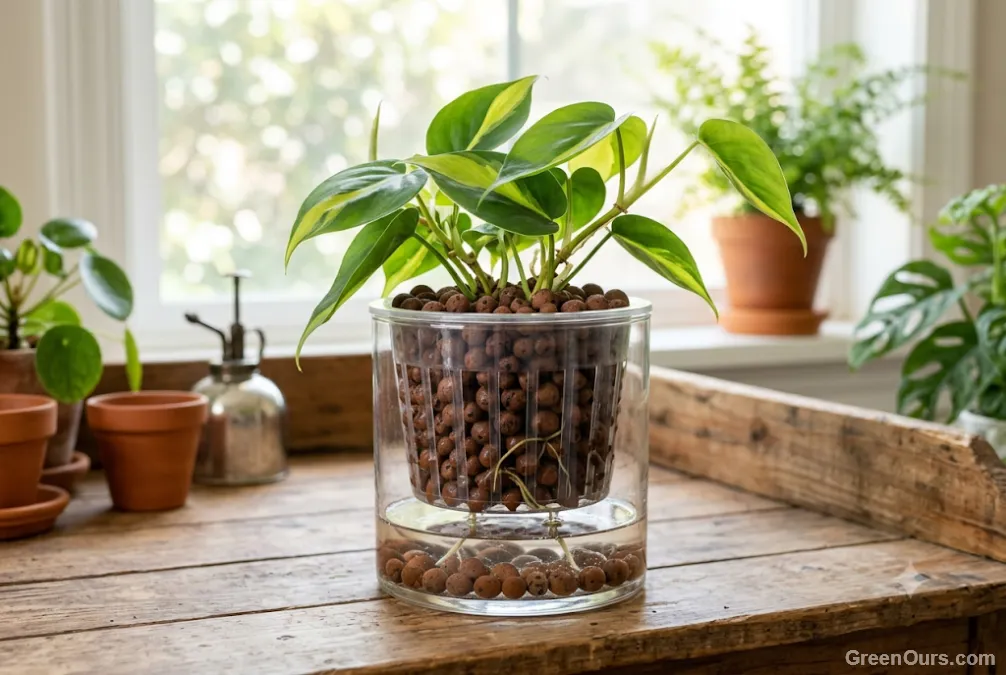
- Rinse and Soak: LECA arrives coated in heavy clay dust. Rinse it in a colander until runoff is clear, then soak the pebbles in plain water for 24 to 48 hours to fully saturate their pore networks.
- Select Your Container: A double-pot setup (an inner net pot resting inside a solid outer cachepot) allows easy checking and flushing. Clear pots or self-watering planters also work well.
- Position the Base and Plant: Place a base layer of LECA in the inner pot to support the roots, keeping the root crown elevated, and fill the surrounding space with remaining pebbles.
- Adjust the Reservoir: Add a shallow amount of water to the outer reservoir, following the design of your container. Keep the water below the root crown and avoid submerging the entire root system. Check moisture movement and plant response regularly, adjusting the reservoir depth as new roots develop.
How to Set Up a PON System
PON requires minimal prep, but its pre-fertilized nature changes how you handle nutrition.
Preparation and Pot Choices
Give PON a brief rinse to clear residual fine dust from shipping. It functions exceptionally well in self-watering planters equipped with water-level indicators, as well as clear glass or plastic vessels with a dedicated bottom reservoir.
Starter Fertilizer Considerations
Because LECHUZA-PON includes slow-release fertilizer designed to provide an initial supply of nutrients (commonly advertised for approximately six months), review the product packaging and monitor plant condition before introducing additional nutrients. Avoid automatic rigid feeding bans if deficiency signs appear, but respect the initial fertilizer supply to prevent salt stress.
How to Transition a Houseplant From Soil
Transitioning a houseplant from soil to semi-hydroponics requires careful root preparation to minimize transplant shock and encourage water-adapted root growth.
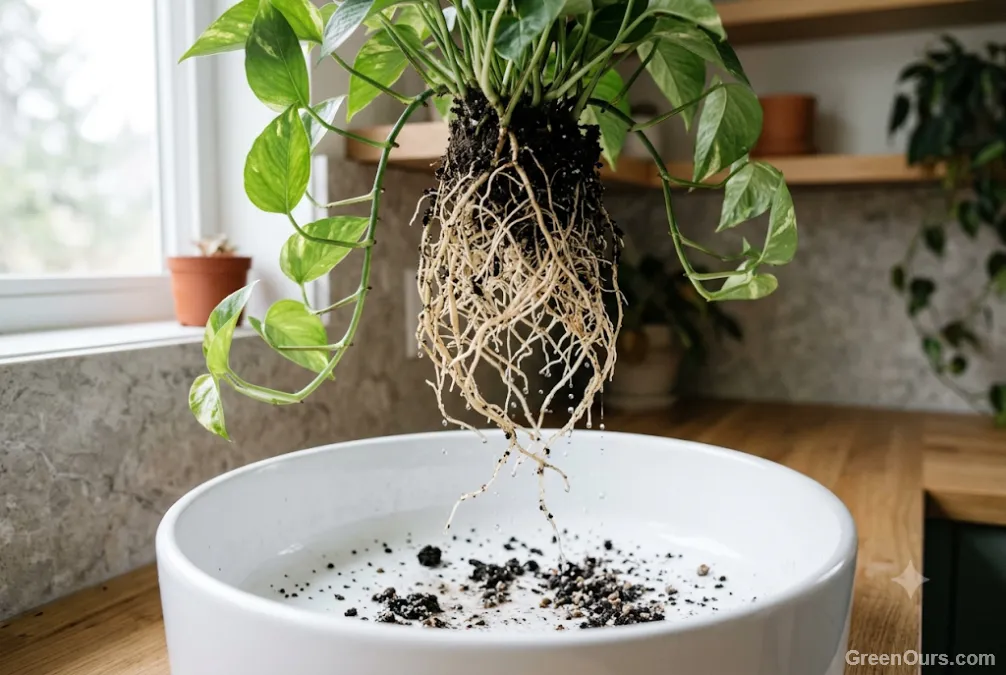
- Unpot and Remove Soil: Gently shake off loose potting mix and carefully tease apart the root ball.
- Wash Roots Thoroughly: Remove as much organic potting mix as reasonably possible under lukewarm running water. While tiny residual particles will not automatically destroy a plant, leaving large amounts of decomposing organic material can create unfavorable conditions and complicate water management.
- Inspect and Prune: Cut away dead, dry, or mushy roots using disinfected tools.
- Manage the Initial Watering Phase:
According to official LECHUZA planter documentation, plants potted in PON within their self-watering systems should initially be watered from above onto the substrate surface during an initial growing-in phase (which can last up to 12 weeks depending on plant size and season), keeping little to no standing water in the bottom reservoir until roots extend downward into the capillary zone. Note that this is manufacturer-specific guidance for integrated self-watering planters, rather than a universal requirement for custom semi-hydro setups.
Expect some initial root adjustment as the plant sheds soil roots and adapts by producing dedicated water-adapted roots.
Nutrients, pH, and Flushing
Because inorganic media lacks organic matter to buffer water chemistry, nutrient and pH management rest directly in your hands.
pH Management and Liquid Feeding
A nutrient solution pH range of 5.5 to 6.5 serves as a reliable starting target for many semi-hydro setups to optimize nutrient uptake. Monitor pH when using hydroponic nutrient solutions, particularly if foliage shows signs of nutrient availability issues. For LECA systems (and PON after its initial pre-fertilized nutrient supply wanes), use complete hydroponic nutrient formulations that supply dissolved essential macro- and micronutrients, as inert media provide no natural nutrition. Start newly transitioning plants on a reduced-strength nutrient solution following the fertilizer manufacturer's directions once established to avoid overwhelming sensitive roots.
Flushing Protocols
Over time, minerals from hard tap water and fertilizer applications accumulate on substrate surfaces. Flush when mineral deposits accumulate or when fertilizer salts are suspected by thoroughly rinsing the substrate under low-mineral water to keep root zones healthy.
Troubleshooting Semi-Hydro Houseplants
Recognizing early signs of stress helps you correct reservoir or substrate issues quickly:
- Yellowing Leaves: Mild yellowing can occur during the 2–4 week transition period as mobile nutrients shift. Widespread yellowing can also stem from lighting changes, natural leaf aging, watering inconsistencies, or nutrient deficiencies rather than root rot alone.
- Soft or Dark Roots: Clear evidence of root decay. Remove the affected plant, trim away dead root tissue using disinfected shears, rinse the remaining healthy roots, clean the container, and adjust reservoir depth and aeration.
- Wilting Despite Water in Reservoir: May indicate that roots have not reached the moisture zone, have been damaged, or are struggling to absorb water. Also check for transplant stress and environmental changes.
- White Crust on Media: Mineral deposits from hard tap water or fertilizer salt buildup. Review your water quality and fertilizer dosing, and flush the medium as needed.
- Algae Growth: Algae thrives when clear reservoirs receive direct light. Switch to opaque cachepots or cover clear glass walls to block light exposure.
Common Beginner Mistakes
- Setting the reservoir water level too high and drowning the main root crown
- Leaving excessive organic soil residue on roots when transitioning from soil
- Ignoring manufacturer guidelines or pre-fertilized nutrient loads in commercial substrates
- Skipping regular maintenance checks and allowing mineral buildup to affect root zones
- Expecting semi-hydroponics to solve pre-existing lighting or humidity deficiencies
Quick Substrate Picker
Choose LECA when you prefer a lightweight medium with large air spaces and are comfortable managing nutrients separately. Choose LECHUZA-PON when you want a finer mineral mix with closer moisture contact and an initial supply of slow-release nutrients.
FAQs
Can I mix LECA and LECHUZA-PON together?
Yes, but combining them changes how water moves through the container. LECA creates larger air spaces, while finer PON particles provide closer moisture contact. If you experiment with a mixture, monitor moisture distribution carefully and avoid assuming that layering one medium beneath the other automatically improves drainage. Beginners may find it easier to start with one substrate.
Do I need special hydroponic nutrients for LECA?
Yes. Because LECA is completely inert and provides no nutritional value, complete hydroponic liquid fertilizers are recommended because they supply fully dissolved essential elements and trace minerals.
Can LECA and PON be reused?
Both substrates can often be reused multiple times after removing roots, organic debris, and mineral deposits. If the previous plant had root disease or pest problems, use an appropriate cleaning and disinfection method before reuse. Discard material that has broken down or remains contaminated. Spent slow-release fertilizer in PON does not mean the mineral substrate itself is unusable.
Choose the substrate that best fits your plant's moisture needs, root condition, and container setup. Start with a manageable system, monitor how your plant responds, and adjust your care routine as new roots develop.
Explore more plant care guides