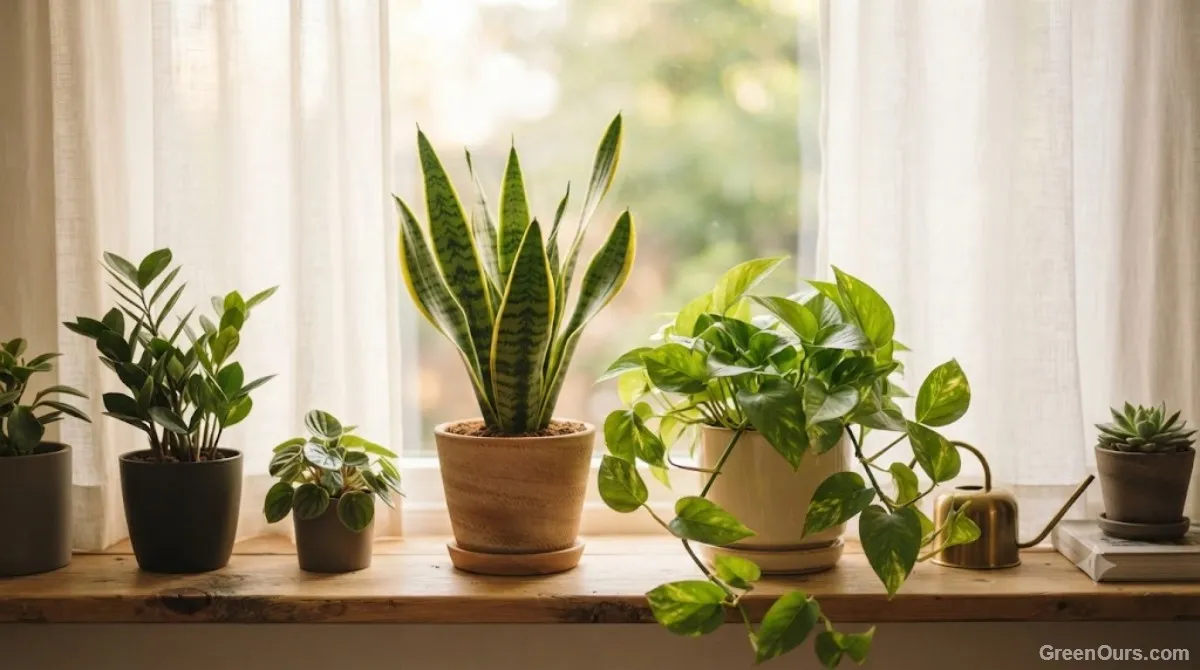

How Long Can Houseplants Go Without Water?
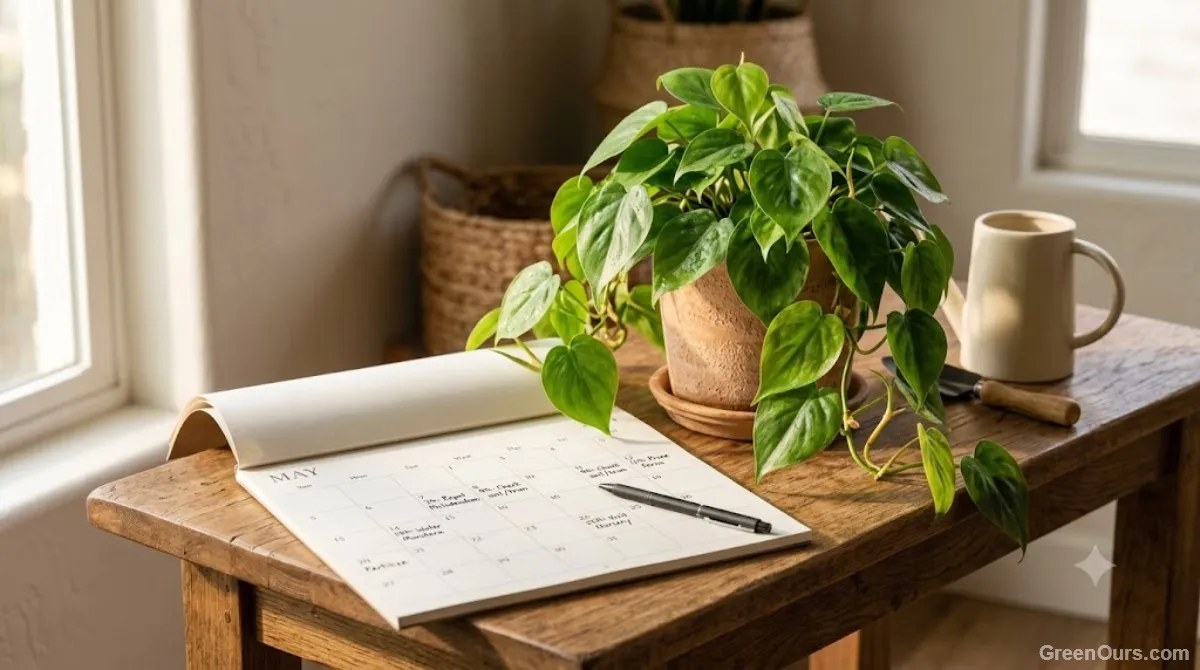
Before you do anything else, be honest with yourself about your calendar. A long weekend and a three-week trip abroad call for completely different strategies, and treating them the same is where most vacation plant care goes wrong.
For anything under a week, many established houseplants do fine with a thorough watering right before you leave and nothing else — though pot size, plant size, temperature, and light all shift that window somewhat, so a small, sun-baked pot won't stretch as far as a larger one in a cooler room. Soil generally holds moisture longer than you'd think, especially if your plant isn't sitting in direct, blasting sun. Past the seven-to-ten-day mark, though, you'll want a backup system in place, because even the most drought-tolerant plant has its limits.
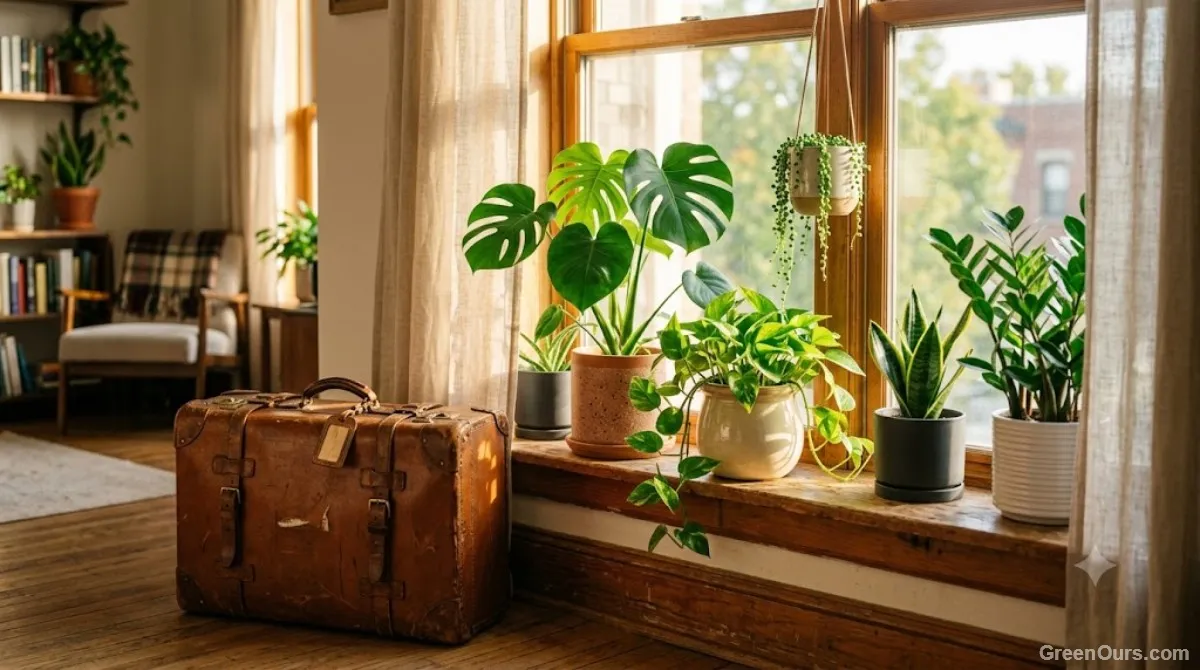
At a Glance: Trip Length and Plant Type
Use this as a starting point, then adjust based on your specific plant, pot, and home conditions.
| Trip Length | Drought-Tolerant (succulents, snake plant, ZZ) | Thirstier Plants (ferns, calatheas) |
|---|---|---|
| Under a week | One thorough watering before you leave | One thorough watering, moved away from strong sun |
| One to two weeks | Usually still fine with a single soak | Set up wicking or the bathtub method |
| Two to three weeks or more | Still generally fine; check soil if possible | Bathtub method plus grouping; consider asking someone to check in |
The Plants That Won't Even Notice You're Gone
A few houseplants are naturally more forgiving than others about being left alone, and it's worth knowing which of yours fall into that category before you plan any special setup for them.
Succulents and Cacti
These store water in their leaves and stems for exactly this reason. Many established succulents can handle two or three weeks without water, especially when kept in appropriate light and a fast-draining mix — though exact tolerance varies by species, pot size, and season. If anything, the bigger risk is someone well-meaning topping them up while you're away.
Snake Plants, ZZ Plants, and Pothos
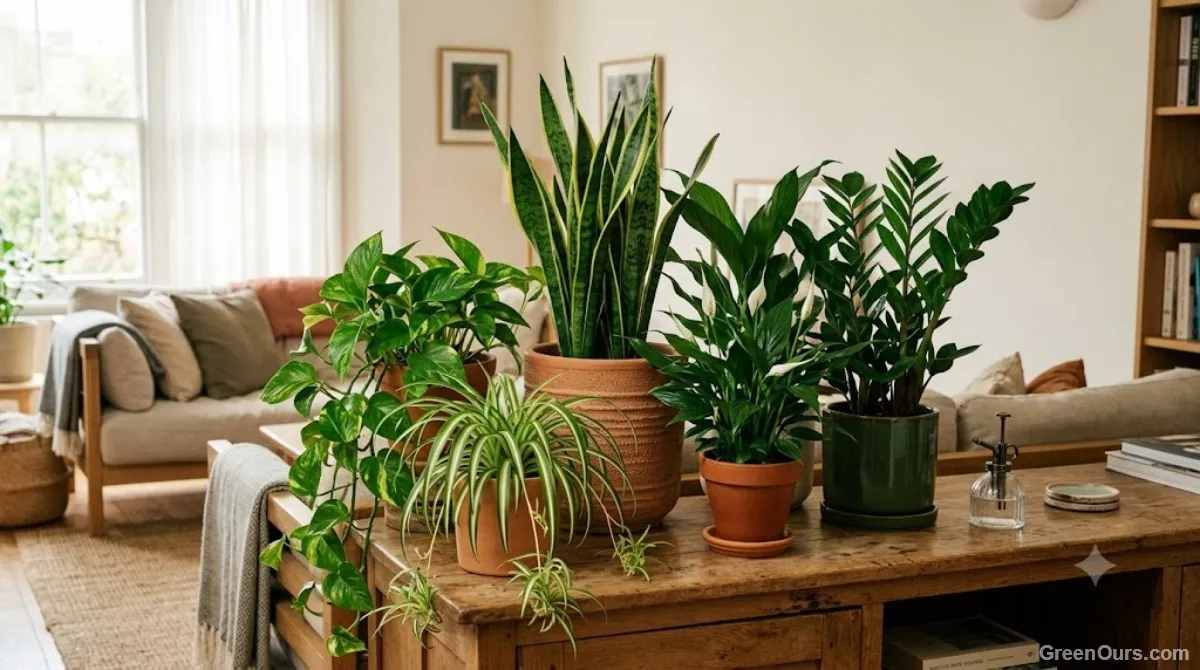
Snake plants store water in their thick, fleshy leaves, while ZZ plants rely on water-storing rhizomes underground — different structures, but both built for the same result: going a long stretch without watering. Pothos doesn't store water the same way, but it will happily coast on a single good soak for a week or more, especially if you move it a little farther from strong afternoon sun before you go.
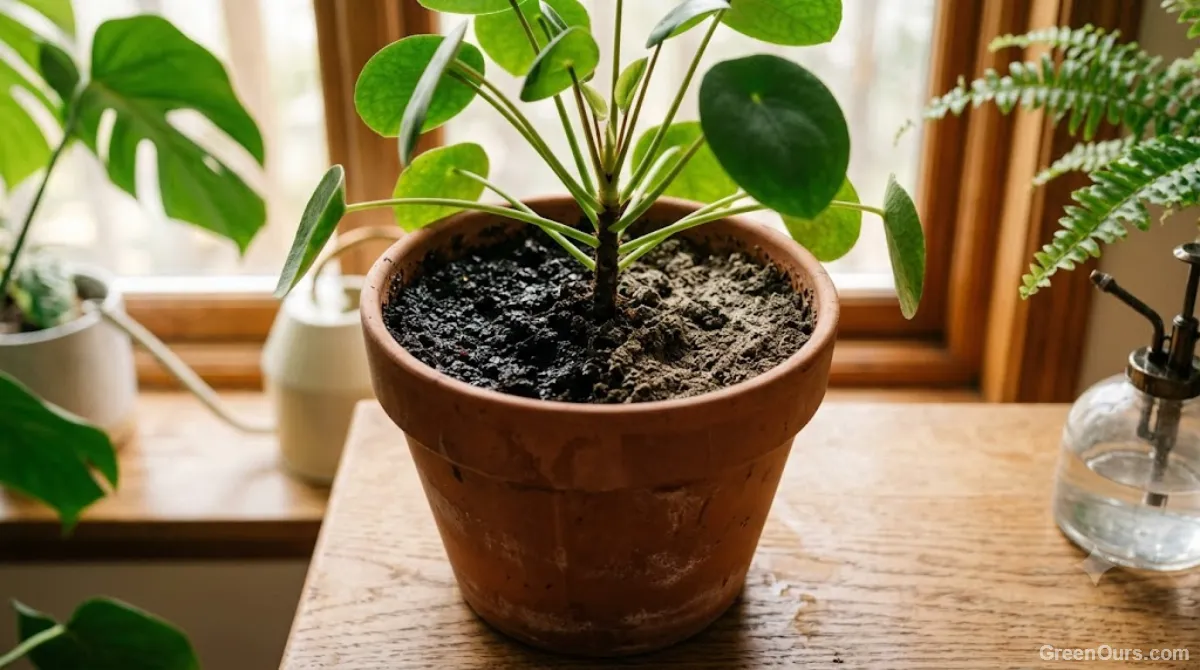
If you're not sure how a plant will handle being left alone, water it well and check the soil in three days. If it's still damp at knuckle-depth, that plant is a low-worry traveler.
Household Fixes for Trips Longer Than a Week
For longer absences, you don't need a gadget. You need water that releases slowly over time, and there are a few reliable ways to set that up with things already in your house.
The bathtub method is the one I reach for most often — for plants that actually want consistent moisture. Line the tub with a towel, water everything well, and set your pots directly on the damp towel with an inch or two of water in the bottom of the tub. Use this only for plants that tolerate consistently moist conditions, and make sure every container has drainage holes — a pot without one will sit directly in standing water rather than wicking it up as needed. The towel wicks moisture upward, the tub holds humidity, and you've essentially built a self-watering tray for a dozen plants at once. Skip this one for succulents, cacti, and other plants that need to dry out between waterings — the constant humidity works against them rather than for them.
String wicking works well for individual pots you don't want to move. Run a length of cotton yarn from a bowl of water into the soil, and it'll draw moisture along steadily for one to two weeks. It looks a little odd, but nobody's home to judge you for it.
Grouping plants together is a small move that makes a real difference too. Clustering pots raises the humidity around their leaves and slows how quickly the soil dries out, which buys you extra days without touching a single watering can.
Prepping Thirstier Plants Before You Go
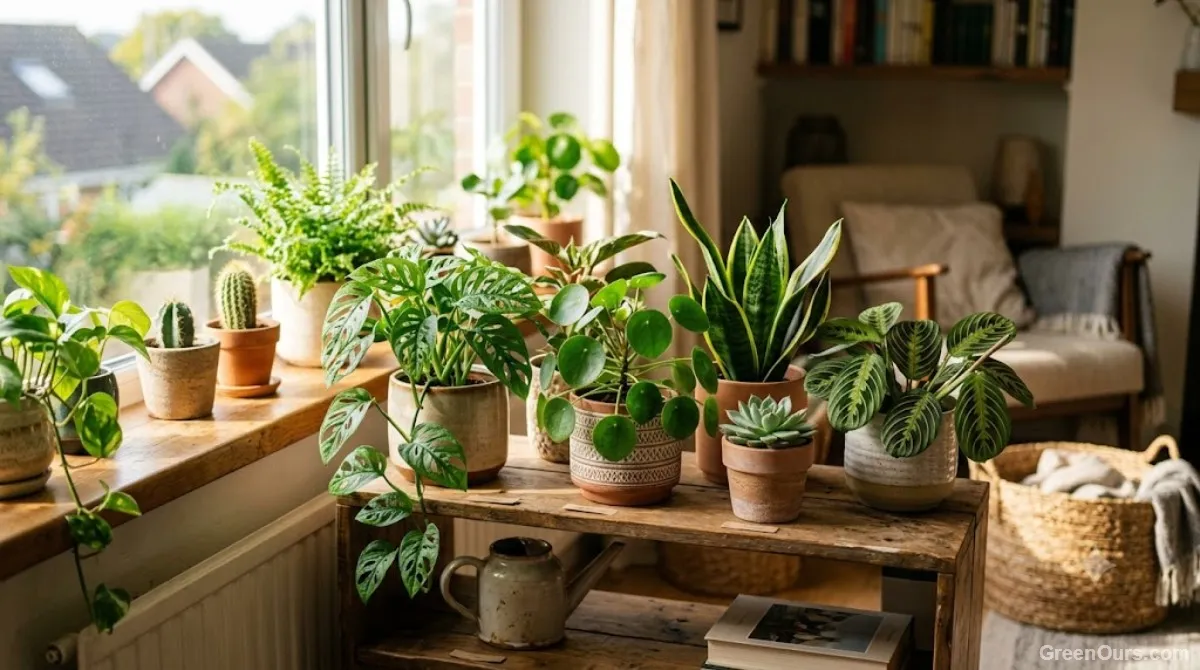
Ferns, calatheas, and other plants that like consistently moist soil need a little more thought than a quick soak and a goodbye. These are the ones that'll sulk fastest if you leave them exactly where they usually sit.
Move them a step or two back from any window that gets strong afternoon sun. Less direct light means less water lost through the leaves, which can be the difference between soil that's merely dry and soil that's bone dry when you walk back in. Pairing that with the bathtub or wicking method gives these plants a real shot at looking exactly the same as when you left.
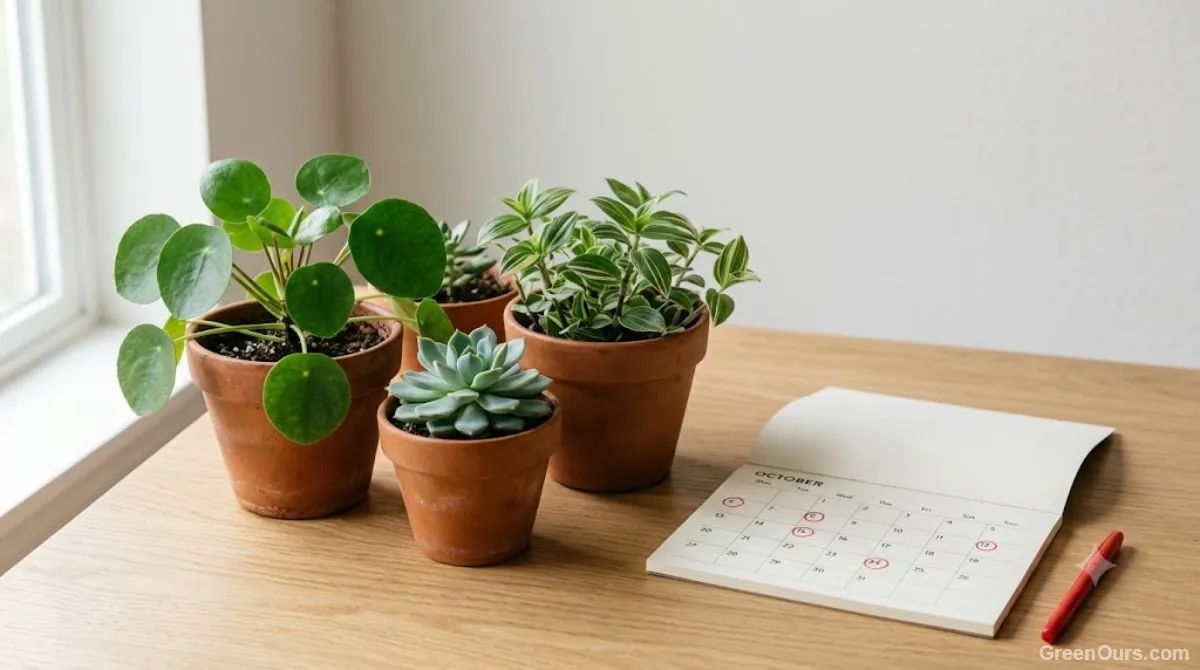
Your Pre-Departure Checklist
Run through this the day before you leave, and you'll cover almost everything that actually matters:
- Check soil moisture on every plant rather than watering on autopilot
- Water thoroughly only where it's actually needed
- Group plants by watering needs, not just by looks
- Move thirstier plants a little farther from strong afternoon sun
- Set up wicks or a bathtub tray for trips longer than a week
- Empty any standing water from saucers before you go
- Skip fertilizing until you're back
- Test your setup a day early if you're trying it for the first time
What Not to Do Before You Leave
The most common vacation plant care mistake isn't underwatering. It's overcorrecting. Soaking every plant heavily the night before a trip can leave roots sitting in waterlogged soil for two weeks, which invites rot far more reliably than a slightly dry pot ever would.
Skip fertilizing right before you go, too — it's an unnecessary variable while nobody's around to watch how the plant responds. And resist the urge to tuck plants into a dark closet "for safety." Without any light at all, even the toughest houseplant will start dropping leaves within days.
Want more beginner-friendly houseplant know-how?
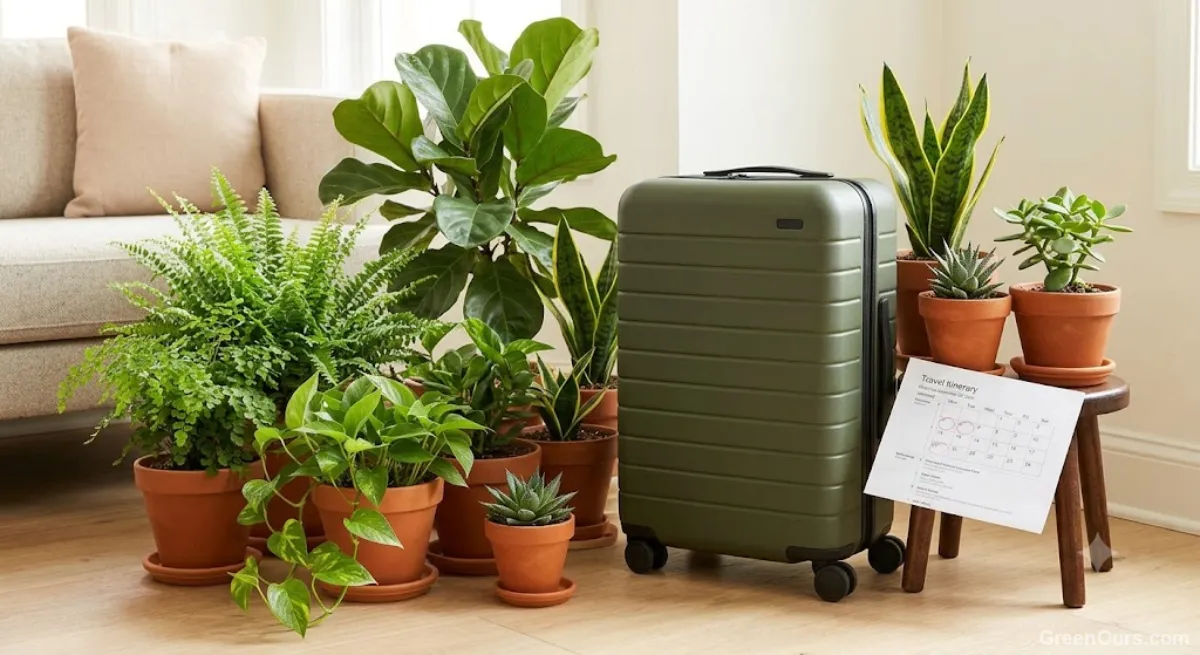
You don't need a plant sitter, a subscription for a fancy watering globe, or a week of pre-trip anxiety. You just need ten minutes before you leave to sort your plants into two piles — the ones that couldn't care less, and the ones that need a towel, a bowl of water, and a spot out of the sun. Do that, and you'll come home to a windowsill that looks like you never left.