
Trailing vs Upright Houseplants: What Growth Habit Actually Means
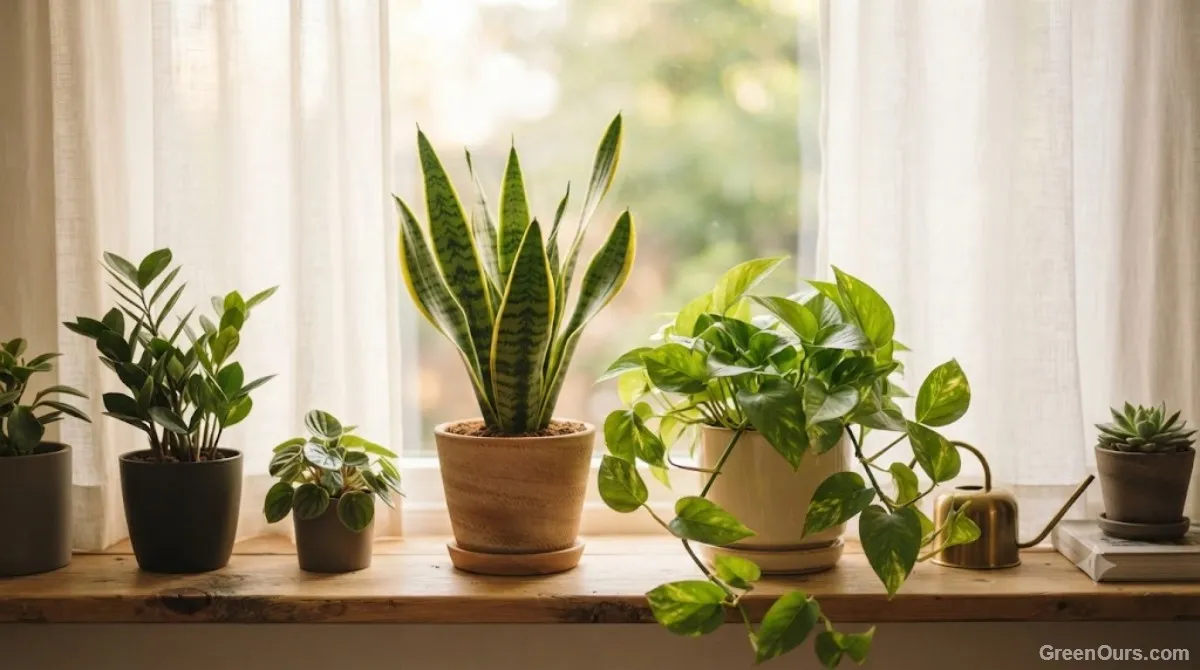
Every houseplant grows in a direction that's built into its nature. Trailing plants send out long stems that reach outward and down, looking for something to climb or somewhere to spill. Upright plants do the opposite — they grow from a central point and reach upward, holding their shape with sturdy stems or a rosette of leaves close to the base.
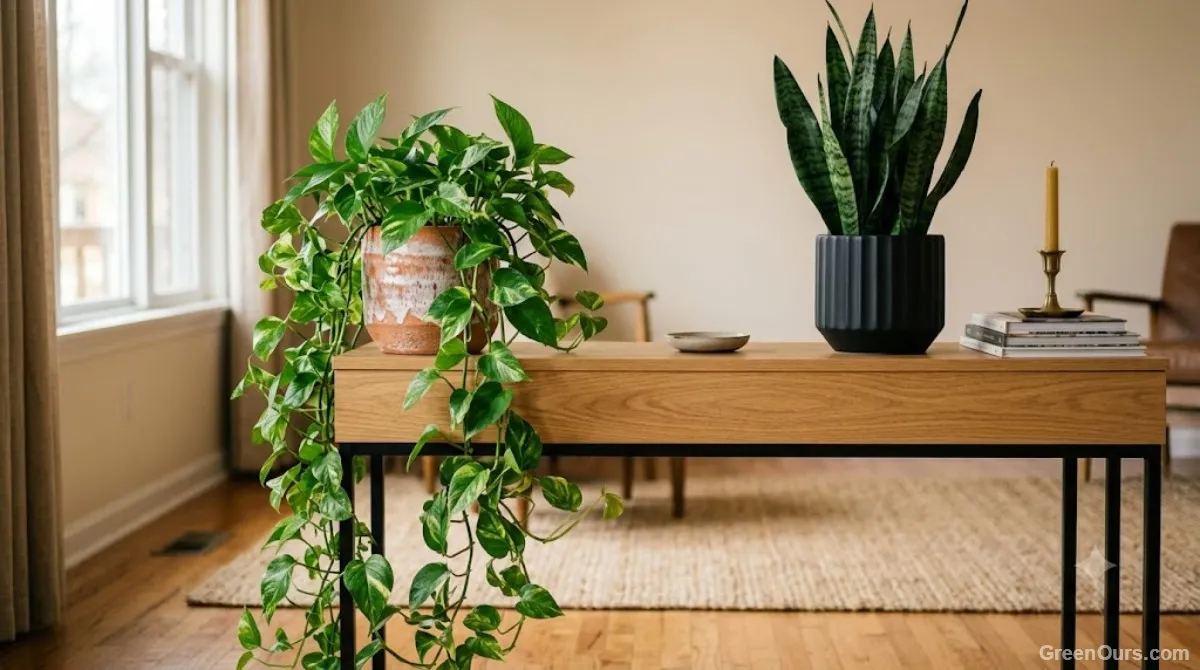
Neither habit is better than the other. They just solve different problems in a room. A trailing pothos softens a hard edge. An upright snake plant holds a corner together. Once you know which job you need done, the plant choice gets a lot simpler.
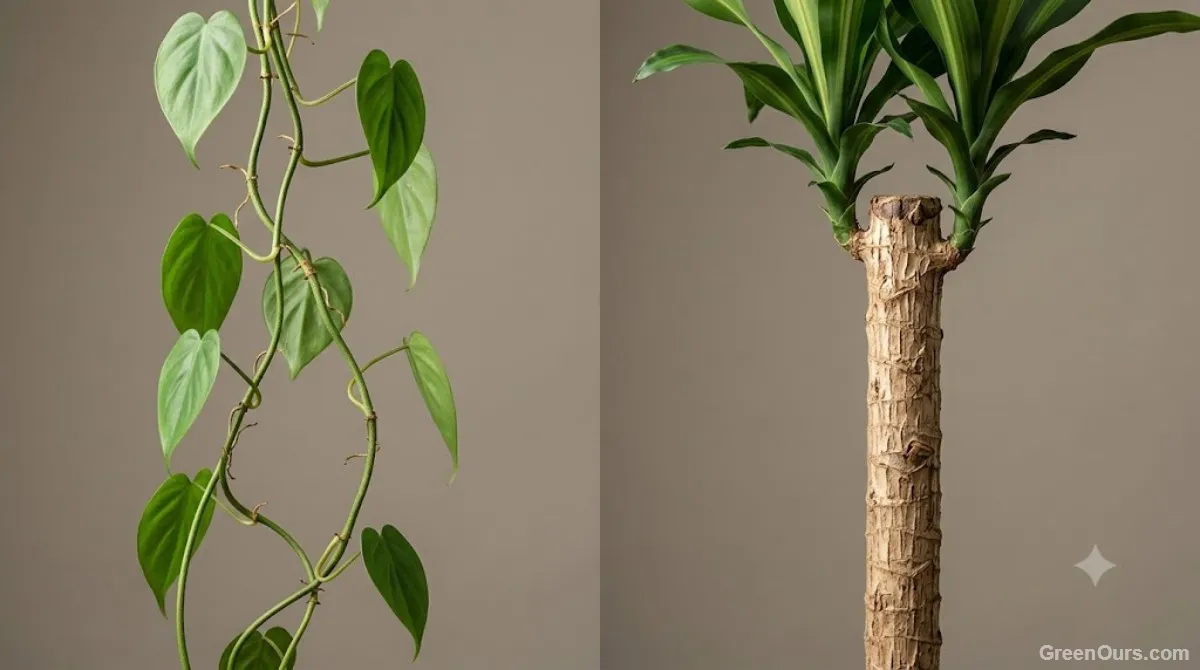
A quick way to check a plant's habit before you buy: look at where new growth is heading. If it's reaching over the pot's rim, it's telling you it wants to trail. If it's pushing straight up from the center, it wants room to stand tall.
Where Trailing Plants Do Their Best Work
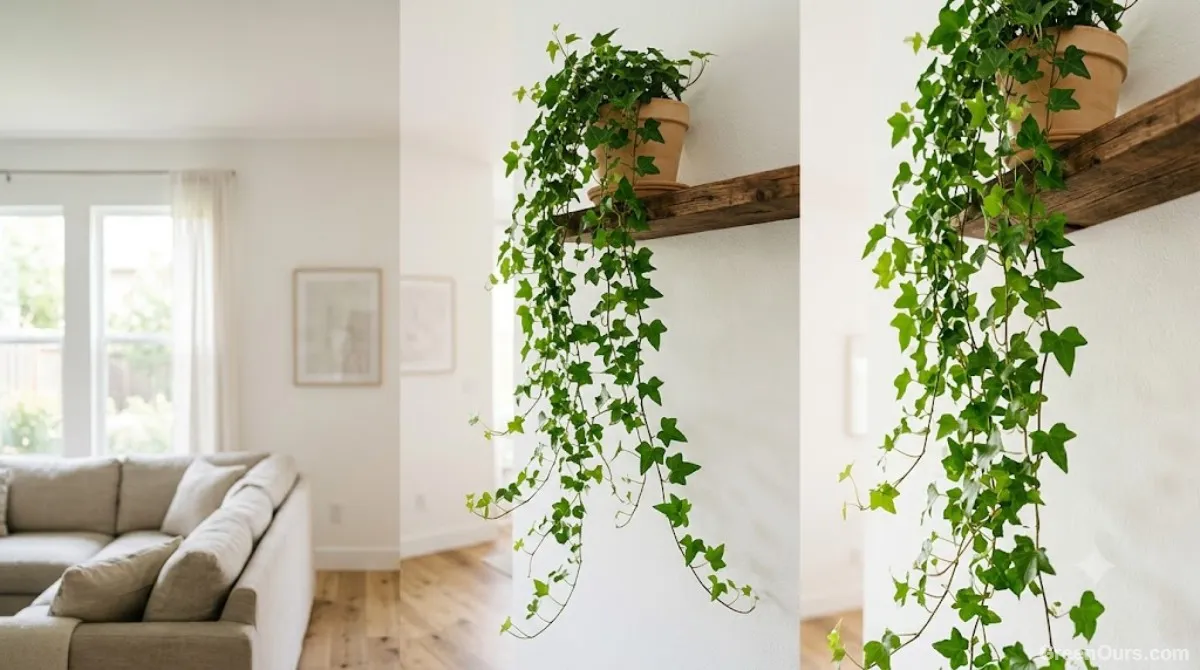
Trailing plants are made for vertical space you're not otherwise using — the top of a bookshelf, a hanging planter near a window, a high plant stand in the corner of a room. They fill the air above eye level, which is space most of us forget about entirely. When you let a vine cascade downward, it draws the eye upward and creates a sense of movement in an otherwise static room. It brings a touch of wildness indoors, breaking up the rigid straight lines of architectural walls and shelving units.
Vertical placement also allows trailing varieties to display their foliage in full. When stems hang freely, they're less likely to sit densely against a damp surface, which can help keep foliage better exposed to air.
Good Beginner Trailing Options
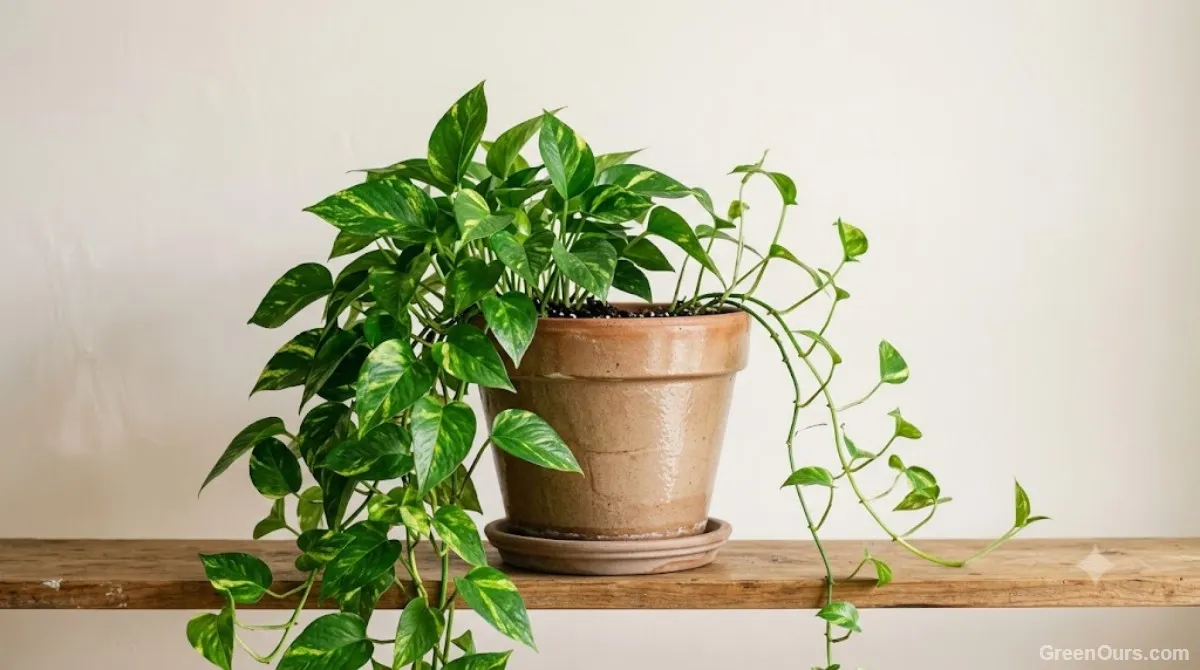
Pothos is the classic starting point — it tolerates a range of light and forgives you if you forget to water it one week. Heartleaf philodendron trails a little more delicately and does well in medium light. String of pearls needs brighter light and less frequent watering, so it's a step up once you've got the basics down. English ivy is another wonderful option if you have bright, cool rooms, offering delicate lobed leaves that layer beautifully over pot edges. Creeping fig works nicely in humid spaces like bathrooms, adhering gently to surfaces if given a little support, though it prefers consistent moisture to stay lush. Tradescantia zebrina brings vibrant purple and silver tones, trailing rapidly across elevated ledges while taking cuttings effortlessly.
Where They Struggle
Trailing plants placed on a low tabletop or a crowded desk tend to look messy fast, because their stems have nowhere to go but sideways into whatever's next to them. If you don't have height to give them, they're not the right pick yet — no matter how much you love the way they look in photos. They also struggle when placed in high-traffic hallways where brushing past trailing vines can snap delicate stems or knock lightweight pots off balance. Furthermore, keeping trailing stems flat on surfaces often hides the under-leaves from light, causing premature leaf drop near the base of the pot.
Where Upright Plants Do Their Best Work
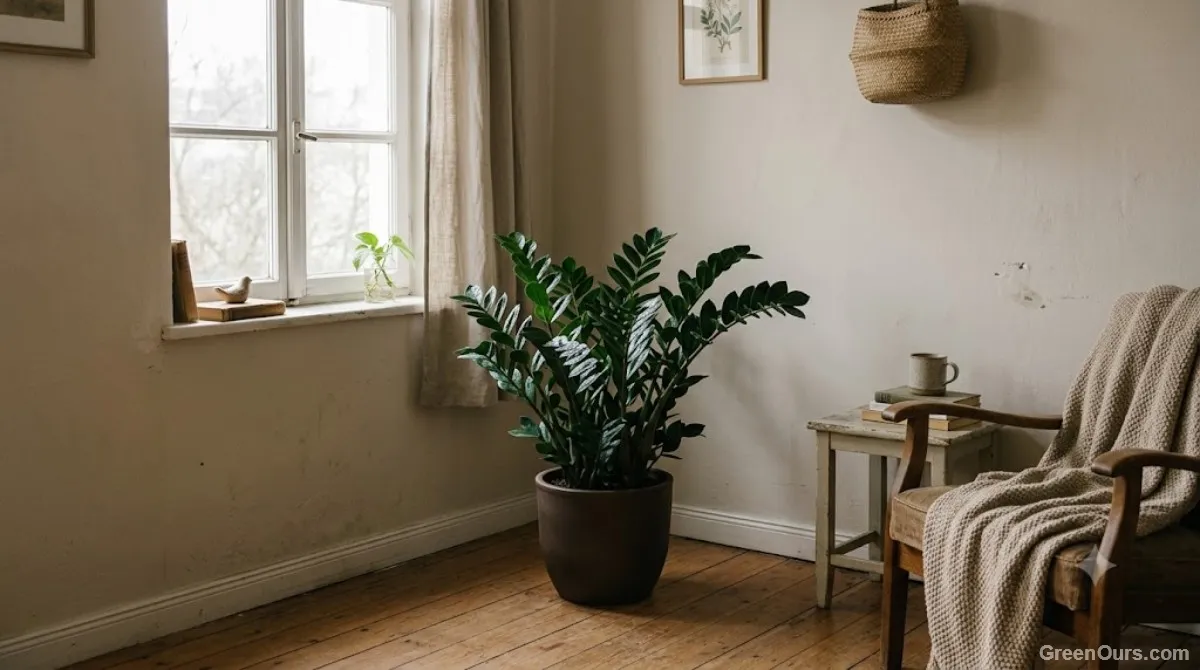
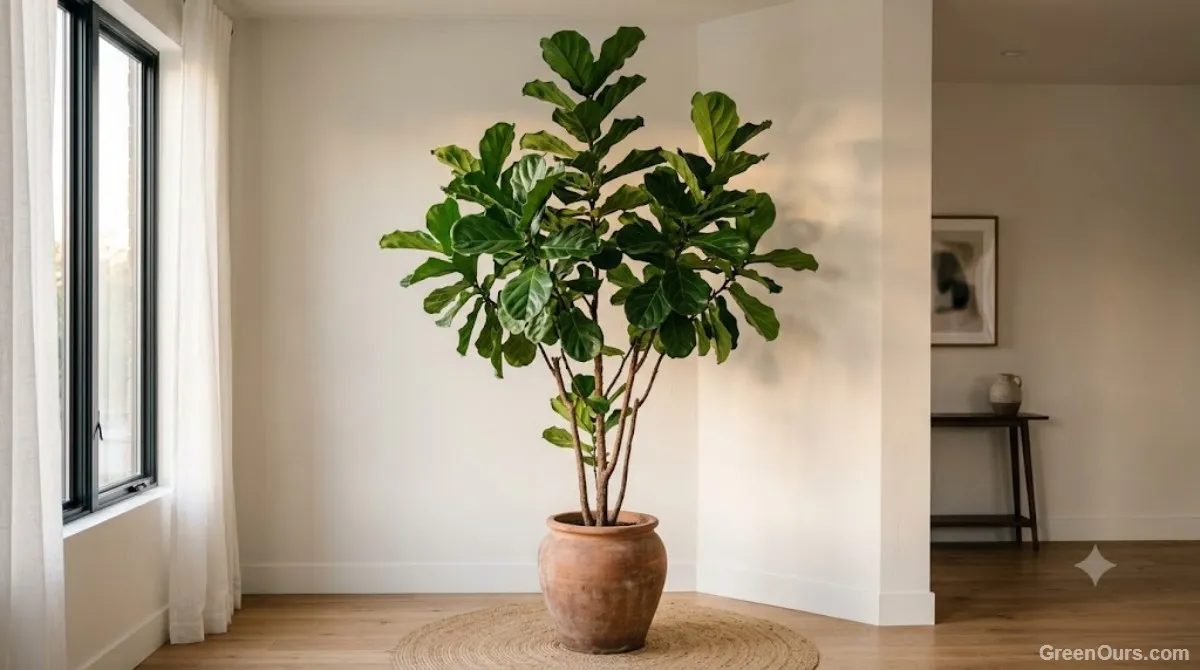
Upright plants are your structure builders. They hold a shape and a footprint, which makes them perfect for floor corners, empty spots beside furniture, or anywhere a room feels like it needs an anchor instead of a soft touch.
They establish verticality without requiring architectural alterations, grounding a space and giving the eye a solid focal point to rest upon. Because upright species concentrate their mass vertically, they excel at filling vertical gaps beside tall furniture like bookcases, wardrobes, or floor lamps. Their distinct silhouettes draw clear visual boundaries, helping to define separate zones in open-plan living areas without blocking sightlines or cluttering walking paths.
Good Beginner Upright Options
Snake plants are about as forgiving as houseplants get, and they hold a strong vertical line without needing much from you. ZZ plants offer a similar low-maintenance structure with slightly glossier leaves. If you want something taller for a genuinely empty corner, a dracaena will grow into real floor-standing height over time. Cast iron plants offer broad, dark green leaves that handle neglect gracefully, while rubber plants provide a bold, tree-like silhouette that commands attention in medium to bright rooms. Yucca canes and ponytail palms also lend strong architectural appeal with their sturdy wood-like trunks, perfect for sunny floor spots that need immediate vertical height.
Where They Struggle
Upright plants tucked onto a crowded shelf just look boxed in — you lose the very structure that makes them worth having in the first place. They need breathing room around their base and above their crown to actually read as the anchor piece they're meant to be. When squeezed into narrow bookshelves or low ledges, their upward aspirations are visually thwarted, making the entire display feel cluttered and awkward rather than sculptural. Additionally, placing tall vertical plants under low hanging cabinets forces their stems to bend, ruining their natural growth form permanently.
Choosing Based on Light, Not Just Looks
Growth habit tells you where a plant fits in your layout, but light still decides whether it'll actually thrive there. A trailing plant destined for a high shelf needs to handle whatever light reaches that height — often less than what's available at window level. Pothos and philodendron are forgiving here. String of pearls is not, and it'll stretch out thin and sparse if the light's too low.
Upright plants earmarked for a floor corner face the same test. Snake plants and ZZ plants tolerate low light well, which is exactly why they're the go-to for corners that don't get much sun. A fiddle leaf fig, on the other hand, wants bright indirect light and will sulk in a dim corner no matter how architecturally perfect that spot looks. Understanding this dynamic prevents the heartbreak of buying a gorgeous structural specimen only to watch it drop its lower leaves because the room's ambient light simply wasn't enough to sustain its mass.
Remember that light intensity drops off sharply as you move away from windows. An upright plant standing six feet back from a south-facing window receives only a fraction of the light given to a vine trailing right on the sill. Always measure the actual light at the exact resting place of the pot before finalizing your choice.
Mixing Both Habits in One Room
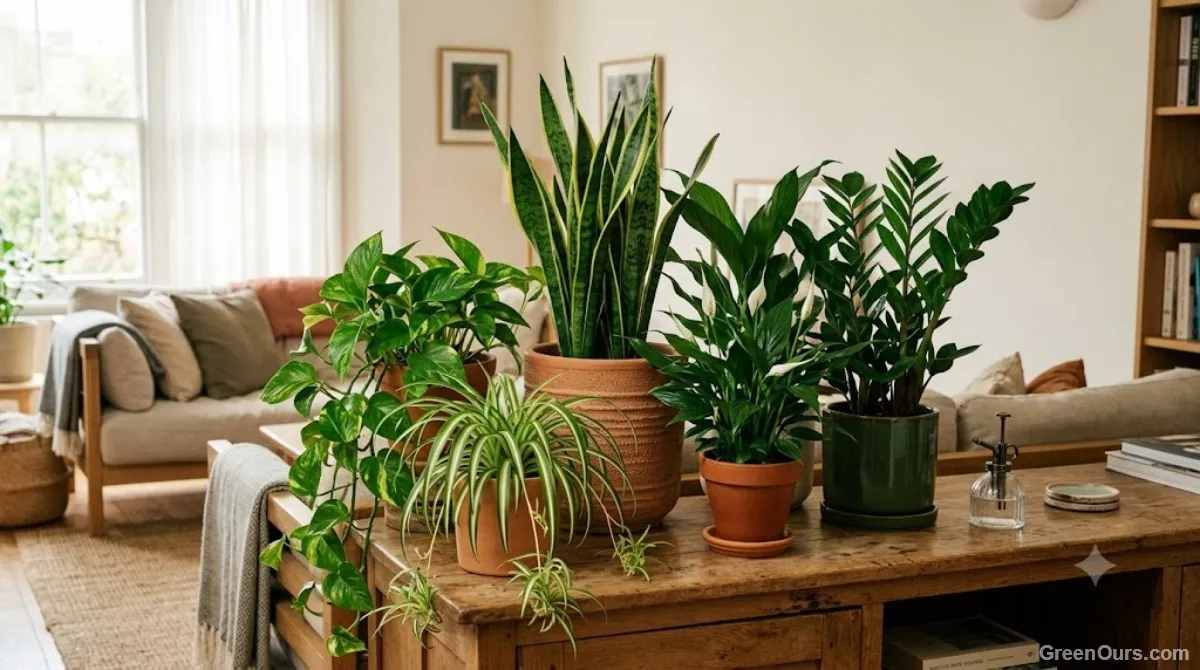
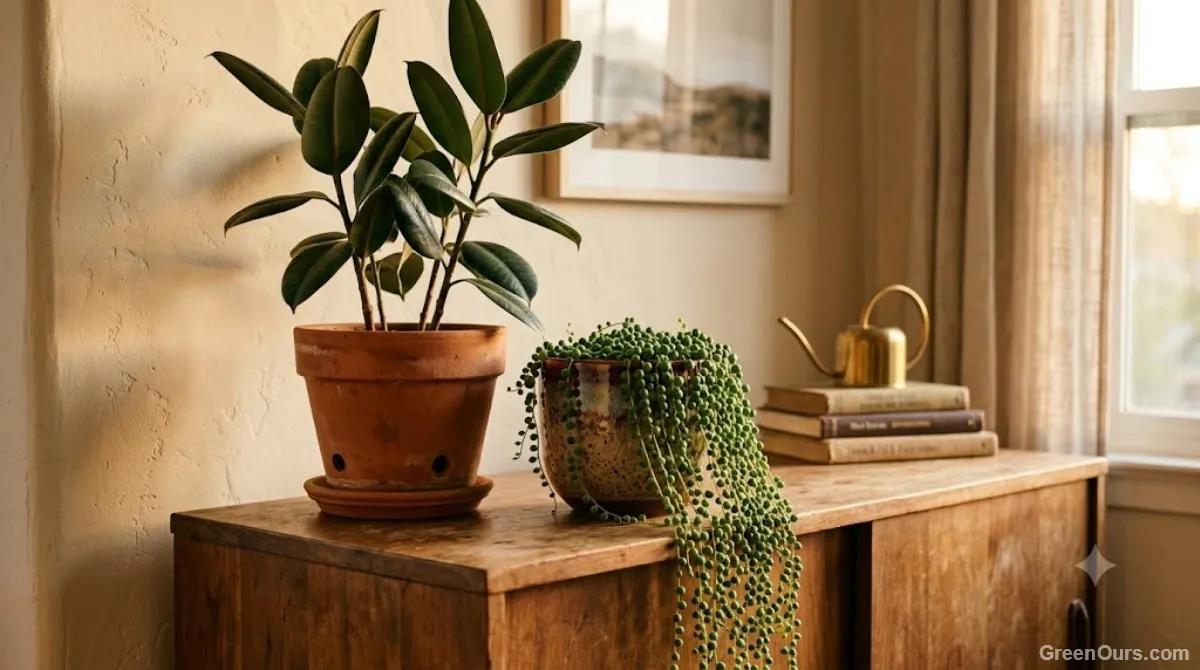
The rooms that feel most put-together usually aren't all-trailing or all-upright — they mix both. An upright plant on the floor gives a corner weight, while a trailing plant on a shelf above it fills the space in between. That layering is what makes a plant collection look curated instead of scattered.
Try grouping three plants at three different heights — one trailing from above, one upright at floor level, one smaller and rounded in between on a side table. You'll notice the eye moves through the space instead of landing on one flat cluster of green. Leave enough real distance between the upright plant and the one trailing above it so the taller plant's canopy doesn't shade it out, and so air can still move freely around both — crowding two plants together for the look of it works against the airflow and light each one actually needs.
When combining different growth habits, consider leaf texture and pot materials as well. A coarse-textured upright plant like a monstera pairs beautifully with fine-textured trailing vines like a string of hearts, creating contrast in both form and foliage scale.
Common Mistakes to Avoid
- Buying a trailing plant because you liked it in a photo, then putting it somewhere with no room to trail.
- Placing an upright plant on a shelf where its height gets awkwardly cut off by the shelf above it.
- Choosing habit without checking light needs, which leaves you with a plant that's in the right spot physically but the wrong spot for its biology.
- Filling an entire room with one habit only, which tends to look either chaotic (all trailing) or stiff (all upright).
- Ignoring how watering requirements change based on pot placement, such as forgetting that hanging trailing plants dry out faster due to rising warm air.
- Overlooking future growth potential, which results in fast-growing vines overrunning walkways or tall upright stems pressing against ceilings sooner than expected.
Ready to combine a few plants into one cohesive display?
See how to group houseplants for a healthier microclimateThe next time you're standing in a plant shop deciding between two options, ask yourself where the plant is actually going to live before you ask whether you like how it looks. A trailing vine and an upright snake plant can both be beautiful — they just need you to give them the kind of space they're built for. Get that part right, and the rest tends to fall into place on its own.