
Why ZZ Plants Take Their Time to Begin With
ZZ plants aren't shy about growing — they're just patient. In their native range across eastern Africa, they've adapted to long dry spells by storing water and energy in those thick rhizomes, which is the whole reason a ZZ plant can survive weeks of neglect without complaint. It's also why the plant doesn't need to rush. Instead of pushing out new leaves continuously the way a pothos or philodendron might, a ZZ plant tends to grow in flushes: a short burst of new stems, followed by weeks or even months where nothing visibly changes while the rhizome quietly stores up energy for the next round.
That pattern alone explains why so many perfectly healthy ZZ plants look completely dormant. You're not missing growth — you're just standing between flushes.
Signs Your ZZ Plant Is Actually Doing Fine
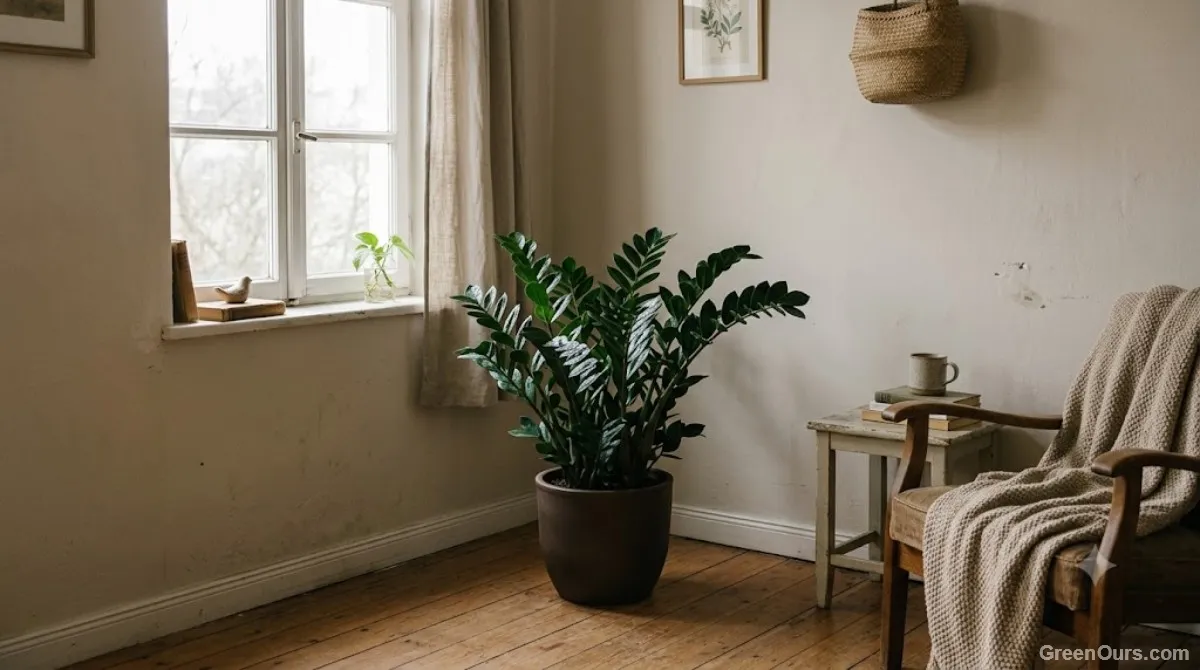
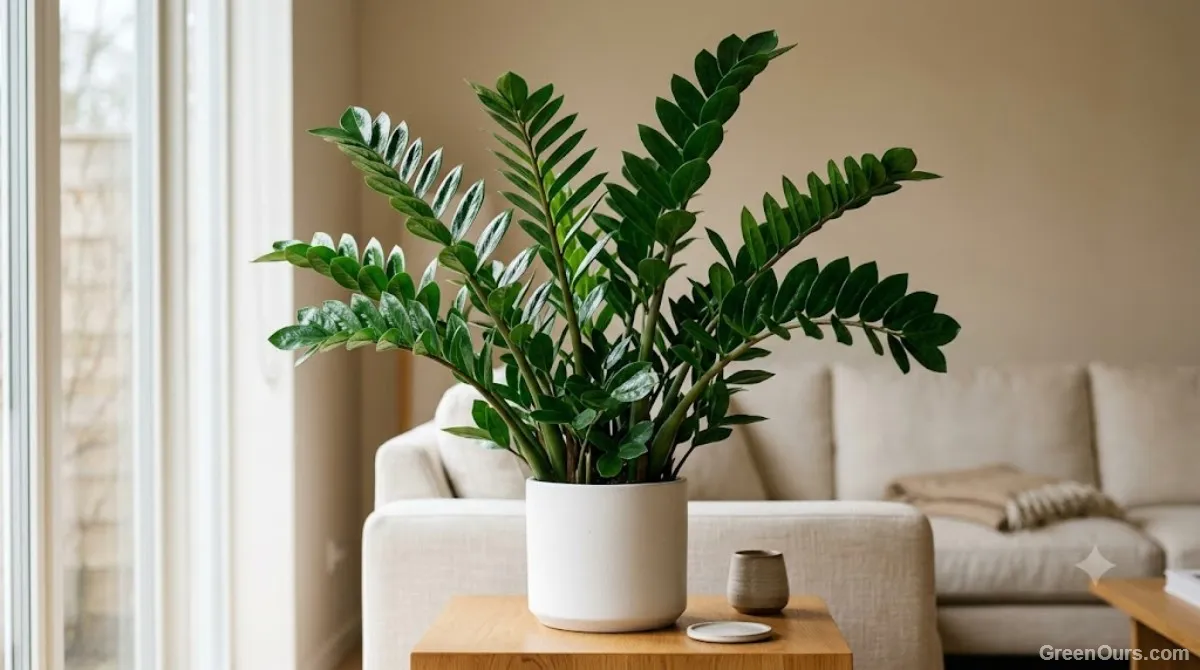
Before assuming something's wrong, it helps to separate slow from stuck. A ZZ plant that's simply taking its time usually still shows a few reassuring signs: the leaves stay firm and glossy rather than dulling or thinning, the stems stand upright instead of flopping, and the color holds a rich, even green from top to bottom. If your plant checks those boxes, it's very likely just doing what ZZ plants do — conserving energy until conditions, and its own internal clock, line up for the next growth spurt.
A newly purchased ZZ can sometimes go several months without visible top growth, especially while it adjusts to a new environment and focuses its initial energy on settling its root system. If yours has been in your home less than a year, acclimation and adjustment might explain why nothing seems to be happening on the surface.
A ZZ plant showing zero new growth for months isn't unusual on its own, especially in its first year. Firm, glossy leaves are the real sign that nothing's wrong.
What Can Actually Slow Growth Down Further
That said, a few conditions can take a naturally slow grower and stall it out completely.
Not Enough Light to Fuel Anything
ZZ plants have a reputation for tolerating low light, and that's true — they'll survive in a dim corner far longer than most houseplants. But surviving and growing are different things. In very low light, a ZZ plant may have enough stored rhizome energy to maintain its existing foliage, but too little light energy to fuel the creation of new growth flushes. If yours has been tucked several feet from the nearest window for a long stretch, re-evaluating its location alongside broader low-light care routines is worth doing first.
A Pot That's Fighting the Rhizomes
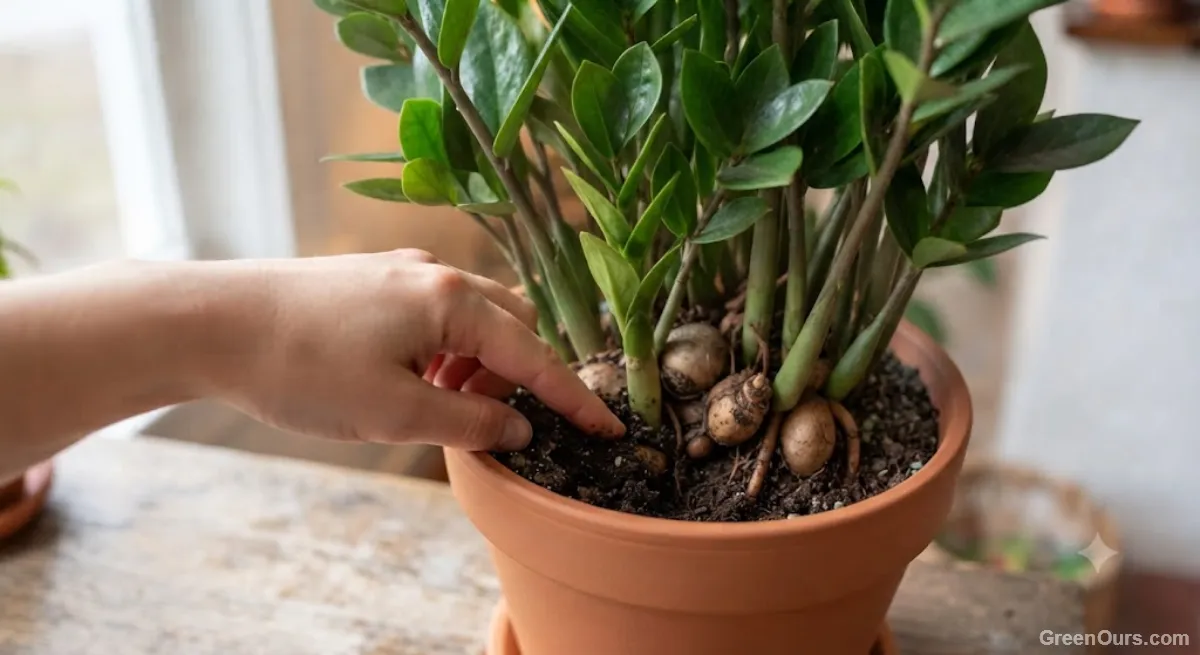
ZZ plants generally tolerate being slightly pot-bound, so resist the urge to size up the container the moment it looks snug. But there's a difference between snug and cramped — if the expanding rhizomes have pushed the plant up out of the soil or cracked the pot, there's no physical room left for them to store energy or expand, and growth grinds to a halt. Conversely, an oversized pot holds excess moisture around underground rhizomes built for much drier conditions.
A Watering Rhythm That Doesn't Match the Plant
Because ZZ plants store water in their swollen underground rhizomes, they don't need, or want, a fixed watering schedule. Watering on a strict weekly routine regardless of soil moisture is one of the most common ways well-meaning owners accidentally slow their plant down — either by keeping the rhizomes constantly damp (risking rot) or by underwatering so severely that the rhizomes deplete their reserves entirely. Checking that the root zone has thoroughly dried out before watering, rather than following the calendar, keeps soil moisture aligned with what the rhizomes actually need to prepare for their next growth spurt.
Temperature and Seasonal Growth
ZZ growth naturally slows during cooler or darker periods of the year. Because these plants naturally align their growth flushes with optimal daylight and warmth, a healthy plant may show little visible activity for months when indoor temperatures drop or daylight hours shrink. Recognizing this natural seasonal pause prevents unnecessary over-correcting.
A Few Adjustments That Can Encourage New Growth
If your ZZ plant's growth has genuinely stalled rather than just paused between natural flushes, a few small changes tied directly to its subterranean biology tend to make the biggest difference:
- Move it closer to a bright window (bright indirect light gives rhizomes the necessary solar energy to trigger a fresh growth flush without scorching the leaves).
- Allow the root zone and soil to dry out thoroughly between waterings, then water deeply to encourage strong root and rhizome development without rot.
- Hold off on repotting unless rhizomes are visibly pushing through the drainage holes or distorting the pot — ZZ rhizomes prefer tight quarters to build up internal energy before flushing out new top growth.
- During spring and summer, a diluted, balanced houseplant fertilizer once a month provides the nutrients required to support an incoming flush of heavy new stems.
- Give any change six to eight weeks before deciding whether it worked. ZZ plants respond on their own underground timeline, not ours.
When Slow Growth Is Actually Something to Watch
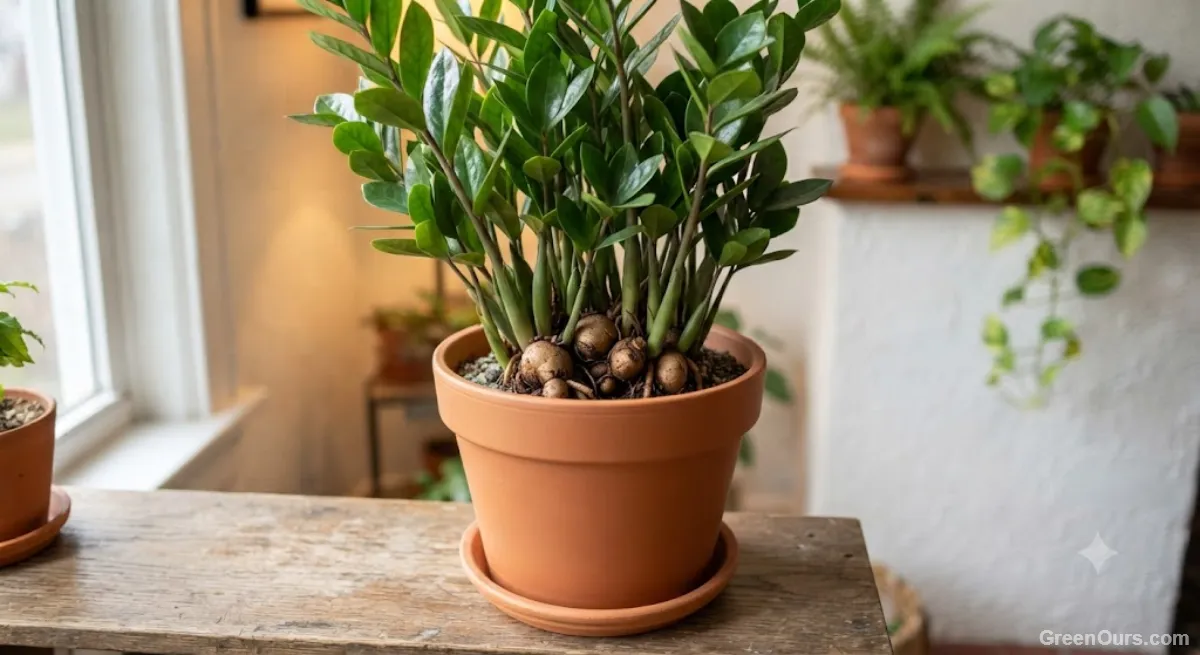
Occasionally, what looks like a patient ZZ plant is dealing with something more serious. If stems feel soft or mushy at the base, if leaves are yellowing broadly rather than just shedding one old leaf at a time, or if the rhizomes feel spongy when you gently check around them, that's usually a sign of damaged rhizomes due to excess moisture. In that case, no amount of waiting will bring growth back on its own — the soil moisture needs to be corrected directly, and in more advanced cases, compromised rhizomes need to be inspected and pruned.
Genuine stalling like that is the exception, though, not the rule. For most ZZ plants sitting quietly on a shelf, the truth is a lot less dramatic: they're just conserving resources for their next flush, on a timeline that has very little to do with ours.
What to Do Next
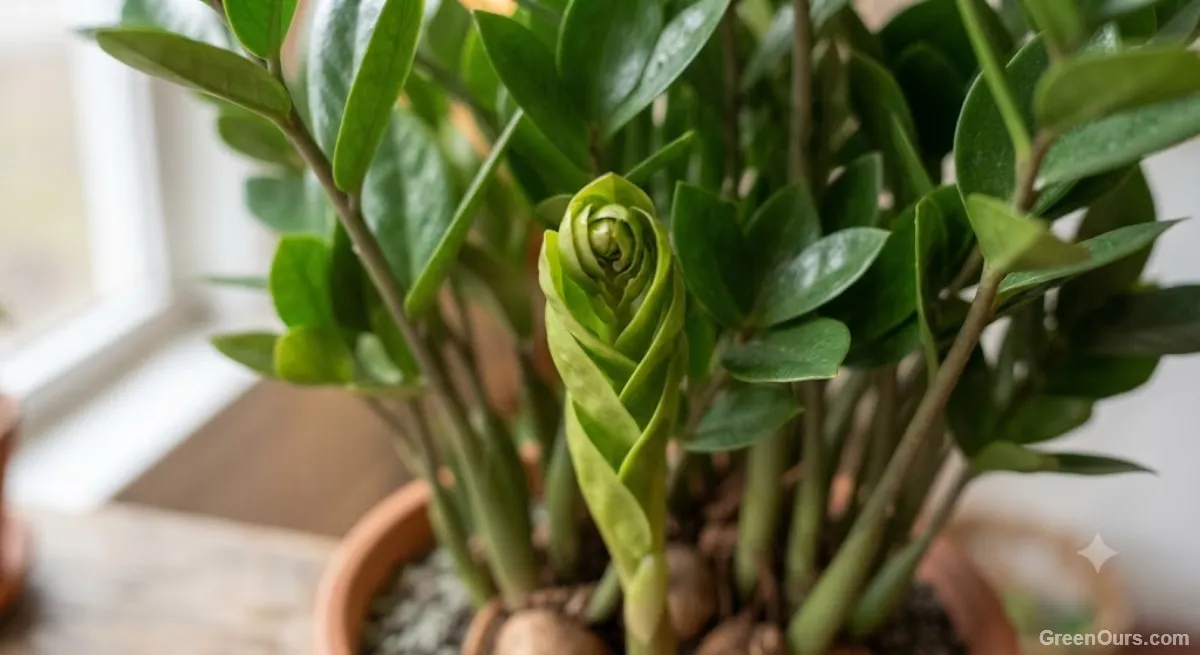
The good news is that patience is basically the whole assignment with this plant. Give it decent light, water it when the soil actually asks for it, and let it work through its own cycle. One day you'll walk by and notice a new stem uncurling that wasn't there yesterday, and that's when you'll know the wait was doing exactly what it needed to.
Explore more beginner plant care guides and troubleshooting tips.