
Can You Grow Carrots in Containers?
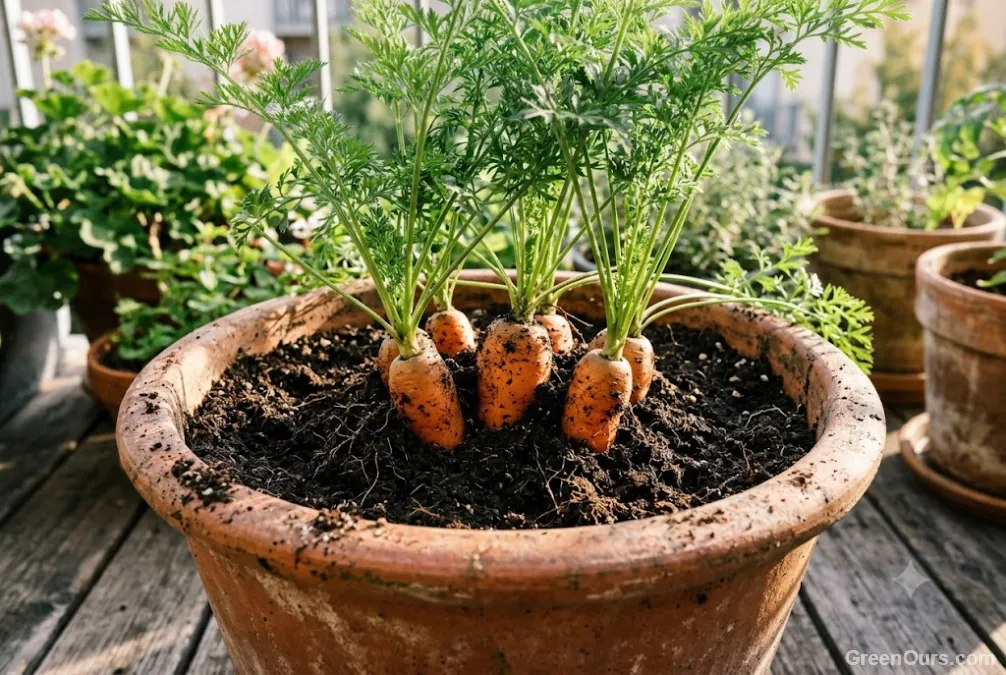
Yes. Carrots grow well in pots when the container is deep enough and the soil stays loose, without stones or hard clumps. A pot also lets you choose the soil yourself, which helps if your ground is heavy or compacted.
The only real catch is depth, so pick the variety and the pot together.
Do the Depth Math First
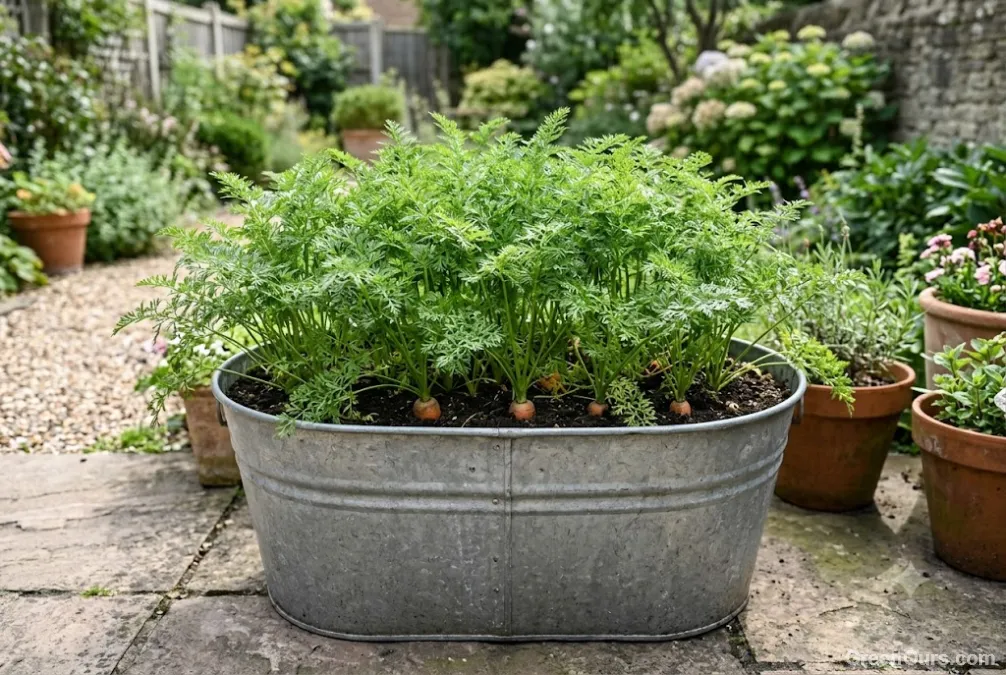
A University of Maryland Extension container-gardening post advises a minimum depth of 150% of the carrot's mature length. Its example: a variety that reaches about 4 inches (10 cm) needs at least 6 inches (15 cm) of soil. It's a rule of thumb, though. A shallower pot doesn't mean no carrots, just smaller ones.
Treat the 150% as the floor, not the goal. For a more generous margin, aim for double the carrot's mature length if you have the room. Measure usable soil depth, meaning the mix itself, not the outside height of the pot.
Mature length varies by cultivar, so use the figure on your seed packet. The table shows typical lengths for each group, from University of Maryland Extension's carrot guide.
| Carrot type (typical length) | Soil depth: minimum (1.5x) / safer (2x) |
|---|---|
| Round and Oxheart (2–3 in / 5–8 cm) | 3–4½ in (8–11 cm) / 4–6 in (10–15 cm) |
| Short'n Sweet baby type (about 4 in / 10 cm) | 6 in (15 cm) / 8 in (20 cm) |
| Chantenay (5–6 in / 13–15 cm) | 8–9 in (20–23 cm) / 10–12 in (25–30 cm) |
| Nantes (6–7 in / 15–18 cm) | 9–10½ in (23–27 cm) / 12–14 in (30–35 cm) |
| Danvers (up to 7 in / 18 cm) | Up to 10½ in (27 cm) / 14 in (35 cm) |
| Imperator (7–8 in / 18–20 cm) | 10½–12 in (27–30 cm) / 14–16 in (35–40 cm) |
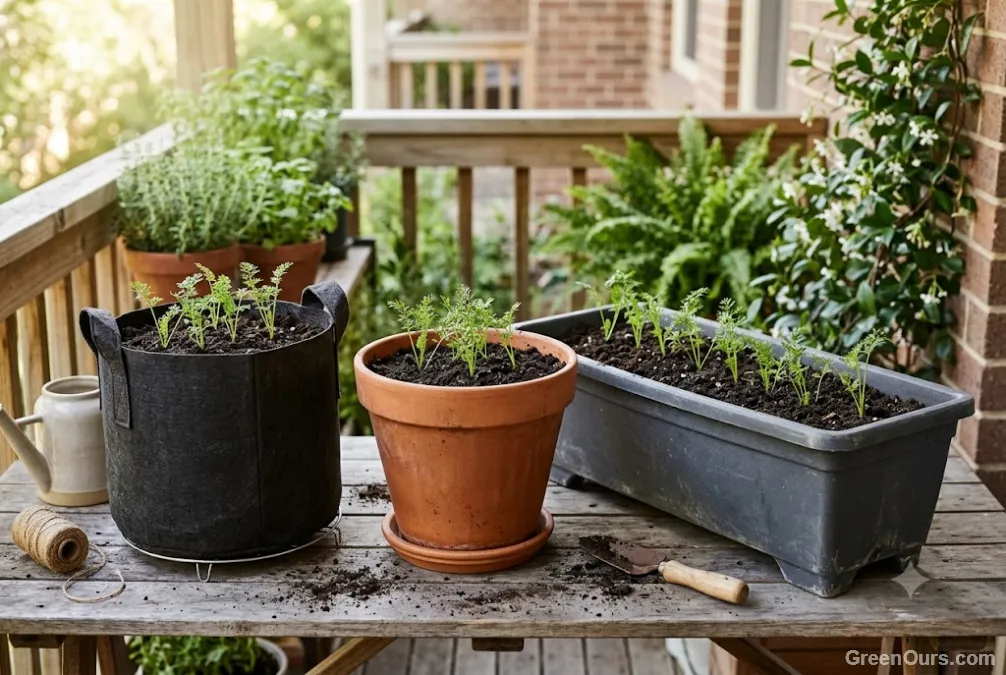
Make sure the container has drainage holes. Carrots need moisture, but roots sitting in waterlogged soil may develop problems.
Quick Guide: Carrot Container Basics
| Factor | Recommendation |
|---|---|
| Soil depth | At least 1.5 times the carrot's mature length; 2 times is safer |
| Mix | Loose, fine-textured, stone-free potting mix |
| Sunlight | At least 6 hours of direct sun a day |
| Watering | Evenly moist, never soggy |
| Spacing | Thin to 1–2 inches (2.5–5 cm) apart |
Select a Carrot Variety
Short and compact types are easier to grow in pots than longer ones. These are well-known examples; your packet's mature length is what counts for the depth math.
Baby types
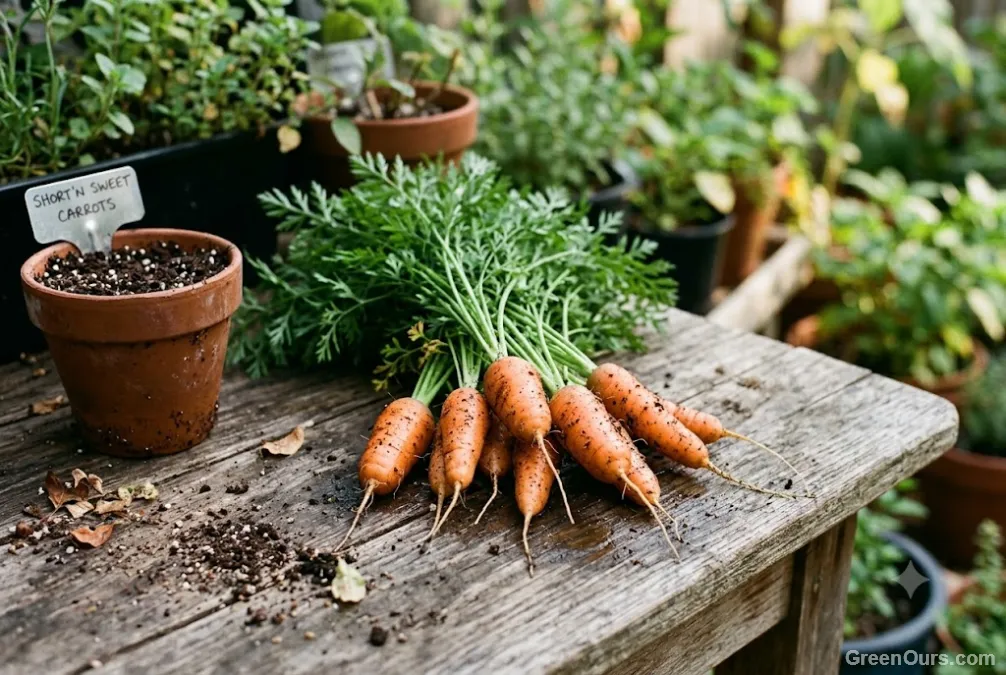
Short'n Sweet (about 4 inches) and Little Finger suit shallow pots.
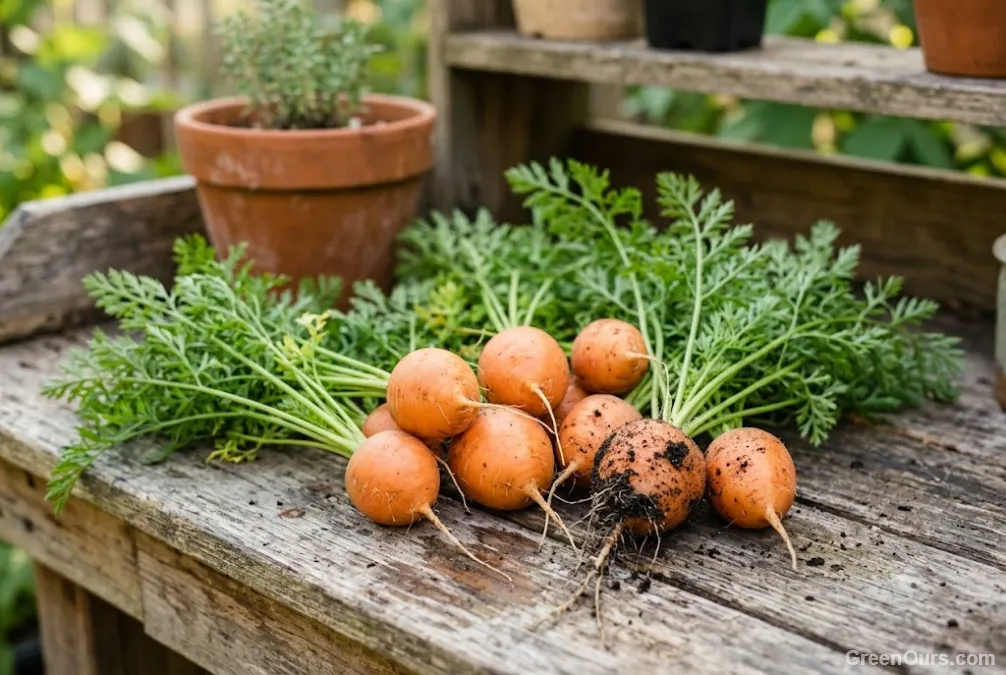
Round types
Thumbelina, Orbit, and Parisian Market. Ideal when depth is limited.
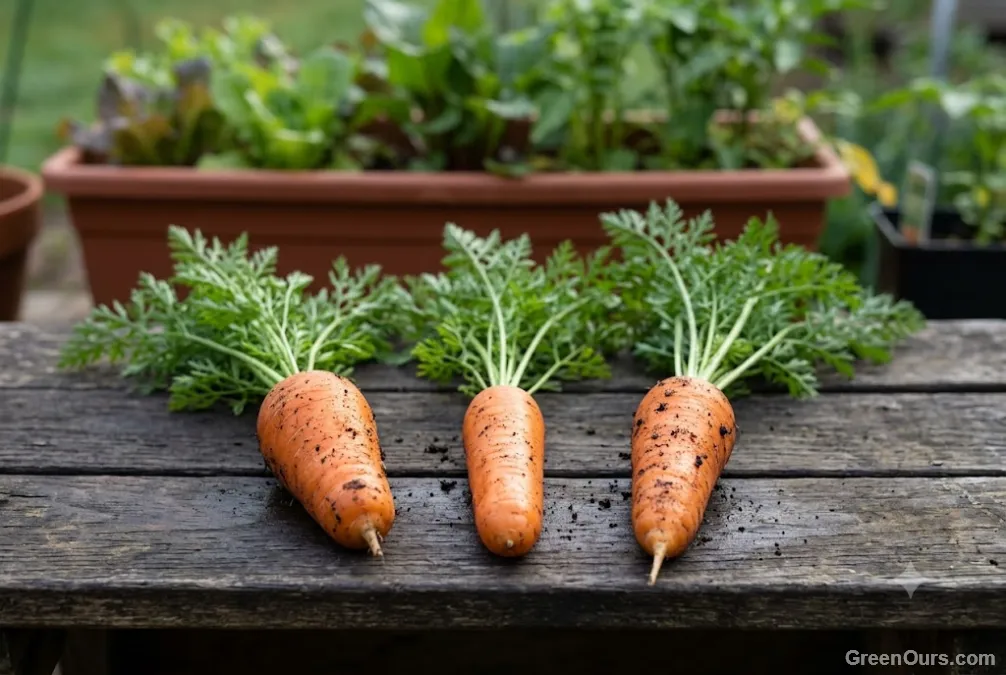
Chantenay, Nantes, Danvers
Chantenay typically 5–6 inches, Nantes 6–7, Danvers up to 7.
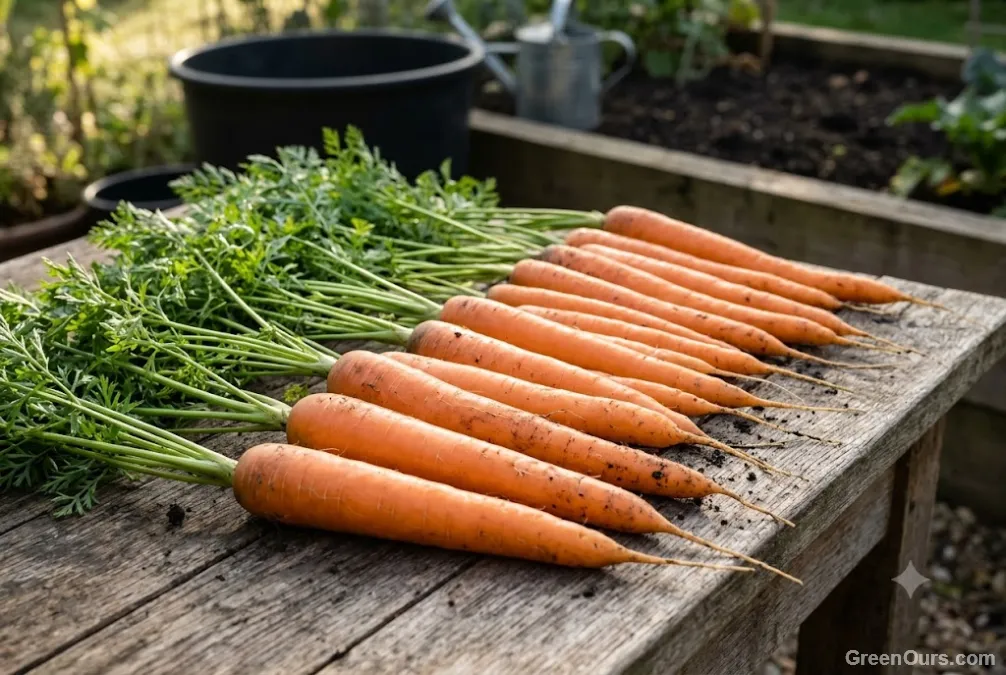
Imperator types
Typically 7–8 inches, the longest of the group, so they need the deepest pots.
Match the Carrot to the Pot You Already Have
Already own a container? Start there and work backward. These rows use the 150% minimum as a guide. Check the mature length on your seed packet, and go deeper where you can.
| Usable soil depth you have | What to grow |
|---|---|
| Under 4 inches (10 cm) | Skip carrots. Salad greens suit shallow pots better. |
| 4–6 inches (10–15 cm) | Round and Oxheart types, such as Thumbelina or Orbit. |
| 6–8 inches (15–20 cm) | Baby types, such as Short'n Sweet or Little Finger. |
| 8–10 inches (20–25 cm) | Chantenay types, such as Red-Cored or Royal Chantenay. |
| 10–12 inches (25–30 cm) | Nantes and Danvers types, at or near their minimum. |
| 12–16 inches (30–40 cm) or more | Imperator types, or a safer margin for any of the above. |
Prepare the Best Soil for Container Carrots
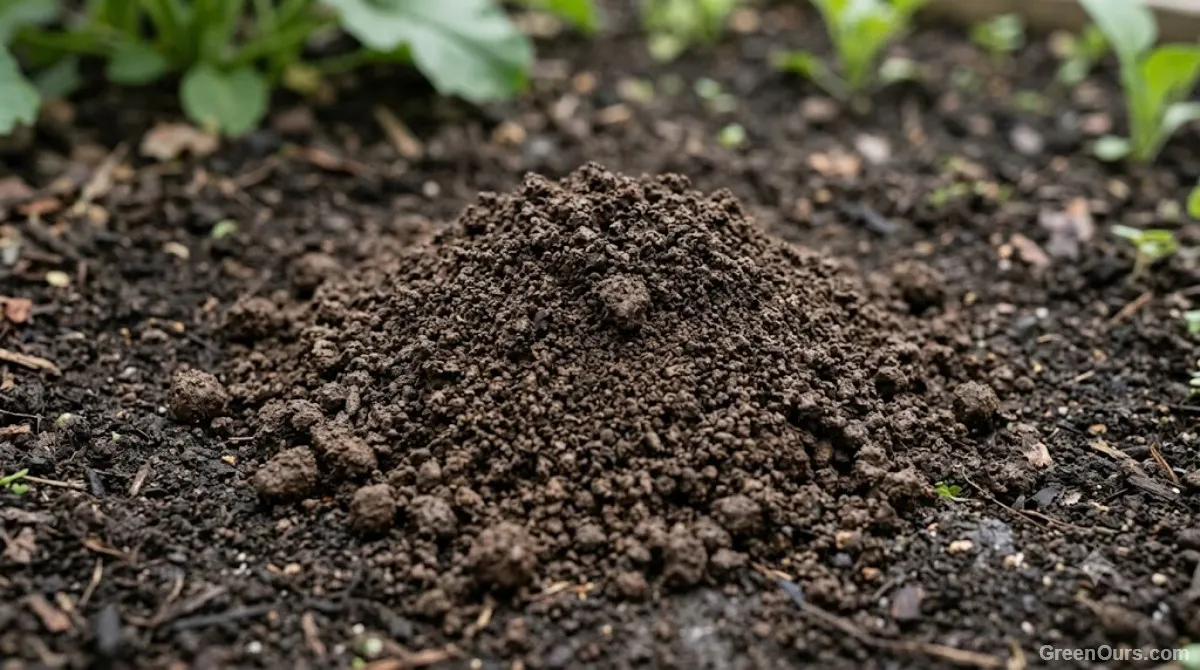
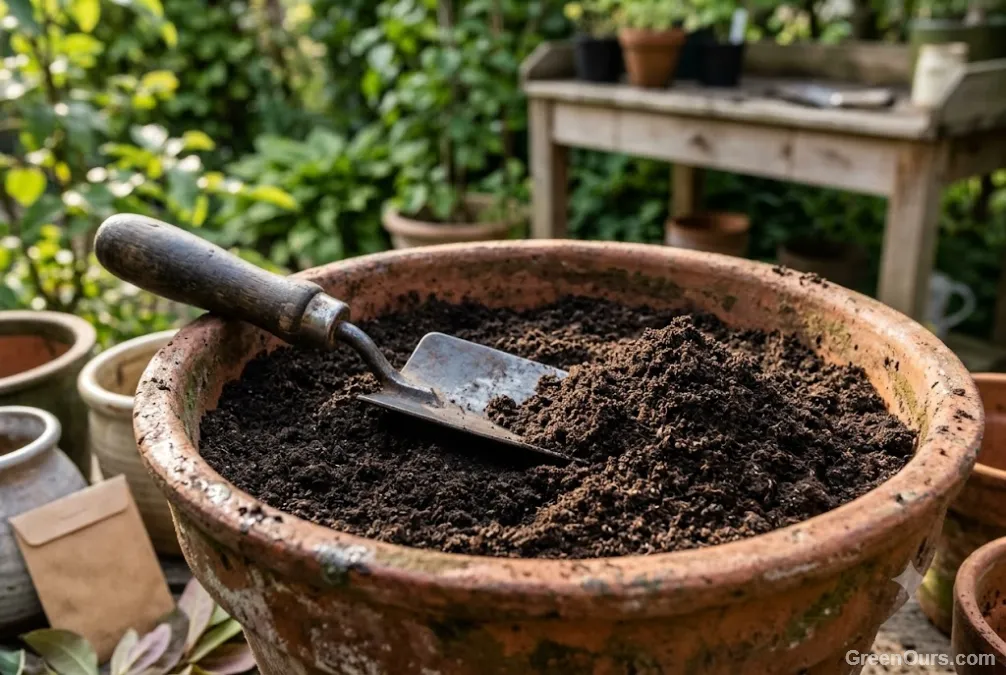
Carrots need a loose, fine-textured mix with no large stones or hard clumps. Roots that hit an obstacle tend to fork or twist.
- Use a well-draining potting mix made for containers.
- Remove stones, sticks, and debris.
- Skip dense garden soil, which compacts in pots.
- Go easy on compost, and avoid fresh manure and high-nitrogen fertilizer.
Fill the pot without pressing the mix down, then water lightly so it's evenly damp before you sow.
How to Plant Carrot Seeds in Containers
Carrots go in from seed and stay put, because moving seedlings can disturb their young roots.
- Pick your timing
Carrots like cool weather and struggle in hot spells. Sow in spring or late summer once the soil is at least 45°F (7°C), and check the packet for your area.
- Sow thinly
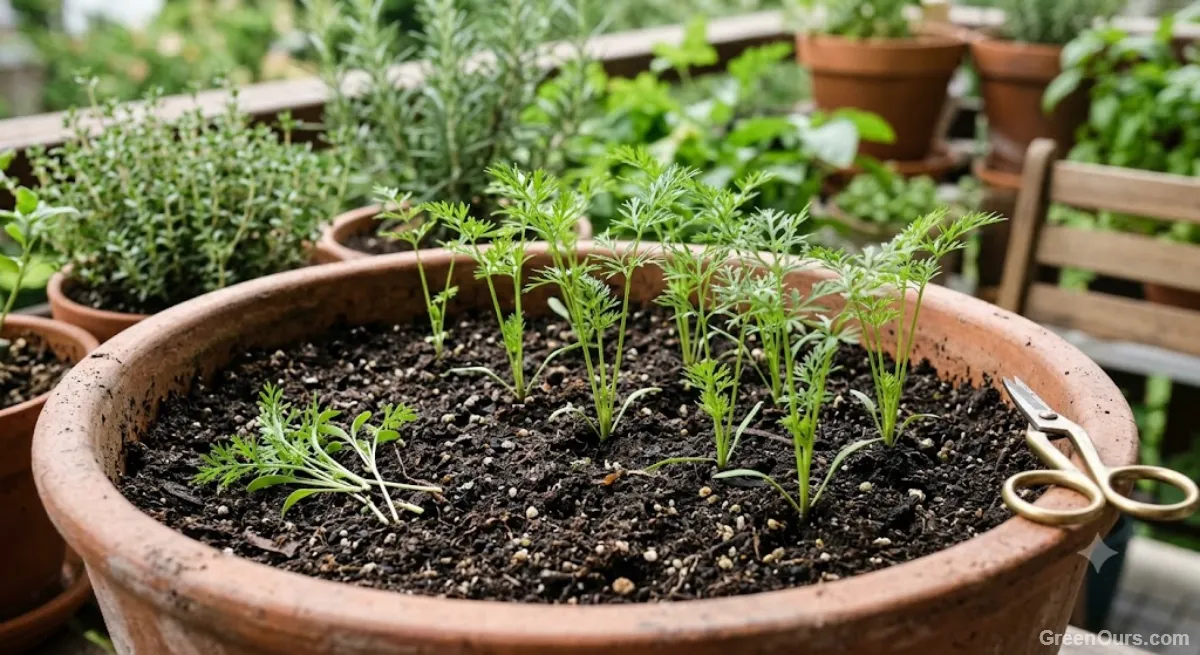
Make shallow furrows, space seeds as the packet advises, and cover with about ¼ to ½ inch (6–12 mm) of fine mix.
- Keep the surface moist
Seeds can take up to two weeks to sprout, and not all at once. Don't let the top layer dry out, and water with a fine, gentle spray.
- Thin the seedlings
When they're about 2 inches (5 cm) tall, thin to roughly 1–2 inches (2.5–5 cm) apart. Extension guidance allows up to 4 inches (10 cm), so give wider-shouldered varieties, or any carrots you want to grow larger, more room. Cut extras rather than pulling them, and let the packet have the final say.
Thinning feels harsh, but crowded carrots end up small and misshapen. Give each one room.
Care for Carrots as They Grow
Once seedlings are established, care is mostly steady moisture and loose soil. Swings between bone dry and soaked are what lead to cracked roots.
In heat waves, move the pot to afternoon shade and check it often, since containers dry out fast. Skip extra fertilizer if your mix already has some, and go easy on nitrogen if you do feed.
Pull weeds early, and avoid digging around established plants, since carrot roots bruise easily.
When and How to Harvest Container Carrots
Check the root shoulder first and your packet's maturity window second. Days to maturity are approximate (University of Maryland Extension gives 65–75 days from seed for many carrots), so start checking as the window approaches. For eating fresh, pull carrots before they get much wider than about 1 inch (2.5 cm).
- The visible shoulder has reached the size the packet describes.
- The packet's maturity window is near or has passed.
- The tops look healthy, though foliage alone doesn't prove the roots are ready.
Harvesting Without Damage
- Water lightly if the soil is very dry.
- Loosen the soil around the carrot.
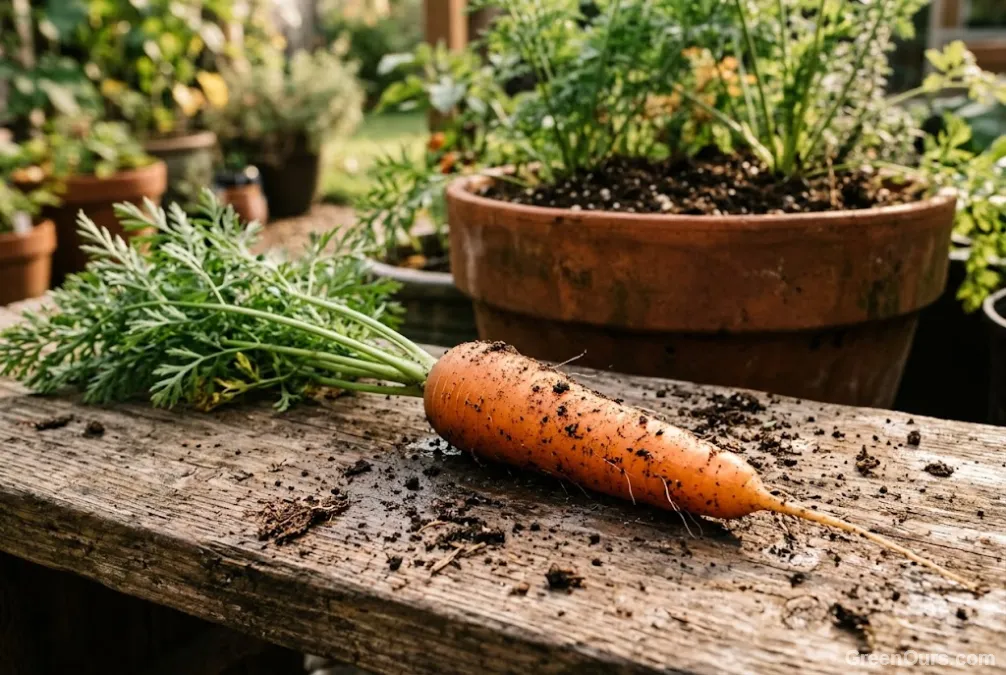
- Hold the foliage at its base and pull gently.
- Brush off soil and trim the tops.
Common Container Carrot Problems
Most issues trace back to depth, soil, spacing, or uneven watering.
| Problem | Likely cause and what to do |
|---|---|
| Short or stunted roots | The pot may be too shallow or the mix compacted. Redo the depth math with usable soil depth and use loose mix. |
| Forked or twisted roots | Stones, clumps, or disturbed roots. Sift the mix and avoid digging near established plants. |
| Small carrots | Crowding or too little time. Thin to the packet spacing and check days to maturity. |
| Seeds don't sprout | The surface dried out or seeds were sown too deep. Keep it evenly moist and follow packet depth. |
| Cracked roots | Uneven moisture. Water more consistently as roots swell. |
| Lots of leaves, small roots | Excess nitrogen or crowding. Ease off fertilizer and recheck spacing. |
FAQs
Can carrots grow in a 5-gallon bucket?
Yes, if it has drainage holes. Measure the usable soil depth inside and run the depth math for your variety.
How many carrots fit in one container?
It depends on the surface area and the variety. Follow the packet's spacing rather than sowing as many as will fit.
Do carrots need full sun?
Most do best with at least 6 hours of direct sun. In strong heat, keep an eye on moisture, since pots dry out quickly.
Sources
What to Do Next
Measure the usable soil depth of your pot, check the mature length on your packet, and multiply by 1.5, or by 2 for a safer margin. If the numbers work, sow; if they don't, change the variety before you change anything else.
After that, your jobs are steady moisture and one confident round of thinning. When the tops fill out, notice how thick the shoulders look. That's your sign the roots are building below.
Key Takeaways
- Soil depth should be at least 1.5 times the carrot's mature length; double is safer.
- Match the variety to your pot, using the length on your seed packet.
- Keep the mix loose, thin the seedlings, and check the root shoulder before harvest.