
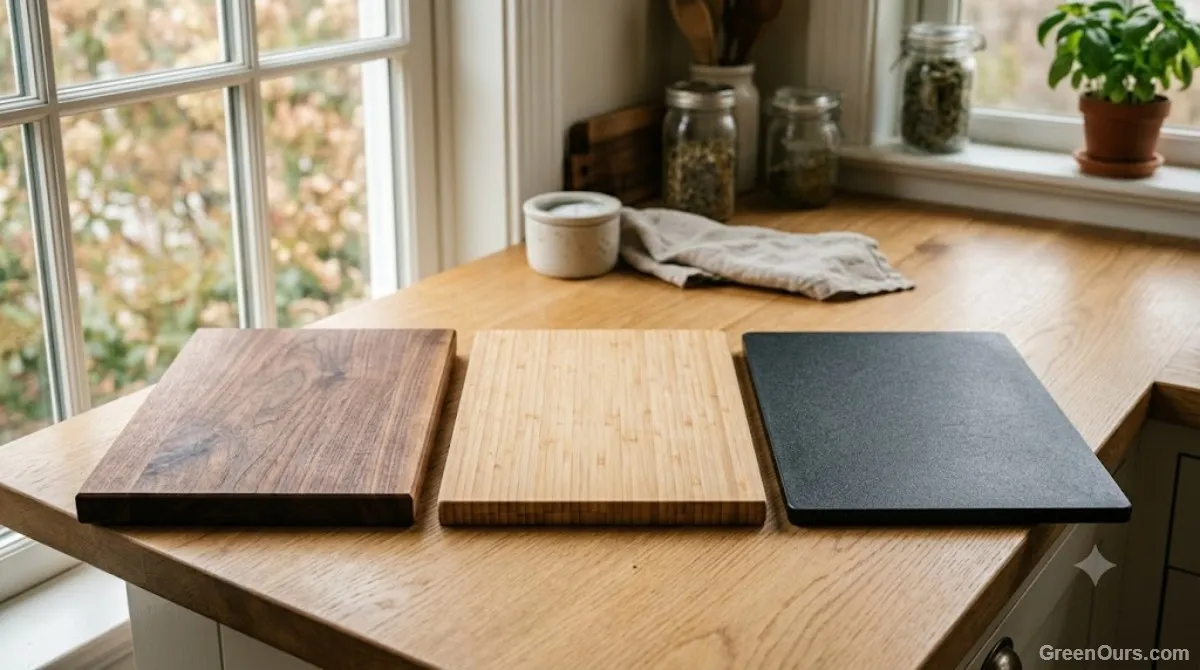
What "Sustainable" Actually Means for a Cutting Board
Before comparing materials, it helps to agree on what we're even measuring. A board's environmental footprint isn't just about what it's made of — it's shaped by three separate things: how the raw material was grown or extracted, how many years the board survives before it needs replacing, and what happens to it at the end of its life. A gorgeous walnut board that gets tossed after eight months because it cracked from neglect can easily have a bigger footprint than a plain plastic one that lasts a decade.
Most buying guides skip straight to material and call it a day. That's how bamboo ended up with its reputation as the automatic green choice — it grows fast, so surely the board made from it must be better. Growing fast is only one part of the story, and it's worth slowing down before you buy.
The most sustainable cutting board is usually the one already sitting in your kitchen right now, not the one you're about to order.
Wood: The Old Reliable With Real Trade-Offs
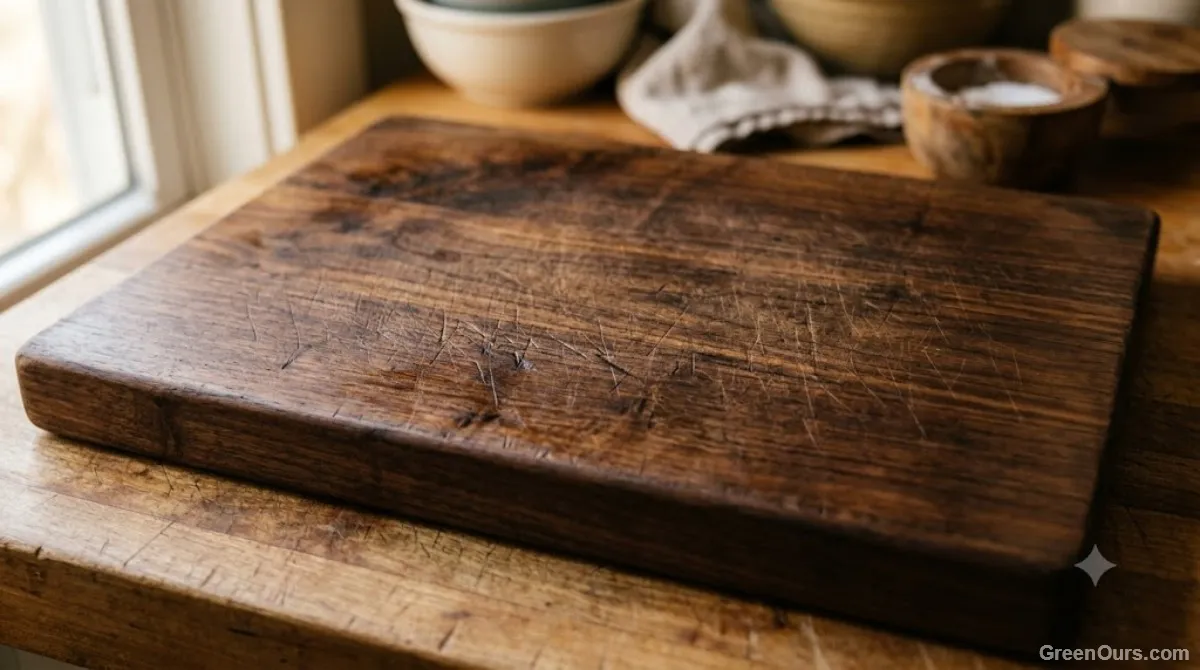
A solid hardwood board — maple, walnut, cherry — comes from a tree that took decades to grow, which sounds like a mark against it. But that slow growth is also why the wood is dense enough to self-heal from knife cuts and resist deep bacterial penetration better than you'd expect. A well-cared-for hardwood board can realistically last ten to twenty years, which changes the math considerably.
Where the Wood Actually Comes From
Sourcing matters more here than almost anywhere else. A board made from FSC-certified domestic hardwood is a very different product than one made from an exotic tropical species logged without oversight. If the listing doesn't mention where the wood came from, that's worth treating as a red flag rather than an oversight. Look for the FSC label directly on the product listing, not just in the marketing copy — brands that only mention sustainability in a headline claim, without a certification number you can actually verify, are worth extra skepticism.
The Upkeep You're Signing Up For
Wood needs regular oiling — food-grade mineral oil or a beeswax conditioner every few weeks — or it dries out, cracks, and warps well before its time. This is the part most people skip, and it's exactly why so many wood boards end up in the trash within a year or two, undercutting the whole point of buying one.
Bamboo: Fast-Growing, But Not Automatically Better
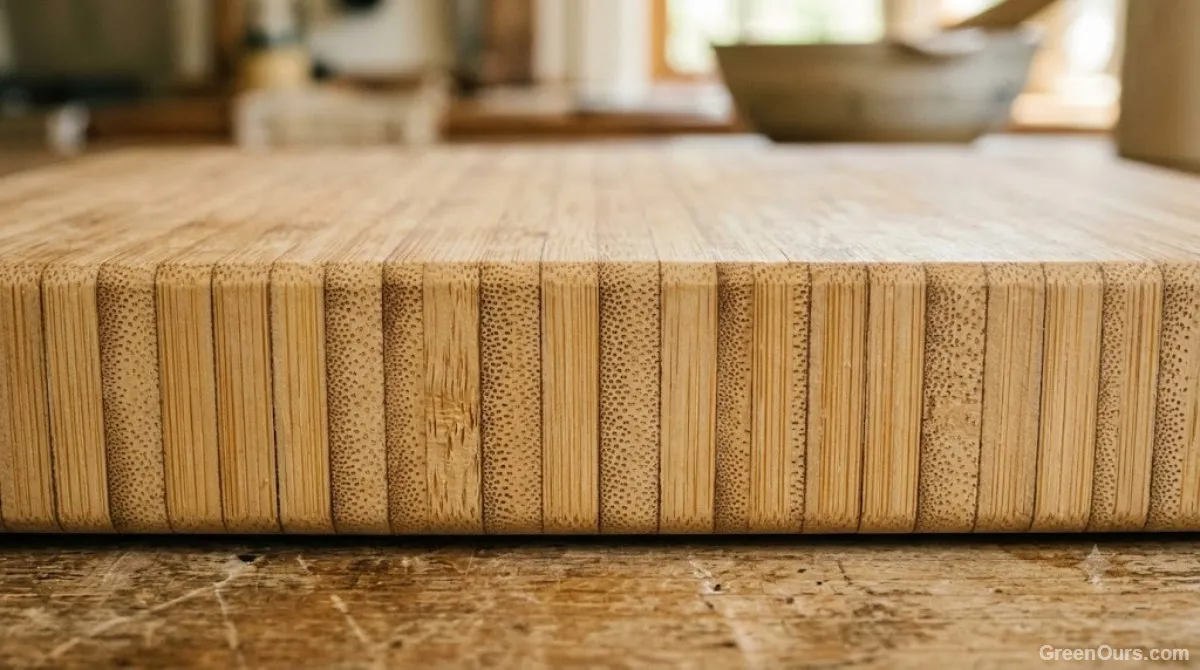
Bamboo reaches maturity in three to five years instead of the twenty-plus a hardwood tree needs, and that's a genuine advantage worth acknowledging. But bamboo isn't a solid piece of timber — it's technically a grass, so boards are made by slicing it into thin strips and laminating them together under pressure.
The Glue Question Nobody Mentions
That lamination step is where things get complicated. Some manufacturers use formaldehyde-based adhesives to bond the strips, and cheaper boards rarely disclose which glue they used at all. A fast-growing raw material doesn't offset a manufacturing process you can't verify, and "bamboo" on a label tells you almost nothing about what's actually holding the board together. If a listing describes the adhesive as "food-safe" without naming which standard it meets, that's not the same as disclosing what's actually in the glue — it's marketing language doing the job a real answer should.
Bamboo is also noticeably harder than most hardwoods, which sounds like a durability win but actually dulls knife edges faster and makes the board more prone to splintering along the glue lines as it ages.
Plastic: The Board Everyone Loves to Hate
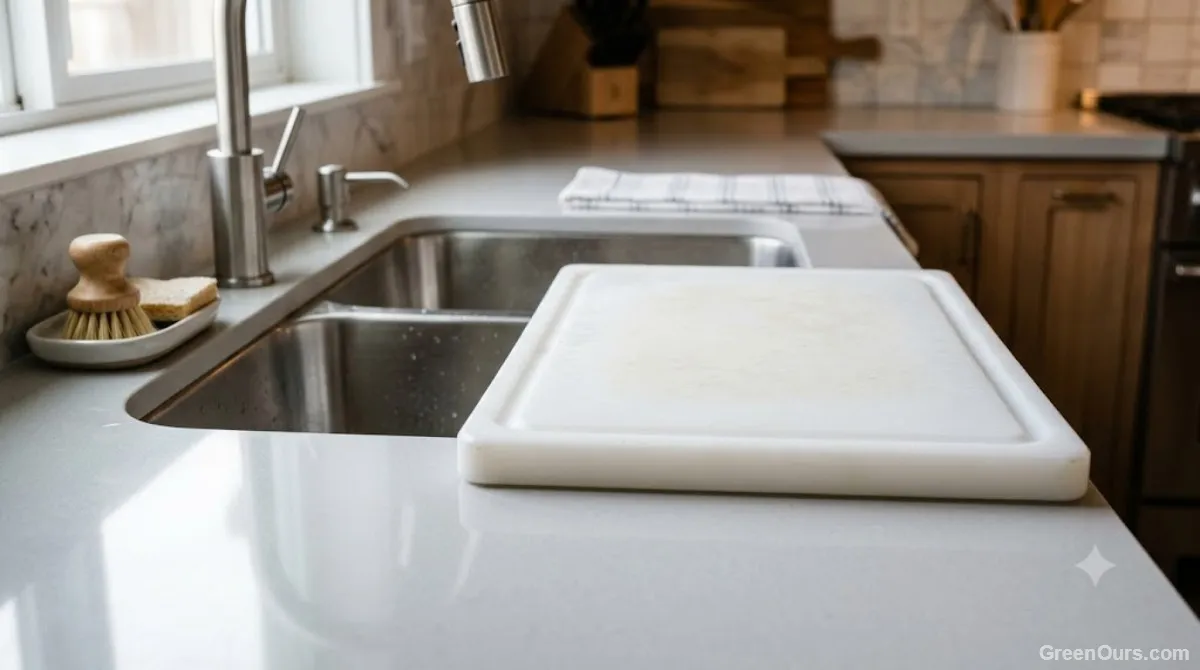
I get it — plastic feels like the villain in this story by default. But a heavy, high-density polyethylene board bought once and used for years tells a different story than the flimsy, grooved one that came free with a knife set. Dense plastic boards go straight into the dishwasher, sanitize reliably at high heat, and are the easier choice if you're handling raw meat regularly and want to avoid cross-contamination risk.
The environmental cost shows up at the cheap end of the market: thin plastic boards develop deep knife grooves within months, harbor bacteria in those grooves no amount of scrubbing reaches, and get replaced constantly. That churn — not the material itself — is what makes plastic look worse than it needs to.
The Question That Matters More Than the Material
Here's what none of the buying guides tell you: replacement frequency does more to determine a board's footprint than the material choice ever will. One good board used consistently for ten years, whatever it's made from, will almost always beat three "greener" boards bought and discarded along the way.
That means the real question isn't wood versus bamboo versus plastic. It's whether you'll actually maintain what you buy — oiling a wood board on schedule, or keeping a plastic one out of the dishwasher's hottest, most warping cycle — and whether the board matches how you genuinely cook, not how you wish you cooked.
If You Only Do One Thing
Pick the material that fits your actual habits, not the one that photographs best. If you cook raw meat several times a week, a dense plastic board you can sanitize without babying is the honest choice. If you're mostly chopping vegetables and don't mind a little maintenance, a hardwood board earns its keep over a decade or more. Either way, commit to using it until it's genuinely done, not until something shinier shows up.
None of this means you need to throw out whatever's currently on your counter and start over — that would defeat the entire point. The most sustainable cutting board is the one you'll still be using five years from now, oiled or scrubbed or dishwasher-safe, doing exactly what it's supposed to do.
More honest kitchen swap guides, no guilt attached:
Glass vs. Plastic Food Storage