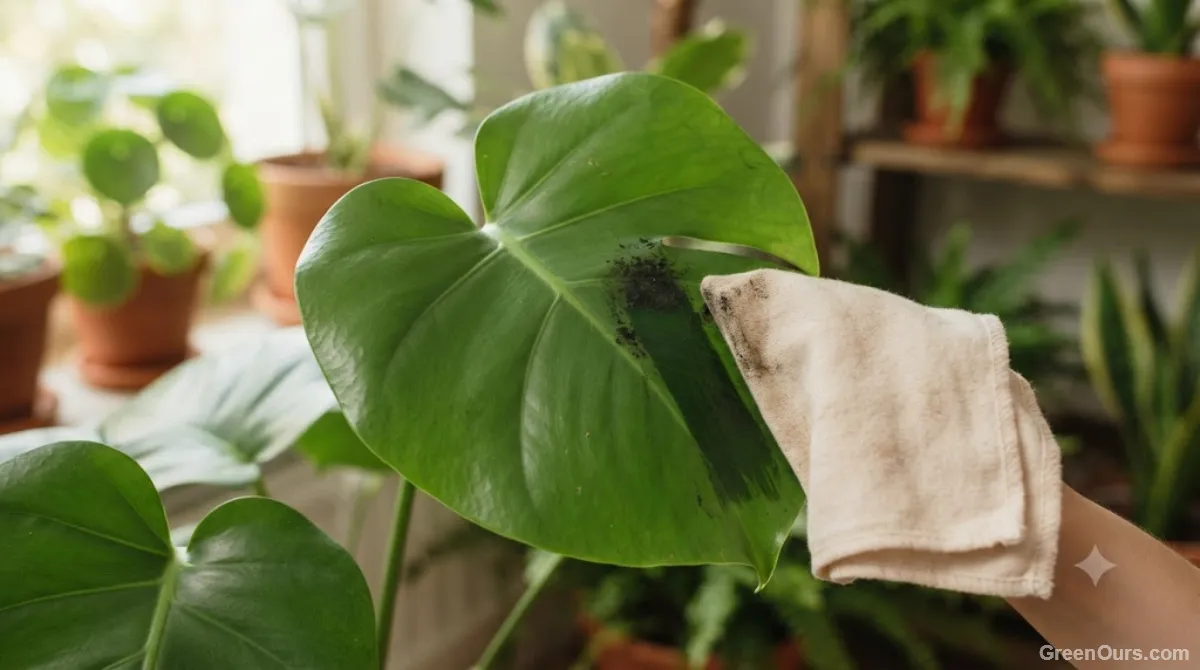

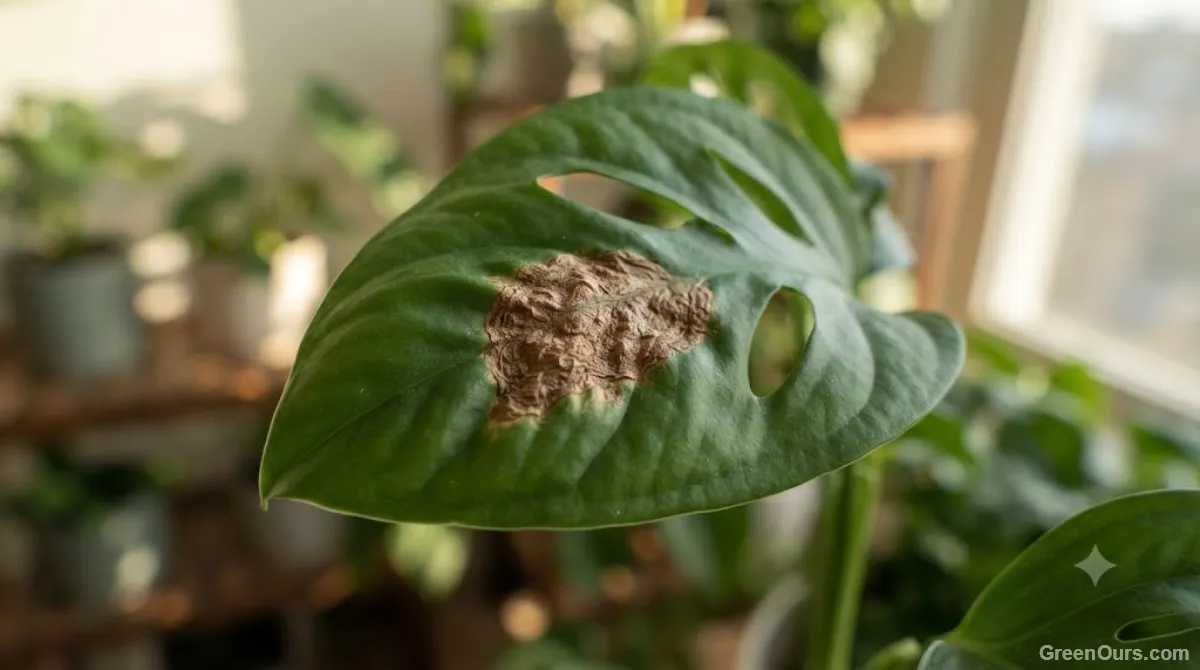
What Corky Scarring Actually Looks Like
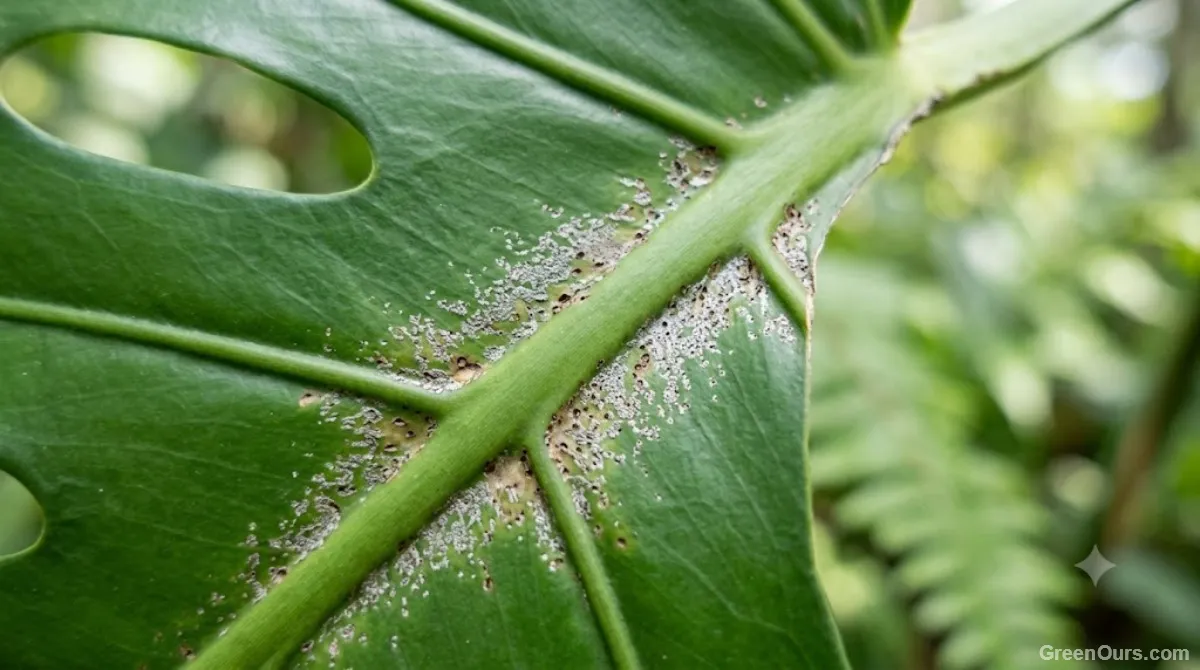
Corky scarring starts as small, water-soaked spots, usually on the underside or edge of a leaf. Within three to five days, the tissue turns tan, then brown, and hardens. Run a fingertip across it and you'll feel a raised, dry texture — not smooth, not slimy, not powdery. That texture is the first useful clue. Fungal and bacterial spots tend to stay flat or develop a soft, sunken center. Corky scars rise above the leaf surface and stay dry to the touch.
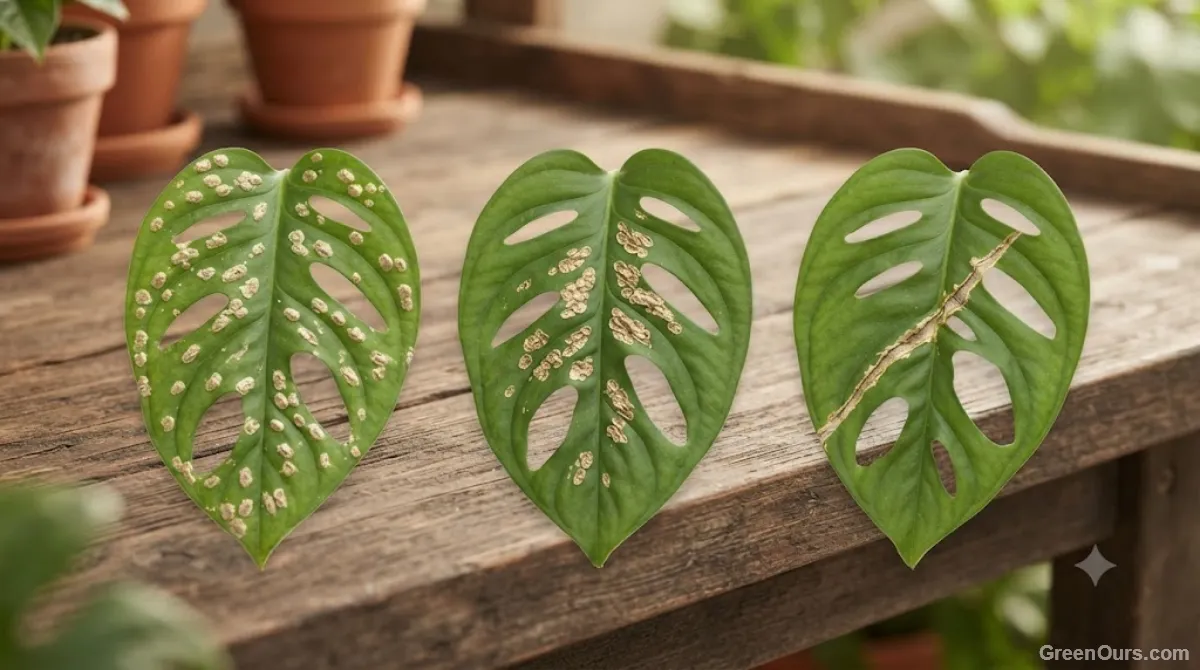
Shape matters just as much as texture. Edema produces scattered, irregular patches, often clustered on lower leaves. Insect feeding leaves a trail that follows where the pest actually fed — a line, a cluster near a vein, a concentration on new growth. Old mechanical wounds show a single, sharply defined scar shaped like whatever caused the original injury.
Location on the plant tells you almost as much as texture does. Brown corky spots on plant leaves that show up only on lower, shaded foliage point toward a physiological cause. Spots that spread onto younger leaves as the plant keeps growing point toward something actively feeding on it. Note both where a spot sits and how old the leaf is before moving to the next check — that combination narrows the diagnosis faster than any single clue on its own.
Three Different Causes, Three Different Textures
Edema (Oedema) Ruptures
Edema happens when roots absorb water faster than the leaf can release it through transpiration. Pressure builds inside individual cells until they rupture, and the plant seals the damage with the same corky tissue a tree uses to close a wound. Look for edema after several overcast days, high humidity above roughly 70%, or overwatering paired with cool temperatures below 60°F. Succulents, peperomia, and ivy geranium show it most often. Spots appear first on the underside of lower, older leaves in irregular, randomly scattered patterns — no two plants show the exact same layout.
Sucking Insect Feeding Trails
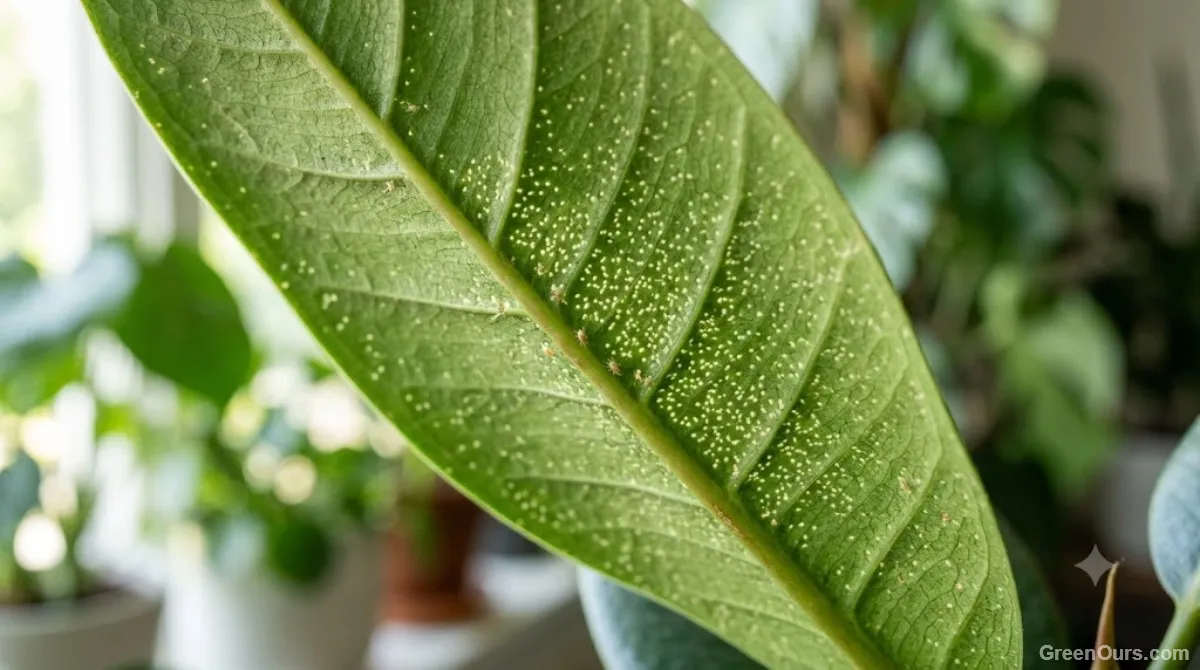
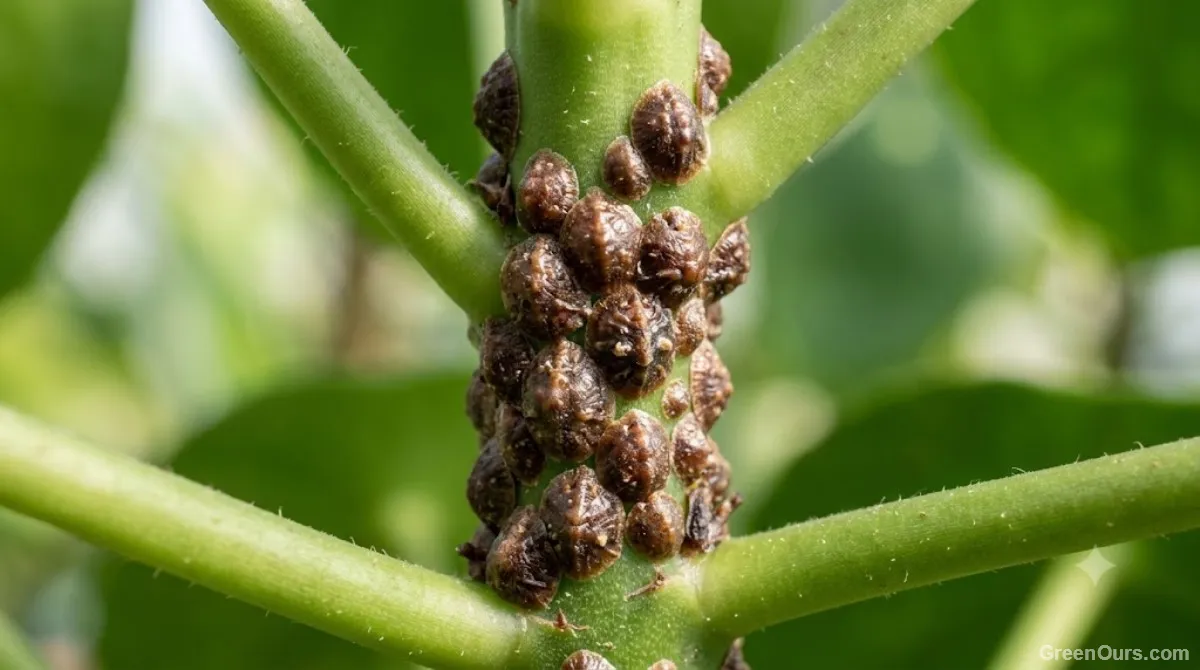
Thrips, spider mites, and scale insects pierce plant cells and withdraw the contents. The plant heals the wound with the same corky tissue it uses for edema, but the pattern gives it away. Feeding damage runs in lines, clusters near veins, or concentrates on new growth rather than old. Check for stippling — tiny pale dots — alongside the corky patches, fine webbing in leaf joints, or a dusting of dark frass. Thrips damage often carries a faint silvery sheen next to the scarring that edema never produces. Spider mites thrive in warm, dry air above 70°F and can complete a generation in under two weeks, which is why populations spike quickly on plants kept near heating vents. Scale insects move much slower — a single generation can take six to eight weeks — so their feeding trails tend to cluster tightly around one or two leaves rather than spreading across the plant.
Healed Mechanical or Chewing Damage
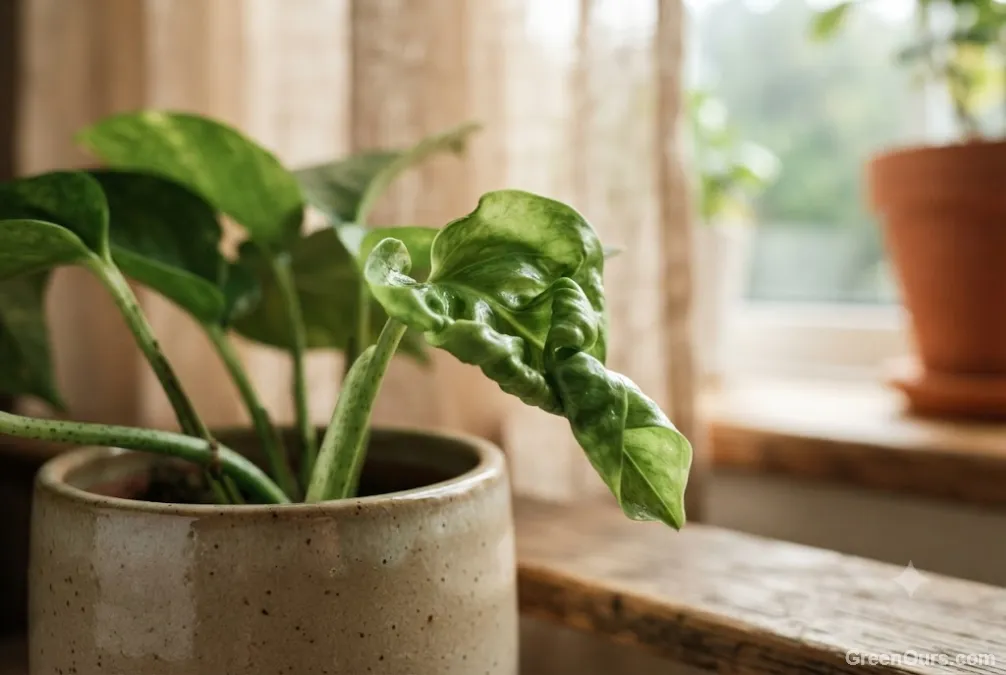
A single scar with a clean, defined edge, confined to one leaf, usually points to physical injury: a graze against a windowsill, a nibble from a curious pet, cold damage from a nearby draft. These heal once and don't spread. If the marks stay on one or two leaves and never appear on new growth over the following weeks, mechanical damage is the likely cause.
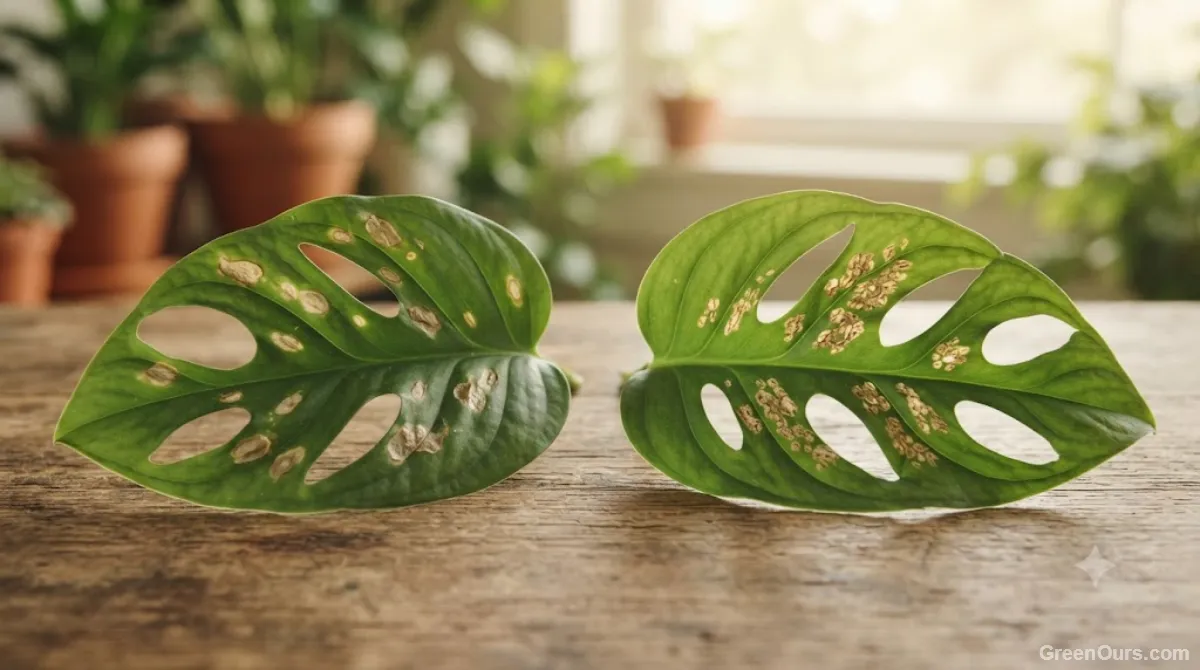
Quick field test: check the tissue immediately around the scar under a hand lens. Edema and healed wounds sit on otherwise clean leaf surfaces. Active pest damage, even old scarring, is often surrounded by stippling, webbing, or the insects themselves.
The Five-Minute Inspection Routine
- Isolate the plant from others nearby and inspect it under bright, indirect light.
- Check both leaf surfaces with a 10x hand lens, starting with the undersides of the three oldest leaves.
- Tap a suspect leaf over a sheet of white paper. Falling specks that move on their own are mites; specks that stay still are debris.
- Note where the scars sit: lower leaves only points to edema, scarring across ages points to pests, one leaf only points to mechanical damage.
- Record watering frequency and light levels over the past two weeks. Edema tracks closely with overwatering combined with low light.

Matching the Scar Pattern to the Cause
Three data points settle most cases: which leaves are affected, whether the pattern repeats, and what else is visible nearby.
- Edema: Lower and older leaves, both sides of the plant, no visible insects, scars appear three to five days after a wet spell.
- Pest feeding: New growth affected, stippling or webbing present, scars cluster near leaf veins or the crown.
- Mechanical damage: One leaf, one scar, sharp defined edge, no spread to neighboring leaves after two weeks of observation.
Treatment: What to Do for Each Diagnosis
Edema: cut watering frequency by roughly 30%, increase air circulation with a small fan, and move the plant to brighter, indirect light. Existing corky scars are permanent — new growth will come in clean once conditions correct, typically within two to three weeks.
Pest feeding: confirm the insect before treating. Thrips respond to insecticidal soap applied every five to seven days for three cycles. Spider mites need increased humidity plus a miticide once populations are heavy. Scale requires manual removal with a cotton swab dipped in isopropyl alcohol, repeated weekly for a month. Reinspect seven days after the first treatment. If fresh stippling or new corky patches appear on growth that was previously clean, extend the treatment cycle rather than switching products — inconsistent follow-through is the most common reason pest treatments appear to fail.
Mechanical damage: no treatment needed. Remove the source of injury — reposition the plant away from foot traffic, drafts, or curious pets — and let new growth fill in past the scar.
When Scarring Signals a Bigger Problem
Corky scars alone rarely threaten a plant's health. Watch for secondary signs instead: leaf drop beyond the scarred leaves, soft or mushy stems, or scarring that keeps reappearing on brand-new growth despite corrected watering and a confirmed absence of pests. Any of those point to a root-level issue or nutrient imbalance that needs a closer look, potentially with a soil test. A soil test typically checks pH, nitrogen, phosphorus, and potassium levels, and results usually take one to two weeks to come back from a standard lab. In the meantime, hold off on adding fertilizer — feeding a plant with an underlying root problem usually makes symptoms worse, not better.
What to Do Next
Corky scarring is a symptom, not a diagnosis on its own. Match the pattern, confirm it with a closer look, then treat the actual cause — not the mark it left behind.
Read our latest pest and disease diagnostics for more plant problems solved.