
Telling Them Apart
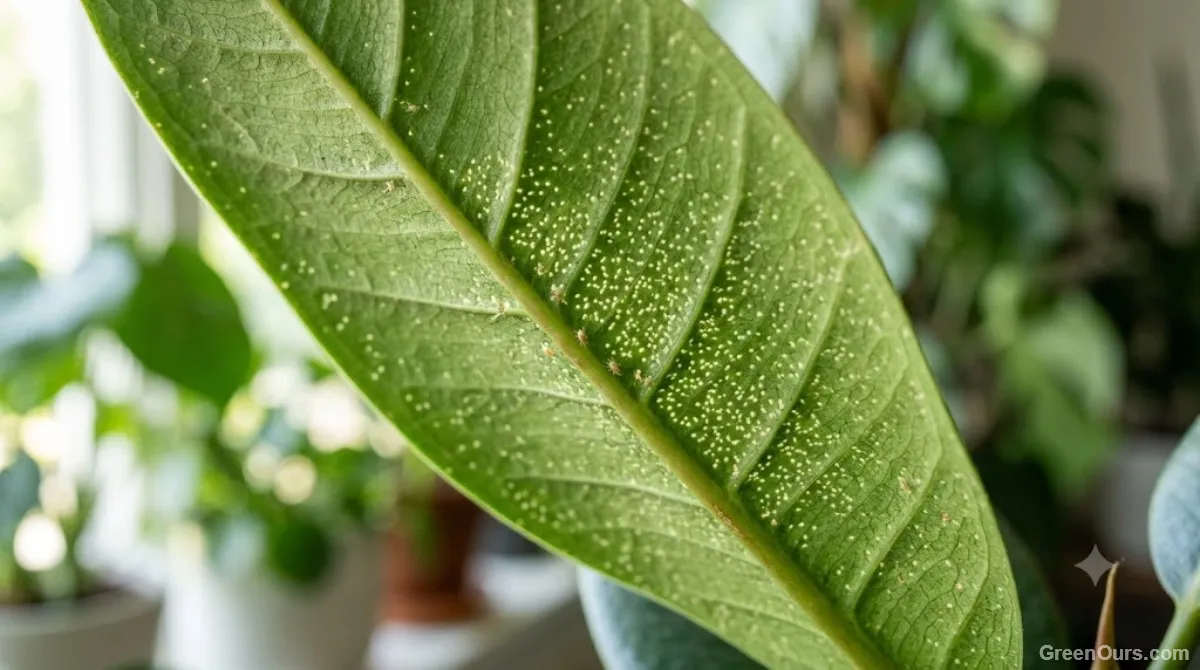
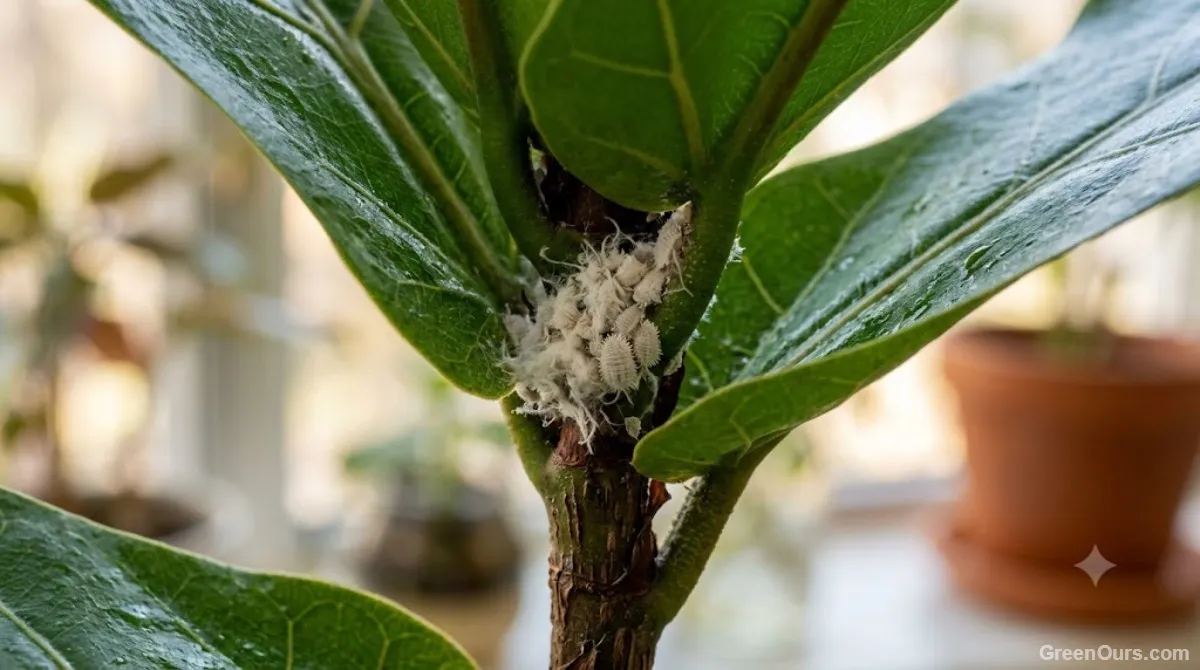
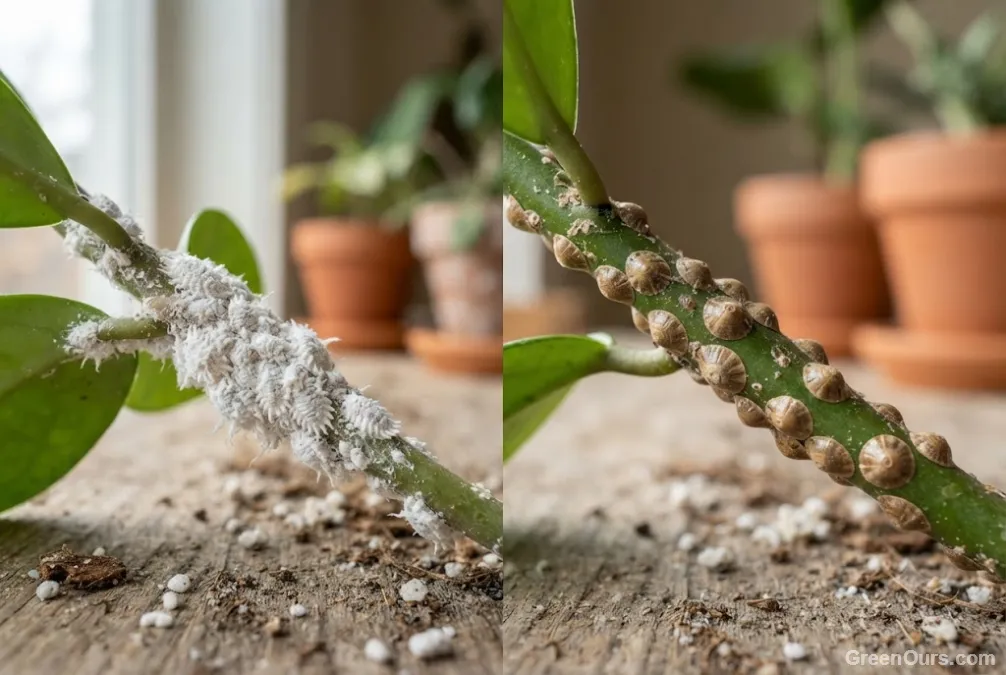
Mealybugs are soft-bodied insects covered in a white, waxy secretion that looks like tufts of cotton. They cluster in protected spots: leaf axils, the underside of leaf ribs, and anywhere a stem meets another stem. Look closely and you'll see faint movement — mealybugs crawl, especially the younger nymphs.
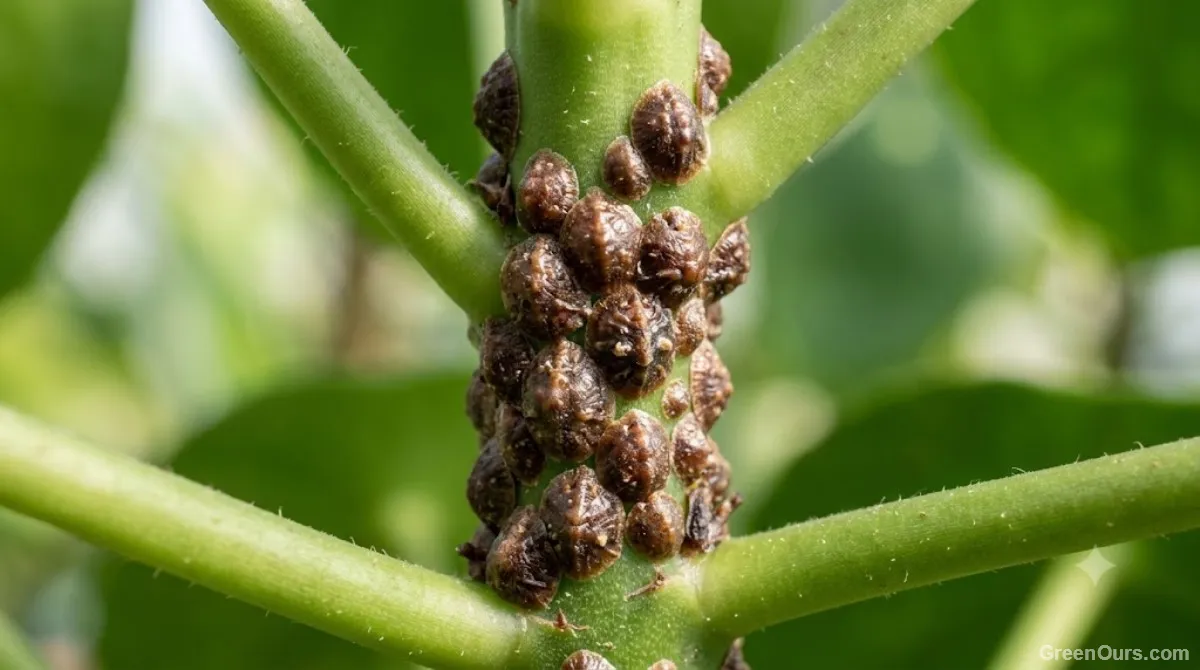
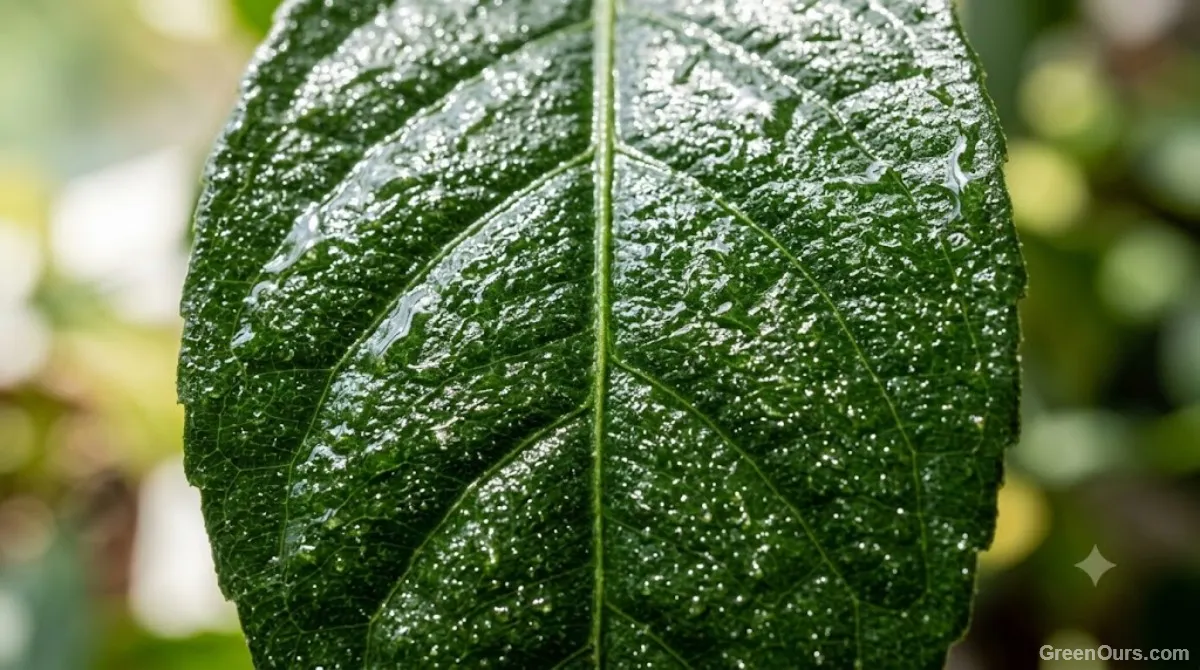
Scale insects are different. Adult scale attaches to a stem or leaf and stops moving entirely, forming a hard, dome-shaped shell in shades of brown, tan, or gray. Scrape one off with a fingernail and the shell comes away clean, but the insect underneath was feeding the whole time you didn't notice it. Soft scale also excretes honeydew, the same sticky residue mealybugs leave behind, which is often the first clue something's wrong before you spot the insects themselves.
The Honeydew Clue
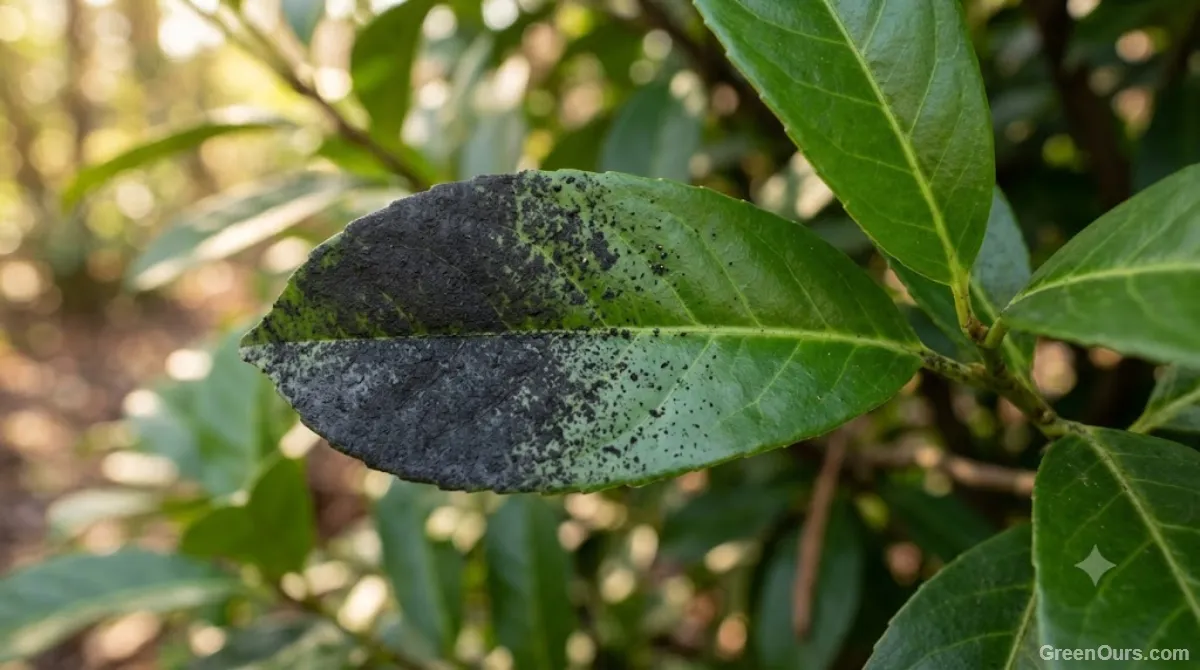
Sticky residue on leaves, nearby furniture, or the floor beneath a plant almost always means one of these two pests. Left untreated, honeydew grows a black sooty mold on the leaf surface, which blocks light and adds a second problem on top of the first.
Check the undersides of leaves and every stem joint, not just the visible top growth. Both pests favor hidden spots specifically because they're harder to inspect and spray.
Why Sprays Alone Don't Work
Standard contact insecticides kill on contact with the insect's body. Mealybugs' waxy coating and scale's hard shell both act as a physical barrier, so a spray that would wipe out aphids in a single application barely dents these two. Add in eggs tucked into crevices where spray never reaches, and it's easy to see why a single treatment round almost never finishes the job.
Manual Removal First
Before any chemical treatment, physically remove what you can see. This step alone often accounts for 70–80% of the population reduction in a light infestation.
Alcohol Spot Treatment
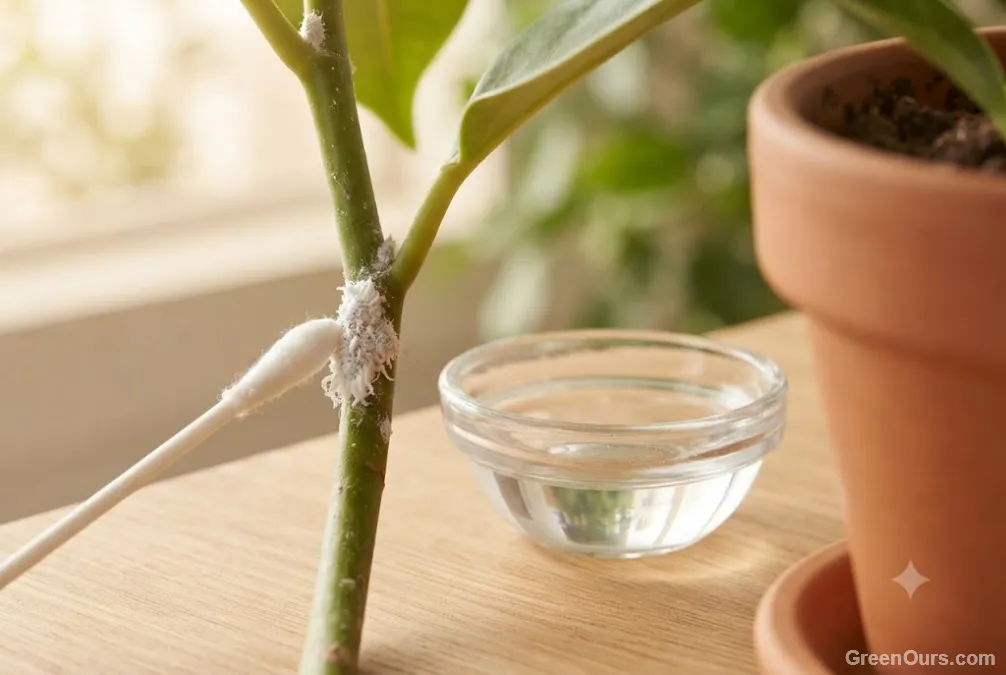
Dip a cotton swab in isopropyl alcohol at 70% concentration and dab it directly onto each visible insect. The alcohol dissolves the waxy coating on contact and kills mealybugs and soft scale within seconds. For hard scale, press and hold the swab for a few extra seconds to soften the shell before wiping it away.
Work leaf by leaf and stem by stem. Skipping sections because "that part looks clean" is the most common reason infestations return within a month.
Pruning Heavily Infested Growth
If a stem or leaf cluster is coated beyond individual treatment, cut it off entirely and discard it away from other plants. This removes eggs and nymphs you can't see along with the visible adults, and it's faster than treating a section insect by insect.
Systemic Treatment for Persistent Cases
When an infestation has spread beyond what manual treatment can keep up with, a systemic insecticide applied as a soil drench is the more reliable option. The plant absorbs the product through its roots and distributes it through its sap, so insects are poisoned as they feed rather than requiring direct contact.
Systemic treatments typically take 7–14 days to reach full effectiveness and need reapplication every 4–6 weeks until no new insects appear for two consecutive inspections. Follow the product's label rate exactly — overdosing doesn't speed up results and can damage root tissue.
Isolating the Plant
Move any infested plant away from the rest of your collection immediately. Mealybug crawlers and young scale nymphs can travel to neighboring pots through touching leaves or even a shared saucer. Keep the plant isolated for a full month after the last insect sighting, not just until it looks clean.
Building a Routine That Prevents Reinfestation
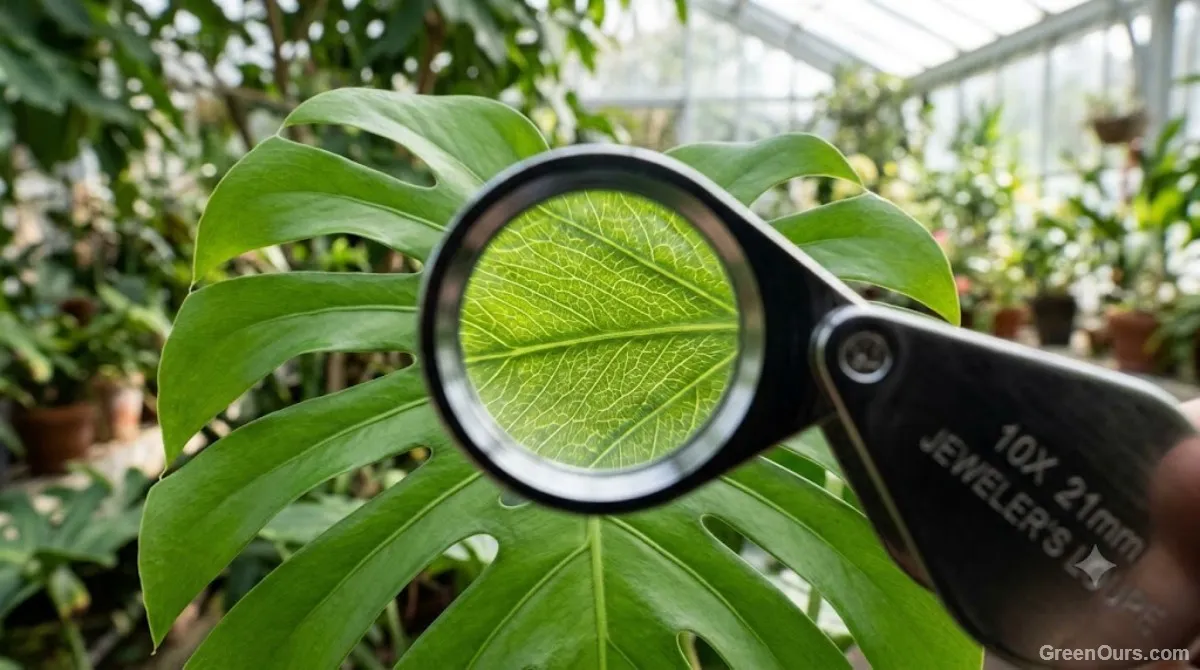
A five-minute check every two weeks catches both pests long before they establish. Look at new growth first — mealybugs and scale target tender tissue, so early infestations show up there before spreading to older leaves.
Wipe leaves down periodically with a damp cloth as part of routine care, not just when you suspect a problem. This physically removes early-stage crawlers before they settle and start feeding, and it's the single habit that does the most to prevent a recurrence.
When It's Time to Let Go
Some infestations don't respond, even after repeated rounds of manual removal and systemic treatment. If a plant reinfests within days of every treatment cycle, or if scale has spread into woody stems where it's essentially impossible to remove completely, discarding the plant protects everything else nearby. That's not a failure on your part — some infestations reach a point where treatment cost outweighs the plant's value.
Browse more diagnostic guides for common plant pests.
Mealybugs and scale insects test your patience more than your skill. The treatment itself is straightforward; what separates a resolved infestation from a recurring one is sticking with the routine past the point where the plant looks clean.