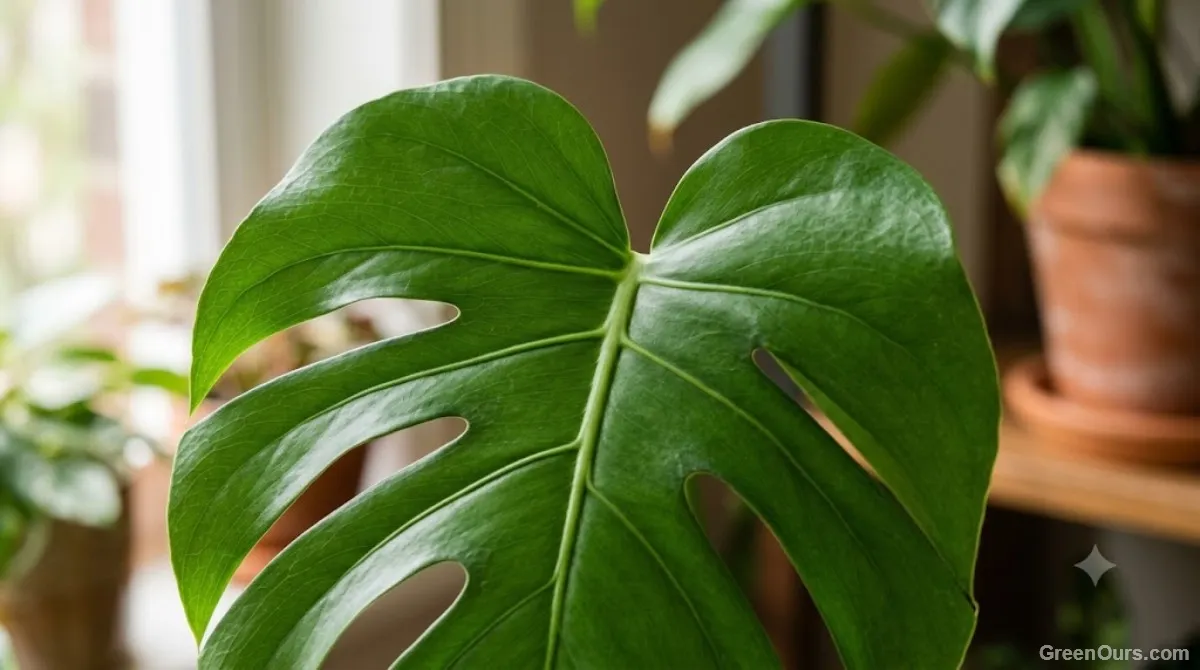

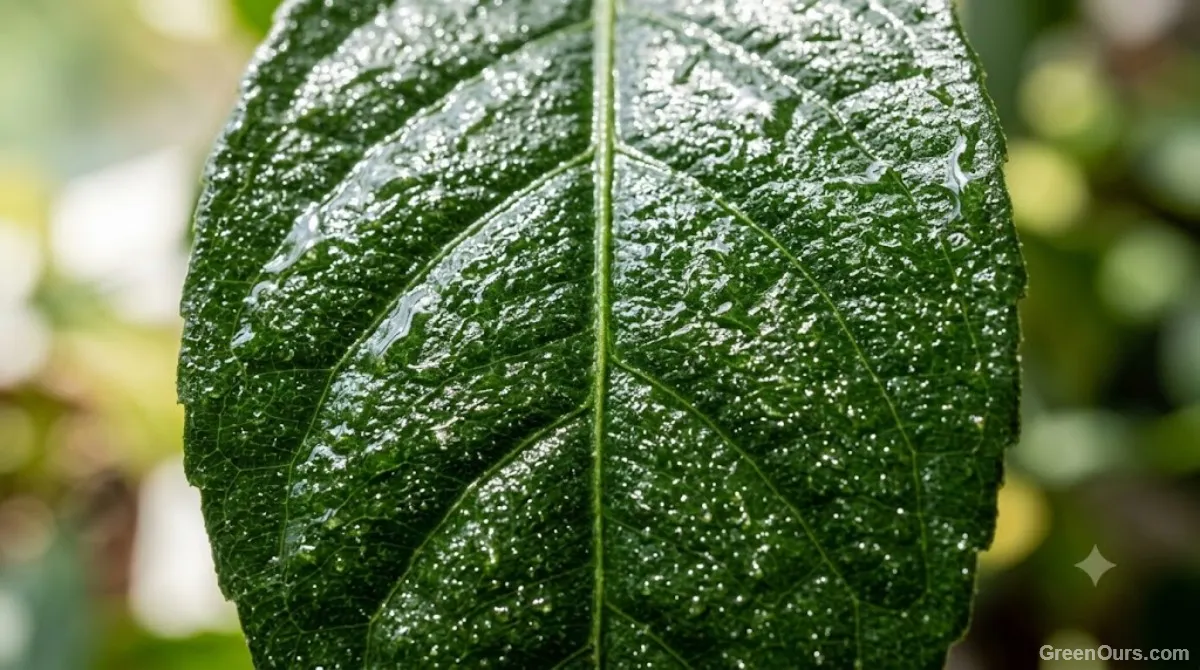
What Sticky Residue Actually Is
Sticky leaves come from one of two sources: honeydew, a sugary waste product excreted by sap-feeding insects, or plant sap itself, released through natural processes like guttation or a physical wound. Both feel similar to the touch. Only one requires action.
Honeydew is clear to pale yellow, slightly tacky, and tends to appear on the upper surface of leaves lower down in the canopy — because it's dripping down from insects feeding above. Sap from the plant itself is usually localized to a specific point of damage: a snapped stem, a pruning cut, or a leaf tip.
The Insects Behind the Honeydew
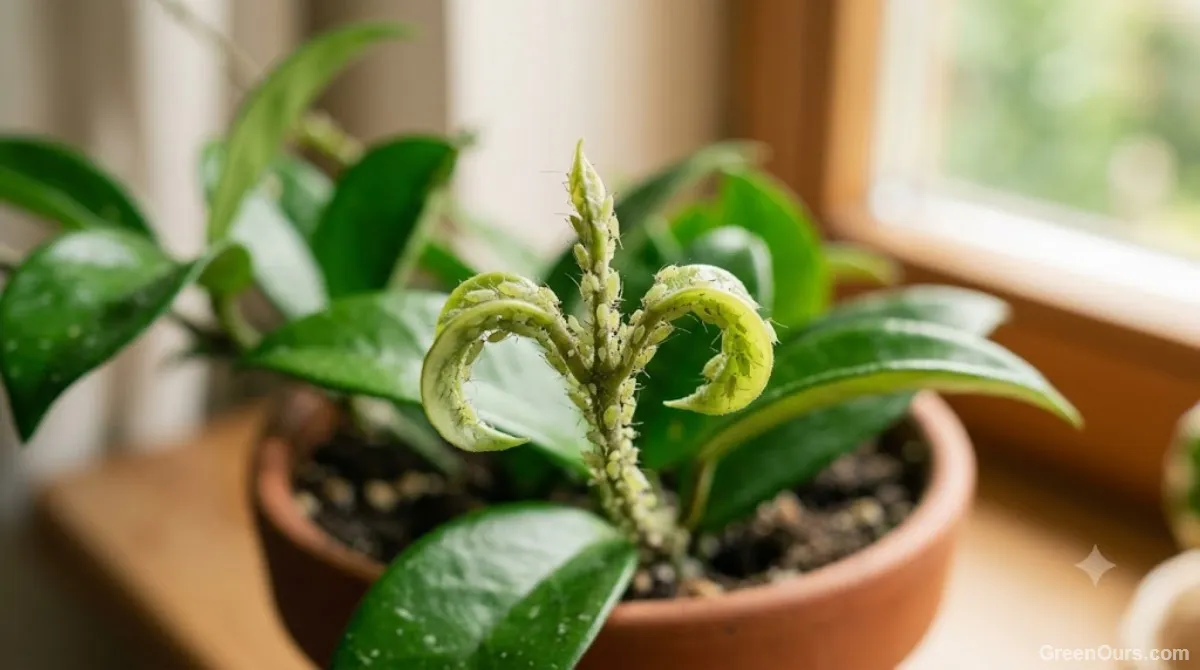
Three insect groups are responsible for the vast majority of honeydew cases: aphids, whiteflies, and soft scale. All three feed the same way — piercing plant tissue and drawing out phloem sap, then excreting the excess sugar they can't process.
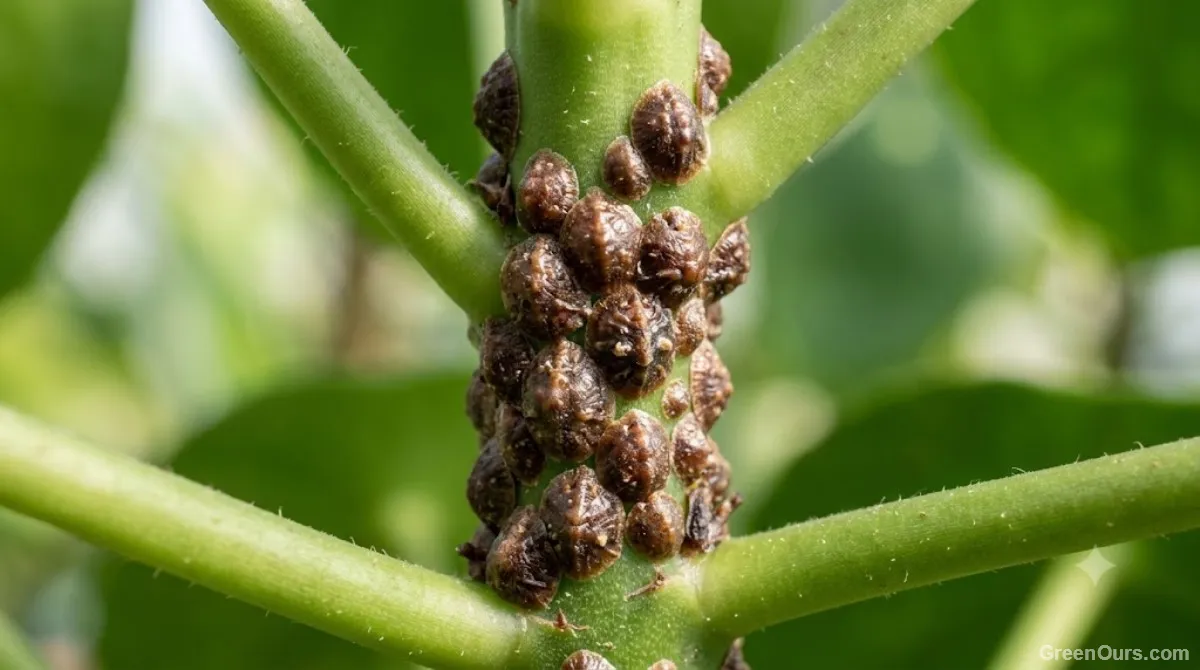
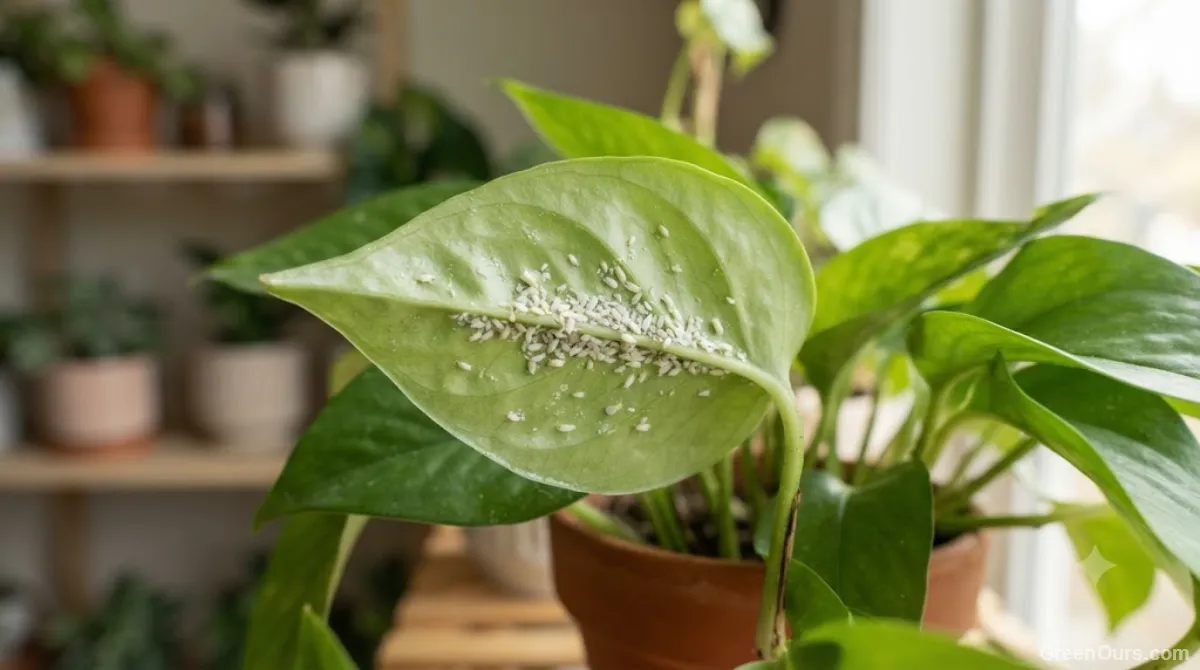
Aphids cluster on new growth and the underside of young leaves. They're small, pear-shaped, and often green or black. Whiteflies scatter into a small cloud when you disturb the plant, then resettle within seconds. Soft scale looks nothing like an insect at first glance — flat, waxy bumps fixed along stems and leaf veins that don't move even when touched.
Check reproduction speed before you decide this is minor. A single aphid colony can produce a new generation in 7 to 10 days under warm indoor conditions. Left untreated for two to three weeks, a handful of aphids becomes hundreds.
If the sticky spots are only on the leaves directly below a specific stem or branch, look up first. Honeydew falls from wherever the insects are actually feeding, and that's rarely the leaf you found it on.
How to Inspect Your Plant Like a Diagnostician
Don't start with the sticky leaf. Start with the growth above it.
- Trace upward from the sticky leaf to the nearest stem junction and new growth tip — this is where most colonies establish first.
- Turn every leaf over. Aphids and whiteflies feed almost exclusively on the underside, where humidity is higher and predators are less likely to find them.
- Run a fingernail along the stem. Scale insects feel like small bumps that don't scrape off easily, unlike dirt or dried sap.
- Shake the plant gently over a white sheet of paper. Whiteflies will lift off and land on the paper, making a light infestation visible in seconds.
- Check the soil surface and the underside of the pot rim. Some scale and aphid populations retreat there during the day.
If you find nothing after this sequence, the sticky residue is very likely plant sap, not an insect problem.
When It's Not Insects: Natural Sap and Guttation
Plants push out sap for reasons that have nothing to do with pests. Guttation happens overnight, when root pressure forces excess water and dissolved sugars out through small pores at leaf tips and edges called hydathodes. By morning, that moisture evaporates and leaves a faint sticky film — most common in high-humidity environments or after heavy watering the night before.
Physical damage causes the second natural pathway. A torn leaf, a snapped petiole, or an aggressive pruning cut will ooze sap at the wound site. This sap dries into a sticky, sometimes slightly discolored patch that stays localized and doesn't spread to nearby leaves over time.
The distinguishing test is spread. Honeydew shows up on multiple leaves in a consistent downward pattern from the feeding site. Natural sap stays fixed to one wound or one leaf edge and doesn't expand.
Treatment: Step by Step
Once you've confirmed an active insect population, treat in this order.
- Wipe down all sticky leaves with a damp cloth or diluted insecticidal soap solution — 2 teaspoons of soap per liter of water. This removes existing honeydew and some insects on contact.
- Apply insecticidal soap or neem oil directly to the undersides of leaves and along stems, where the insects are actually feeding. Spray until runoff, focusing on new growth and stem joints.
- Repeat every 5 to 7 days for three treatments. This interval targets newly hatched insects before they mature and reproduce, since a single application rarely kills every egg or nymph present.
- Isolate the plant from others during treatment. Aphids and whiteflies move easily between nearby plants that touch or share airflow.
- For scale insects specifically, use a cotton swab dipped in isopropyl alcohol to physically remove visible bumps before applying any spray — the waxy coating resists most sprays on its own.
Sooty Mold: The Follow-On Problem
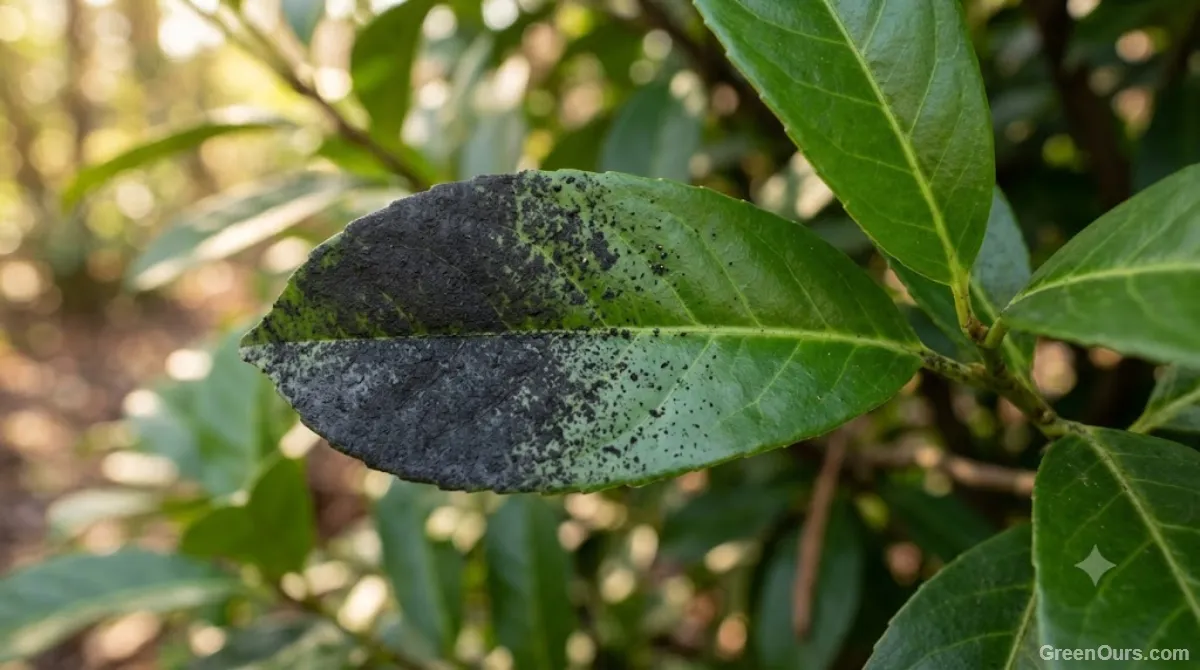
Honeydew left on leaves for more than a week or two often develops a second issue: sooty mold, a black, powdery fungus that grows directly on the sugary residue rather than on the plant itself. It doesn't infect the leaf tissue, but it does block light from reaching the surface, which reduces the plant's ability to photosynthesize.
Sooty mold wipes off easily once the underlying honeydew source is treated and the residue is cleaned away. It won't return on its own — it needs the sugar film to grow on, so removing the insects removes its food source permanently.
Prevention Going Forward
Check the undersides of leaves every time you water — it takes ten extra seconds and catches new colonies before they establish. Quarantine any new plant for two weeks before placing it near your existing collection, since aphids and whiteflies frequently hitchhike in on fresh nursery stock.
Keep humidity moderate rather than high wherever possible. Whiteflies in particular reproduce faster in warm, still, humid air, and a small fan improving airflow around susceptible plants measurably slows their spread.
Read more on diagnosing and treating common houseplant pests.
Sticky leaves are a symptom, not a diagnosis on their own. Trace the residue to its source, confirm what's actually feeding on the plant, and treat the insects rather than just the mess they leave behind. Once the population is gone, the stickiness stops — and it stays gone.