
What You're Actually Looking At
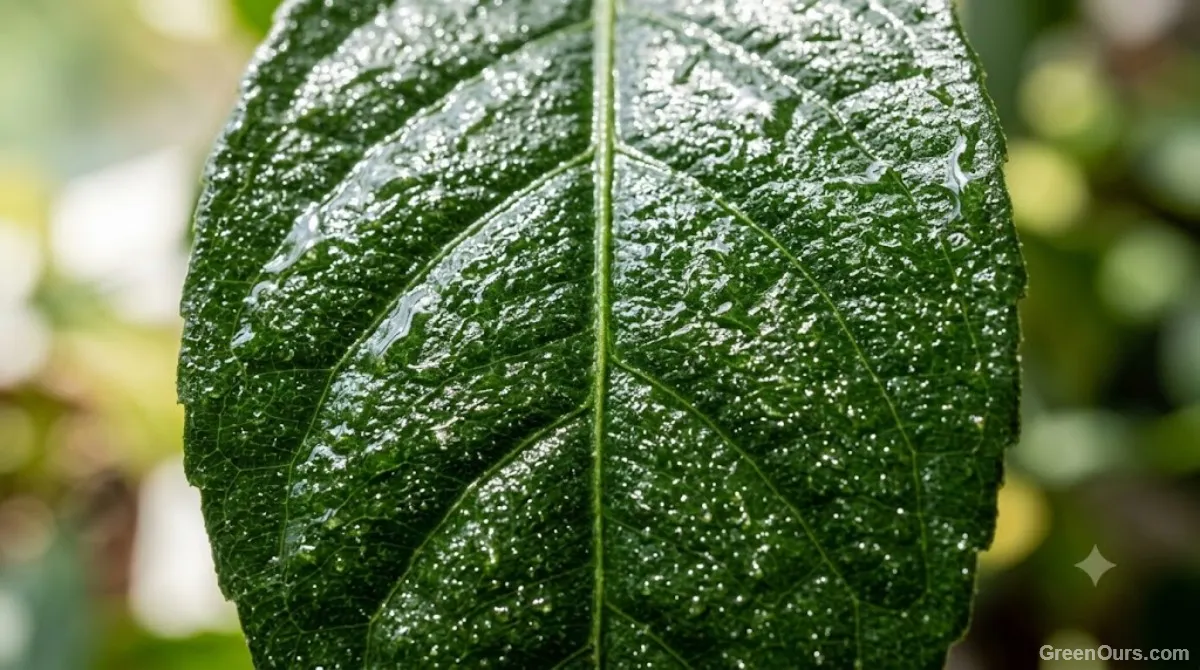
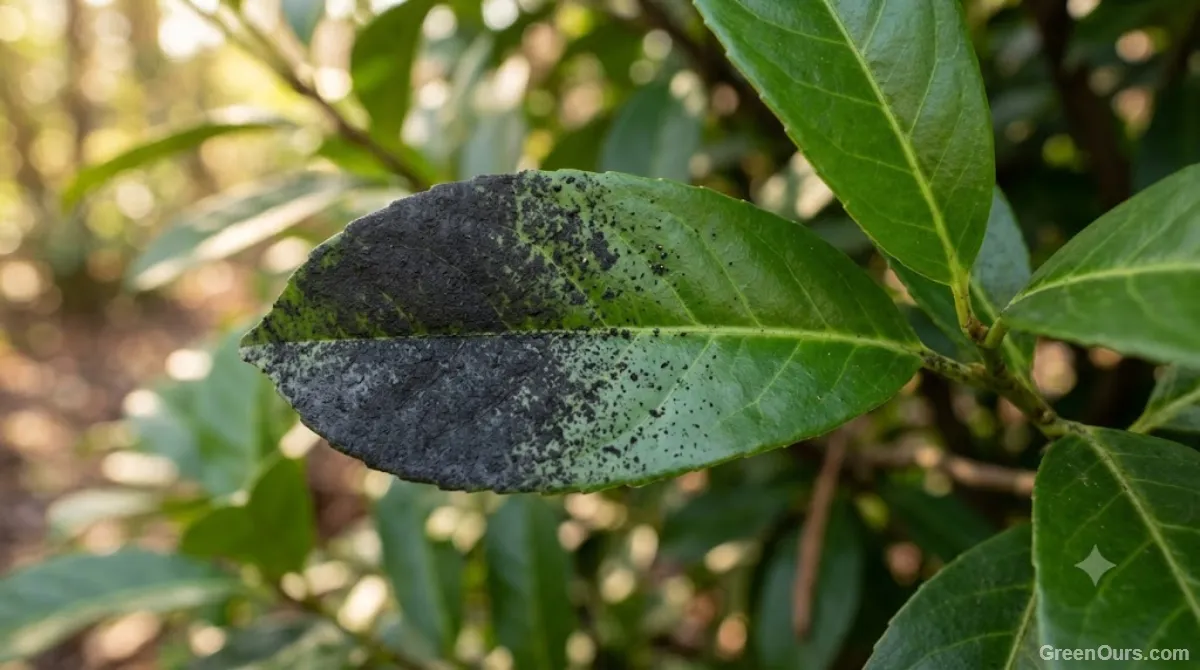
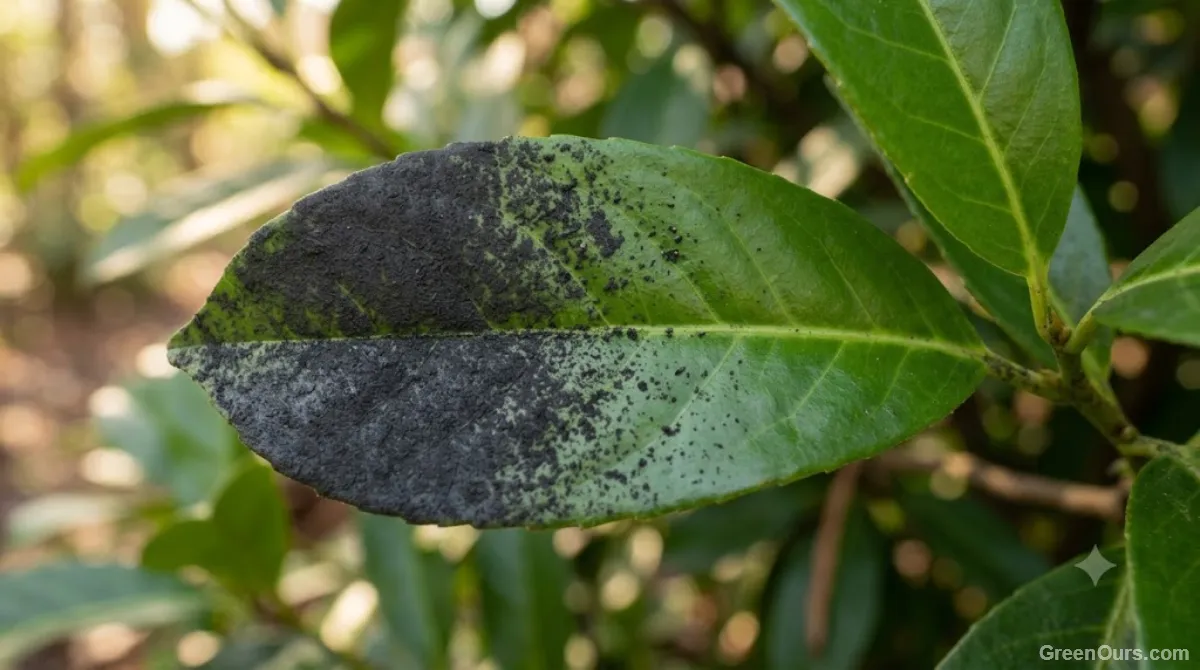
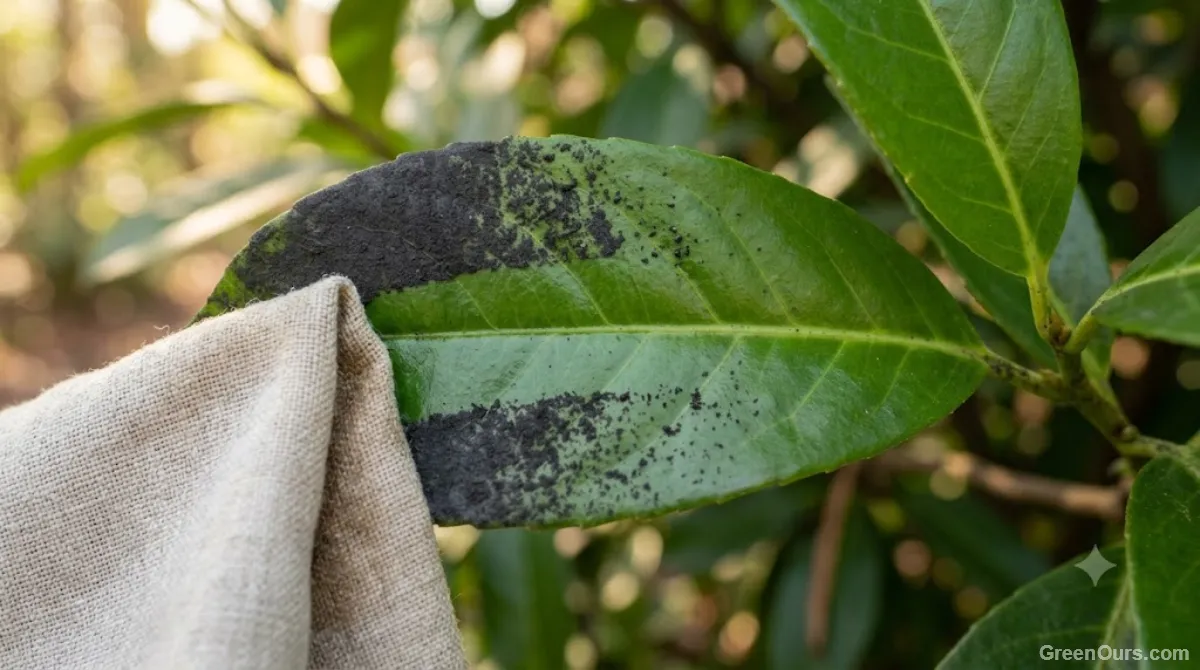
Black sooty mold forms a thin, dark film on the upper surface of leaves. Early on it looks like dirty smudges; left untreated, it thickens into a felt-like black layer that can cover most of the leaf surface. Run a fingernail or damp cloth over it and it wipes away, leaving green, undamaged tissue underneath. That's the single fastest way to rule out a true fungal leaf disease — pathogens like leaf spot or blight don't wipe off, because they've colonized the tissue itself.
The mold isn't harmless, though. A leaf with heavy coverage — roughly 30 to 40 percent of the surface or more — loses meaningful photosynthetic capacity because the coating blocks light from reaching chlorophyll. On a single leaf that's a minor issue. On a shrub or tree carrying it across most of the canopy for a full season, it can measurably slow growth and reduce flowering or fruiting the following year.
The Real Cause: Honeydew-Producing Insects
Sooty mold needs honeydew to grow, and honeydew comes from three main groups of sap feeders. Identify which one you have before you choose a treatment, since dosing and timing differ.
Aphids
Small, soft-bodied, usually clustered on new growth and the undersides of young leaves. Populations can double in 7 to 10 days under warm conditions, which is why honeydew — and the mold that follows — seems to appear overnight.
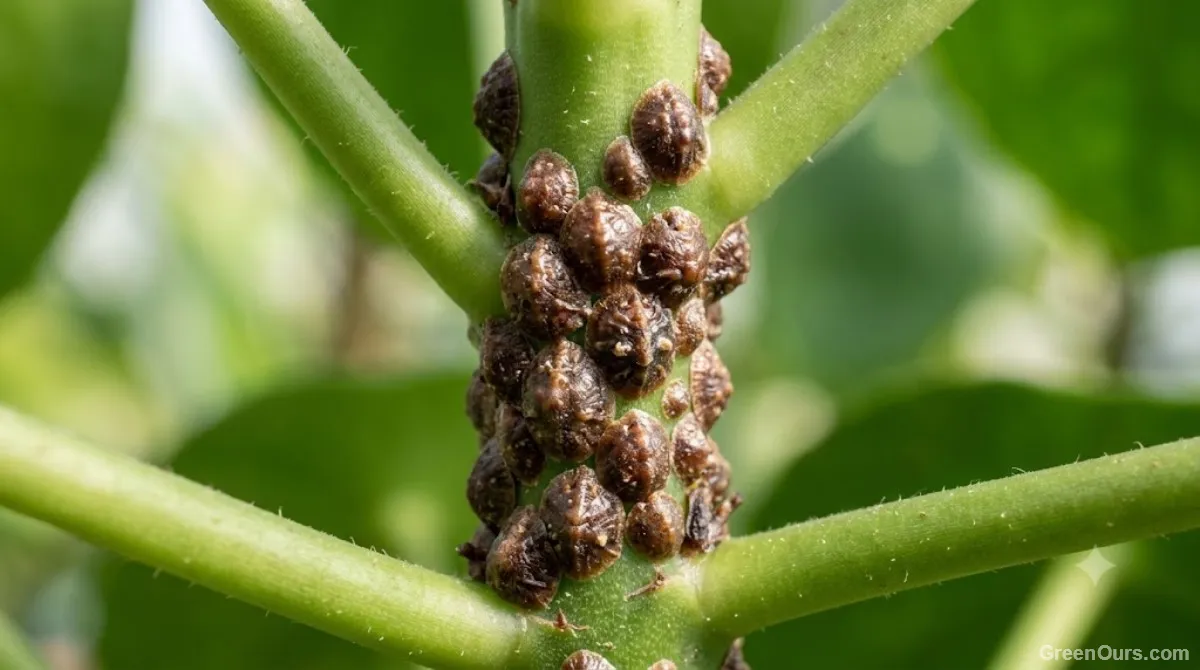
Soft Scale and Mealybugs
Scale attaches to stems and leaf veins and can be mistaken for plant tissue at a glance; mealybugs show up as small white, cottony clusters in leaf joints. Both feed continuously and produce honeydew at a steadier rate than aphids, which is why sooty mold on woody shrubs often traces back to scale rather than aphids.
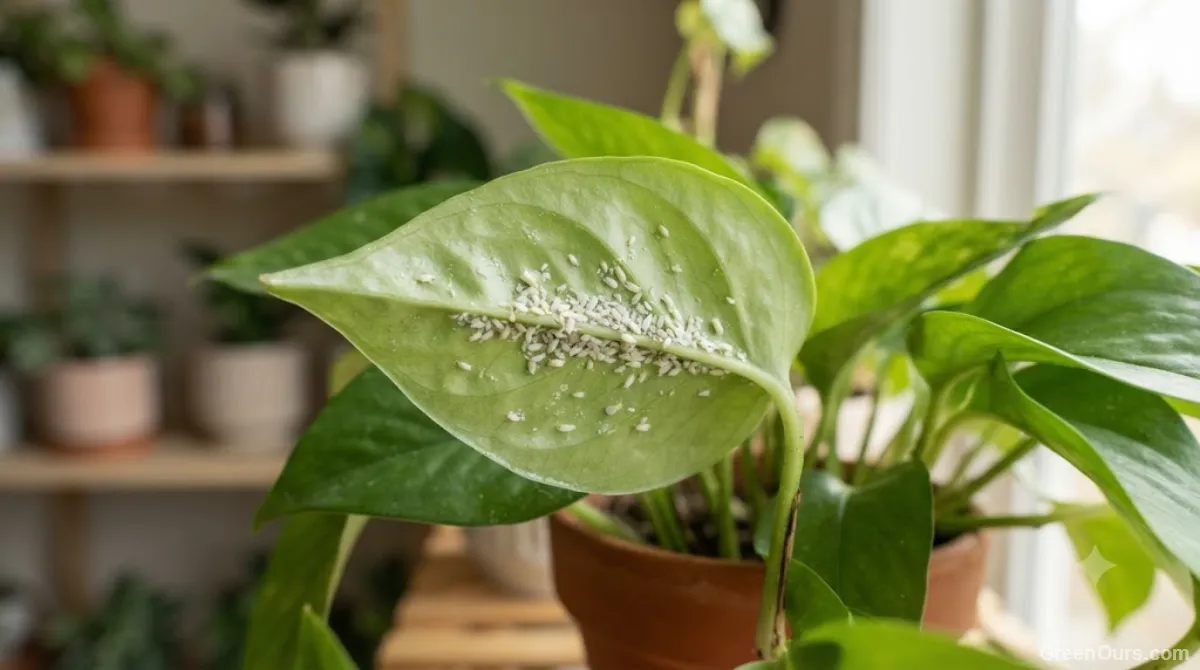
Whiteflies
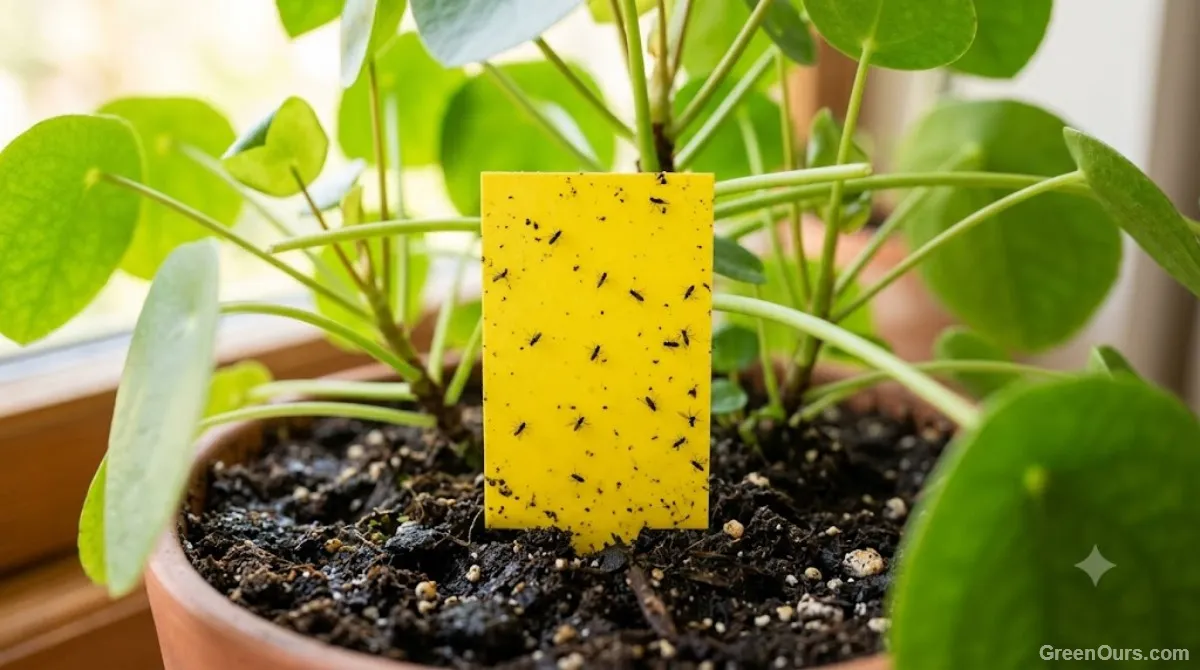
Tiny, moth-like insects that scatter in a cloud when you disturb the foliage. They favor the undersides of leaves and are common on hibiscus, citrus, and many houseplants moved outdoors for summer.
If you can wipe the black coating off with a damp cloth and the leaf underneath is green and intact, you're dealing with sooty mold, not a fungal or bacterial leaf disease. Spend your treatment effort on the insects, not the mold itself.
Removing Sooty Mold From Leaves
Removal is straightforward and doesn't require fungicide, because you're not fighting an infection.
- Mix a mild solution of dish soap and water — about one teaspoon of soap per liter.
- Wipe larger leaves individually with a soft cloth or sponge dipped in the solution.
- For outdoor shrubs or trees, hose the foliage down with a strong, steady spray, focusing on the upper leaf surfaces where the mold collects.
- Avoid scrubbing tender new growth — a light wipe is enough; hard pressure can bruise young tissue.
Eliminating the Insects Behind It
Removing the mold buys you a clean-looking plant for a week or two at most. The insects are the actual target.
For aphids and whiteflies, spray insecticidal soap or a light horticultural oil directly on the undersides of leaves, where these insects concentrate. Apply every 5 to 7 days for three applications to catch newly hatched insects the first round misses.
For scale and mealybugs, horticultural oil works but needs full coverage on stems and leaf joints, not just leaf surfaces — these insects often go unnoticed because they don't move. A dormant oil application in late winter, before new growth starts, prevents a large share of the season's population.
Preventing Recurrence
Control the Ants
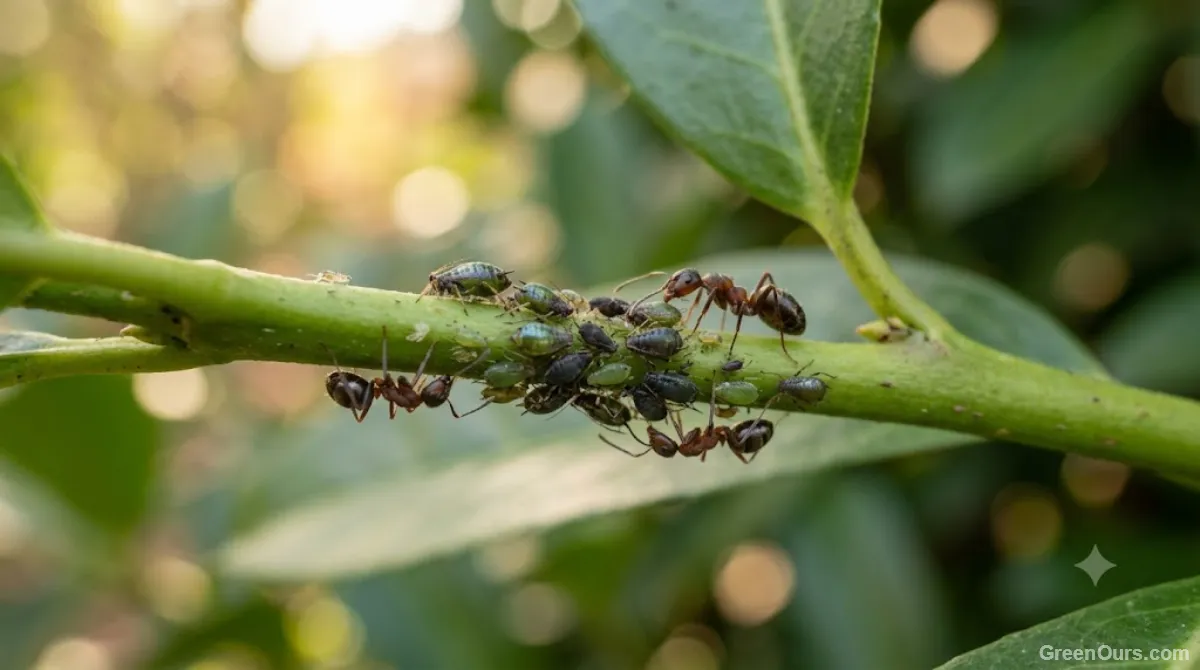
Ants farm aphids and scale for their honeydew, physically moving colonies to new growth and driving off predatory insects like ladybugs that would otherwise keep populations down. A sticky barrier band around the trunk or stem base, or ant bait placed away from the plant, removes that protection and lets natural predators do more of the work.
Build a Two-Week Inspection Habit
Check the undersides of leaves and stem joints every two weeks during the growing season. Catching a small aphid cluster or a few scale insects before they establish is far easier than treating a full infestation — and it means you never get far enough along to see sooty mold in the first place.
When to Call a Professional
Sooty mold covering a mature tree's full canopy usually means a scale or aphid population that's been established for one or more seasons — beyond what topical treatment reaches effectively. An arborist can apply systemic treatments through soil injection or trunk application that reach insects hidden in bark crevices and upper branches you can't spray from the ground. If you've treated twice and the mold keeps returning at the same rate, that's the signal to bring one in rather than repeating the same approach a third time.
What to Do Next
Sooty mold is one of the easier plant problems to resolve correctly, precisely because it tells you exactly where to look. Wipe it off, find the insects underneath, treat those, and keep checking every two weeks. Skip the insect step and you'll be wiping the same leaves again by next month.
Read our latest pest and disease diagnostics for more plant problems solved.