
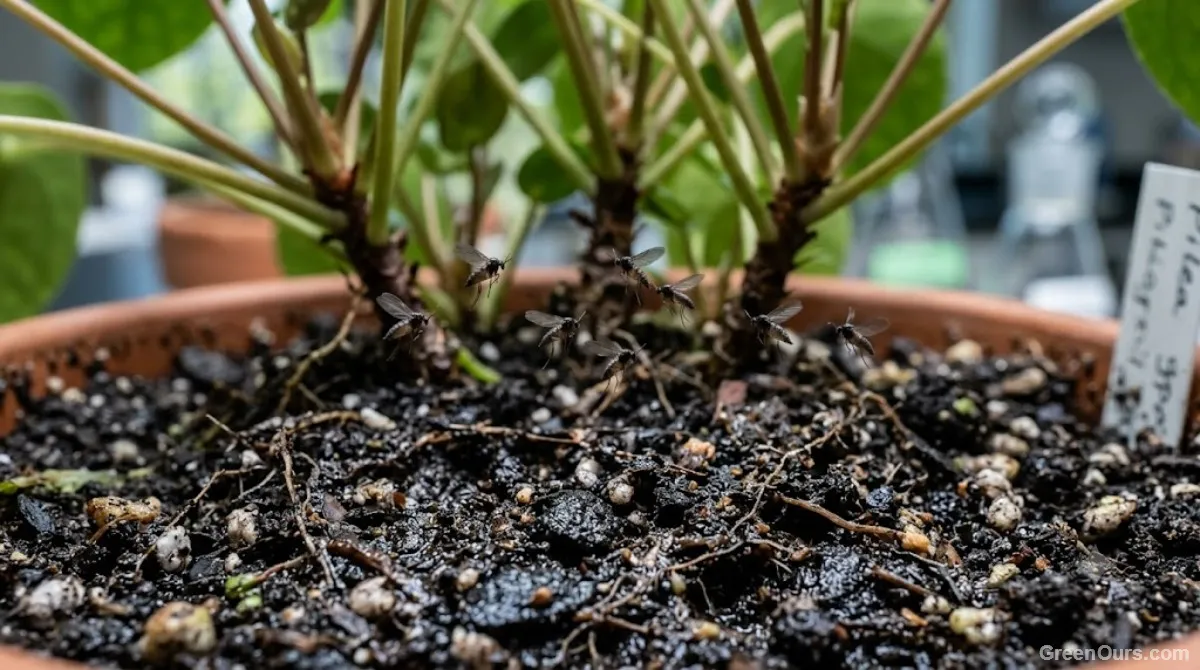
Identifying the Problem
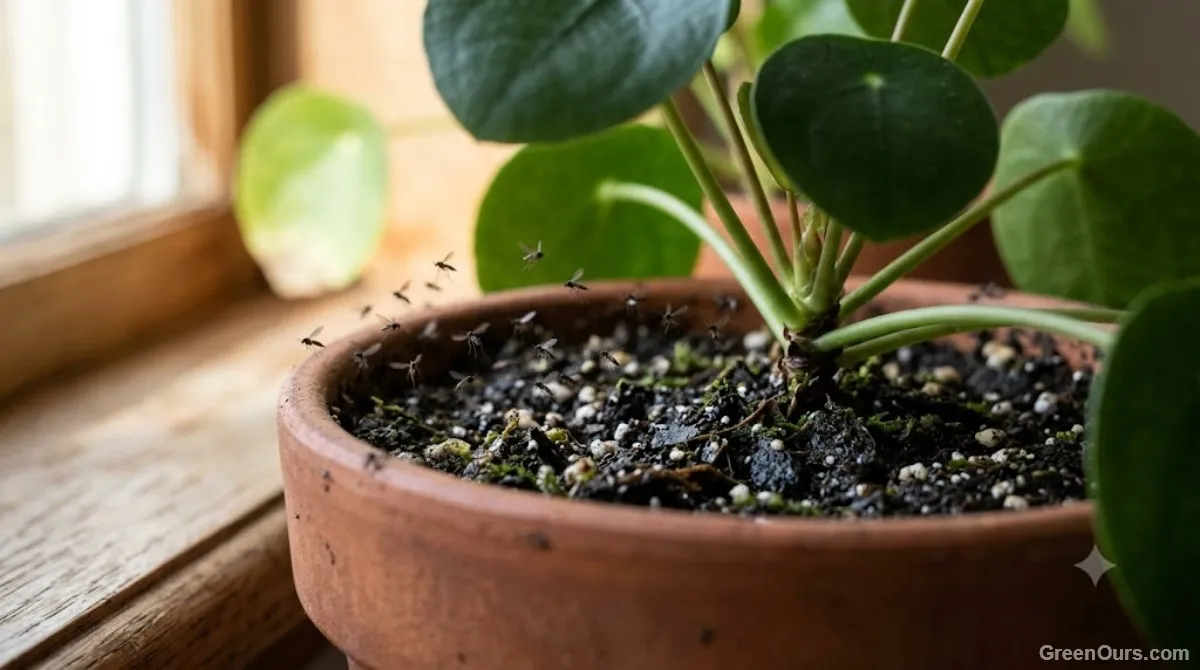
Both pests show up under the exact same environmental conditions: consistently moist potting soil, low airflow, high relative humidity around the canopy, and decaying organic matter sitting at or near the surface. Both fly up in small clouds when the pot is disturbed, watered, or even moved across a bright window sill. From three feet away, they look like the exact same tiny nuisance insect hovering around your indoor garden.
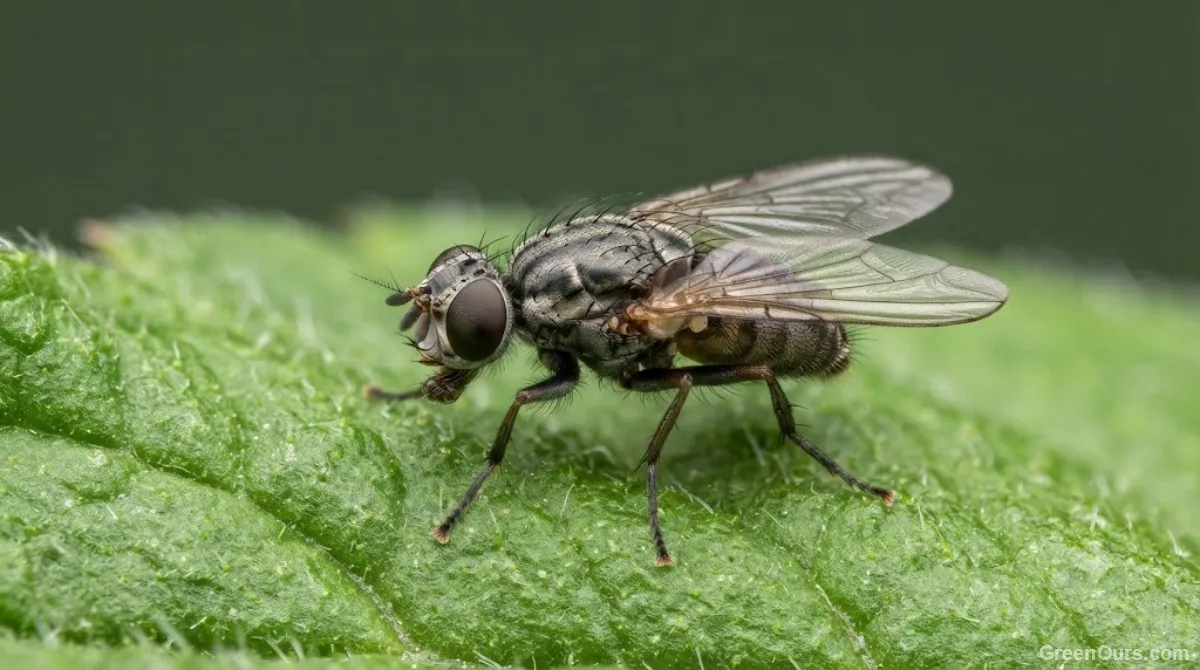
Up close, however, they couldn't be more distinct. If you can get one to land — on a leaf, a windowsill, or the plastic rim of the pot — you can run through a quick diagnostic check: antenna length, eye color, and wing pattern. That three-part visual inspection is usually enough to separate them in under a minute without needing any special magnifying equipment.
Telling These Pests Apart: Physical Differences
Body Shape and General Silhouette
Fungus gnats have long, thin, mosquito-like bodies paired with delicate, slender legs. They look frail and elongated, almost like tiny delicate midges when viewed in profile. Shore flies, by contrast, are shorter, stockier, and noticeably sturdy. They have a broader thorax and a more compact abdomen — looking much closer to a miniature house fly or fruit fly in overall build and posture.
Take time to observe the posture when the insect is at rest. Gnats hold their wings folded flat down their slender backs, creating a narrow linear profile. Shore flies hold their broader wings slightly flared, giving them a stout, rounded silhouette on soil or foliage.
Antenna Length and Prominence
Fungus gnats feature long, thread-like antennae that extend out prominently from the head, often measuring roughly half the total length of their body. Shore flies have short, stubby, barely visible antennae that fit tightly against the front of the head and are very easy to miss without close inspection or a magnifying glass. This single physical trait separates the two species faster and more reliably than almost anything else.
Eyes and Wing Anatomy
Shore flies possess noticeably reddish or brownish-red compound eyes that stand out under direct light, accompanied by dark wings marked with five distinct small pale spots. Fungus gnats have plain dark eyes and clear or smoky wings that lack spots entirely, featuring instead a characteristic, faint Y-shaped vein pattern near the outer wing margin.
Fastest diagnostic shortcut: check eye color first. Red eyes mean shore fly. No red means fungus gnat. Everything else is confirmation.
Behavior and Flight Patterns
Flight characteristics provide another huge set of clues before you even catch a specimen. Fungus gnats are notoriously weak, erratic fliers. They don't fly in straight lines; instead, they drift upward in short, awkward, fluttering bursts when disturbed. They tend to stay very close to the damp soil line, hovering within a few inches of the pot or clustering on nearby bright windows when attracted to daylight.
Shore flies, on the other hand, are swift, strong, and deliberate fliers. They zip from spot to spot with purpose, navigating air currents with ease. More importantly, shore flies display a distinct walking behavior: they will actively run across the soil surface, pot rims, or leaves on foot between short flights — a rapid scurrying motion that fungus gnats almost never exhibit. If you see a tiny fly actively darting and walking across wet soil rather than lazily hovering above it, that is a strong shore fly indicator on its own.
Breeding Habits: Where Each Pest Lays Eggs
Fungus Gnat Larvae and Feeding Damage
Fungus gnat females lay hundreds of tiny eggs in the top inch or two of moist, organic potting mix. Once hatched, the translucent, black-headed larvae reside beneath the soil surface, where they feed on soil fungi, decaying root matter, and organic debris. However, when population density spikes, fungus gnat larvae turn their attention to live plant tissue — specifically the tender root hairs and young feeder roots. In seedlings, cuttings, and young houseplants, this subterranean feeding can stunt growth, cause lower leaves to yellow, and open up pathways for fungal root rot pathogens like Pythium.
Shore Fly Larvae and Environmental Requirements
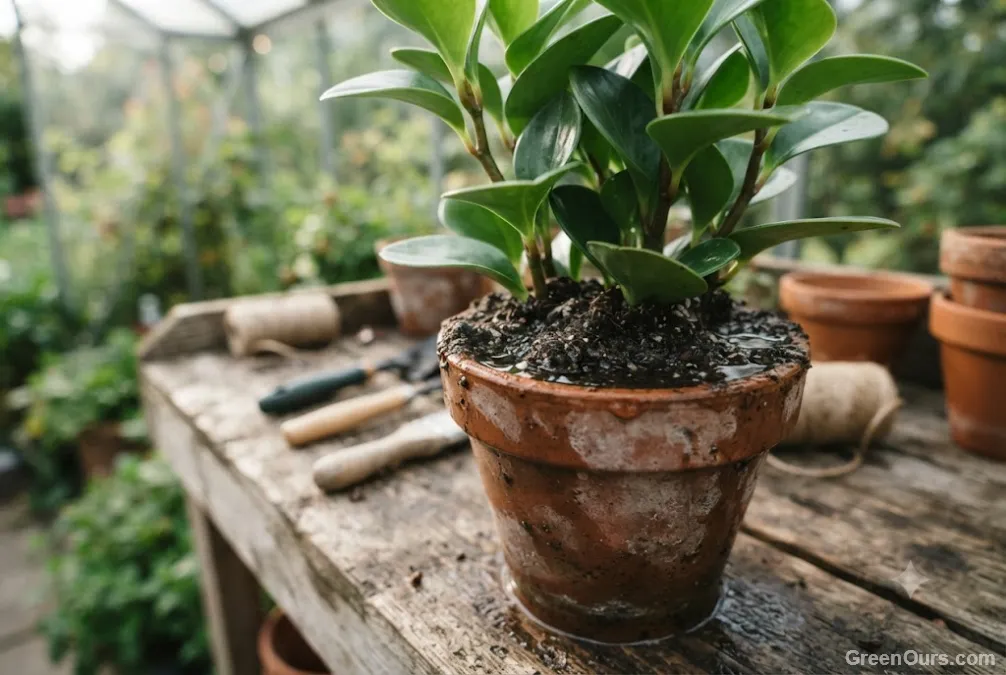
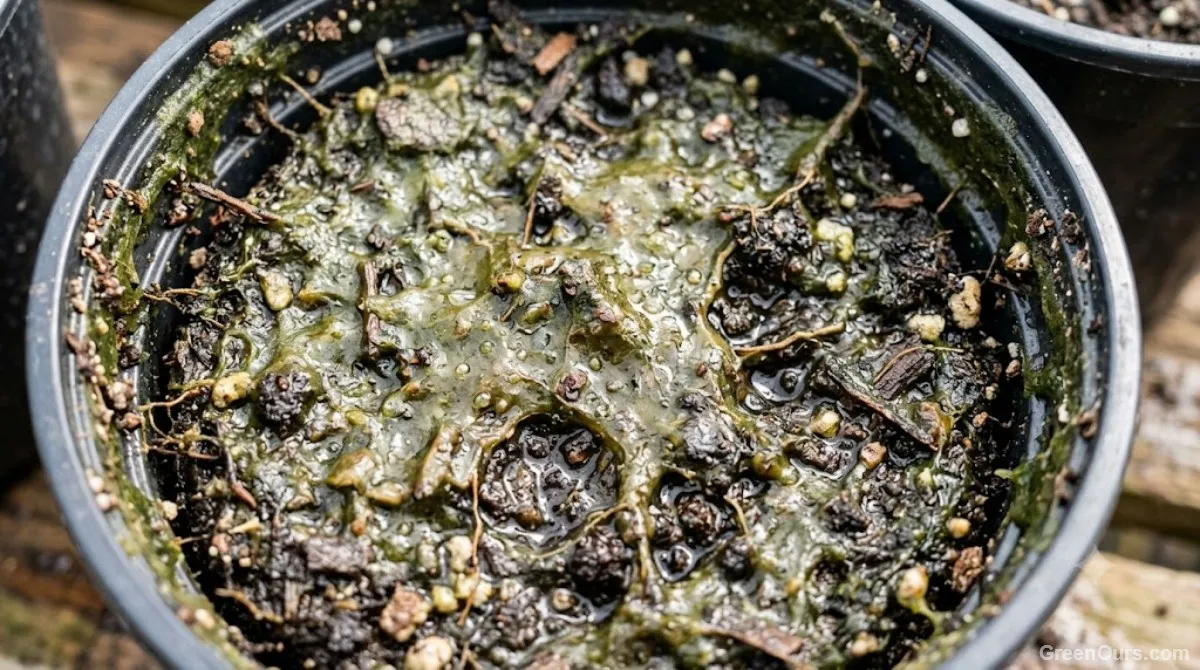
Shore flies have a completely different feeding strategy and nursery environment. Females lay eggs directly on top of algae films growing on overly wet soil surfaces, drainage trays, saucers, or moist clay pot sides. Shore fly larvae feed exclusively on that surface algae and microscopic green microorganisms. They do not tunnel into the potting medium, they do not feed on plant roots, and they cause zero direct mechanical damage to the plant's root system. The harm they cause is purely aesthetic and sanitation-related, though high populations indicate severe overwatering.
Step-by-Step Identification Checklist
To eliminate guesswork when comparing shore flies vs fungus gnats, follow this simple five-step diagnostic checklist when you first notice small dark flies around your indoor garden:
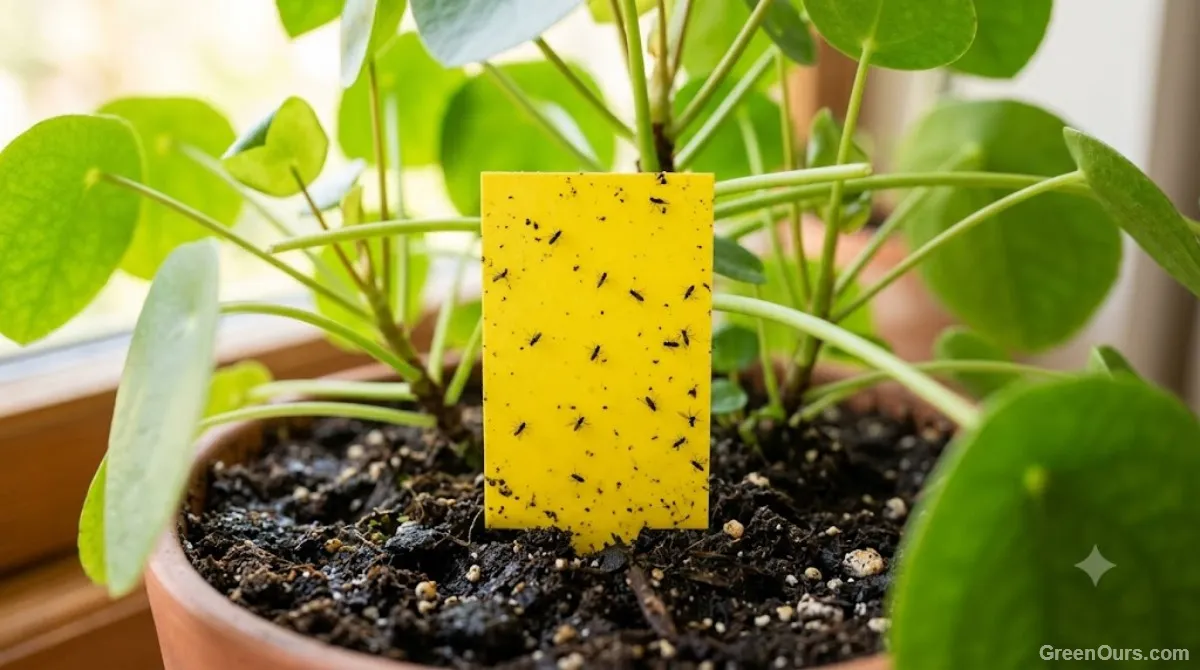
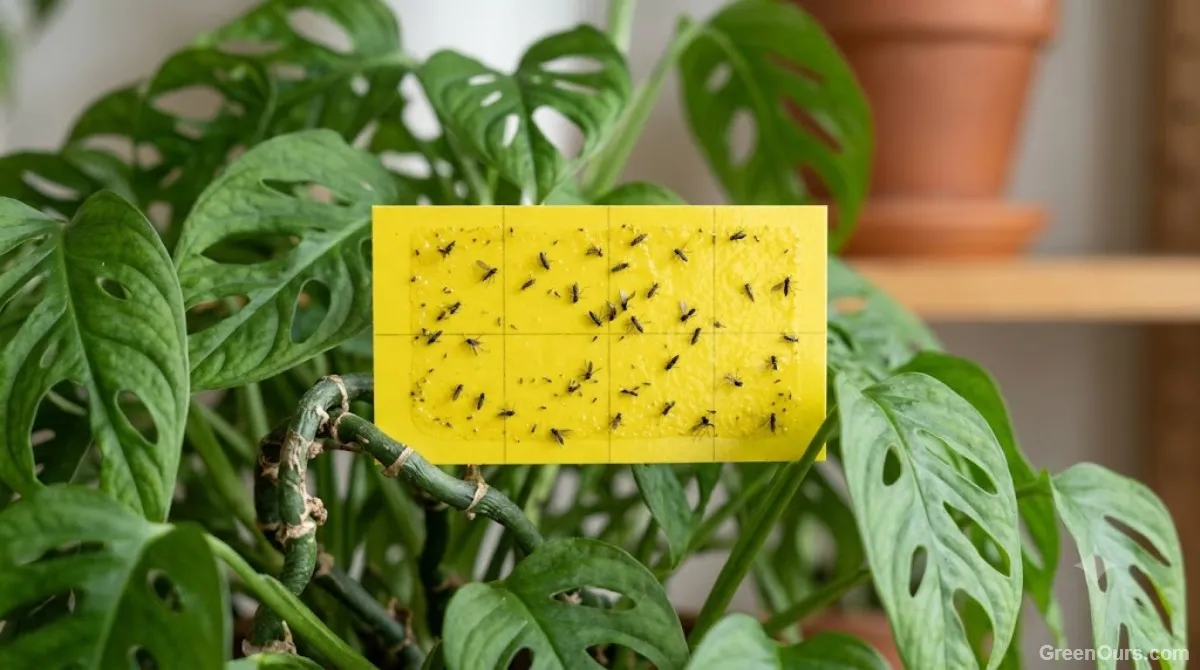
- Catch a fresh specimen by placing a bright yellow sticky trap at soil level or trapping a fly under a clear cup pressed against a smooth leaf surface.
- Examine antenna length under good light: long, prominent, multi-segmented antennae indicate a fungus gnat; short, barely visible antennae indicate a shore fly.
- Observe eye color under a strong flashlight or bright desk lamp: bright red or reddish-brown eyes confirm shore flies.
- Inspect the wings: five light-colored dots on darker wing membranes signal a shore fly; clear, unspotted wings with a subtle Y-vein pattern confirm a fungus gnat.
- Observe undisturbed insects near the soil surface for 30 seconds: active, rapid running across wet substrate leans heavily toward shore flies, while weak, hovering, clumsy drift points to fungus gnats.
Why Treatment Differs Completely
Because these two insects inhabit different micro-environments and feed on entirely different food sources, using a one-size-fits-all treatment plan inevitably fails. Effective control requires targeted intervention based on your diagnostic results.
Treating Fungus Gnats
Fungus gnat control must focus on the larvae living below the soil surface. First, adjust your watering schedule: let the top two inches of soil dry out thoroughly between waterings, as delicate gnat larvae quickly desiccate and die in dry soil. For active infestations, apply a soil drench containing Bacillus thuringiensis israelensis (BTI), a naturally occurring soil bacterium that produces toxins specific to dipteran larvae. When larvae ingest the treated soil, BTI destroys their gut lining within days without harming plant roots or beneficial soil biology. Concurrently, deploy yellow sticky traps at soil level to capture egg-laying adults and break the breeding cycle.
Treating Shore Flies
Shore fly control requires an entirely different tactical focus because the larvae are strictly surface-dwellers feeding on algae rather than soil matter. A BTI soil drench is largely ineffective against shore flies because their larvae reside on the algae surface film and do not ingest deeper soil particles. Instead, target their food supply: scrape away and discard any visible green algae film from the soil surface, pot rims, and drainage saucers. Allow the soil surface to dry out completely, increase room ventilation or add an oscillating fan to encourage surface evaporation, and switch to bottom-watering to keep the top layer dry. Without an active algae crop to feed on, shore fly populations collapse rapidly.
Misidentifying the pest means you'll waste time and effort drying out soil depths that were never harboring larvae, or pouring biological drenches over surface-feeding insects that will simply ignore them.
When to Seek Further Help
If you discover that both pests are present simultaneously — a common occurrence in greenhouse environments or severely overwatered collection areas — you will need to execute both protocols together: scrape away topsoil algae while applying a BTI drench to target deeper subterranean larvae.
Furthermore, if pest numbers continue to climb after two full weeks of targeted treatment, the issue is rarely a failure of the treatment itself. Instead, it signals a systemic drainage issue, such as compacted potting soil, blocked drainage holes, or a pot that holds far too much water for the plant's root mass. In those extreme cases, bare-root repotting into a fresh, porous, well-draining potting mix is the fastest way to reset the environment and resolve what spot treatments cannot fix.
Two flies, two life cycles, two fixes. Get the identification right, and the treatment stops being guesswork.