
New Growth Is the Target, Not an Accident
Pests don't distribute themselves evenly across a plant. They concentrate at stem tips, unopened leaf buds, and flower stalks because that tissue is easiest to pierce and richest in sugars and amino acids. A mature leaf has a thicker cuticle and lower nitrogen density — it's simply less rewarding to feed on.
This is why damage often looks isolated to the newest inch of growth while the rest of the plant appears untouched. If you're only checking leaves that already look established, you'll miss the infestation until it's spread to three or four new flushes.
Check new growth first, every time. If a pest is present anywhere on the plant, the newest unfurled leaf or stem tip will show symptoms before older foliage does.
The Three Culprits Behind Dying Shoots
Aphids
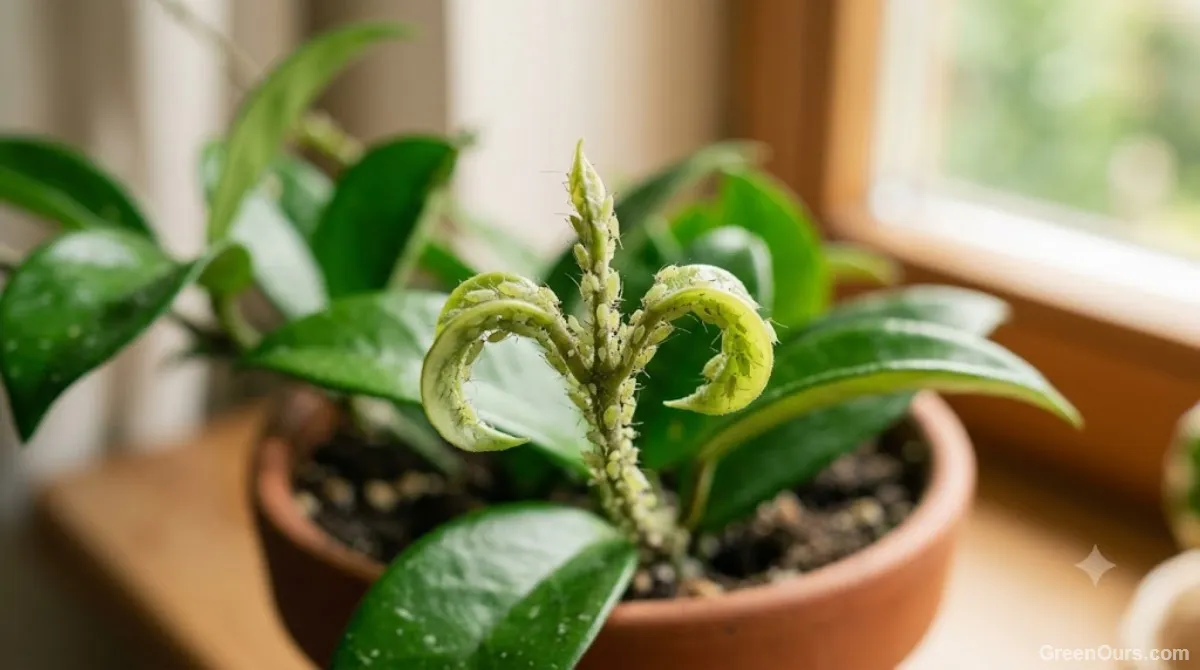
Aphids cluster in visible groups at stem tips and the undersides of the youngest leaves. Look for pear-shaped insects 1–3mm long, ranging from green to black depending on species. Feeding causes curling, twisting, and a sticky honeydew residue that often develops black sooty mold on the surface below.
Aphid populations grow fast. A single female can produce 60–100 offspring without mating, and at 20–25°C a new generation matures every 7–10 days. A small cluster you dismiss on a Monday can be a colony by the following weekend.
Thrips
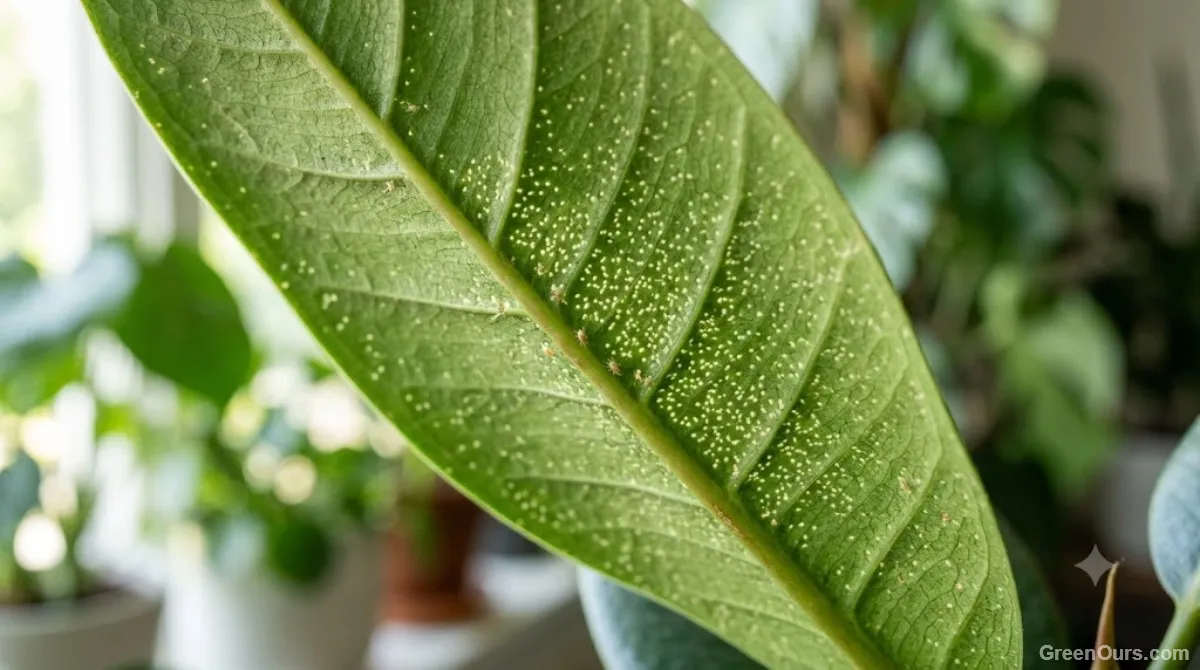
Thrips are harder to spot — 1–2mm, slender, and quick to hide in leaf folds when disturbed. Damage looks like silvery or bronze stippling on new leaves, often paired with tiny black flecks of frass. Distorted, crinkled new growth and streaked flower petals are also strong indicators.
Thrips have overlapping, staggered generations, meaning eggs, larvae, and adults are present at the same time on an infested plant. That's the main reason single-treatment approaches fail against them.
Spider Mites
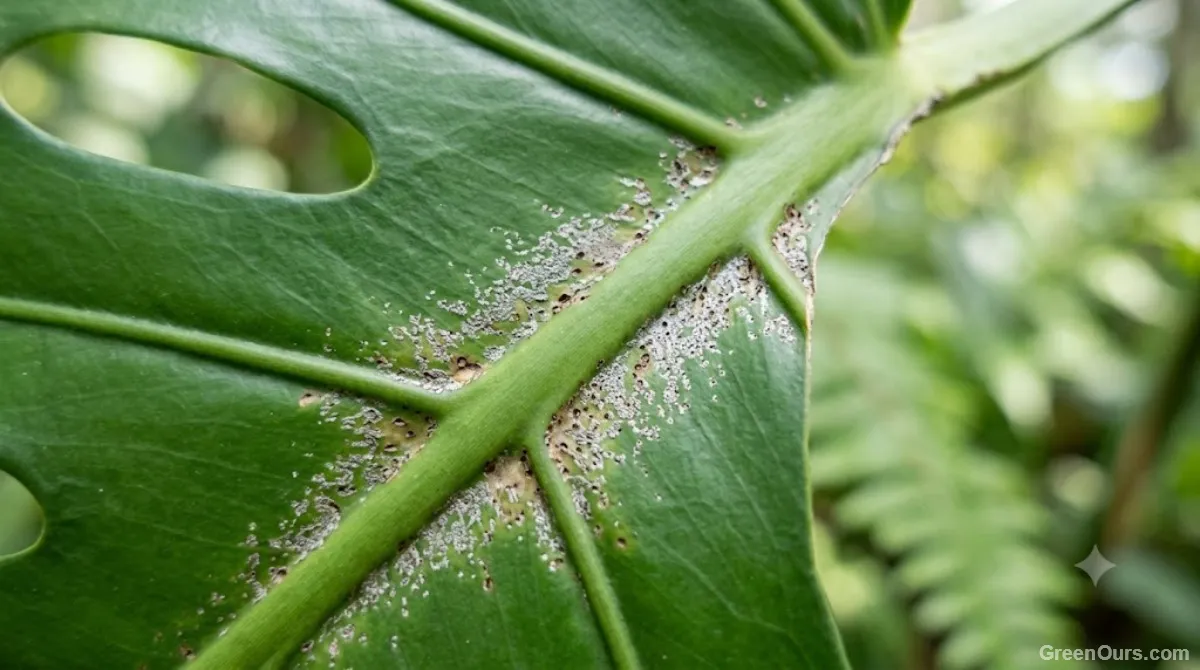
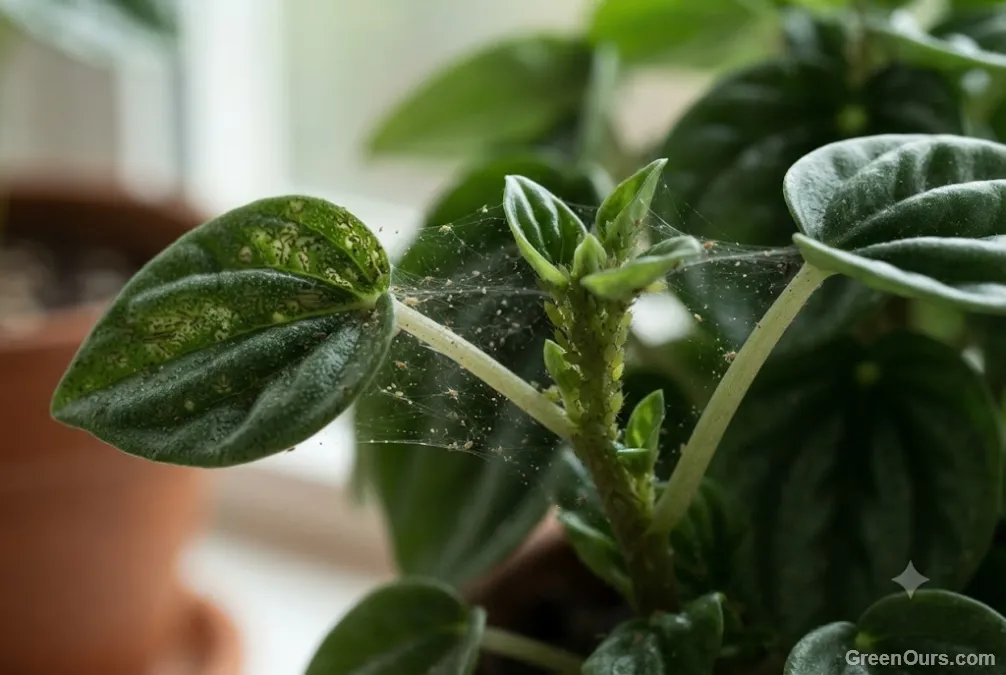
Spider mites are the smallest of the three, often invisible without magnification. The clearest sign is fine webbing at the junction of new leaves and stems, paired with a stippled, bronze-toned discoloration across the leaf surface.
They thrive in dry air below 40% relative humidity and reproduce fastest above 27°C, where populations can double every 3–5 days. Low-humidity indoor environments in winter are their preferred conditions, which is why infestations often surface right when heating systems kick on.
A 60-Second Inspection Routine for New Growth
Run this check on any plant showing new-growth dieback, and repeat it weekly on plants you've treated before:
- Tap the newest stem tip firmly over a sheet of white paper. Aphids and mites will dislodge and become visible as moving specks.
- Turn the newest unfurled leaf over and check the underside near the midrib — this is where thrips and mites concentrate first.
- Look for webbing at the base of the newest leaf, where the petiole meets the stem. This is the earliest visible sign of spider mites.
- Check for sticky residue on the leaf surface or the leaf below it — a sign of aphid honeydew, even if you can't see the aphids themselves.
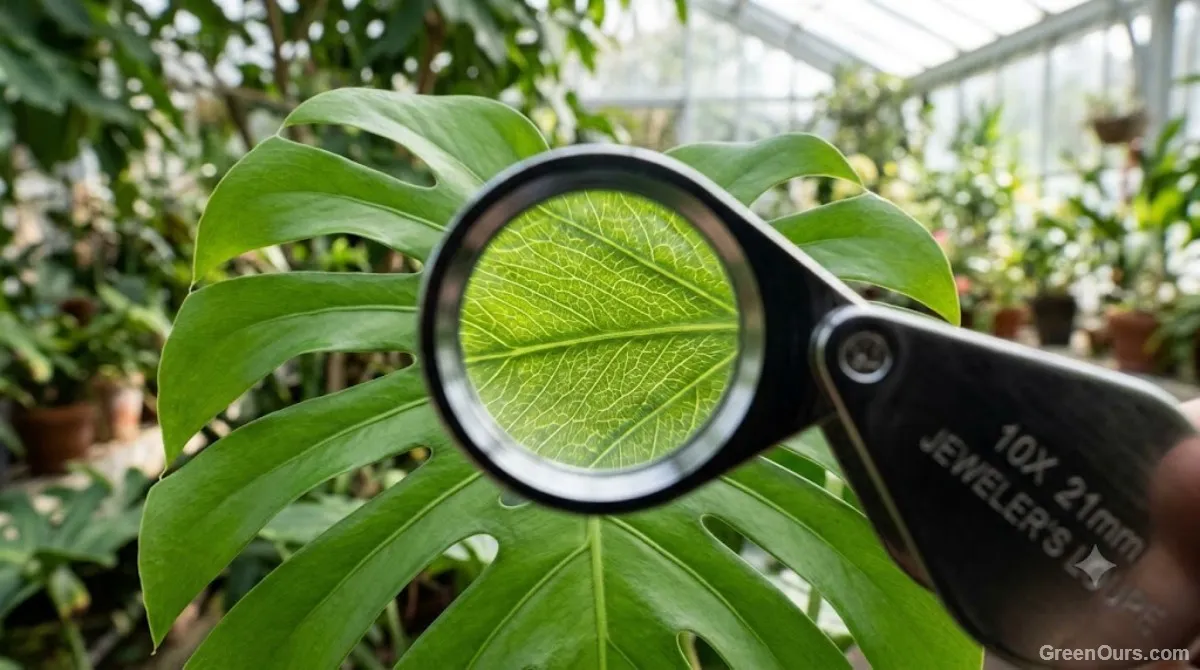
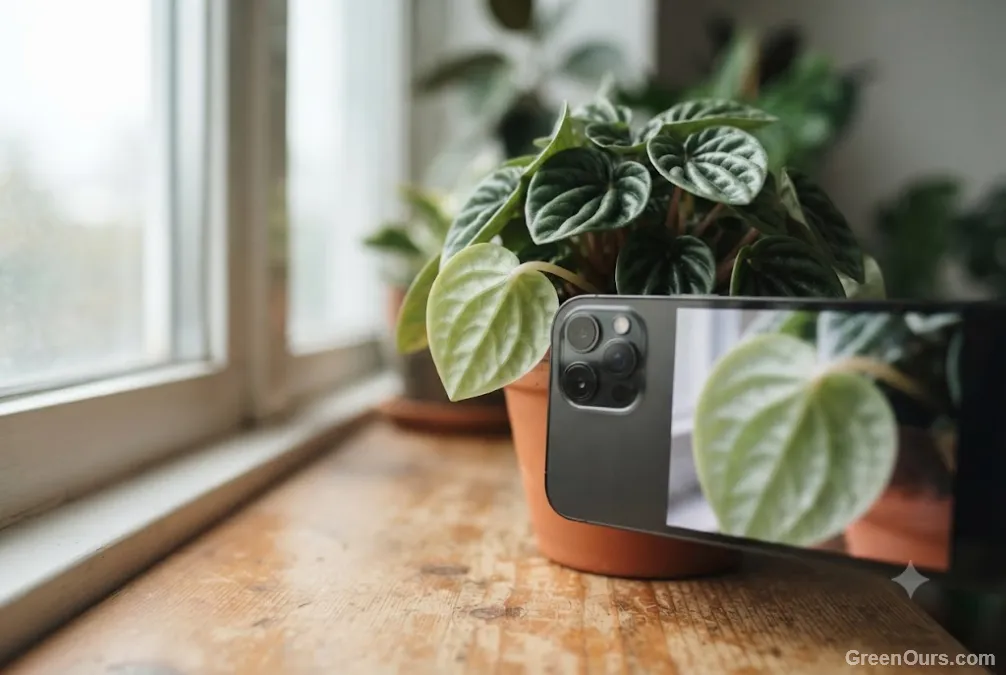
- Use a phone camera's macro mode or a 10x loupe on any leaf with stippling. At that magnification, thrips and mites are easy to tell apart by movement and size.
Targeted Treatment by Pest
Aphids
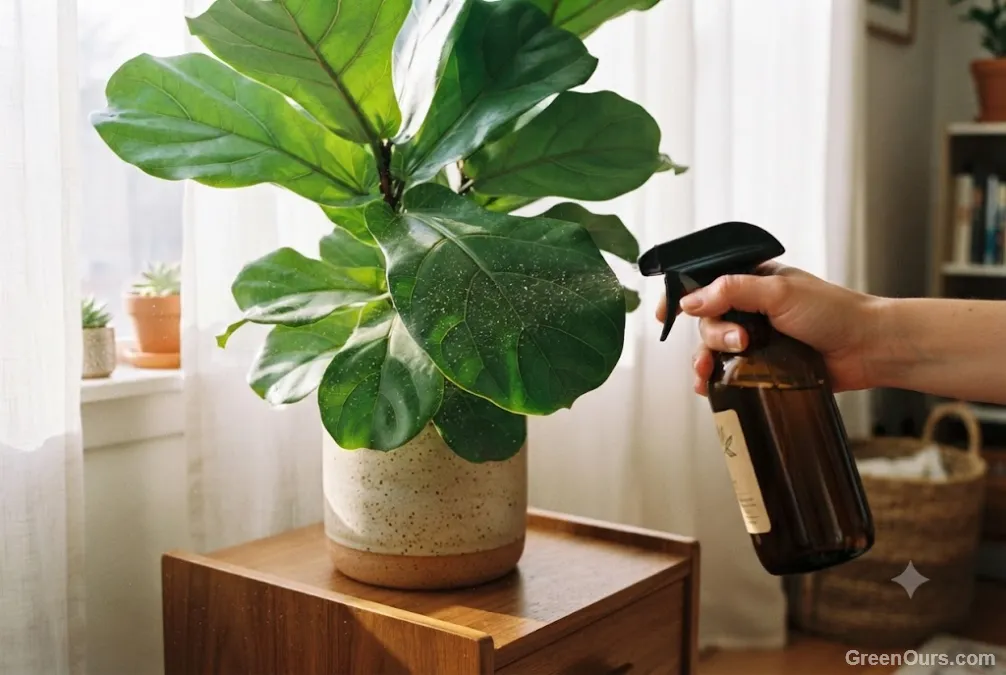
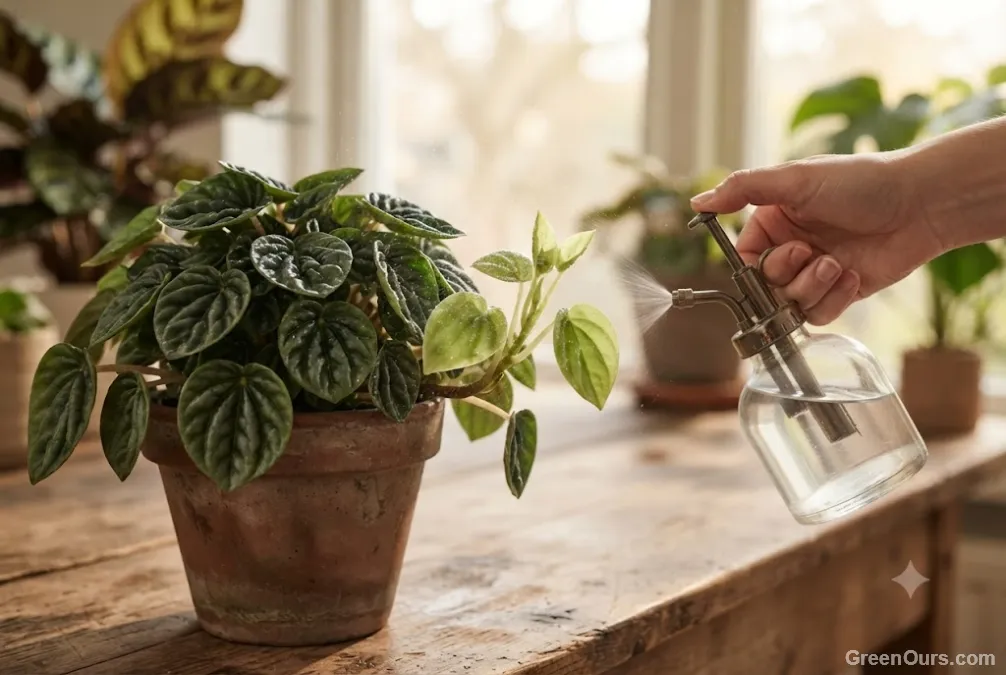
For light infestations, wipe the affected shoot with a damp cloth or a strong water spray to physically remove the cluster. For established populations, apply insecticidal soap at a 2% concentration directly to the new growth every 3 days for two weeks, targeting the undersides of leaves where colonies rebuild.
Thrips
Isolate the plant immediately — thrips move easily between neighboring pots. Use blue sticky traps near the soil line to monitor adult activity, and apply a spinosad-based spray at 5–7 day intervals for three full rounds. Because generations overlap, one or two applications will miss eggs that hatch afterward.
Spider Mites
Raise humidity around the plant to above 50% — mites struggle to reproduce in moist air. Rinse new growth under running water to physically knock down populations, then follow with insecticidal soap or a miticide at 5-day intervals for two to three rounds, since eggs typically survive the first application.
Preventing Repeat Damage
Quarantine new plants for two weeks before placing them near existing ones — this is how most infestations start. Inspect new growth weekly using the routine above, even on plants with no visible history of pests.
Avoid heavy nitrogen fertilizing beyond label recommendations. Excess nitrogen produces soft, fast growth that's more attractive to all three pests. Keep indoor humidity between 40–60% where possible, since that range is unfavorable for spider mites without encouraging fungal issues.
What to Do Next
New growth will keep dying back until the specific pest behind it is identified and treated on its own timeline. Aphids need repeat contact treatment, thrips need multiple rounds to catch overlapping generations, and mites need humidity change alongside miticide. Skip the guesswork, inspect the tip first, and treat for what's actually there.
Once you know which pest you're dealing with, the treatment is straightforward.