
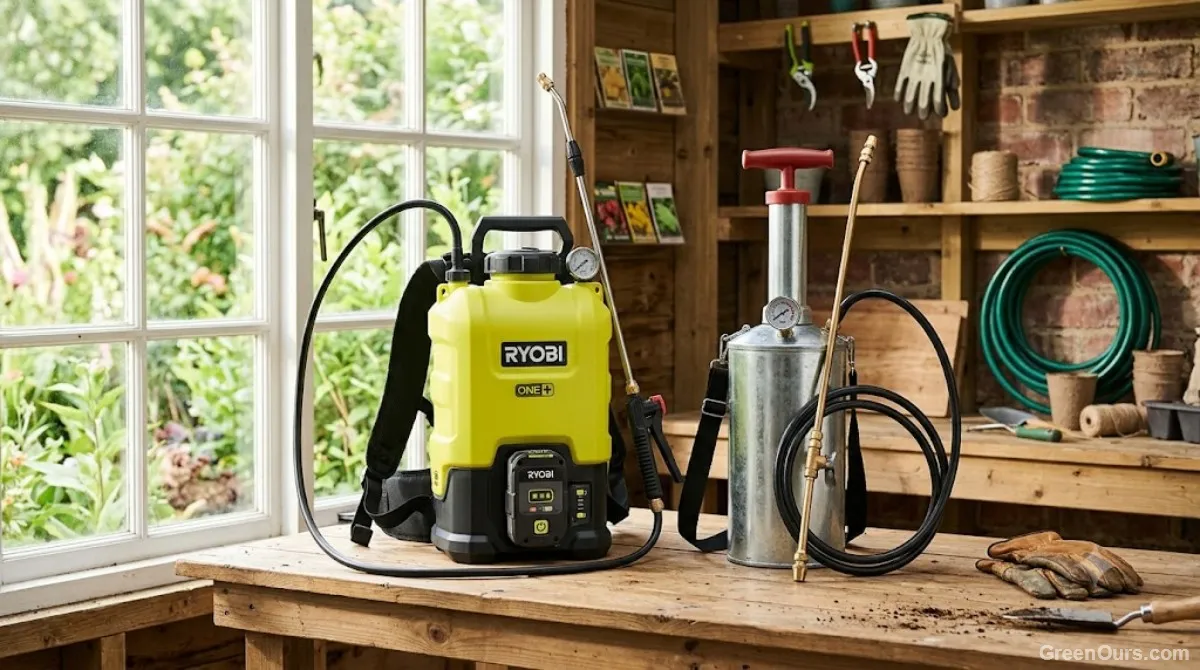
The Time Question Nobody Answers Honestly
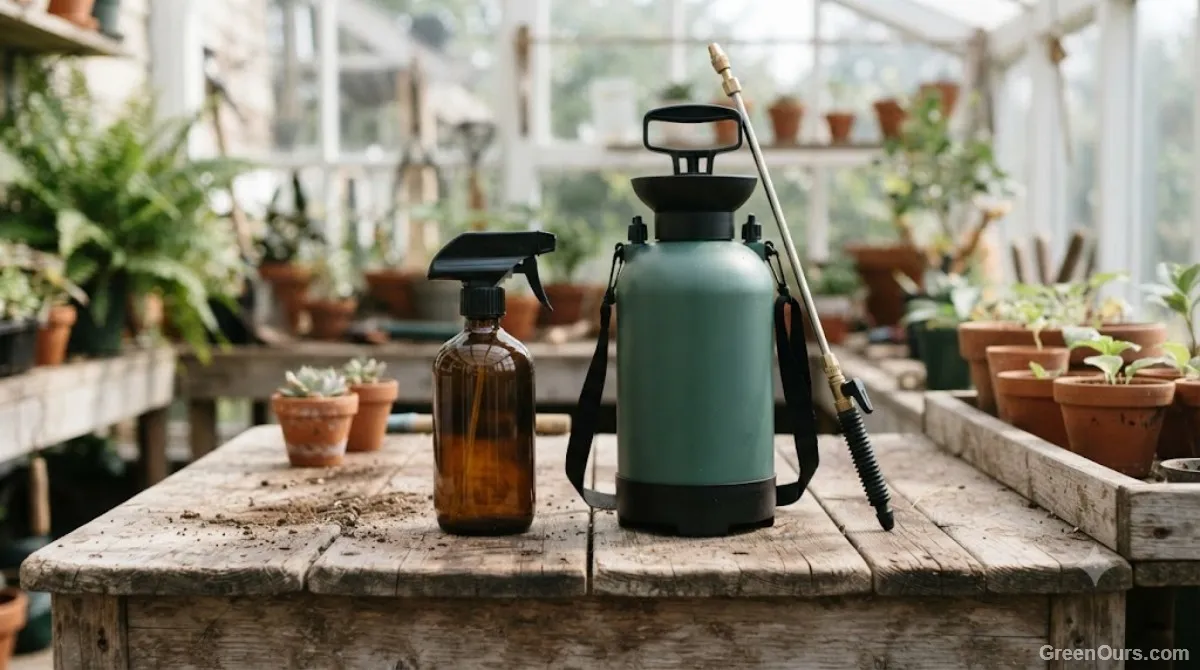
Most sprayer comparisons focus on price. Price matters less than application time once you're spraying more than a few plants. A standard 2-gallon manual pump sprayer requires re-pressurizing roughly every 30 to 45 seconds of continuous spraying to maintain 30-40 PSI. Each re-pressurizing cycle takes 10-15 seconds of pumping. Over a 20-minute application session, that adds up to 4-6 minutes of pumping time where you're not actually spraying anything.
Battery-powered sprayers maintain pressure electronically. Most consumer models hold 30-60 PSI continuously without operator input, which means the entire tank empties without a single pause for pumping. On a task that takes 20 minutes with a manual sprayer, a battery unit typically finishes in 14-16 minutes. That's not a dramatic difference for a single session. It compounds fast if you're spraying weekly.
Tank Size and Application Volume
Manual Pump Sprayers
Manual units typically range from 1 to 4 gallons for handheld and backpack styles. Smaller tanks mean lighter carrying weight, which matters when you're already generating fatigue from pumping. A 2-gallon tank covers roughly 1,000-1,500 square feet of foliar spray at standard dilution rates before needing a refill.
Battery-Powered Sprayers
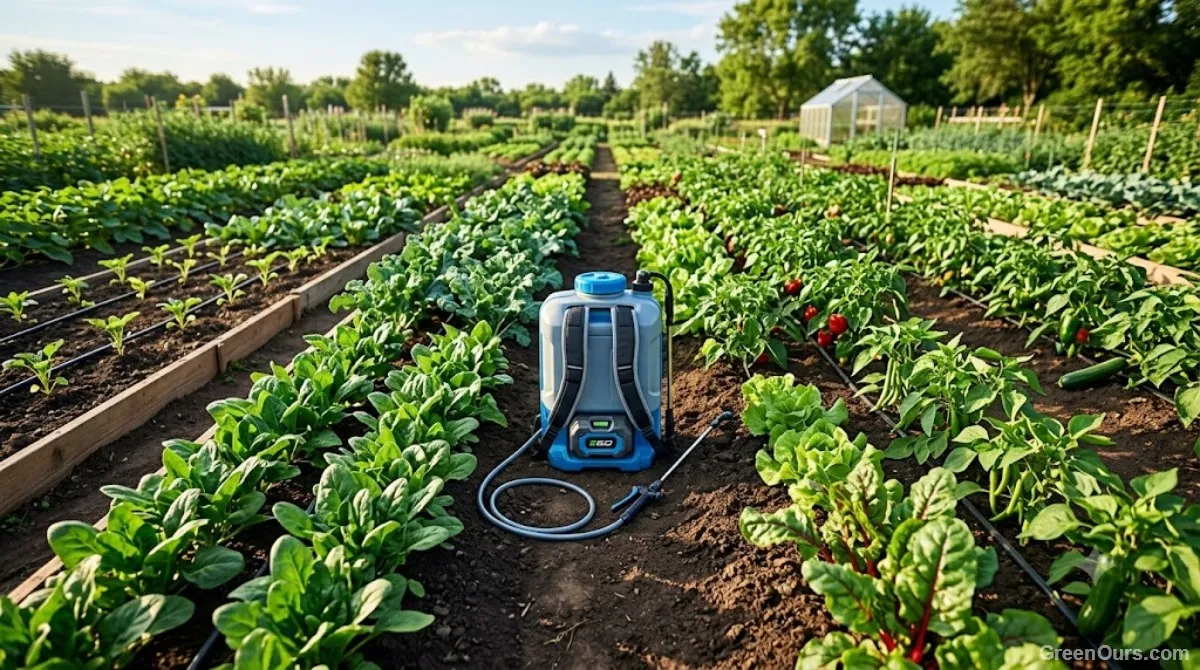
Battery-powered backpack models commonly run 3 to 4 gallons, occasionally up to 5. The added weight is offset by the shoulder harness design most backpack units use regardless of power source. Run time on a full charge is the number that matters more than tank size: most 12V battery sprayers deliver 6-10 hours of continuous spray time per charge, which covers multiple tank refills before you need to recharge.
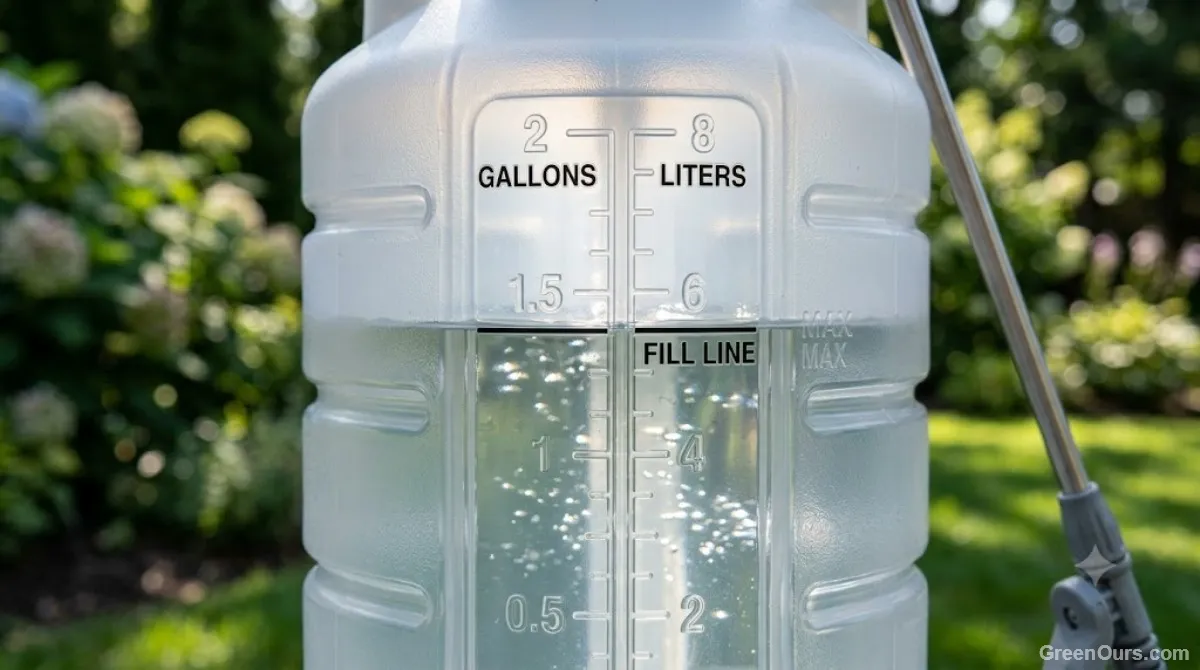
Check the pump's rated PSI, not just the tank size, before buying. A large tank paired with a weak pump still produces inconsistent coverage on dense foliage or when spraying upward into tree canopies.
Pressure Consistency: Why It Matters More Than Tank Size
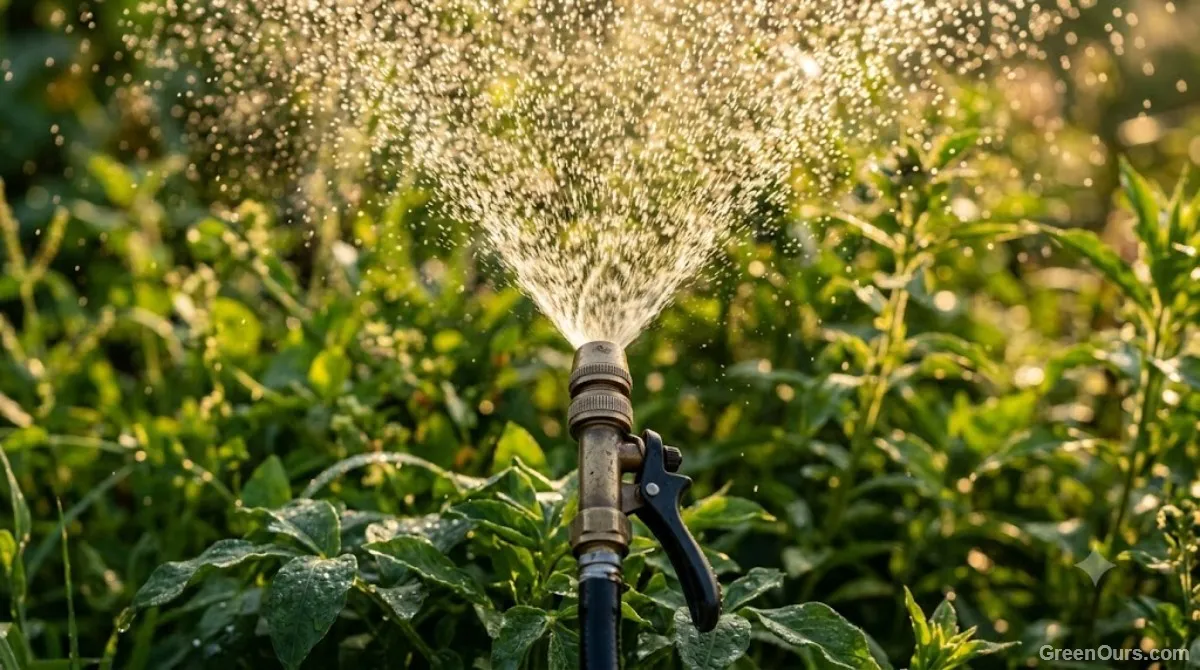
Pressure consistency determines droplet size. Inconsistent pressure produces a mix of large drops that run off the leaf and fine mist that drifts away from the target. Neither delivers the intended dose. This matters most for fertilizers and pesticides applied at specific concentrations, where under-application wastes the trip and over-application risks leaf burn or residue buildup.
Manual sprayers produce a pressure curve: high right after pumping, tapering as you spray, low right before the next pump cycle. Battery units hold a flat pressure line for the entire tank, which is the single biggest functional difference between the two categories. For foliar feeding programs where consistent coverage affects nutrient uptake, that flat line is the deciding factor, not tank capacity or price.
Maintenance and Failure Points
What Breaks on Manual Sprayers
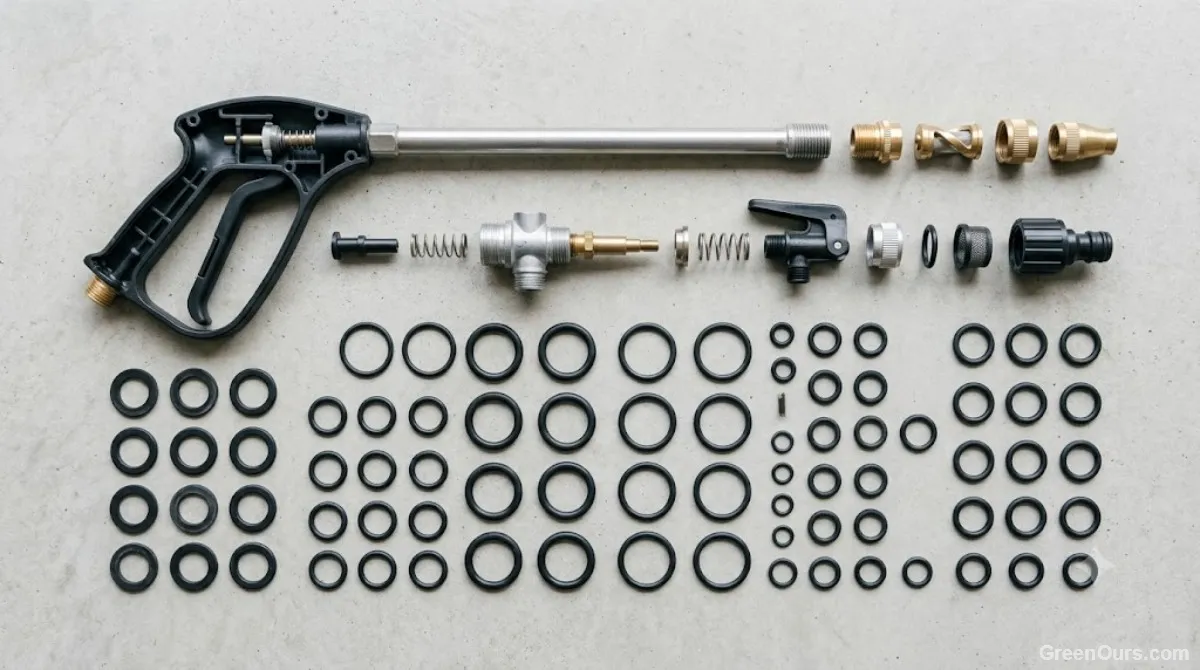
Manual pump sprayers fail predictably: the pump gasket wears out, the check valve sticks, or the seal around the pump handle dries out and cracks. These parts are cheap and widely available. A full seal kit typically runs under $10, and most home gardeners can replace one in under 10 minutes with basic tools.
What Breaks on Battery Sprayers
Battery units introduce two additional failure points: the battery itself and the motor. Lithium-ion batteries in consumer sprayers hold a useful charge cycle count of roughly 300-500 charges before capacity noticeably degrades. At weekly use, that's 6-10 years of service. Motors rarely fail under normal use but are not user-serviceable, meaning a motor failure typically means replacing the entire unit rather than a $10 part.
Who Actually Benefits From Upgrading
Run the numbers against your own yard before spending more on a battery unit. Under 500 square feet of treated area, sprayed occasionally, a manual pump sprayer does the job with no meaningful time penalty. The pumping fatigue simply doesn't accumulate enough to matter.
Above 2,000 square feet, or for anyone spraying weekly across a vegetable garden, orchard, or large bed system, the flat pressure curve and eliminated pump cycles produce a real, measurable time savings and more even coverage. Anyone applying pesticides at label-specified concentrations also benefits from the consistency, since accurate dosing depends on steady pressure rather than the taper of a hand pump.
Buy based on your square footage and spray frequency, not on which option looks more capable on the shelf. A battery sprayer sitting mostly unused is dead weight and a dead battery. A manual sprayer worked past its comfortable capacity is wasted time every single week.
Read our latest tools and equipment guides