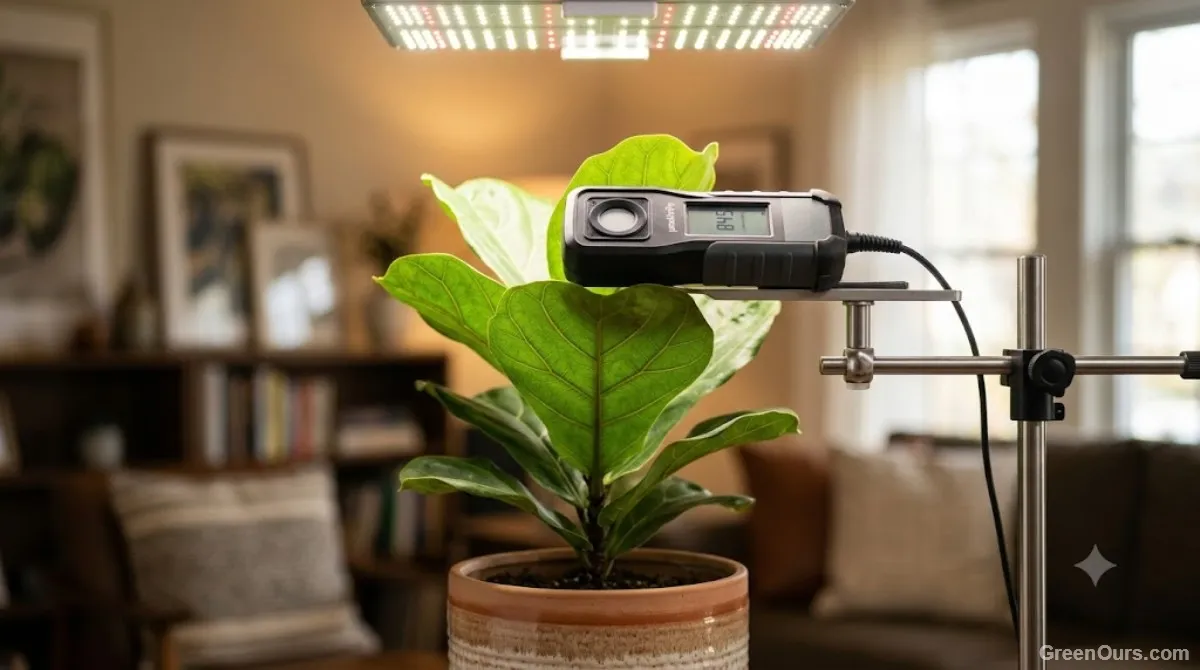

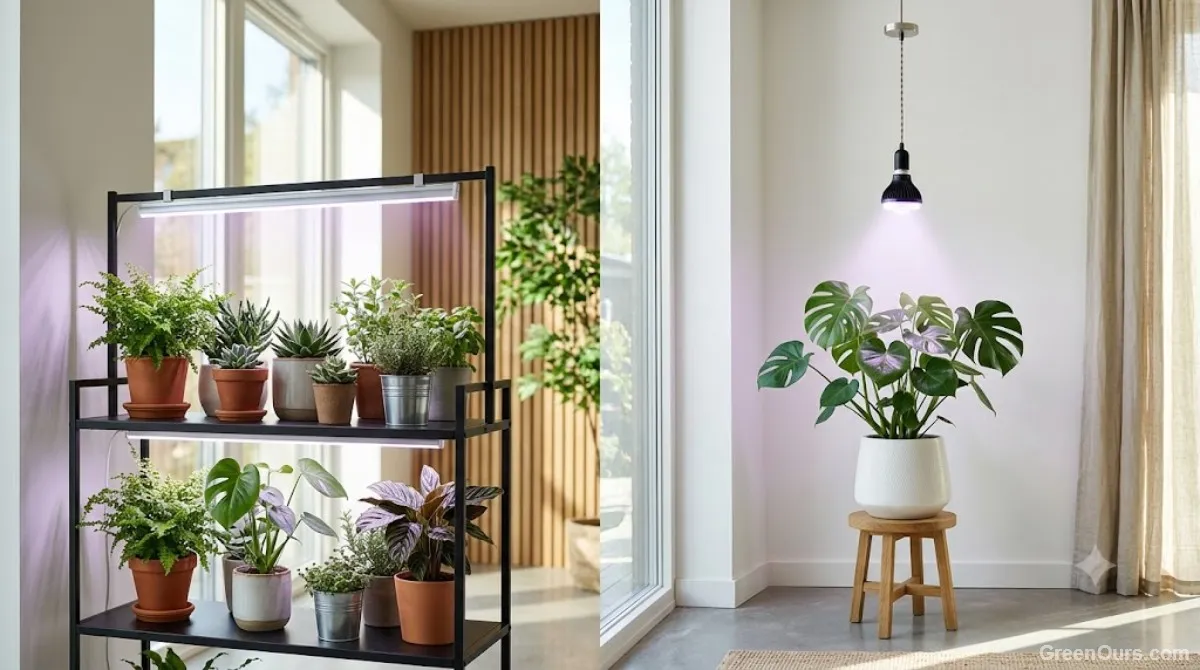
Bars and Bulbs Solve Different Problems
A grow light bar is a linear fixture — usually 12 to 48 inches long — with diodes spaced evenly along its length. It's built to light a surface, not a point. A grow light bulb screws into a standard fixture or clamp lamp and throws light in a cone from a single source.
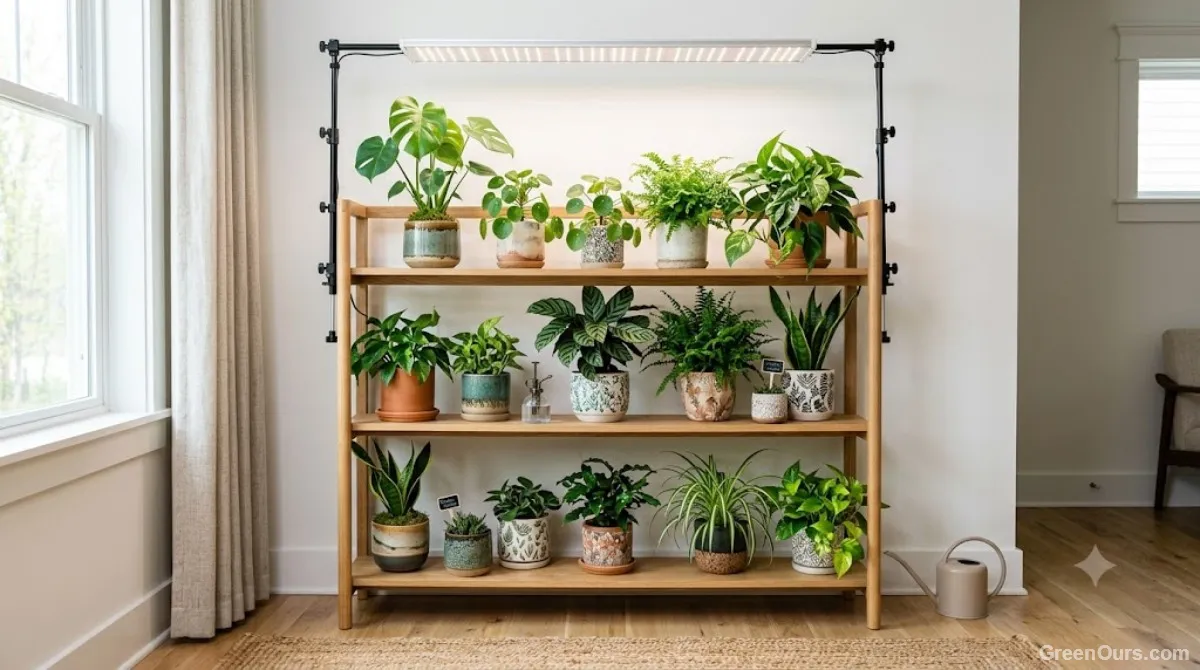
That structural difference shows up fast on a shelf. Measure the light at the center under a bulb and you'll often read 400 µmol/m²/s of PPFD. Move a foot to either side and that number can drop by 40% to 60%. A bar mounted the same distance above the same shelf holds a much flatter curve — usually within 15% to 20% across the width.
Spectrum matters too. Bar fixtures generally distribute a mix of full-spectrum diodes across their length, which keeps color rendering consistent across the whole shelf. Bulbs concentrate the same spectrum into a single point, so light quality is identical within the beam, but the beam itself is small.
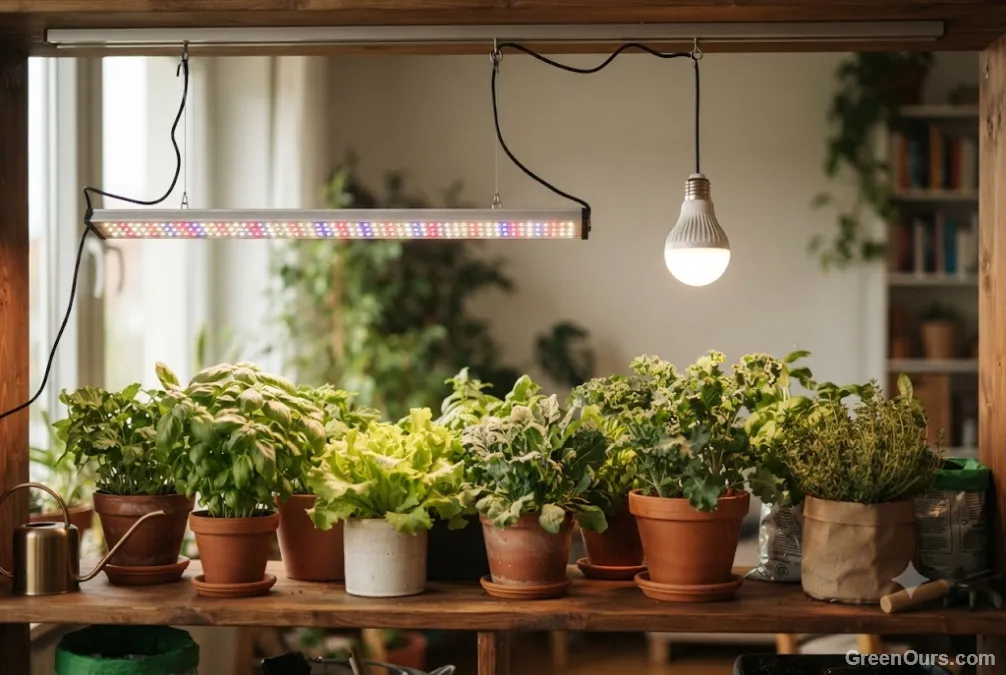
Before buying anything, measure your shelf or growing area in inches, not "about a foot." Bar length is chosen to match shelf width; bulb count is chosen to match plant count. Guessing here is the most common lighting mistake.
Coverage Area and Shelf Layout
If you're lighting a multi-plant shelf, coverage area decides the outcome before intensity does. A single bulb, however bright, can't fix uneven geometry.
- Measure the full width and depth of the shelf or grow space.
- Check the fixture's rated coverage footprint at your intended mounting height — most bar manufacturers list this in square feet.
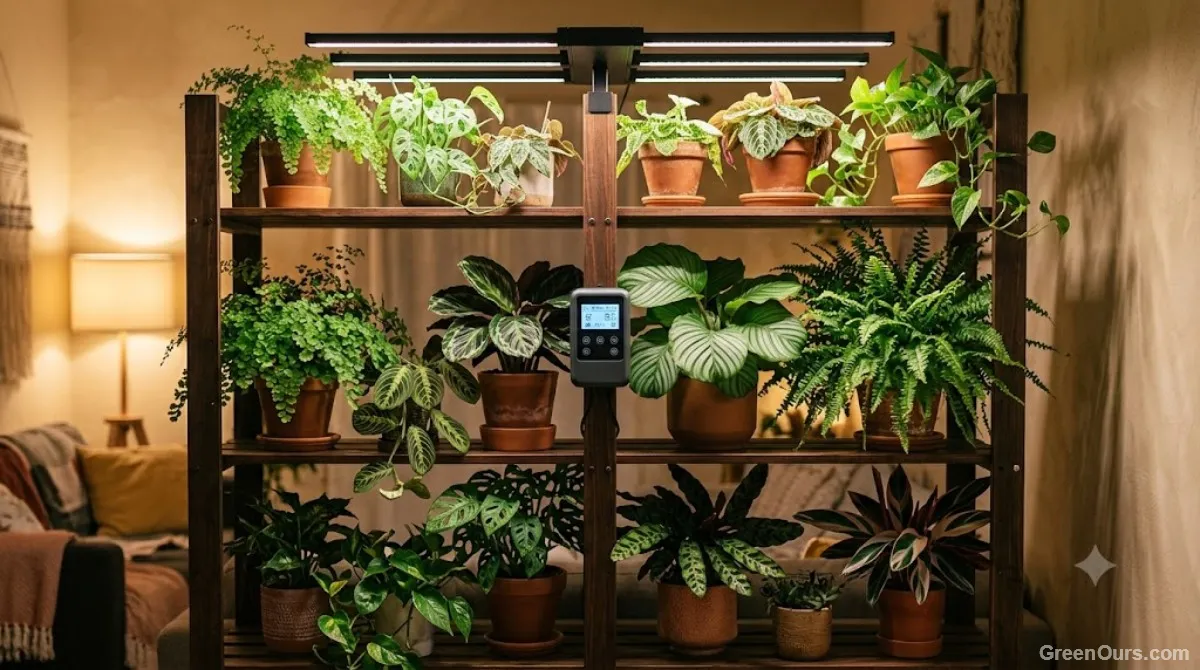
- For shelves over 24 inches wide, plan for two parallel bars or a single bar rated for that width, not one bulb in the middle.
- For a single pot or a small cluster of two to three plants, a bulb in a reflector clamp is usually enough, and it's cheaper to run.
Bar fixtures make sense the moment you're lighting a shelf rather than a plant. Bulbs make sense when you're lighting a plant rather than a shelf. Mixing that up is why so many "the grow light doesn't work" complaints trace back to one bulb over a three-foot rack.
Light Intensity and Mounting Distance
PPFD Targets by Plant Type
Match intensity to what you're actually growing:
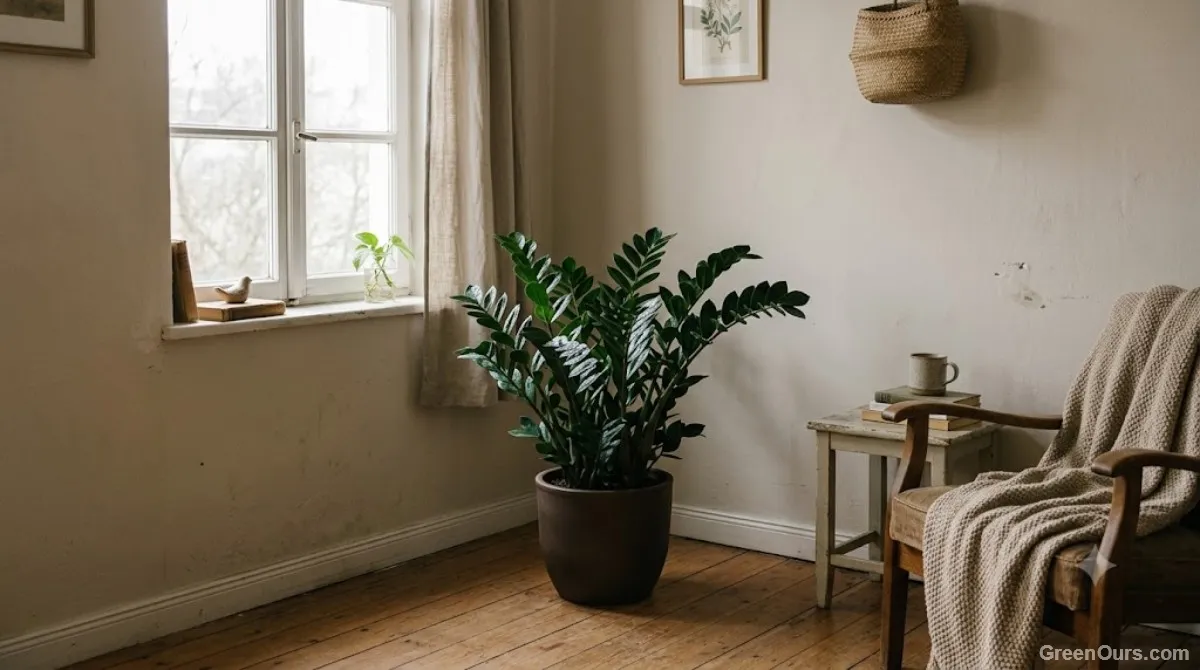
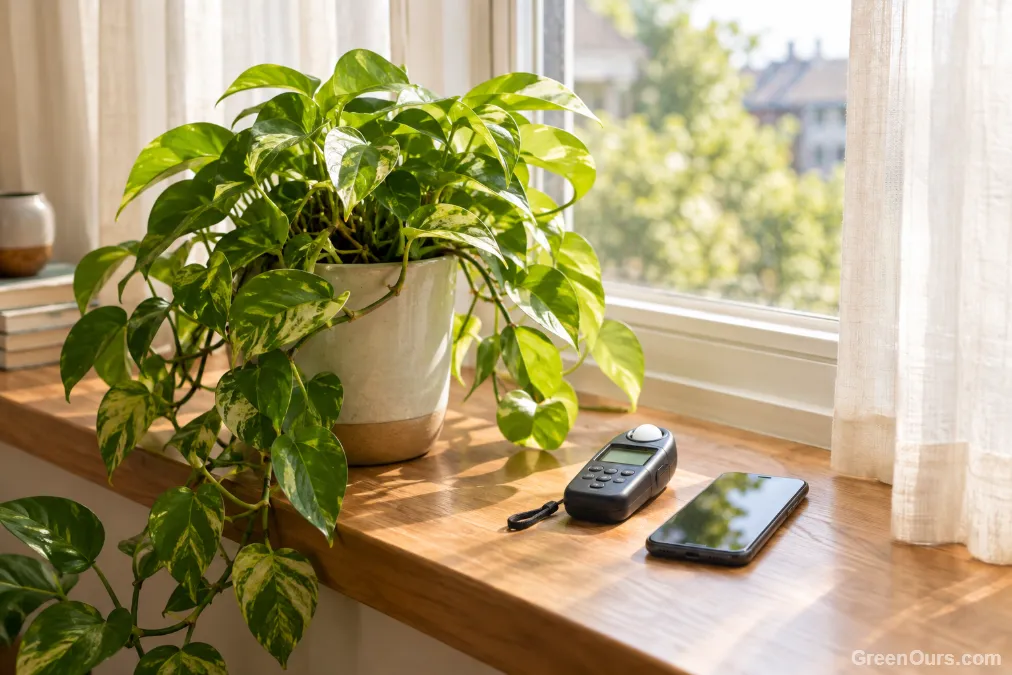
- Low-light foliage (pothos, snake plant, ZZ plant): 100–200 µmol/m²/s
- Medium-light tropicals and herbs (basil, monstera, philodendron): 200–400 µmol/m²/s
- High-light seedlings, succulents, and fruiting plants: 400–600+ µmol/m²/s
Run any of these for 12 to 16 hours a day, on a timer, not by memory. Consistency matters more than a slightly higher peak reading.
Adjusting Mounting Height
Bars are typically mounted 12 to 18 inches above the canopy. Because the light is spread across the fixture's length, that distance keeps intensity even without concentrating heat in one spot.
Bulbs need to sit closer — 6 to 12 inches above the canopy in most reflector housings — because the beam is narrower and intensity falls off faster with distance. That closer distance also raises the risk of leaf scorch on sensitive foliage, so check leaves weekly for bleaching or crisping at the point nearest the bulb.
Energy Efficiency and Operating Costs
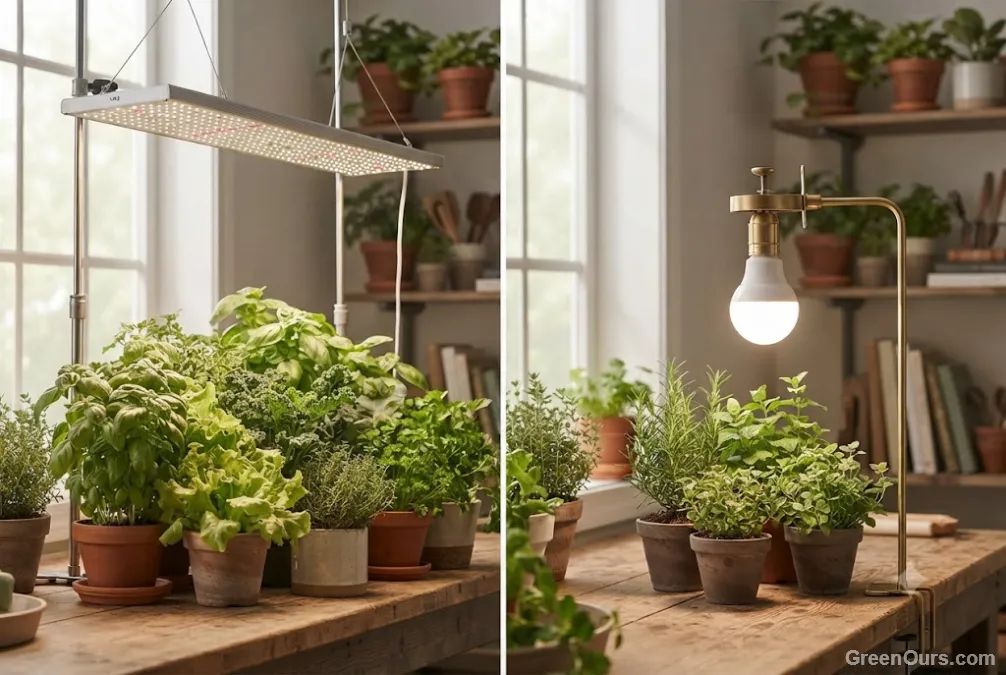
A full-width LED bar rated for a four-foot shelf typically draws 30 to 65 watts. Matching that coverage with bulbs usually means running three to five clip lights at 9 to 15 watts each — 27 to 75 watts combined, often for less even output.
At 14 hours a day and a typical residential rate of $0.15 per kWh, a 45-watt bar costs roughly $2.75 a month to run. A comparable four-bulb setup, once you add up the wattage, tends to land in a similar or slightly higher range, with more individual fixtures to maintain.
Heat dissipation follows the same pattern. A bar spreads heat output across its length, so the heat sink running along 24 to 48 inches has more surface area to shed warmth. Bulbs concentrate both light and heat into a housing a few inches across, which is part of why they run hotter per watt and wear out faster.
Lifespan reflects that difference. Quality LED bars are commonly rated for 25,000 to 50,000 hours. Screw-in LED grow bulbs are usually rated lower, in the 15,000 to 25,000 hour range, partly because the driver electronics are packed into a smaller housing that runs hotter.
Which Setup Actually Fits Your Space
Choose a bar if you're lighting a shelf, a rack, or more than three plants grouped together — the even coverage and lower long-term cost per plant win out.
Choose a bulb if you're lighting one plant, working with an existing lamp or fixture you don't want to replace, or need something you can reposition easily as furniture or plants move around.
A lot of growers end up running both: bars over the main propagation or houseplant shelf, a bulb or two for the odd plant that doesn't fit the rack. That's not indecision. That's matching the fixture to the geometry, which is the entire point.
Measure the space first — the fixture choice follows from that, not the other way around.
Get the coverage right and the rest of your plant care stops fighting an uneven light source. That's one variable removed, and one less thing to diagnose the next time a leaf looks off.