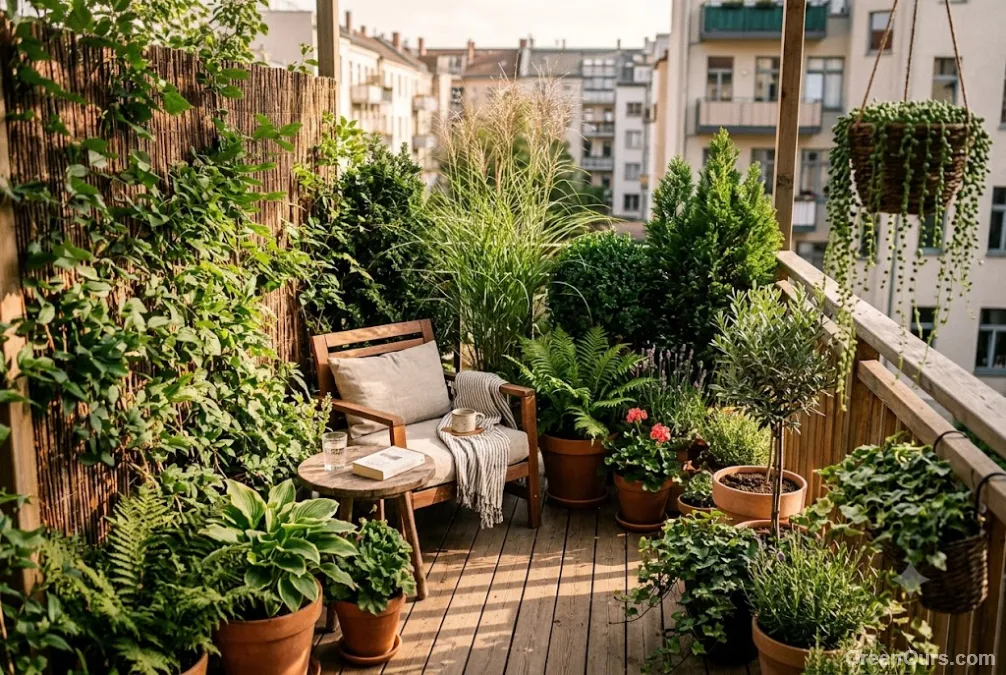

Why Your Balcony Feels Exposed
Before you buy anything, work out where the unwanted views actually come from. A screen that blocks the sidewalk does very little against someone looking down from a higher floor.
Sit in your usual spot at the times you normally use the balcony, then look around slowly. You'll notice the problem is usually one or two angles, not all four sides.
Street-level views
If you overlook a sidewalk or courtyard, people below can often see straight through the railing. A railing cover or a row of suitably sized planters over the lower section usually handles this.
Side views from neighbors
When another balcony sits close to yours, a narrow permitted screen or a tall planter at the corner often does the job. You may only need to cover one side.
Views from upper floors
Railing screens won't help much against views from above. Overhead coverings and hanging items need building approval, since they can create wind and falling-object hazards.
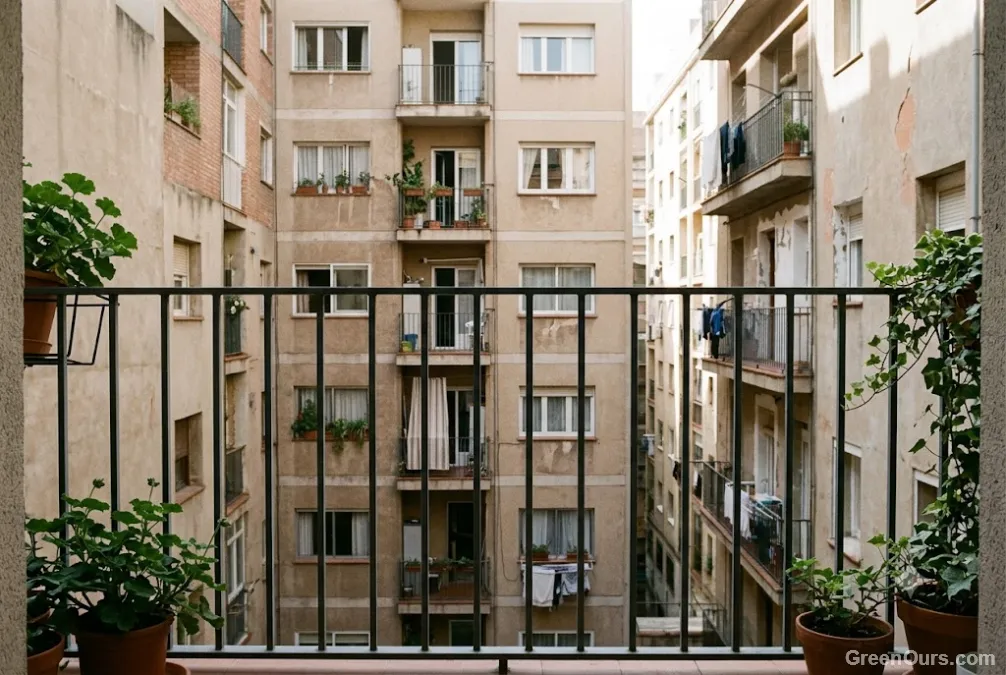
- Front: can people below or nearby see onto the balcony?
- Left and right: can neighbors see your seating area?
- Above: do higher windows or balconies overlook you?
- Light: would blocking that view make the space too dark?
Screen the one or two views that bother you most, not every side. Less material usually means more light and a balcony that still feels open.
Choosing the Right Privacy Solution
Most balcony privacy screen ideas fall into five groups: living screens, railing covers, outdoor curtains, freestanding partitions, and solid panels. Each trades off privacy, light, space, and upkeep differently.
Think of these as functional types rather than strict product categories. A solid panel, for example, can work as a railing cover or as a partition, depending on where you place it.
| Privacy solution | Key features and considerations |
|---|---|
| Living screen (plants and trellises) | Natural appearance; takes time to grow; requires watering, pruning, and suitable containers. |
| Railing covers (mesh, reed, slatted timber) | Provides immediate screening; light and airflow depend on material; check attachment and building rules. |
| Outdoor curtains | Adjustable privacy; requires an approved support; fabric can catch wind. |
| Freestanding partitions | Screens a specific area; uses floor space; stability and wind exposure matter. |
| Solid panels | Blocks views more completely; can catch strong wind, especially on exposed upper floors. |
Wind-permeable versus solid. Slatted, woven, or mesh materials may let some air through, while a broad solid panel can act like a sail. That doesn't make a permeable screen automatically safe: size, fixing method, and exposure still matter, so follow the product's instructions and your building's requirements.
Best Plants for Balcony Privacy
Plants give you the softest kind of screen, and the nicest to sit beside. They also take time, so think of them as a living layer rather than an instant wall.
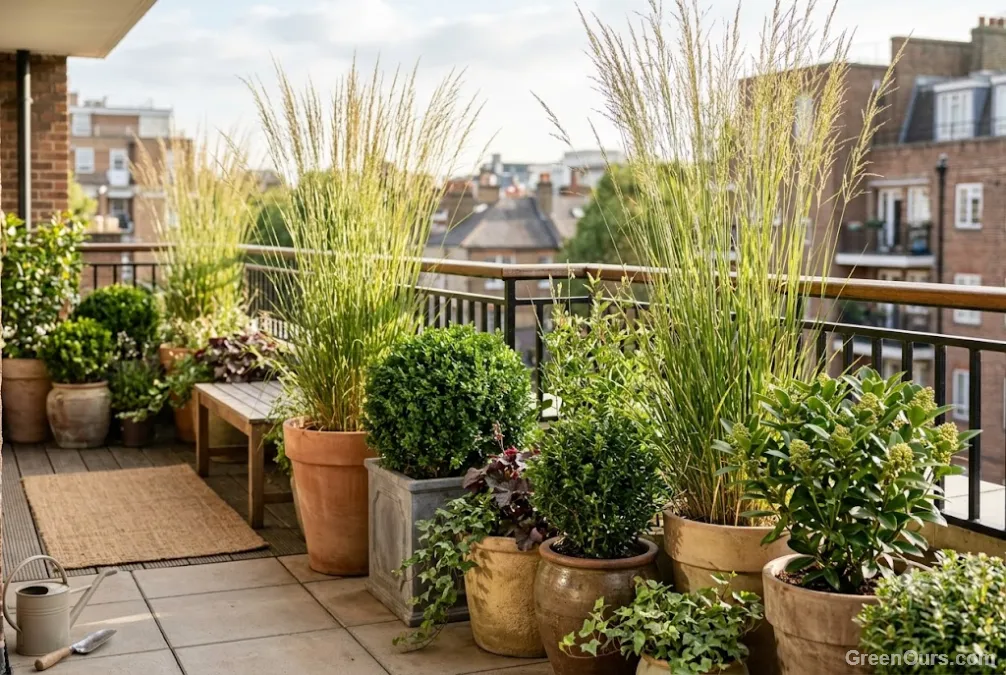
Not every pretty plant screens well. Ornamental grasses and compact evergreen shrubs are generally better for sustained visual screening, while heuchera and many ferns are mainly lower foliage plants. Whatever you choose, check the mature height, whether your container suits it, and how it copes with your local growing conditions.
For sunny balconies
Ornamental grasses add upright height, and rosemary can grow into a bushy shape with good drainage. Lavender offers structure and seasonal flowers, while compact shrubs give more substance. Check each variety's mature size before choosing a pot.
Grasses vary in how they look over winter, so compact evergreen shrubs give more consistent year-round screening where your climate allows.
For partly shaded balconies
Heuchera (coral bells) brings colorful foliage at lower and medium heights, and ferns add leafy texture in sheltered shade. Some climbers tolerate partial shade on a permitted trellis. Shorter plants may not block a direct view on their own, so pair them with something taller.
For narrow balconies
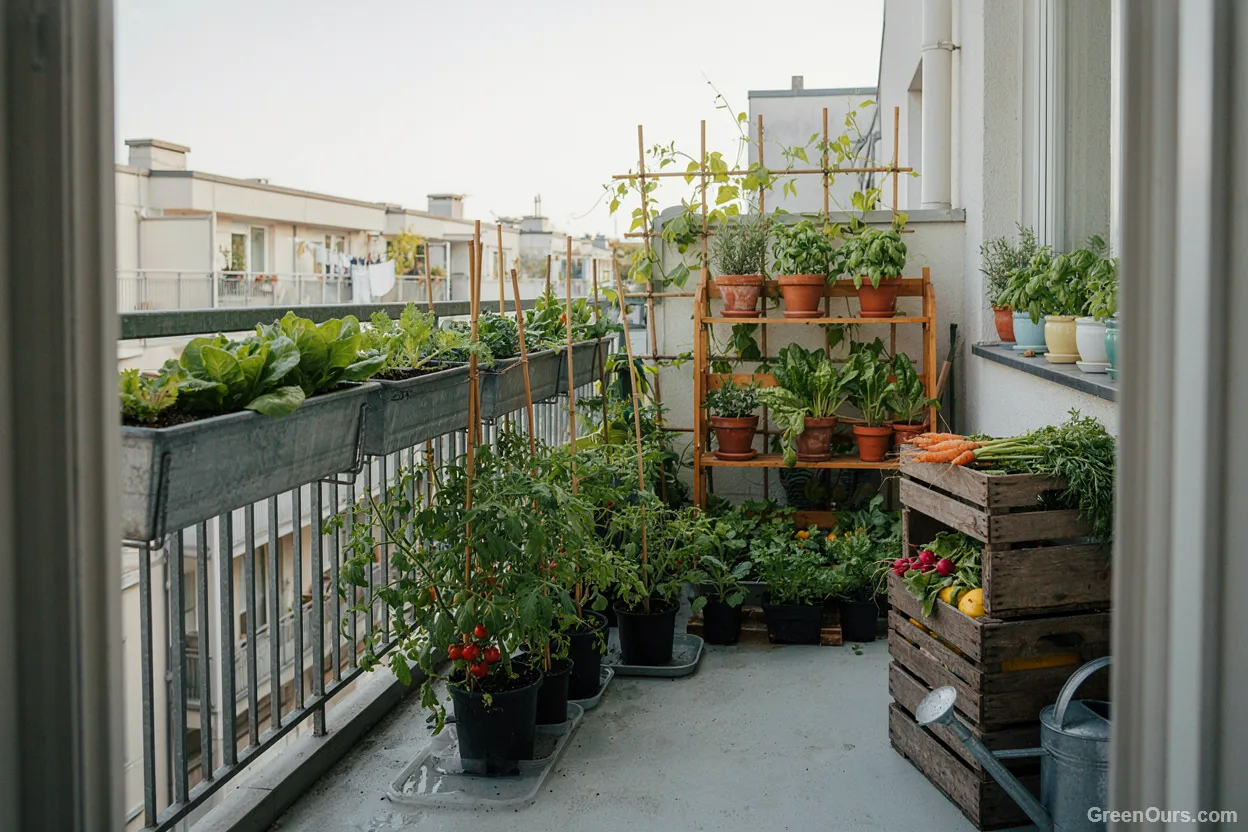
Go vertical instead of lining up several large pots. One or two upright containers placed where they interrupt the worst sightline often work better than a crowd.
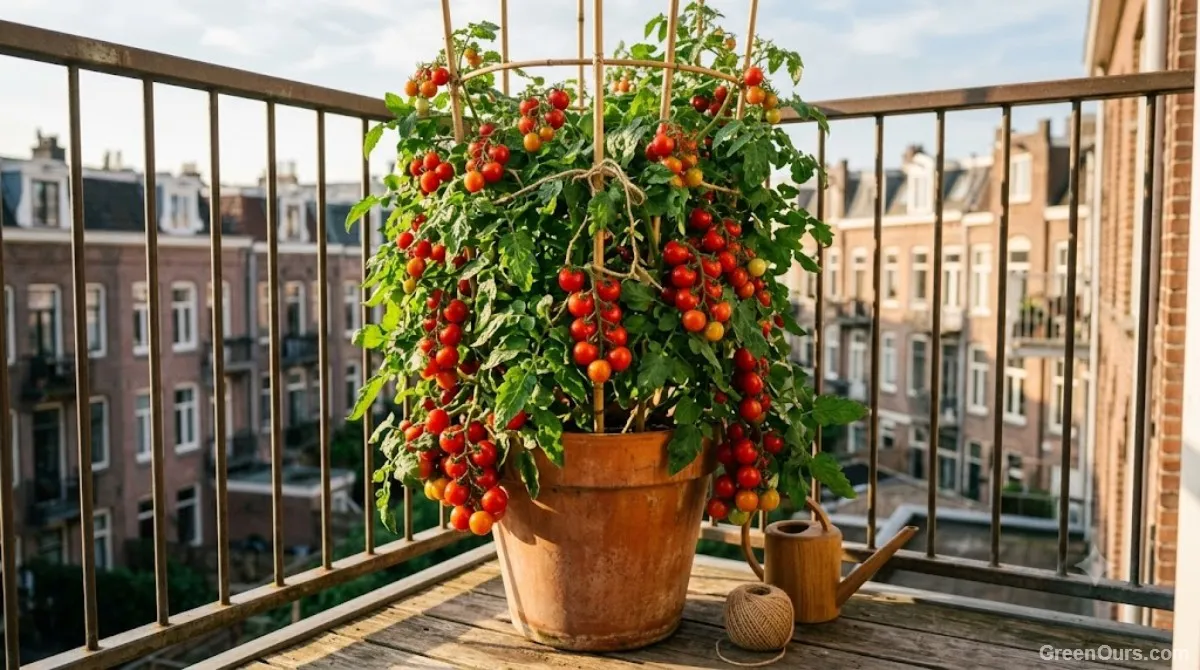
Always look at container depth and mature size before buying. A shallow pot can leave a tall plant unstable, and a large one gets very heavy once it's watered.
Renter-Friendly and No-Drill Options
If you rent, removable is a great starting point. Just remember that no-drill doesn't automatically mean permitted or safe, so read your lease and building rules first.
Freestanding planters
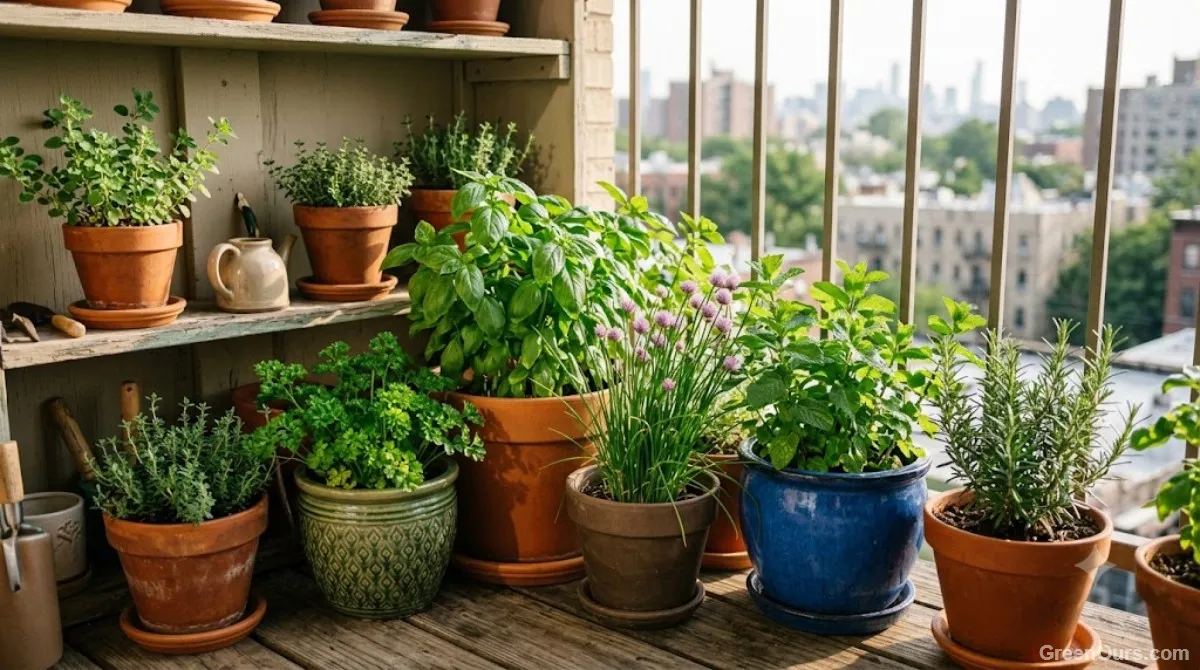
The simplest renter friendly balcony privacy move is a stable planter with a plant that fits it. Think about its filled weight, and keep it clear of doors and drains.
Removable panels and freestanding trellises
Strap-on railing panels look convenient, but some buildings still prohibit anything attached to the railing. A freestanding outdoor trellis can carry a climber without touching the wall, provided it stays stable in wind.
Portable dividers
A divider beside your seating can screen one spot rather than the whole balcony. Light ones move easily but may also catch gusts, so check the base and stability guidance.
Removable isn't the same as secure, and freestanding doesn't mean windproof. Use only stability measures approved for your balcony, and never improvise a railing attachment to hold something steady.
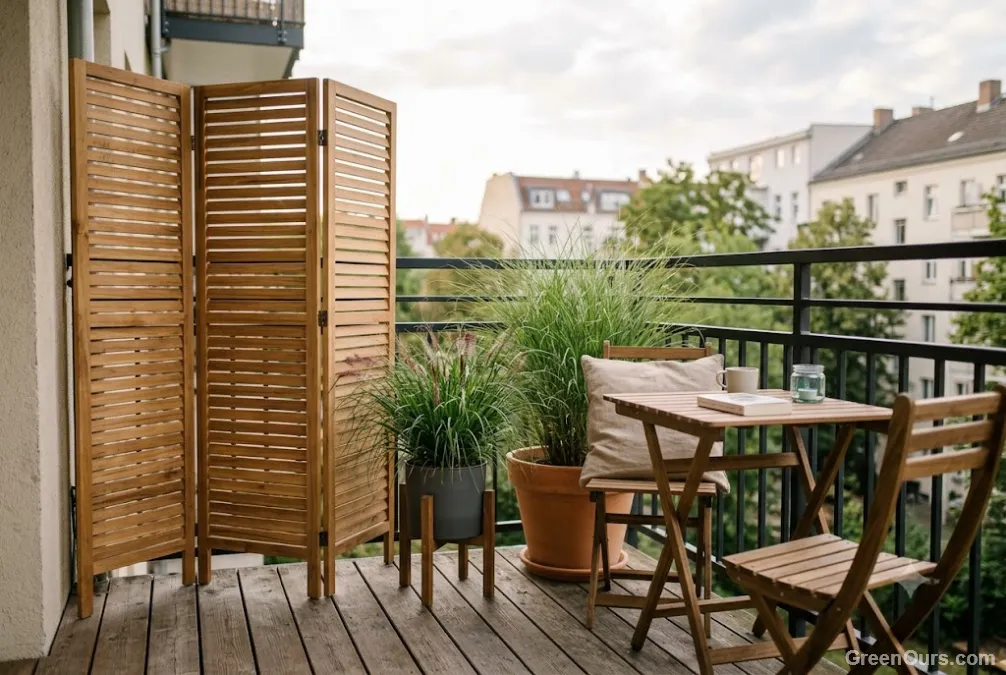
- Your lease and building rules allow the item.
- The installation method is approved for your balcony.
- It won't block access, drainage, or create a falling-object hazard.
Privacy Without Losing Natural Light
A balcony can be private and still feel gloomy if you block too much daylight. The aim is to interrupt direct views while the space stays open and breathable.
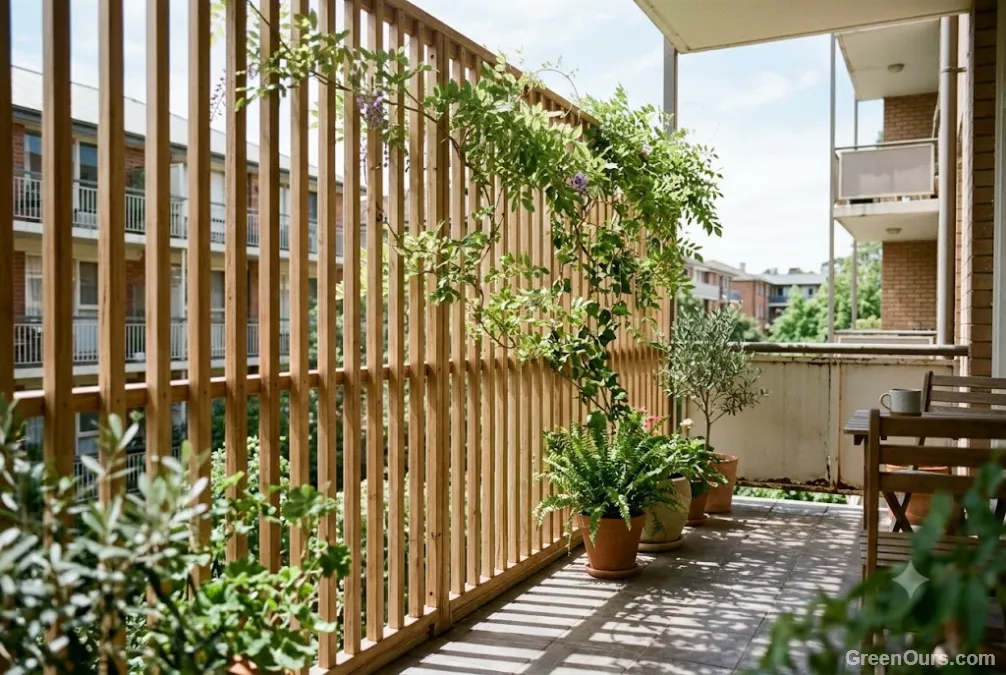
Slatted panels, open lattice, and suitable mesh create partial screening, and a layer of foliage in front softens them as it grows. Gaps reduce privacy from some angles, so test the view from your seat rather than from the front.
Where permitted, translucent panels let some daylight through. Their privacy varies with material and viewing angle, and many give less at night when the balcony is lit.
Wind, Weight, and High-Rise Safety
Balconies often see stronger, more turbulent wind than ground-level spaces. Screens, curtains, trellises, and lightweight planters can all move in gusts.
A planter's real weight is the container plus damp soil, the plant, and any retained water. Never assume your balcony can support extra heavy planters or partitions, and don't rely on a general figure you found online.
Before you add anything, run through this list.
- Ask building management which requirements apply to your balcony.
- For several large pots or a heavy partition, get qualified advice on structural load before you buy.
- Never balance pots on a railing or ledge.
- Check your setup after strong wind.
- Keep drains and the balcony door clear.
Water carefully so runoff doesn't drip onto the balcony below, and use trays where needed.
Balcony Privacy Decision Matrix
Use this as a starting point, not a substitute for product specifications or building rules. It covers the same five options as the comparison above.
| Privacy solution | Space, budget, and maintenance |
|---|---|
| Living screen with plants | Needs floor or vertical space; cost varies by plant and container; requires regular watering, pruning, and seasonal care. |
| Railing cover | Usually needs little floor space; cost varies by material and size; requires occasional cleaning and attachment checks. |
| Outdoor curtains | Needs room for an approved support and fabric movement; cost varies by system; requires cleaning and checks for wear and wind exposure. |
| Freestanding partition | Needs floor space for the divider and base; cost varies by size and material; requires cleaning and stability checks. |
| Solid panel | Needs a secure, approved setup and may take floor or railing space; cost varies by size and material; requires cleaning and regular checks, especially after strong wind. |
Which option fits you?
- Immediate screening: an approved railing cover or freestanding partition.
- Natural look: suitable plants, with a permitted trellis if needed.
- Small balcony: focus on one exposed sightline.
- Windy upper floor: be cautious with tall, broad, or solid structures.
Common mistakes to avoid
- Covering the whole railing when one corner would do
- Choosing plants that outgrow the space
- Ignoring wind
- Overloading the floor
- Blocking drains or exits
- Skipping the lease or HOA rules
Some properties restrict visible changes or materials like bamboo and reed, so ask for written clarification if the rules are vague.
Quick Answers
How can I make my balcony private without drilling?
Check your lease first. If allowed, freestanding planters, portable dividers, or approved removable screens are the usual starting points.
How do I block a neighbor's view without losing sunlight?
Target the specific sightline. A narrow screen, open lattice, or carefully placed foliage can give partial privacy while light still passes through.
Can balcony privacy plants survive winter?
Some can, some can't. Your USDA zone is only one piece of the puzzle, because containers get colder than ground-planted roots. Wind exposure, how well the container is insulated, and the specific plant's cold tolerance all affect survival.
How quickly can plants create a privacy screen?
It depends on species, starting size, and season. If you want privacy now, pair plants with an approved screen rather than waiting on new growth.
What to Do Next
Start with the view that bothers you most, then check your lease and the wind on your balcony before you shop. One well-placed planter or an approved screen is often enough to make the space feel like yours again.
Once that corner feels calmer, notice how often you actually sit out there. What's the one spot you'd love to claim first?
Take it one corner at a time, and enjoy the quiet.