
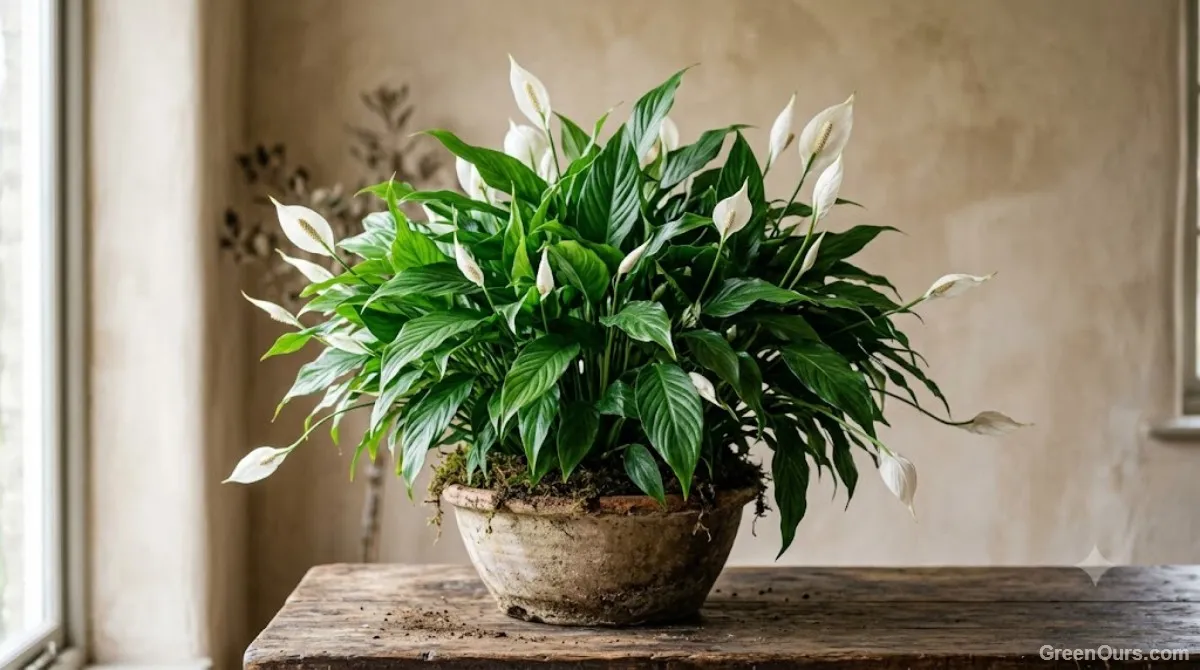
Divide, Repot, or Leave It Alone?
Not every crowded pot needs to be split. Some plants genuinely like being snug, and dividing too early just means more work for you and more stress for the plant. Before you reach for the shears, look for signs rather than going by a calendar.
Signs Below the Soil Line
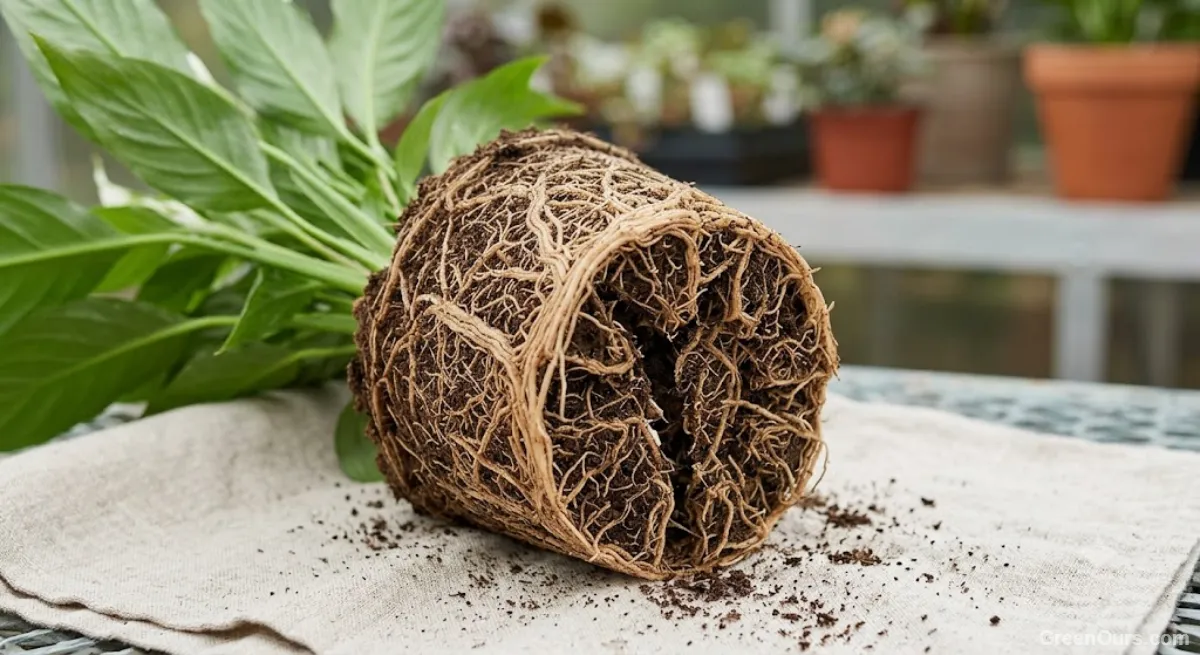
If you're watering far more often than you used to, the roots may have filled most of the pot. Tip the plant out: a dense wall of circling roots with little visible soil means it's root-bound. That tells you the plant needs room, but not yet whether to divide.
Signs Above the Soil Line
Division makes sense when the plant is really several plants sharing one pot. Peace lilies form distinct clumps and may stop producing new leaves and look tired even after watering. Snake plants send up pups so tightly packed that the newest ones can't get enough light. Some ferns develop a hollow, dead center as the oldest growth dies back while new fronds appear only around the rim.
This table shows common patterns rather than guarantees.
| What you see | What it suggests | Next step |
|---|---|---|
| Fast-drying soil, dense circling roots, and one main crown | Root-bound, but still one plant | Repot into a slightly larger pot |
| Fast-drying soil, dense roots, and several distinct clumps or crowded pups | A good division candidate | Divide, then pot up each section |
| A little snug but growing well | Doing fine | Leave it and check again next season |
| Fast-drying soil but roots that aren't crowded | Something else may be going on | Check the pot size, potting mix, light, and heat before disturbing the roots |
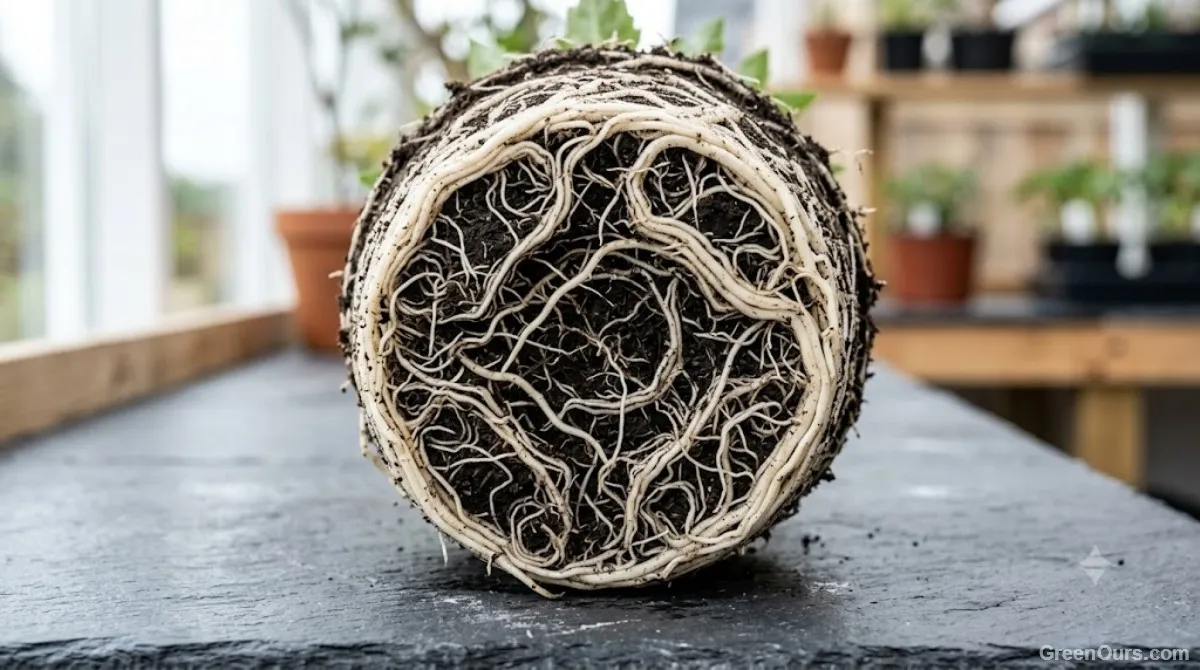
Fast-drying soil alone doesn't mean a plant needs dividing. It can just as easily need repotting. Divide when fast drying, dense roots, and more than one natural clump show up together.
Before You Start: Timing, Tools, and Watering
You don't need a potting bench, just a few basics:
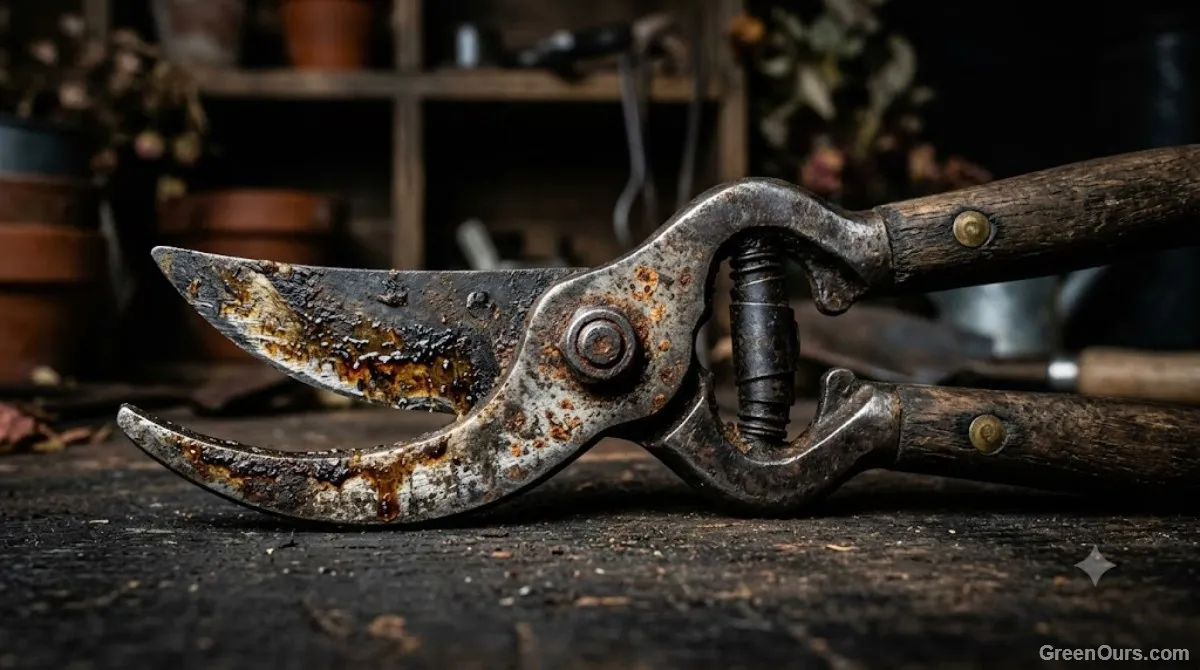
- Clean, sharp shears or a knife, especially for rhizome-based plants like snake plants
- Pots sized to each division's roots, not much bigger
- Fresh potting mix suited to the plant
- A tray or old towel to catch soil
- Rubbing alcohol to wipe the blade, since a dirty blade can carry rot into a fresh cut
Wear gloves if your skin is sensitive, since peace lilies and some other houseplants can irritate skin, and keep offcuts away from pets and small children who might chew them.
Early spring is the ideal time to divide, and early spring through summer generally gives the best recovery, though most houseplants can be divided at other times if needed. Water the plant a day or two beforehand rather than right before. Slightly moist, not soggy, soil holds together better and makes natural separations easier to see.
The Basic Steps at a Glance
Whatever the plant, the process follows the same shape:
- Ease the plant out of its pot, supporting the base rather than pulling on the leaves.
- Loosen the soil and look for natural separations.
- Separate the sections by hand where you can, and with a clean blade where you can't.
- Check that each division has leaves and healthy roots.
- Pot each one in fresh mix, water it in, and set it somewhere bright but not harsh.
How to Separate Roots Without Tearing Them
Read the Roots Before You Cut
Start with slightly moist soil, then work the mix away gradually until the root crown is exposed. Look for natural gaps between clumps, where the roots already run in separate masses. Those gaps are your dividing lines. If you can't find one, that's a sign the plant may be a single crown rather than several.
Fingers First, Blade Second
Tease sections apart with your fingers, and stop pulling when you feel strong resistance. Tightly tangled roots often loosen if you work slowly and let the soil fall away instead of yanking. Only when a section won't part on its own, make one deliberate cut through the connecting tissue holding it, and no more.
Check Every Division Before You Pot It
Each division needs both foliage and functional roots. Firm roots are healthy, so trim only the ones that are black, mushy, or clearly dead and leave the rest alone. When in doubt, make fewer, larger divisions: two or three sturdy sections usually recover faster than five small ones. If a division ends up with only a few roots, don't discard it. Give it a small pot and extra patience.
Dividing Peace Lilies, Ferns, and Snake Plants
Peace lilies and many ferns are divided by clump, separating whole plants. Snake plants are divided by rhizome, cutting a horizontal stem. All three are forgiving of a beginner's hesitant first attempt.
Peace Lilies
Peace lilies grow in clumps, with multiple individual plants sharing one root system rather than a single central stem. Once you've eased the plant out, loosen the soil around the base until you can see where one clump naturally meets another, and tease the roots apart by hand rather than cutting through the middle.
Work slowly. If two sections resist, don't force them: one deliberate cut with a clean knife beats tearing at roots that don't want to let go. A division with lush foliage but almost no roots will struggle far more than one with modest leaves and a healthy root mass.
Ferns
Ferns that grow in clumps divide much like peace lilies. Look for natural clumps around the outer edge of the root ball, away from any hollow, dying center, and separate those outer sections rather than trying to salvage the middle.
Not every fern grows this way. Single-rosette ferns, like a bird's nest fern, generally grow from one crown and aren't divided.
Snake Plants
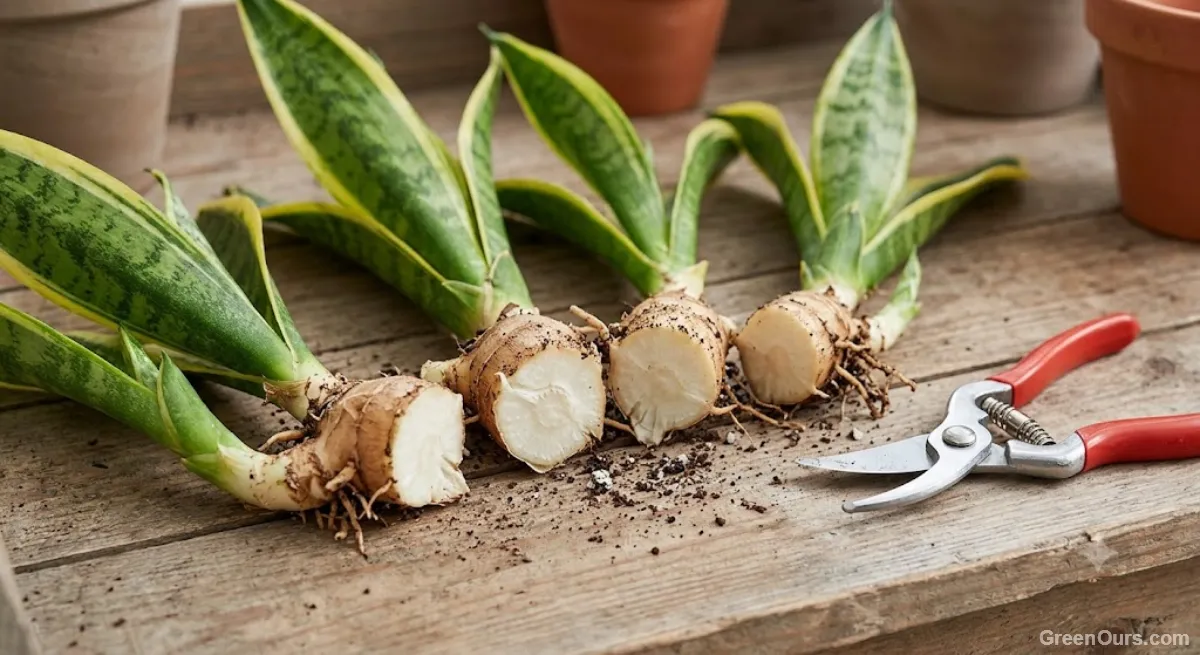
Instead of loose clumps, snake plants grow from thick, pale rhizomes that spread horizontally under the soil, with leaves sprouting along the way. Trace a rhizome with your fingers until you find a section with at least two or three leaves attached, then cut through the rhizome on either side of that section with clean shears.
A healthy section with leaves and attached rhizome has the structure needed to establish as a separate plant, though results vary. If yours is simply crowded but healthy, repotting it whole may be all it needs.
When Not to Divide
Sometimes the right call is to hold off:
- The plant is stressed or unwell. Divide only healthy, vigorously growing plants, so sort out rot, pests, or serious drought first.
- It's the wrong season. A plant that's dormant in winter usually benefits from waiting.
- It has a single crown, like a bird's nest fern. There's nothing natural to separate.
- You can't find a gap without cutting through the middle of the crown.
- It's healthy and simply a bit snug. Repotting or leaving it alone is often the better call.
Potting Up and Aftercare That Helps Recovery
The days right after dividing matter more than the division itself. A freshly split plant has fewer roots supporting the same amount of leaf growth, so it's temporarily more vulnerable than it looks.
Pot each division into fresh mix, water it in well to settle the soil around the roots, and hold off on fertilizing for several weeks. New roots are what the plant needs to focus on, and fertilizer right now just adds pressure. Keep divisions out of direct, harsh sun for the first couple of weeks, since bright, indirect light lets them recover without added heat stress.
For a division with only a few roots, use a small pot, keep the mix barely moist rather than wet, and expect slower recovery.
It's normal for a division to look a little sparse or wilted for the first week. One new leaf or frond unfurling is a good sign the roots have taken hold.
Mistakes That Slow Recovery
A few habits tend to undo an otherwise careful division:
- Dividing a plant that's bone dry. Dry roots tend to snap instead of separating cleanly, and broken roots take longer to heal.
- Using oversized new pots. Soil that stays wet around roots that can't yet fill the space invites rot, so choose a pot sized to the division's roots, at most one size up.
- Rushing. Splitting a plant in five minutes between chores usually means force where patience was needed.
Sources and Further Reading
The general guidance on timing, choosing healthy plants, and making divisions with leaves and roots is consistent with these extension resources. Details vary by plant, so treat them as starting points.
Where to Start
If you're not sure whether your plant needs dividing at all, tip it out of its pot and look at the roots and the crowns. If it's one dense plant, repot it. If it's clearly several, you're ready to divide.
Dividing a houseplant for the first time will probably make you a little nervous, and that's fine. A healthy respect for the roots is exactly what gets you a good outcome. Which plant in your home is due for a closer look?
Give each new division bright, indirect light and a light check every few days, and most will settle in on their own.