
What Sunburned Leaves Actually Look Like
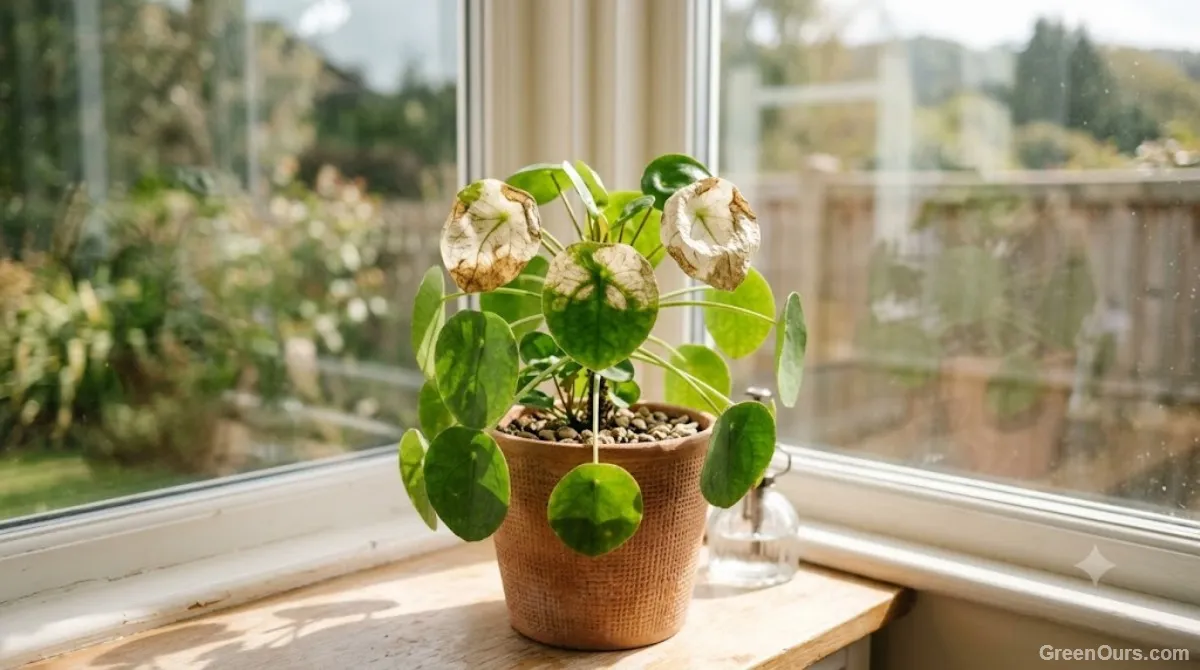
Leaf scorch has a pretty distinct signature once you know what you're looking for. It usually shows up as pale, bleached-out patches — sometimes white, sometimes tan or straw-colored — with edges that are noticeably crisp and dry to the touch. You'll often see it concentrated on the side of the plant that faces the window, or across the top-facing leaves that caught the most direct sun.
The tissue in these spots isn't just discolored, it's actually dead. If you look closely, damaged patches can feel thin, papery, or slightly brittle compared to the healthy green parts of the same leaf. That's the plant's cells breaking down from too much direct light and heat, not a nutrient problem or an infection.
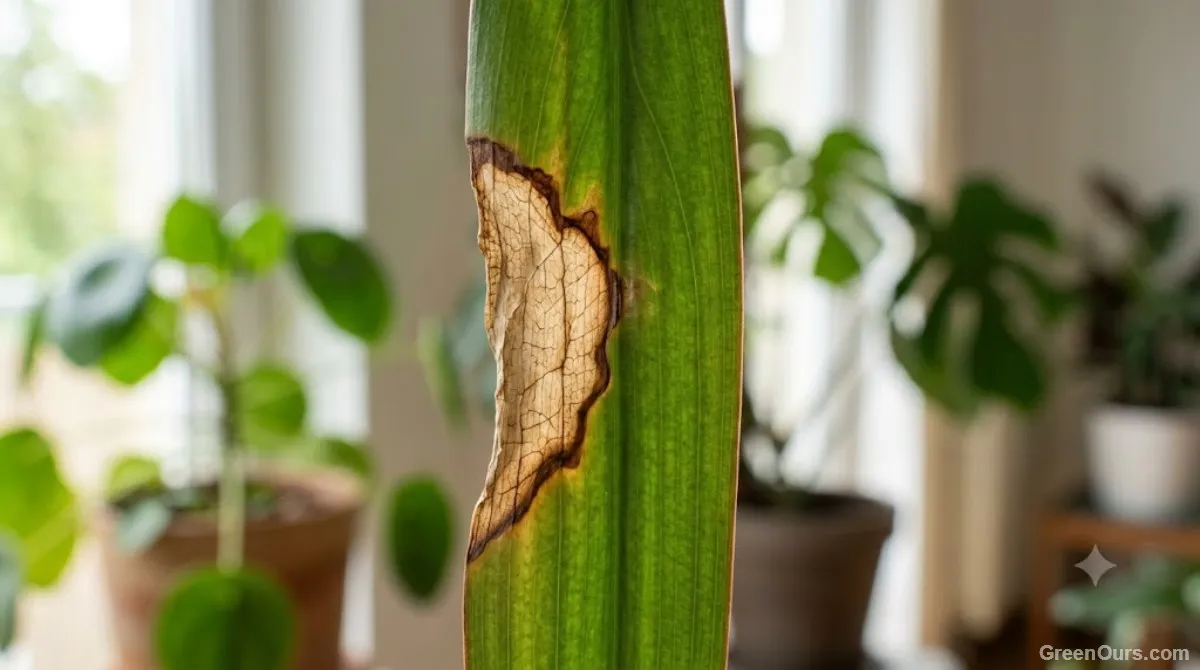
A helpful gut check: sunburn damage tends to appear within a day or two of a light change, and it stays put rather than spreading leaf to leaf the way disease often does. If new leaves keep showing the same pale patches weeks later with no light change, something else may be going on.
Confirming It's Sunburn and Not Something Else
Before you start treating your plant for sun damage, it's worth ruling out a couple of common look-alikes so you're not chasing the wrong fix.
Sunburn vs. Nutrient Deficiency
Nutrient issues, like a nitrogen or magnesium shortfall, tend to create a more gradual, evenly distributed yellowing across a leaf, often starting between the veins. Sunburn is more localized and abrupt — a distinct scorched patch rather than a slow color shift across the whole leaf.
Sunburn vs. Pest Damage
Pests like spider mites can cause stippled, speckled discoloration, and you'll often spot tiny webbing or moving specks if you look closely, especially on the undersides of leaves. Sunburn patches are smoother and more solid-looking, without any texture or movement when you inspect them.
Sunburn vs. Underwatering Stress
A thirsty plant tends to show curling, wilting, or an overall dull, droopy look throughout the whole plant. Sunburn shows up as damage isolated to the leaves that were directly exposed, while the rest of the plant often still looks perfectly perky.
What to Do the Moment You Spot It
If you're trying to figure out how to fix sunburned houseplants, the first move isn't to grab the scissors. It's to get your plant out of the light that caused the problem in the first place. Move it a few feet back from the window, or shift it to a spot with bright, indirect light rather than direct rays. If it was outside, bring it back into filtered shade or indoors.
This matters because scorched leaves won't heal, but the plant needs its remaining healthy leaves to keep photosynthesizing while it grows new, undamaged ones. Pulling it out of harsh light protects those healthy leaves from picking up more damage while the plant recovers.
Give the soil a check while you're at it. A plant that was dry when it got scorched is more vulnerable, since moisture-stressed leaves have less resilience to heat. If the top couple of inches of soil feel dry, water it thoroughly, but don't go overboard trying to compensate — consistent, normal watering is what it needs, not extra.
Should You Remove the Damaged Leaves?
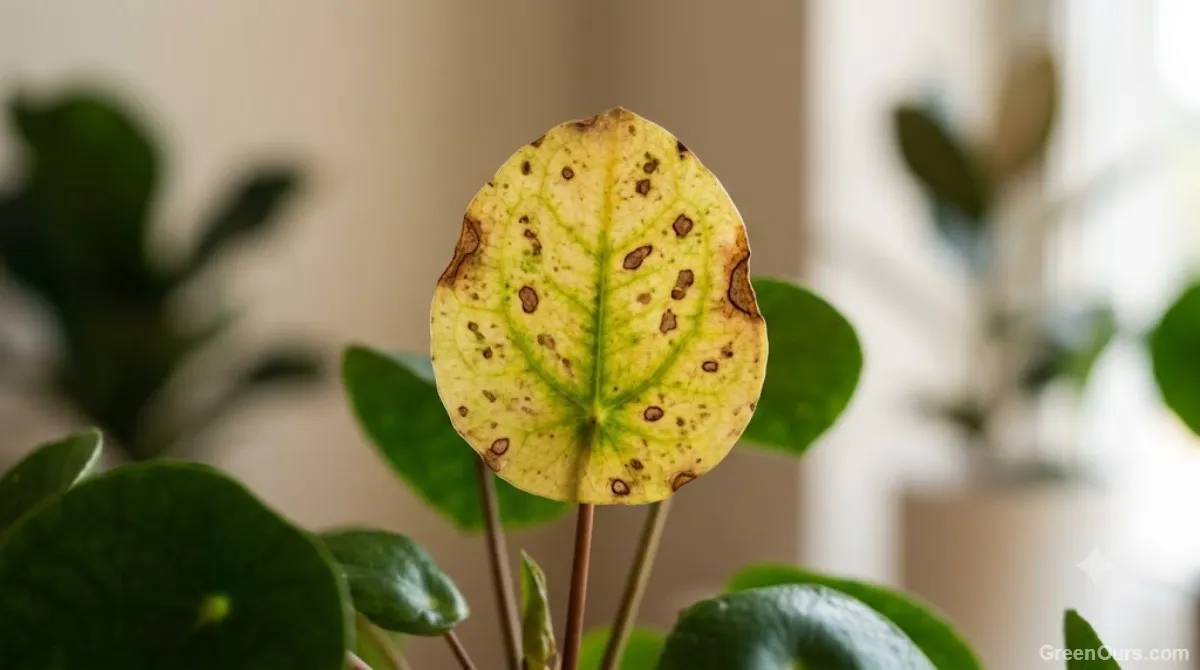
This is the part that trips a lot of people up, because a leaf covered in crispy patches looks like something you should cut off right away. In most cases, though, it's better to wait.
A leaf that's only partially scorched, with healthy green tissue still intact, is still doing useful work for the plant even with the damaged section. Removing it too early costs your plant photosynthesis it needs to grow new leaves and recover its energy. Leave partially damaged leaves in place until the plant has clearly stabilized and pushed out fresh growth.
When Removal Makes Sense
There are a few situations where trimming is the right call: a leaf that's more than half scorched and offering little green tissue left, one that's gone fully brown and brittle, or one that's clearly rotting or mushy rather than just dry. In those cases, use clean, sharp scissors and cut the leaf at its base rather than tearing it, which helps the plant heal the cut cleanly.
Common Recovery Mistakes to Avoid
A few well-intentioned reactions can slow recovery down more than the sunburn itself:
- Don't put it back in full sun to "help it adapt." Scorched leaves are already damaged, and more direct light will only add new burns rather than toughening the plant up.
- Don't remove every damaged leaf right away. As covered above, partially scorched leaves are still useful to the plant while it recovers.
- Don't dramatically increase watering. Sunburn is light damage, not thirst — normal, consistent watering is what the plant needs, not extra.
- Don't fertilize heavily right after the stress. A recovering plant benefits more from stable conditions than a nutrient boost, and heavy feeding can add stress rather than help.
- Don't expect scorched tissue to turn green again. That damage is permanent on the affected leaf; recovery shows up in new growth, not in the old patches fading away.
A Few Common Scenarios
Here's how this plays out with a few plants people commonly deal with:
| Situation | Likely Response |
|---|---|
| Pothos suddenly moved to afternoon sun | Move it back to bright, indirect light |
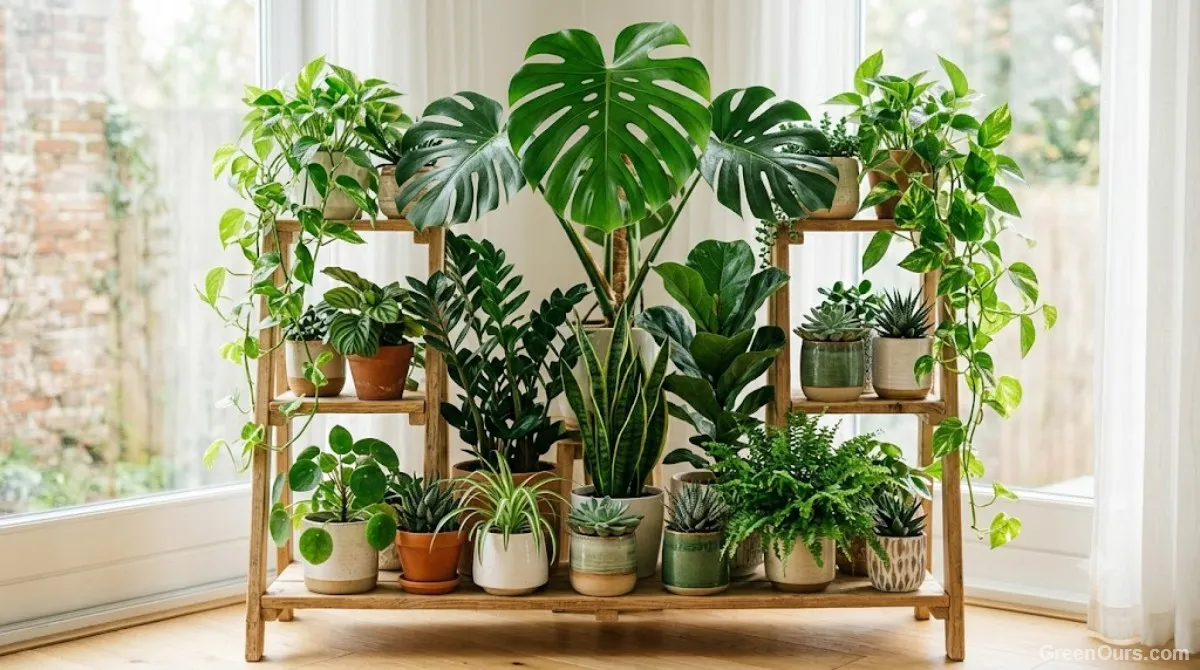
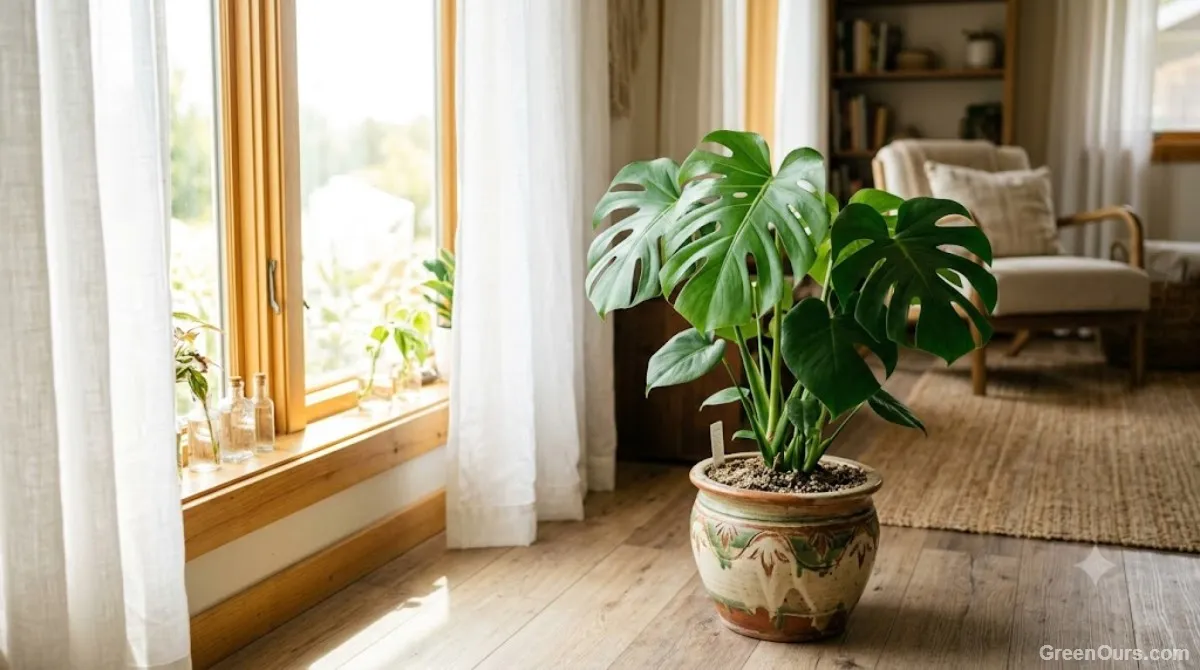
| Monstera moved outdoors for the season | Use filtered or dappled shade and acclimate gradually over several weeks |
| Snake plant with a few scorched patches | Remove only the severely damaged tissue; snake plants otherwise tolerate more light than most on this list |
| Succulent with pale or brown sun-exposed patches | Assess whether it actually needs more, not less, light — some succulents scorch from a too-sudden increase rather than too much light overall |
Getting the Light Right Going Forward
Once your plant is stable, the real fix is figuring out where it can sit long-term without this happening again. Many common tropical and understory houseplants — the kind most people grow indoors — can scorch when suddenly exposed to intense direct sun, since they're adapted to the dappled, filtered light of a forest floor rather than an open windowsill in full afternoon glare. Some houseplants, like many succulents and cacti, actually tolerate or even need substantial direct sun, so it's worth knowing which category your particular plant falls into before assuming less light is always the fix.
If you're not sure how much light a particular spot gets, try the hand-shadow test: hold your hand a foot above the leaves around midday. A soft, blurry shadow means bright indirect light, which most houseplants love. A sharp, well-defined shadow means direct sun, and that's where scorch tends to happen.
If you do want to introduce a plant to a brighter spot, ease it in gradually over a couple of weeks rather than making the move all at once. A little extra light exposure each day gives the leaves time to adjust instead of getting overwhelmed.
What Recovery Actually Looks Like
You'll know your plant is on the mend when you start seeing new leaves emerge that are fully green, with no pale patches at all. That's the clearest sign the light situation has been corrected. The existing scorched leaves won't turn green again, and that's completely normal — they're simply doing their job until the plant is ready to replace them.
Give it a few weeks of steady, appropriate light and normal watering, and most plants bounce back fully from this kind of stress. It's an unsettling thing to see happen to a plant you're taking care of, but it's rarely a setback that sticks around for long.
Want more gentle, beginner-friendly plant care guidance?
The next time you catch yourself moving a plant toward a brighter window, you'll know exactly what to watch for — and if a few leaves do end up scorched, you'll already know it's nothing to panic over.