
Quick Decision Guide: Stay Outside, Protect, or Bring Indoors
Start here to find your next move, then read on for the details behind each group.
| Group | Typical plants | Your next step |
|---|---|---|
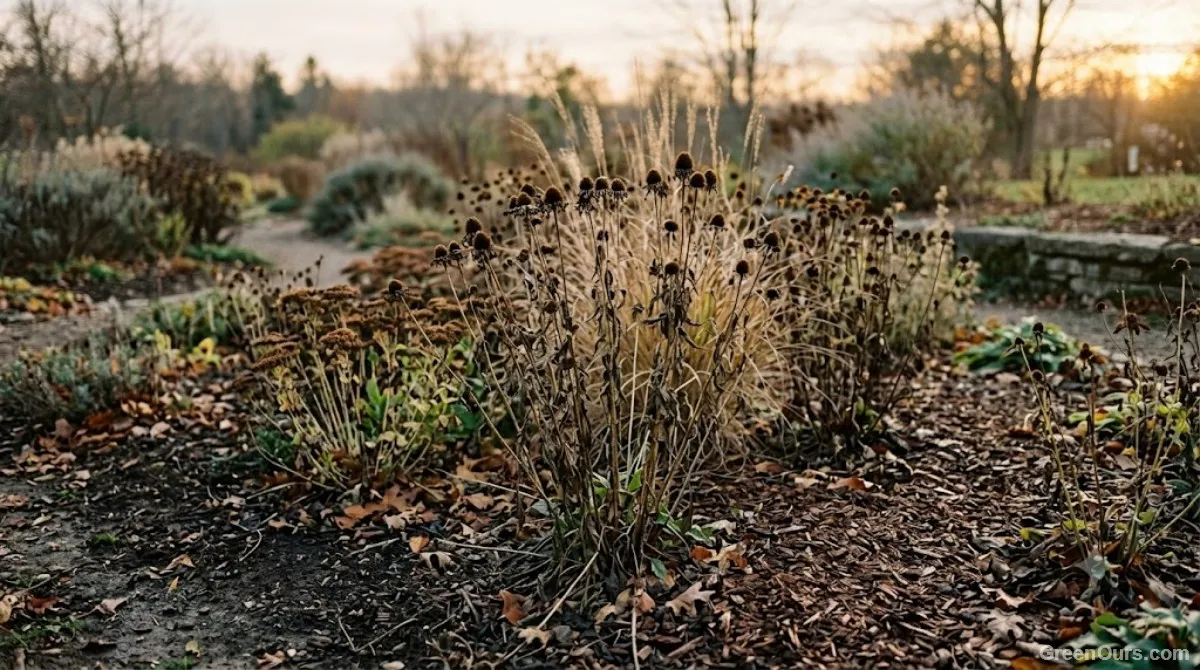
| Stay Outside | Hostas, sedum, daylilies, ornamental grasses, dwarf conifers | Keep outdoors in a suitably sized pot; protect roots with mulch and shelter from wind |
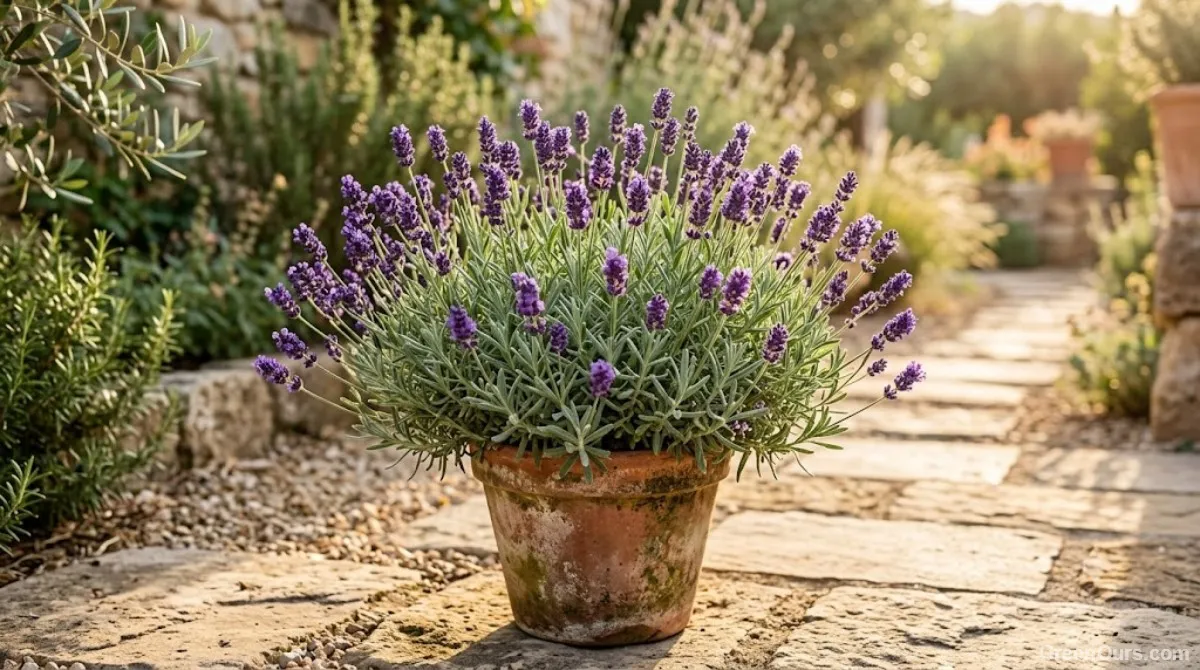
| Protect | Lavender, rosemary, roses, figs, some hydrangeas | Group, insulate, or move to a sheltered or unheated spot, depending on variety and climate |
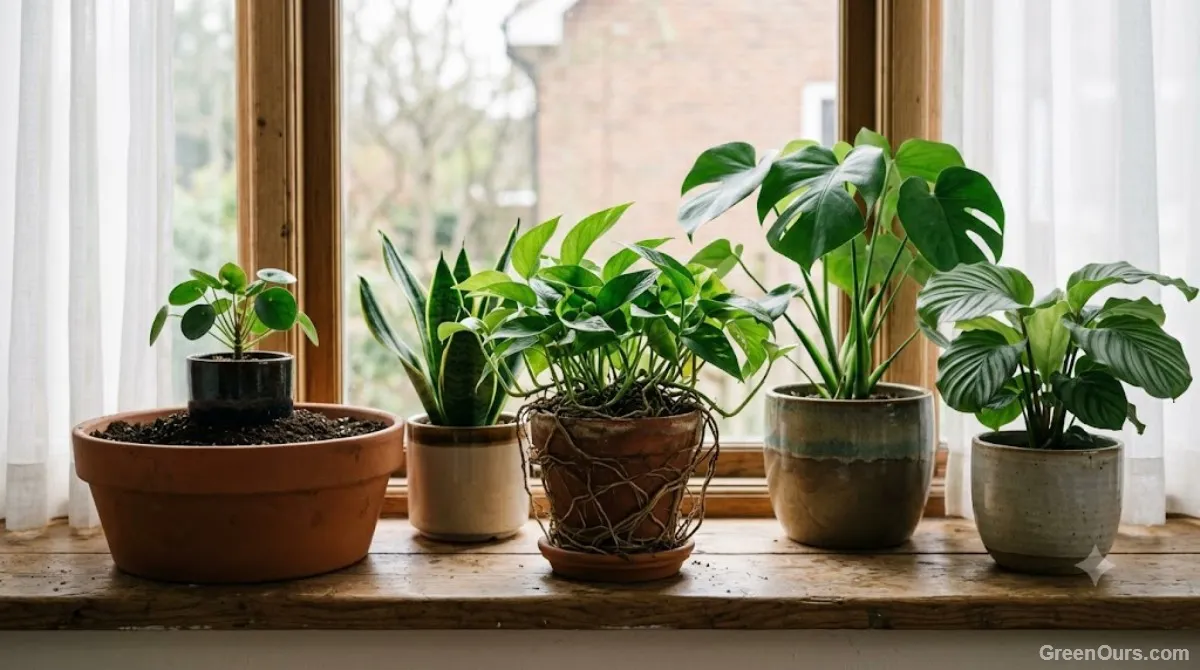
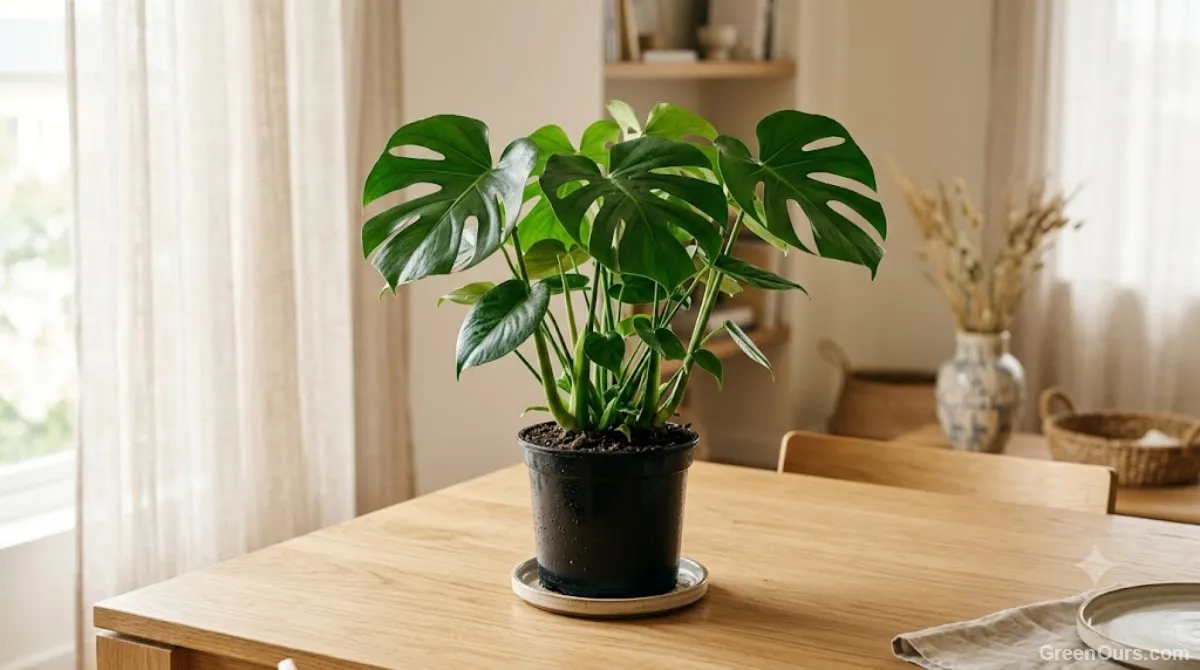
| Bring Indoors | Tropical hibiscus, bananas, mandevilla, tropical foliage plants, many citrus (tolerance varies by variety) | Move inside before cold nights, in a bright spot with frost-free temperatures |
Why Potted Plants Need Different Winter Protection
A plant in the ground has a whole yard of soil around its roots, and that soil holds on to warmth surprisingly well. A pot has thin walls and cold air on every side, so container roots get colder, and get there faster, than the same plant would in a garden bed.
Size and exposure matter almost as much as the plant. Picture two pots of the same hardy hosta: one in a small pot on an open, windy balcony, the other in a large pot against the house wall. The small pot can lose heat much faster and may freeze through during a severe cold snap, while the large one often manages with mulch and shelter.
That's why a perennial that's hardy for your zone can still die in a planter. A conservative planning shortcut is to treat container plants as one or two zones less hardy than the tag says. It's a shortcut rather than a formula.
The idea to hold on to: plan around the roots, not the leaves. If the roots can't take the cold, it doesn't matter how tough the top growth looks.
Which Potted Plants Stay Outside and Which Come In
Before you move a single pot, check each plant and sort it. A few quick questions will tell you most of what you need.
Four questions to ask about each plant
- What exactly is it? Find the species or variety name on the tag. Hardiness can differ a lot even within one plant family.
- What's its hardiness zone, and what's yours? Look up your zone on the USDA Plant Hardiness Zone Map. As a cautious planning shortcut, treat a container plant as one or two zones less hardy than its tag says. It's a rule of thumb, not a guarantee. Pot volume, exposure, root hardiness, the variety itself, and your local winter extremes can all outweigh a simple zone adjustment, so check your local university Extension office when in doubt.
- How big and exposed is the pot? Small pots in open, windy spots lose the most protection.
- Does it need a cold rest or frost-free storage? Some plants must go dormant, while others simply can't be allowed to freeze.
Plants that can usually stay out
Hostas, sedum, daylilies, and many ornamental grasses are common perennials that overwinter in pots in cold climates. Dwarf conifers and boxwood are familiar shrub examples. Even these depend on the variety and your zone, so confirm your exact plant instead of assuming, since cultivars of the same plant can differ in cold tolerance. Evergreens also keep losing moisture to cold, dry wind, so they like some shelter.
Plants that need protection
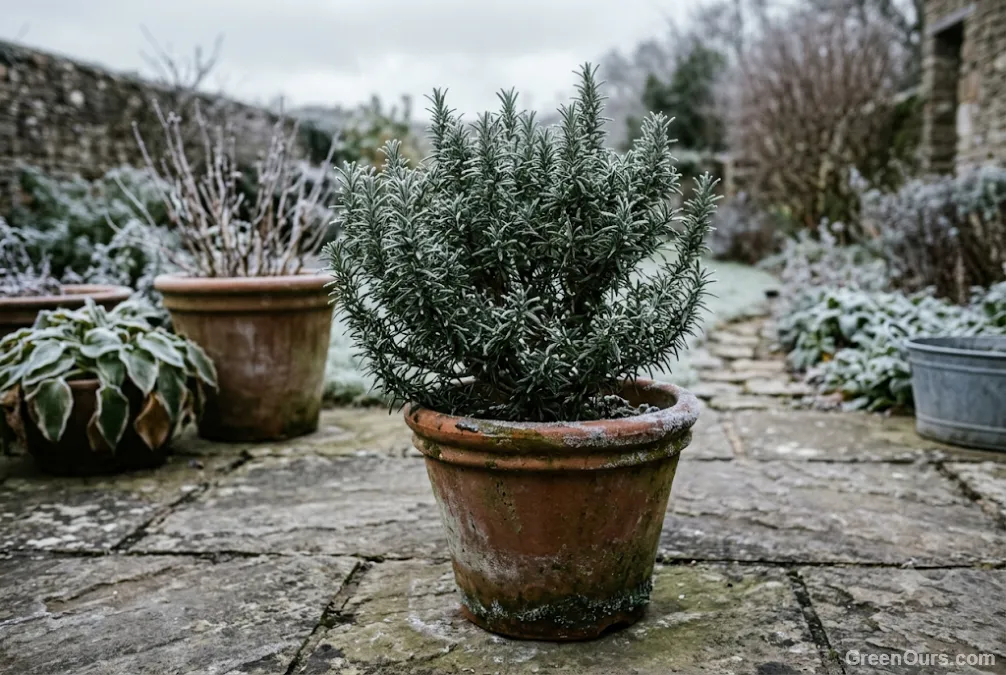
Lavender, rosemary, roses, figs, and some hydrangeas sit in the middle, and their hardiness varies by variety. Rosemary and lavender are good examples, because species and cultivars differ a lot. Some tolerate real cold in fast-draining soil, while others need frost-free protection, so check your exact variety.
In a mild climate these plants may be fine outdoors. In a colder one they'll want a sheltered spot, grouped pots, and insulation, or a move into an unheated space.
Plants that must come in
Tropical hibiscus, potted bananas, mandevilla, and tropical foliage plants generally can't take freezing and need to come indoors. Their needs differ, though. Many citrus varieties tolerate only brief, light cold, so check yours. Nights settling near 50°F (10°C) are a cautious planning threshold for the most sensitive tropicals, not a universal minimum. Some tolerate cooler nights and others sulk sooner, so check your species' temperature needs.
| Plant type | General winter approach |
|---|---|
| Cold-hardy perennials (hosta, sedum) | Often stay outdoors with root protection |
| Evergreen shrubs (boxwood, dwarf conifers) | Shelter from drying wind; keep soil from going bone dry |
| Borderline plants (lavender, rosemary, fig, roses) | Depends on species, variety, and zone; shelter, group, or move to an unheated space |
| Tropical and tender plants (hibiscus, banana, mandevilla, many citrus) | Move indoors before damaging cold; citrus tolerance varies by variety |
| Tender bulbs and tubers | Some can be lifted and stored dormant, depending on the species |
Four Ways to Overwinter Potted Plants
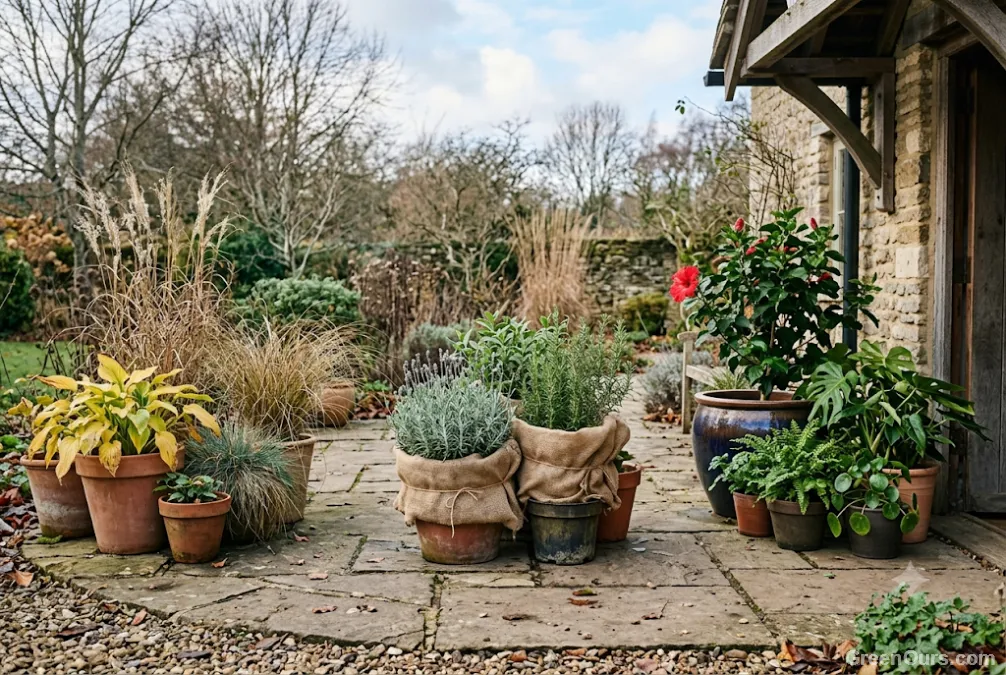
There isn't one best method. The right one depends on the plant and on what space you actually have. Sheltering, grouping, and sinking pots suit hardy and borderline plants. Unheated storage suits dormant plants whose needs match the space. Truly tender plants need frost-free indoor conditions and shouldn't rely on any of these outdoor methods.
Move to a sheltered spot
Slide pots against the house, ideally somewhere that blocks wind. Even a few feet can soften the worst of it, and you'll notice the difference on blustery nights.
Group and insulate
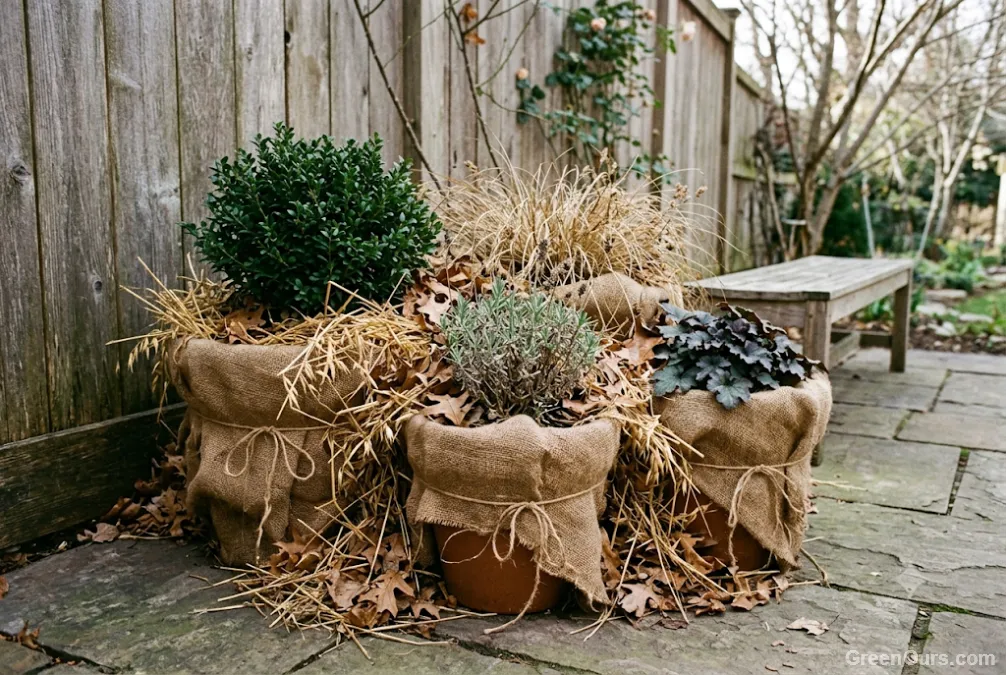
Cluster pots tightly so they share warmth and shield each other's sides. Pack leaves, straw, or burlap around the group and add mulch over the soil.
Keep the wrapping breathable. Burlap and straw still buffer the pots against cold, but they let moisture escape, while sealed plastic traps damp against the pot and soil.
Sink pots into the ground
If you have a spare patch of garden, dig a hole and set the whole pot in so the rim sits just above the soil. The surrounding earth acts like an insulating blanket, and a layer of mulch finishes the job. It's one of the gentlest methods for hardy plants.
Store in an unheated space
A cool garage, shed, or basement suits plants that go dormant and just need to dodge the worst cold. Not just any spare space will do, so match the temperature to the plant. Some hardy plants resting dormant are fine near freezing, while others need to stay frost-free, so check the species. A minimum-maximum thermometer shows the coldest and warmest the space really gets overnight, which is often different from what you'd guess.
Check on stored plants every few weeks, and water only enough to keep the soil from drying out completely.
How to Protect Containers and Roots From Freezing
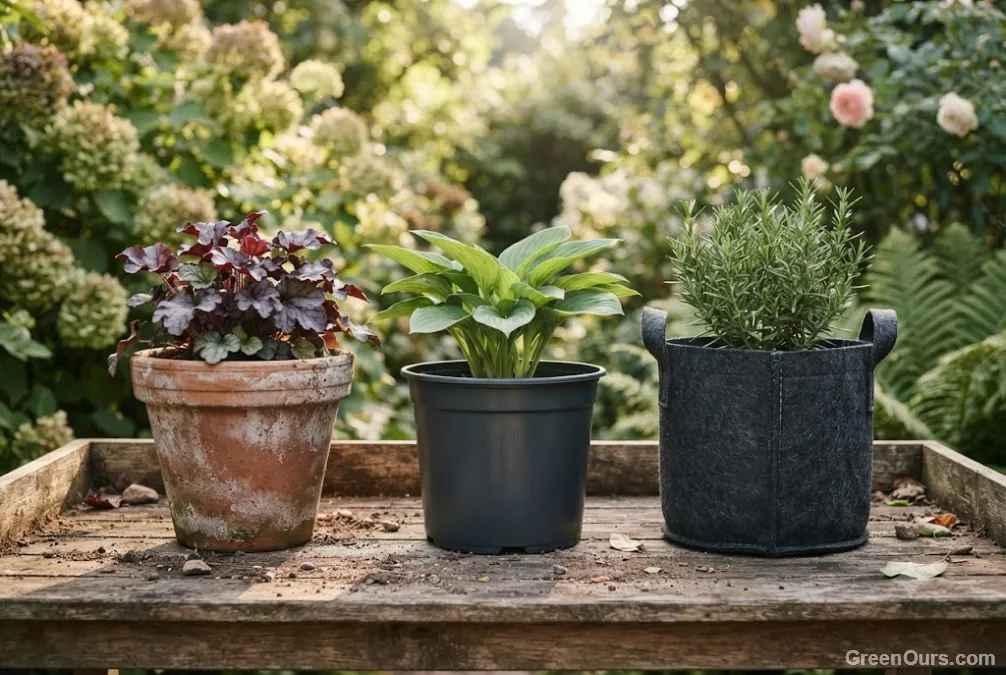
Pot size and material matter more than most of us expect. A big pot holds more soil, so it changes temperature more slowly than a small one. Unprotected terracotta and ceramic pots that aren't rated for frost are the ones most likely to crack when wet soil freezes and expands. Plastic, resin, and fiberglass usually flex instead, though very thin plastic can turn brittle in severe cold.
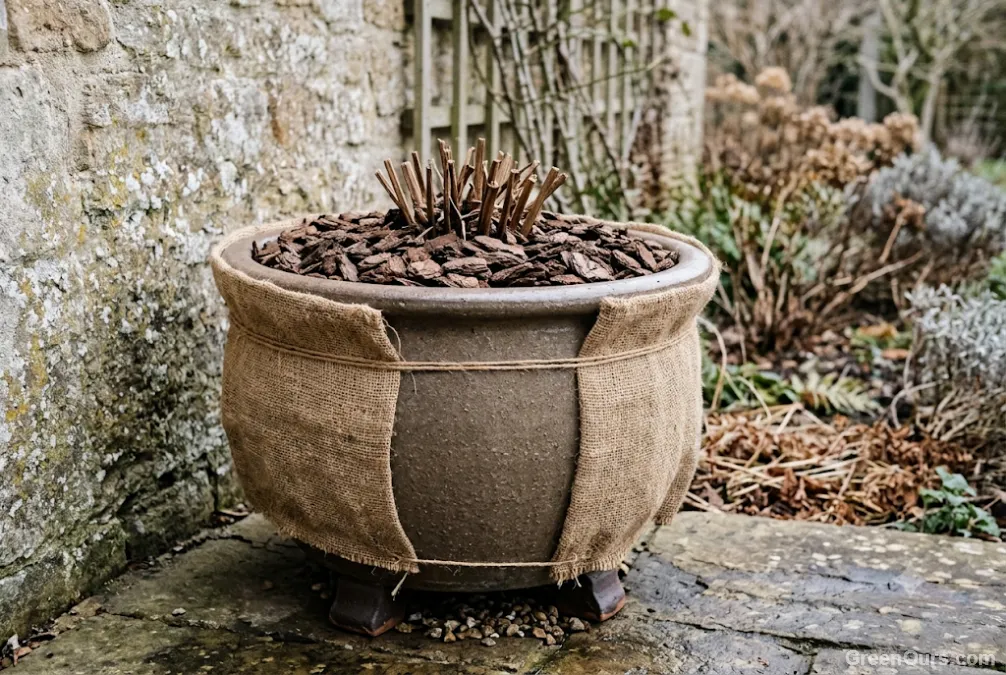
Set pots on pot feet or a couple of bricks. That keeps drainage holes open, stops pots sitting in standing water, and lets air move underneath. Then add a few inches of mulch over the soil, and wrap the pot sides loosely with burlap. Leave the top open to the air.
Repeated freezing and thawing is the other troublemaker. A sheltered spot out of the wind keeps temperatures steadier, and shade can reduce the daily freeze-thaw swings a sunny wall causes. The north side of a house often helps, but in some climates it's simply the coldest spot, so judge by your own yard.
How to Water Potted Plants in Winter
Dormant deciduous plants, the ones that drop their leaves, need water far less often. Evergreens are different. They keep losing moisture through their foliage all winter, so a bone-dry root ball in January is a common reason they struggle by spring.
There's no fixed winter schedule, because watering depends on dormancy, temperature, light, and soil moisture. Stored dormant plants need very little, while plants still growing indoors under light need water whenever the top of the soil dries.
Push a finger a couple of inches into the soil. If it's dry, water on a mild morning when temperatures are above freezing, so any excess drains before nightfall. If it's damp, leave it be.
The opposite problem is just as real. Soggy soil that freezes is rough on roots, so keep drainage holes clear and never leave a saucer holding water. Skip fertilizer until spring, since plants aren't growing and can't use it.
Overwintering Without a Garage or Greenhouse
Not everyone has a spare shed, and that's completely fine. A few humbler spots can do a surprising amount of work.
- An unheated porch or entryway against the house wall
- A stairwell or cool hallway with a bright window
- A spare room you keep cooler than the rest of the home
- A sheltered corner against a wall, with pots grouped and wrapped
Match the spot to the plant. Dormant plants generally want cool conditions suited to their species, and a warm living room can wake them too early. Tender evergreen plants that keep growing need frost-free temperatures and a bright window. Before bringing any plant inside, check under the leaves for pests so you don't invite them in for the winter.
When to Bring Plants Back Outside in Spring
Spring is when it's easiest to undo all your good work by being too eager. Wait until your local last frost date has passed, and watch the forecast for a late cold snap.
Then ease plants out over a week or two. Plants that spent winter indoors need to adjust to outdoor light and wind, not just cooler air, and sudden direct sun can scorch their leaves. Start in a shady, sheltered spot for a few hours a day, and increase the time and light gradually. Unwrap hardy pots in stages too, so new growth isn't hit with cold wind all at once.
Common Overwintering Mistakes
- Trusting the zone on the plant tag without thinking about the pot
- Wrapping pots in sealed plastic, which traps moisture
- Leaving saucers full of water so soil stays soggy and freezes
- Moving dormant plants into a warm room, which wakes them too early
- Skipping the pest check before bringing plants indoors
- Fertilizing in winter when nothing is actively growing
A Quick Decision Shortcut
If it's tropical, bring it in. If it's hardy but sitting in a small pot, group and insulate it. If you're truly unsure, check the plant's tag and your local Extension office, then lean toward more protection.
What to Do Next
This week, walk around and sort your pots into three piles: stay out, protect, and bring in. Start with the tender ones, since they're the first to need shelter, then move your most precious hardy pot into a spot out of the wind.
Once that's done, you'll have taken the biggest risks off the table. Which pot are you most nervous about this winter?
Take it one pot at a time, and your plants will thank you come spring.