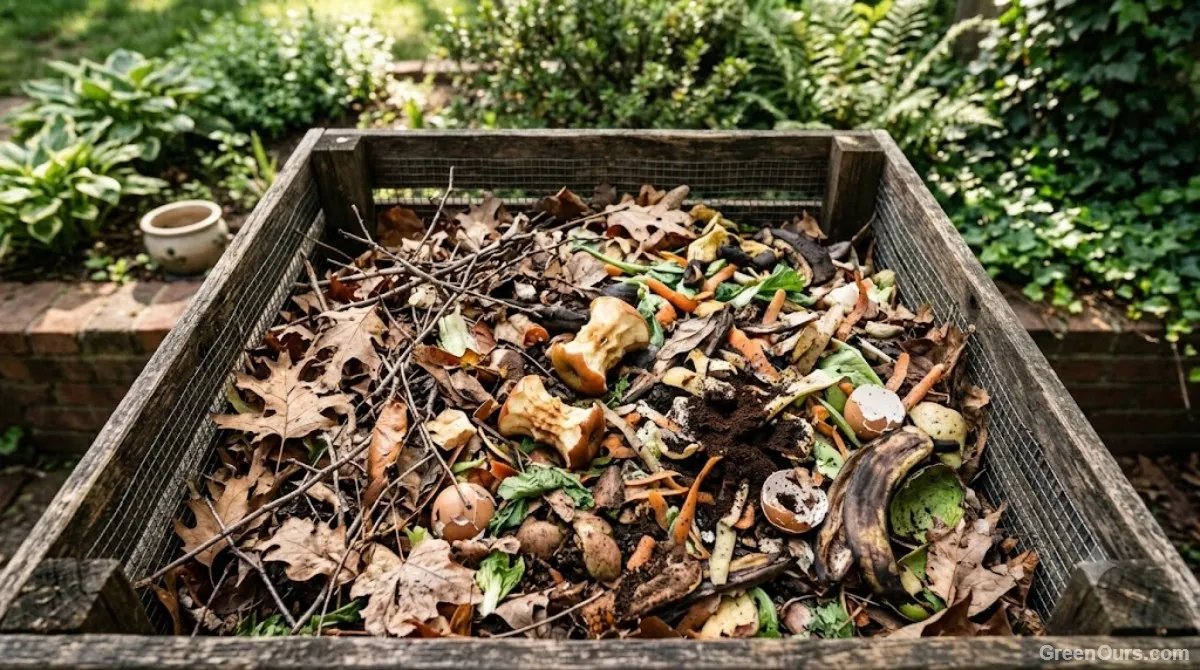

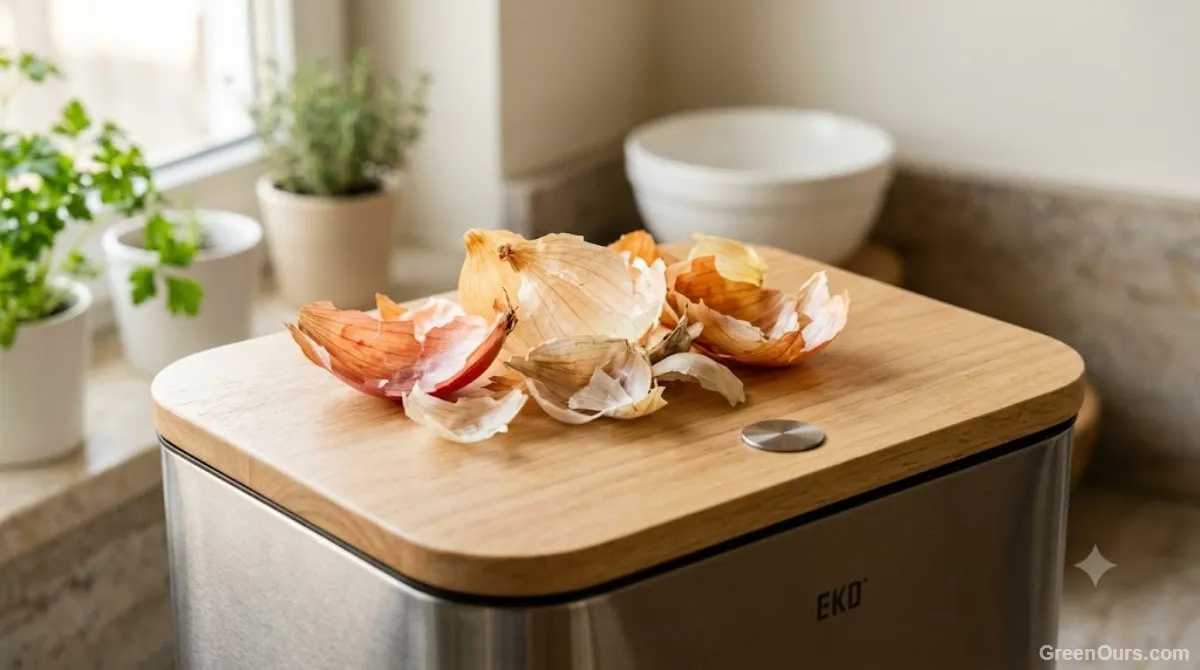
Where the "Never Compost Onions or Garlic" Rule Came From
Every composting myth has an origin story, and this one usually traces back to two half-truths that got mashed together and passed around until they hardened into fact. The first is that onions and garlic are acidic, which supposedly throws off a pile's balance. The second is that they're toxic to worms, which supposedly means one clove could wipe out a whole bin.
Neither of those holds up under scrutiny. A few onion skins aren't acidic enough to meaningfully shift the pH of a compost pile that's also breaking down eggshells, coffee grounds, and cardboard. And while it's true that alliums contain compounds that can irritate worms in large, concentrated amounts, a normal kitchen's worth of scraps is nowhere near that threshold.
What's Actually True (and What Got Exaggerated)
Here's what's real: onion and garlic scraps decompose more slowly than soft produce like lettuce or banana peels, thanks to their waxy, papery layers. They also carry a noticeably strong smell while breaking down, which is the part people actually notice and then blame on the wrong cause. It's not toxicity. It's odor, and odor gets misread as danger surprisingly often in composting circles.
If your compost smells sharper than usual after adding onion or garlic, that's normal decomposition, not a sign something's gone wrong. Cover the scraps with browns and the smell fades within a day or two.
Hot Piles, Cold Piles, and Worm Bins Aren't the Same Situation
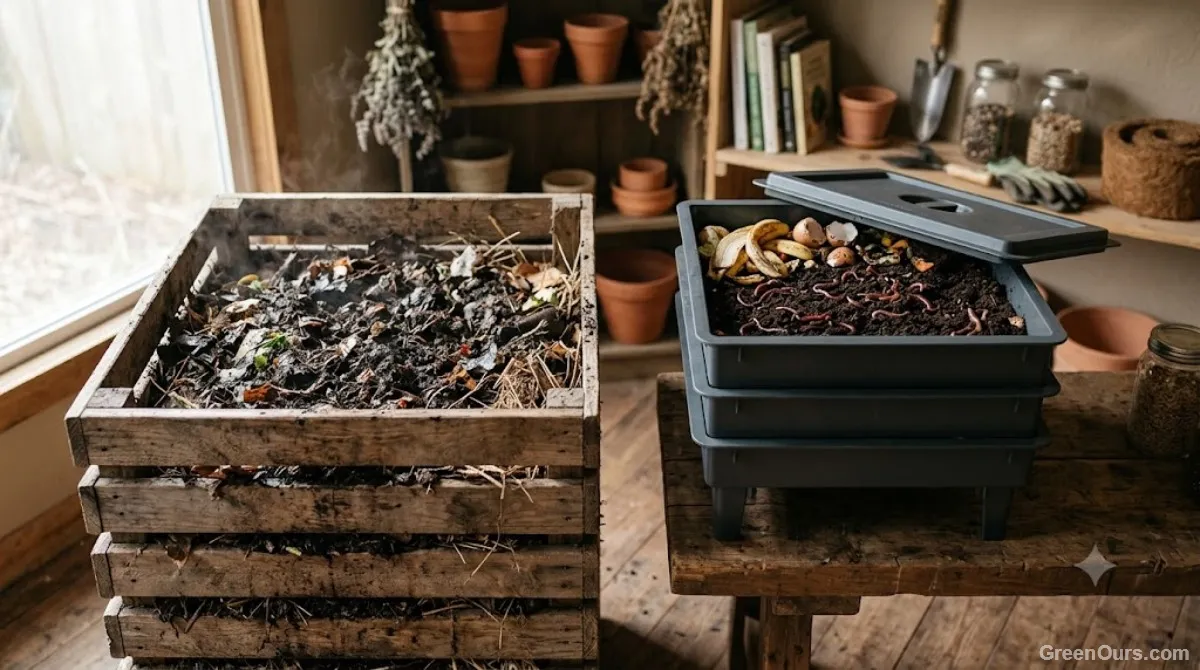
Backyard Hot Compost
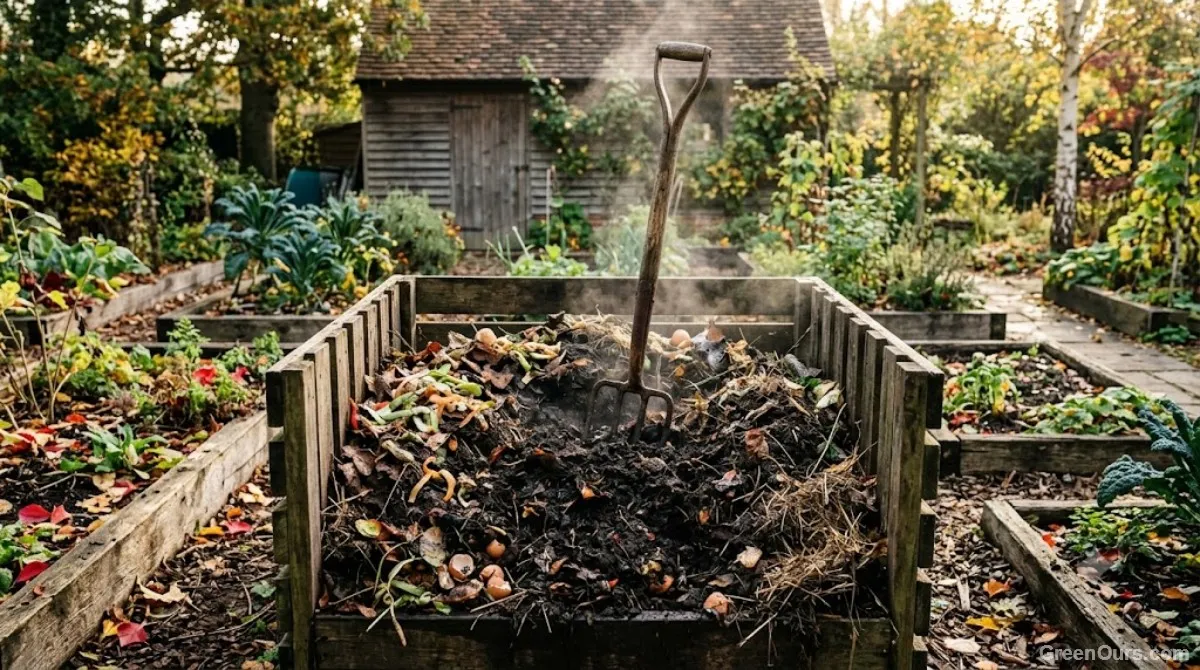
A pile that's actively heating up, getting turned regularly, and reaching a real internal temperature handles onion and garlic without much fuss. The heat speeds up breakdown and disperses the smell before it becomes a problem worth noticing.
Slow, Cold Compost Piles
A cold pile that mostly just sits there will take longer to break alliums down, sometimes weeks longer than softer scraps. That's not harmful, just slower. Chopping the pieces small before adding them speeds things up considerably.
Worm Bins Are Where It Gets Trickier
This is the one exception worth taking seriously. Worms can be sensitive to concentrated alliums, and a worm bin is a much smaller, more contained environment than an outdoor pile. Small amounts, finely chopped and buried, are generally fine. Large quantities of raw onion or garlic dumped in at once are the actual thing to avoid, and it's a matter of proportion, not a total ban.
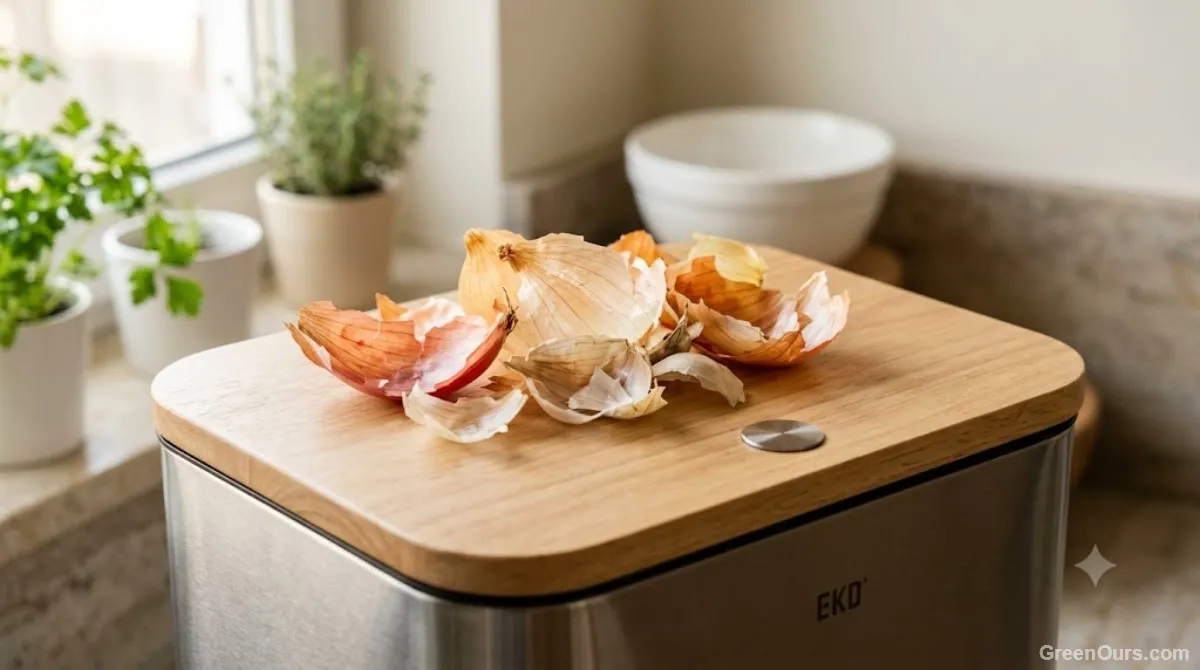
How to Add Onion and Garlic Without Creating a Mess
A few small habits make the difference between a pile that handles alliums fine and one that gets smelly and slow.
- Chop scraps into smaller pieces so they break down faster and blend in more easily.
- Bury them under a layer of browns like dry leaves, shredded cardboard, or straw instead of leaving them exposed on top.
- Spread additions out over several days rather than dumping a whole week's worth of peelings in one go.
- For worm bins specifically, keep portions small and mix them into an existing layer rather than adding a concentrated pocket.
Signs You've Added Too Much
If your pile starts smelling sour or sharp for more than a couple of days, or if you notice worms clustering away from a particular spot in the bin, that's your cue to ease off and add more browns to balance things out. It's not a crisis. It's just feedback, and composting is mostly a game of reading feedback and adjusting as you go.
The Myths Worth Finally Retiring
Onion and garlic scraps aren't poison. They're not a worm-killing hazard waiting in your kitchen bin. They're just a slower-decomposing, strong-smelling ingredient that behaves a little differently than a wilted lettuce leaf, and that difference gets treated like a red flag far more often than it deserves. Once you know what's actually going on, there's no reason to keep quarantining them to the trash.
Get more no-guilt composting tips like this one.
So go ahead and stop sorting your onion skins into a separate, guilty little pile. Toss them in, bury them under some browns, and let your compost do what it's actually built to do.