
The Paper Question Nobody Really Answers
Most composting guides tell you paper is a "brown" — a carbon-rich material that balances out the nitrogen-heavy "greens" like vegetable scraps and coffee grounds. That's true. But it skips the part where not all paper is created equal, and the difference usually comes down to two things: what's stuck to it, and what it's coated with.
Grease, food residue, wax, and plastic laminate all slow down or completely block decomposition. Plain, uncoated paper breaks down beautifully. The trick is learning to tell them apart quickly, without turning grocery shopping into a research project.
Here's a detail most guides skip: the ratio matters more than people think. Compost needs a rough balance of browns (carbon) to greens (nitrogen), and paper is almost always your easiest, cheapest brown. Cardboard, newspaper, and plain paper towels are basically free filler that keeps a pile from turning into a slimy, smelly mess. That's the actual reason paper deserves a spot in your bin, not just because it feels virtuous to keep it out of the trash.
Paper Towels and Napkins: When They're Compost Gold (and When They're Not)
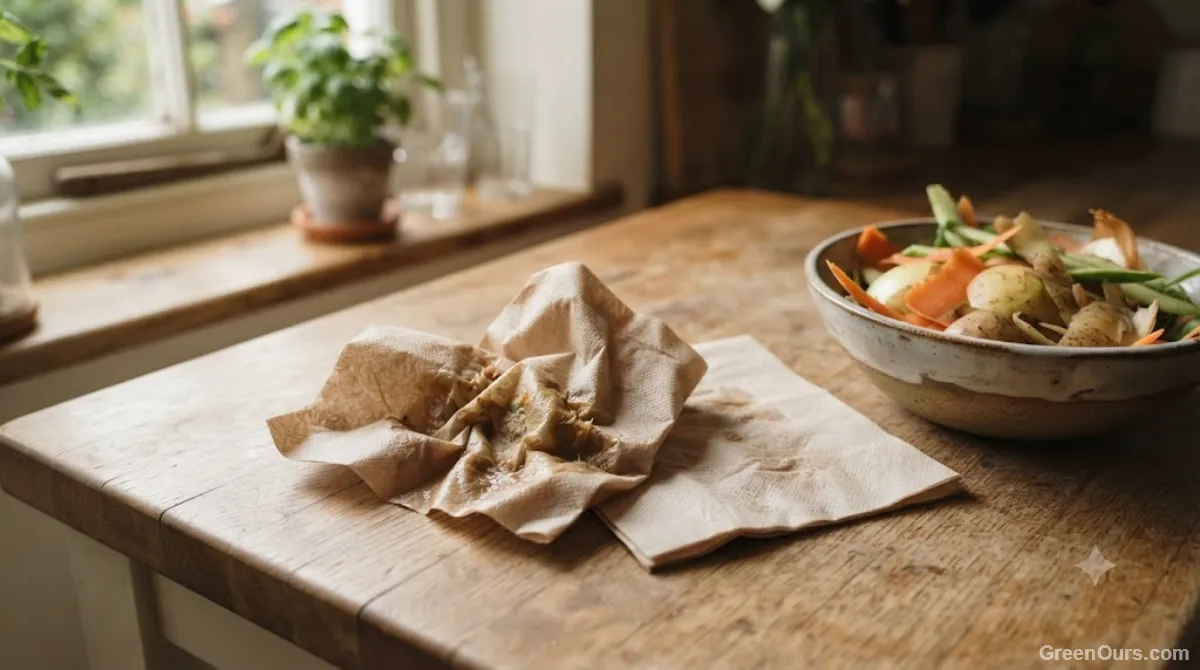
Can you compost paper towels and napkins? In most cases, yes — plain paper towels and napkins are genuinely one of the best paper products for composting. They're already broken down into soft fibers, they hold moisture well, and they decompose faster than cardboard or newspaper. If you wiped up water, coffee, or plain food scraps, toss it in without a second thought.
Where it gets murky: paper towels used to clean up chemical spills, disinfecting wipes, or anything soaked in cleaning products don't belong in compost. Those chemicals can kill off the beneficial microbes and worms doing the actual work of breaking everything down. Same goes for napkins with heavy dye printing or foil accents — save those for the trash.
One thing that surprised me: recycled paper towels compost just as well as virgin ones, and bleached versus unbleached doesn't make a meaningful difference either, despite what some corners of the internet insist. What actually matters is what touched the paper after it left the roll — not what it was made from in the first place.
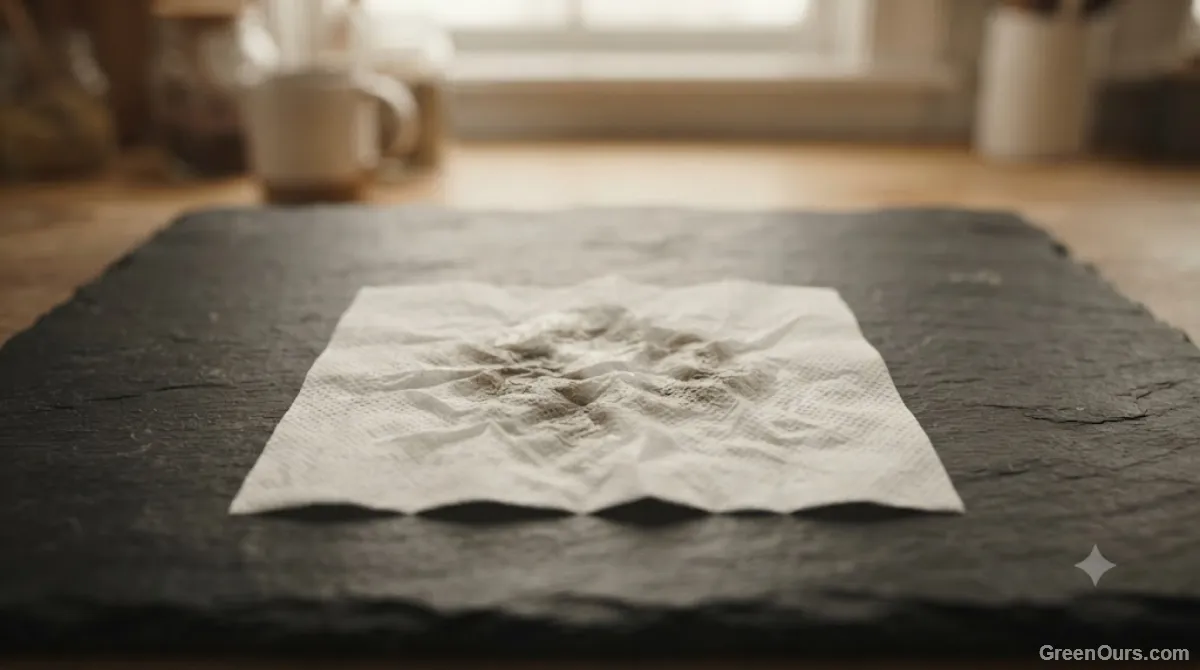
Quick gut check: if a paper towel wiped up something you'd eat, compost it. If it wiped up something you'd spray from a bottle with a warning label, it goes in the trash.
The Pizza Box Debate, Settled
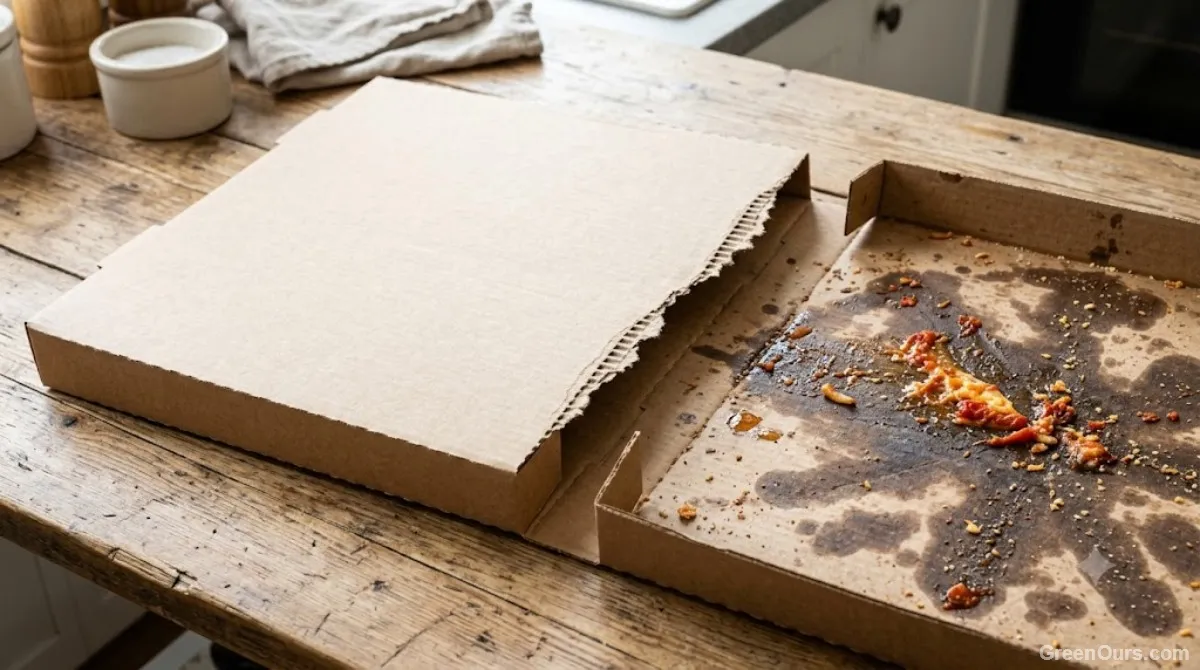
This one causes more kitchen arguments than it should. Pizza boxes are compostable in theory — they're just cardboard — but grease is the deciding factor, and most pizza boxes have plenty of it.
Here's what actually works: tear the box into two pieces. The lid, which usually stays clean, can go in either recycling or compost. The bottom section, soaked in oil and cheese residue, should go straight into compost rather than recycling, because grease contaminates the recycling stream and can ruin an entire batch of paper being processed. Composting handles grease far better — a moderate amount of oil actually breaks down fine over time and won't harm your pile.
The exception is a box soaked all the way through with a thick layer of oil pooling at the bottom. At that point it's not really "a little greasy" anymore, and too much oil at once can smother your pile instead of breaking down cleanly. Rip off and toss the worst section, compost the rest.
If you're composting in a hot, actively managed pile, a moderately greasy box section will usually break down within a couple of months. Cold or passive composting takes longer — think closer to six months to a year — so if your bin runs cold, lean toward tossing the greasiest cardboard rather than waiting it out.
What About Receipts, Glossy Flyers, and Other Sneaky Paper?
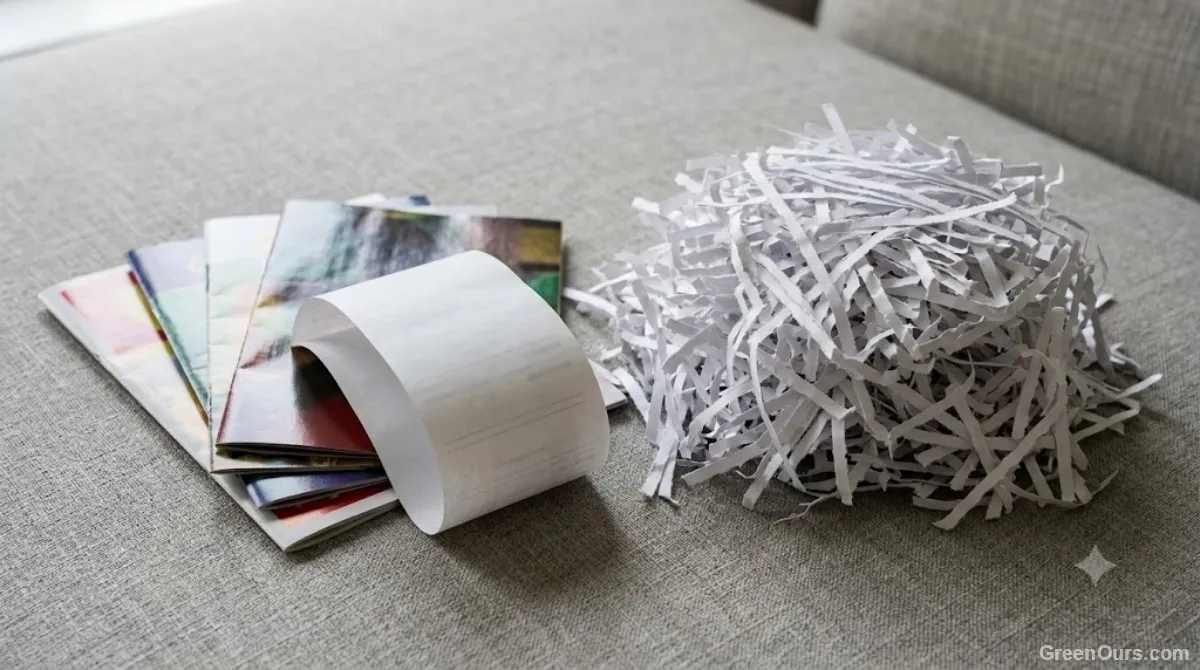
This is where most people get caught off guard, myself included. Thermal receipts — the shiny kind from most registers — are coated in a chemical layer (often BPA or a similar compound) that has no business anywhere near your food scraps. Skip composting those entirely.
Glossy magazine pages, junk mail flyers, and most gift wrap use plastic-based coatings or metallic inks that won't break down and can leave synthetic fragments in your finished compost. Plain junk mail printed on regular paper is usually fine in moderation, but anything with a shine to it should go in the trash or recycling instead.
Egg cartons and plain brown paper bags are the quiet good guys of this category — genuinely compostable, no asterisk needed, as long as they're not coated in wax or plastic sheen. Shredded office paper is fine too, in moderation, though I'd skip anything with heavy black ink coverage since some toners still contain compounds you don't want breaking down near your vegetable scraps.
A Quick Sorting Method So You Stop Guessing
I've landed on a simple rule that saves me from overthinking every scrap: tear it, and see what happens. Plain paper tears into soft, fibrous strips. Coated or laminated paper tears with a slightly plasticky resistance, or it doesn't tear cleanly at all — it just crumples. If it feels more like plastic than paper in your hands, treat it like plastic.
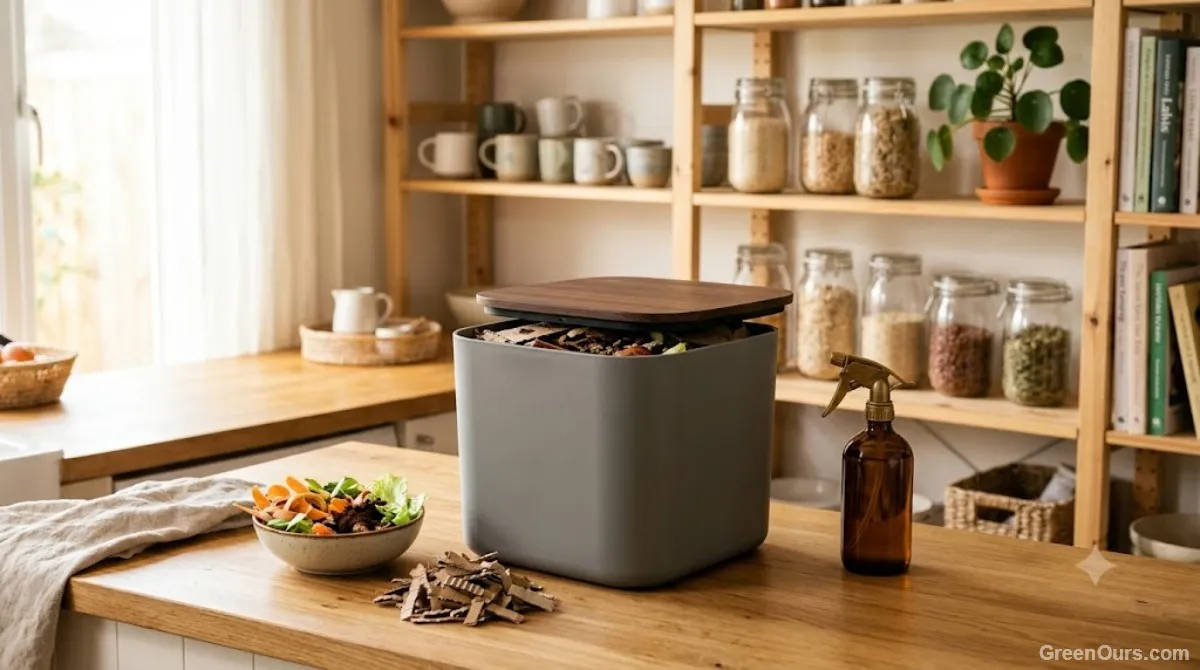
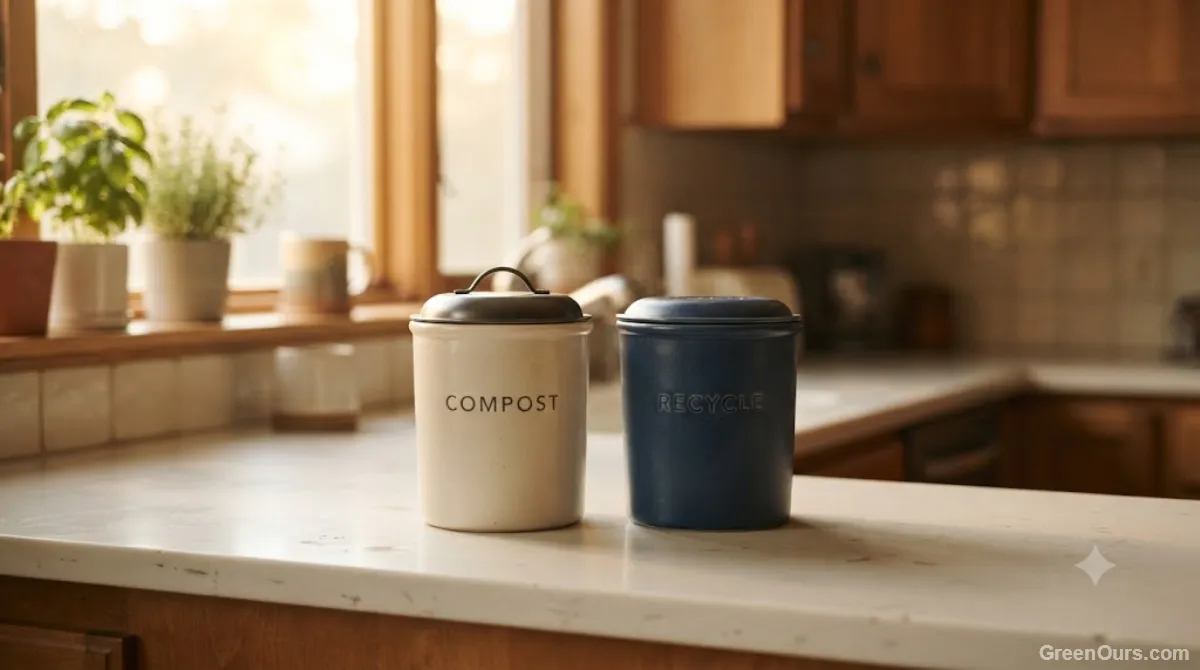
I keep two small bins on my counter now — one for compost-bound paper, one for everything that needs to go in the trash or recycling instead. It sounds fussy, but it took about a week to become automatic, and now I don't even think about it. My husband still asks before he tosses anything, which, honestly, I'll take as a win.
Shredding paper towels, napkins, and torn cardboard before adding them also helps enormously. Smaller pieces break down faster and are less likely to mat together into a soggy layer that blocks airflow — something I learned the hard way after finding a solid, undecomposed paper towel clump six months into a bin I thought was working perfectly.
What Happens If You Get It Wrong
If a coated or chemically treated item ends up in your compost occasionally, it's not a disaster. One rogue receipt isn't going to poison your entire pile. The bigger issue is consistency — regularly adding grease-heavy, chemical-laden, or plastic-coated paper will slow decomposition, introduce contaminants, and eventually leave visible plastic fragments in your finished compost, which you really don't want mixed into garden soil.
Worst case, you end up picking a few stubborn plastic-coated fragments out of your finished compost before using it in the garden — annoying, but not dangerous. The bigger risk is letting it become a habit rather than a one-off, since that's when contamination actually builds up in your soil over time.
Want more honest answers to your composting questions?
Most of this comes down to slowing down for about two seconds before you toss something. You don't need a chemistry degree — just a habit of checking whether what's on the paper is food or something else entirely. Once that becomes automatic, the pizza box hesitation disappears, and so does the guesswork.