
Are Wool Dryer Balls Worth It? What They Actually Do
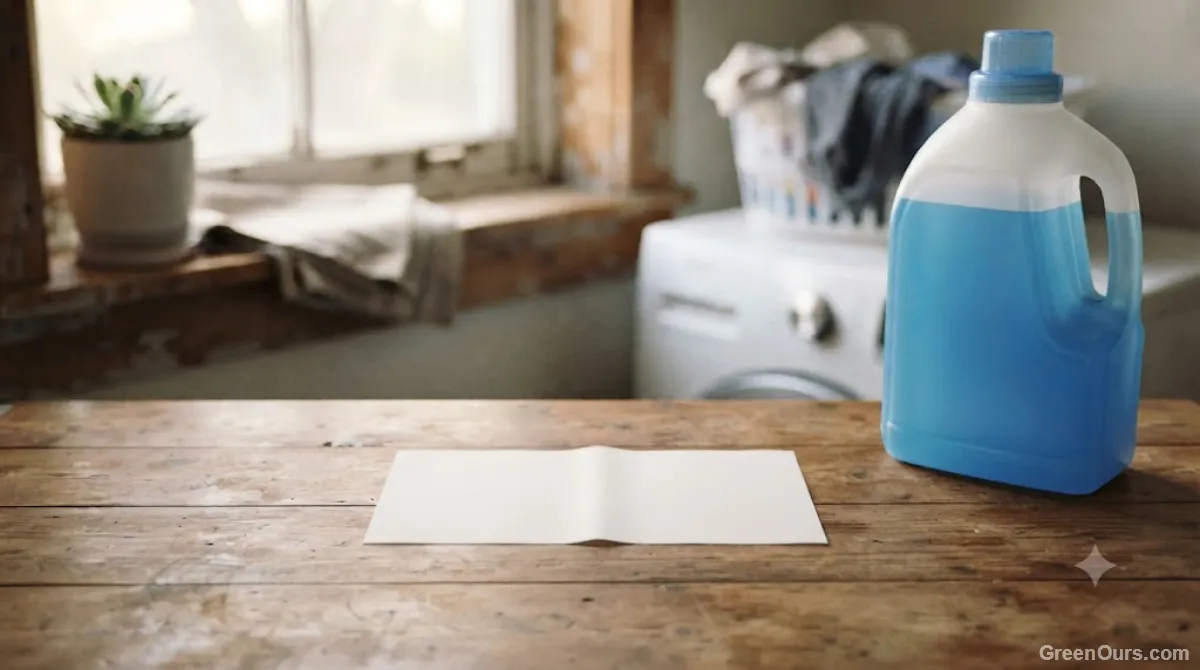
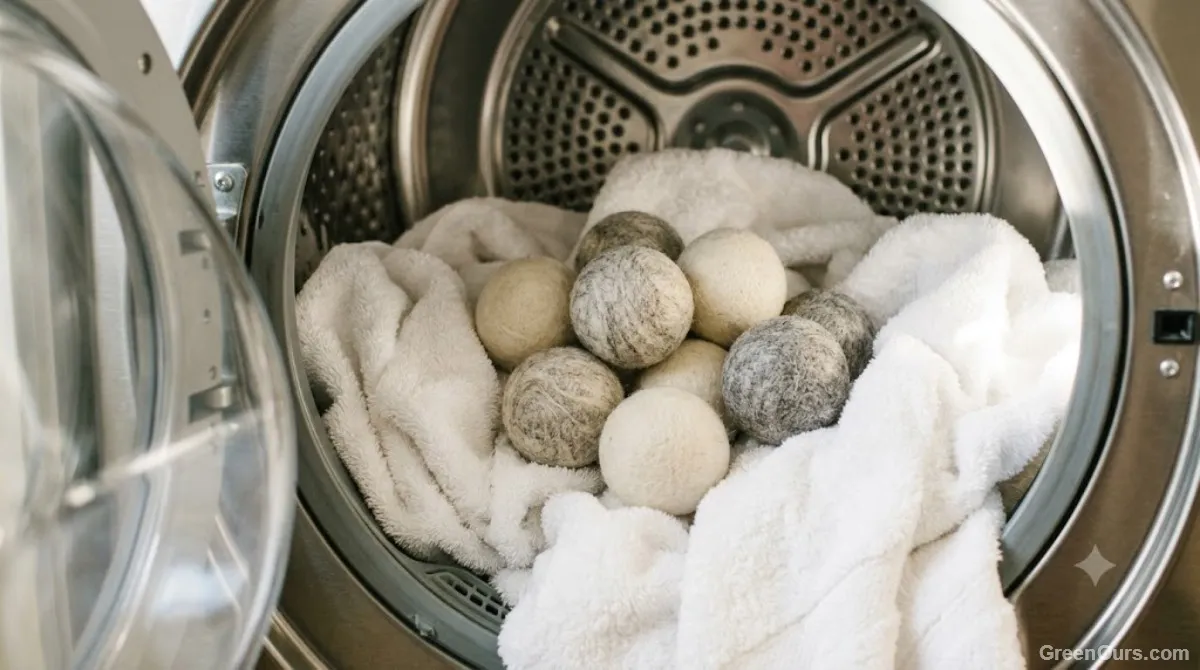
A dryer sheet works by coating your laundry with a thin layer of fabric softener and anti-static agents as it tumbles and heats up. Wool dryer balls do something completely different — they're dense, felted balls of wool that bounce around the drum and physically separate your clothes as they dry.
That separation matters more than it sounds like it should. When towels and sheets clump together in a soggy mass, hot air can't move through them efficiently. Wool balls keep pockets of space open between items, which should let air circulate more evenly across the whole load instead of just the outer layer.
There's no fragrance, no residue, and nothing to throw away when the load is done — the same set just goes back in next time.
The Real Cost Math
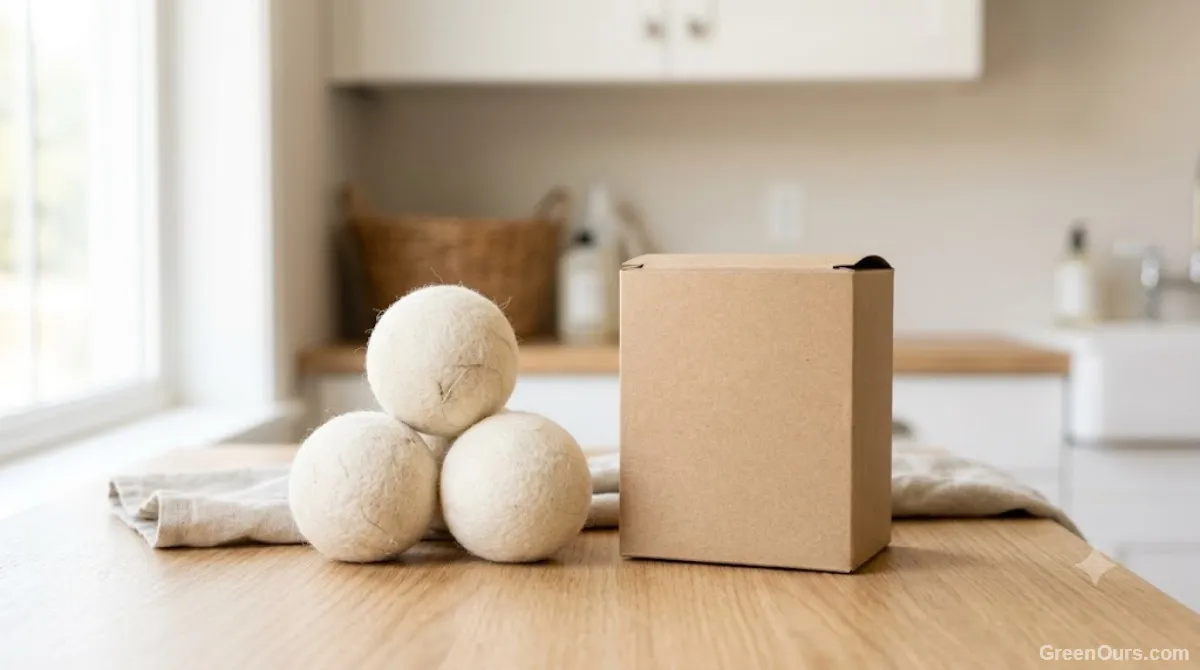
A set of six wool dryer balls typically runs in the range of twelve to twenty dollars, depending on the brand and whether the wool is organic. Prices shift by retailer, so check the current listing before you decide. That looks steep next to a cheap box of dryer sheets, and I get why people stop right there.
But the sheets are a recurring cost, so the fairer comparison is per load. As a simple illustration, a five-dollar box of eighty sheets works out to about six cents a sheet. If you use one sheet per load and do four loads a week, that's roughly thirteen dollars a year; if you use two sheets, it's closer to twenty-six.
Plug in your own numbers, because your break-even point depends on how many sheets you use, how often you do laundry, what you paid for the balls, and how long they last. For households that use several sheets per load, a set may pay for itself within a year or so, while light users could take noticeably longer — and if you only use one sheet per load, the savings are modest. For many people, the stronger case for wool is less about dollars and more about not buying, and not throwing away, a disposable product every week.
Look for a product clearly labeled 100% wool if you want a firmly felted ball designed for repeated dryer use.
Do They Actually Cut Drying Time?
This is the part I was most doubtful about, and in my experience it turned out to be mostly true — with conditions. On heavy loads like towels, sheets, and denim, my dryer often finished noticeably sooner than it used to, which adds up to a useful chunk of time and energy over a week of laundry.
How I judged the difference
This isn't a controlled experiment. I noticed the change across everyday loads over a few months, rather than logging each one or matching load sizes precisely, so treat my experience as a starting point, not proof.
Results also depend on your dryer type, load size, and ambient humidity. To get a real answer for your own machine, time three similar towel loads without the balls, then three with them, and compare.
Where the time savings show up
Bulky, absorbent fabrics that tend to clump — towels, robes, bedding — are where I saw the biggest difference, which makes sense because they're the items most likely to trap moisture in a dense wad without something separating them.
Where it barely registers
Lightweight loads like t-shirts, underwear, or a single delicate item don't clump much to begin with, so the difference in drying time was small enough that I couldn't really see it on the dryer's clock.
What About Static?
Here's where I have to be honest instead of enthusiastic: in my experience, wool balls reduce static rather than eliminate it. On cotton and natural fibers, I noticed the improvement — fewer socks stuck to sheets, fewer shirts crackling when I pulled them out.
On synthetic fabrics — think fleece, athletic wear, anything polyester-heavy — static still happened sometimes, wool balls or not. If you're someone who lives in workout clothes, don't expect this swap to solve that particular annoyance on its own. Results vary with your dryer, the dryness of your air, and your fabrics.
Plain wool balls are also fragrance-free. If the scent of dryer sheets was part of what made laundry day feel finished, that's a genuine trade-off to weigh before you switch.
How Many Balls to Use, and With Which Fabrics
How many balls per load
Most sets come with six, and manufacturers commonly suggest using three to six depending on load size. A small load of shirts doesn't need the full set, while a big load of towels or bedding is where more balls earn their keep.
If your dryer is very large, or you regularly stuff it full, err toward the higher end. There's no exact rule, so start with what the package suggests and adjust based on whether items still come out clumped.
Fabrics and softness
Towels, sheets, and everyday cotton are the natural fit. Delicates and items with special care labels should follow their own drying instructions regardless of what's in the drum.
Wool balls don't add the slick, coated softness of a fabric softener. They can help fluff fabrics as they tumble, but if a very soft, perfumed feel is what you want, you may notice the difference.
How Long They Last and How to Care for Them
You'll see manufacturers advertise very long lifespans, but treat those numbers as marketing rather than a promise. In practice, how long a set lasts depends on the quality of the wool, how tightly the balls are felted, your dryer's heat setting, and how often you run it.
What I found vs. what manufacturers claim
What I can tell you is what I've seen in my own laundry room over a few months: separation on heavy loads, a modest static improvement on natural fibers, and no fragrance. What manufacturers claim about lifespan and performance is their own marketing, and I haven't independently verified it, so weigh the two accordingly.
Signs of wear and basic care
Signs a set is wearing out: the balls start to loosen or unravel, shed more than a little fuzz, or stop separating your laundry as well as they did. Balls that start to fall apart usually can't be rescued, so it's worth replacing them rather than letting loose wool end up in the lint trap.
Care is refreshingly low-effort. There's nothing to wash after each load, and if a ball gets grubby, wiping it with a damp cloth is usually enough. Wool can felt further when exposed to heat and moisture, so treat any deeper cleaning gently and follow the maker's care instructions.
What to Look for When Buying
Quality varies a lot between sets, so a few details are worth checking before you spend anything. Here's what to look for and why each one matters:
- Listed as 100% wool. Blended or synthetic-filled balls can behave differently, so a clear 100% wool label is the simplest way to know what you're getting for repeated dryer use.
- Firmly felted. A dense ball holds its shape as it bounces around the drum, while a loose or squishy one is more likely to shed and unravel.
- A size that suits your dryer. Balls around tennis-ball size are common. Too small and they may get lost among the laundry; too large for a compact dryer and they can crowd the load.
- A set of at least three, ideally six. Bigger loads generally benefit from more balls, so a bigger set lets you match the number to the load instead of guessing.
- Clear care guidance. A seller who explains how to clean and store the balls is usually paying attention to quality, and it helps you avoid shrinking or damaging them.
- Transparent wool sourcing. If sustainability is why you're switching, information about where the wool comes from helps you judge whether the product matches your values.
Who should skip wool
Wool is an animal-derived material, so it won't suit anyone avoiding animal products. If you have a wool allergy or a sensitivity, talk to your doctor or choose a different alternative rather than assuming the balls are harmless.
If you're unsure a set is truly felted wool, buy the smallest available and test it for a few loads before committing to a bigger purchase.
Where Wool Dryer Balls Fall Short
They're not silent. There's a soft, rhythmic thump as they tumble, which is barely noticeable during the day but can be annoying if your laundry room shares a wall with a bedroom and you run a load at night.
New wool balls also shed a bit of fuzz for their first handful of cycles — nothing that ends up on your clothes in any meaningful way, but you'll see a little wool lint in the trap. And if fragrance was your favorite part of laundry day, plain wool balls give you none of that.
Who Will Actually Be Happy With the Switch
If your laundry is mostly cotton, towels, and bedding, and you're doing loads regularly enough that a set of balls gets real use, this swap is likely to pay off for many households. It's a low-effort change that quietly removes a recurring purchase from your routine.
If you're washing mostly synthetic activewear, need a strong signature scent, or do laundry rarely enough that the upfront cost feels hard to justify, dryer sheets might still make more sense for you right now — and that's a fair call, not a failure.
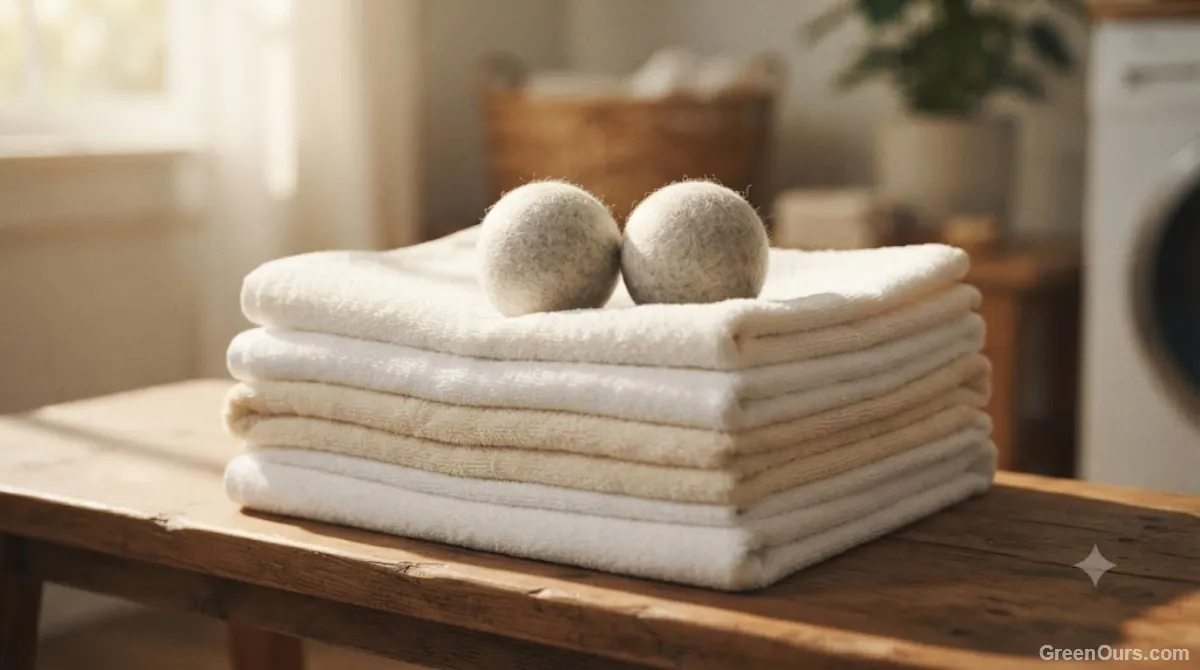
Wool Dryer Balls: Pros and Cons at a Glance
Pros
- Reusable, with no fragrance, residue, or disposable waste
- Helps separate bulky loads like towels and bedding
- Modest static reduction on natural fibers, in my experience
- Removes a recurring purchase from your routine
Cons
- Higher upfront cost than a box of dryer sheets
- Little help with static on synthetics
- No scent, and a soft thumping sound
- Not suitable if you avoid animal products or have a wool sensitivity
The short version
If you do frequent, towel-heavy loads and don't need a scent, they're worth trying. If your laundry is mostly synthetic or infrequent, you can reasonably skip them.
More honest looks at eco swaps that actually work.
I'm not going to pretend wool dryer balls turned laundry day into some sustainable-living triumph. They're just a small, unglamorous swap that quietly does its job — a little quieter on the wallet, a little kinder on the planet, and about as un-dramatic as household changes get.