
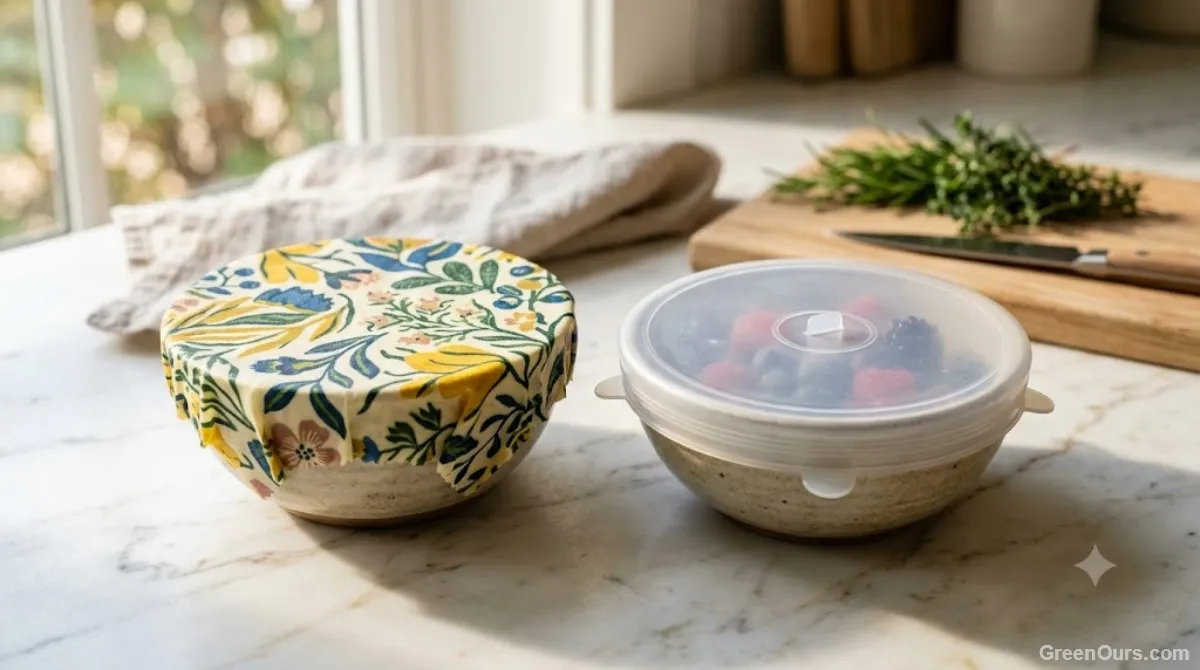
Let's start with what nobody tells you before you buy either product: they solve different problems. Beeswax wraps are for covering and wrapping. Silicone covers are for sealing. Once that distinction clicks, most of the confusion about which one to buy disappears.
Beeswax Wraps: What They're Good For
Beeswax wraps are cotton fabric coated in a mix of beeswax, tree resin, and usually jojoba oil, and the whole appeal comes down to one thing: the warmth of your hands softens the wax just enough to let you mold it around whatever you're wrapping. Half an onion, a hunk of cheese, a bowl with an odd lip shape — the wrap conforms in a way that no rigid or stretchy cover can.
This makes beeswax wraps genuinely useful for cut fruit, cheese, half a sandwich, or the end of a baguette — anything with an odd shape that a flat lid would never sit flush against. They also fold down flat, which matters if your kitchen drawers are already fighting for space.
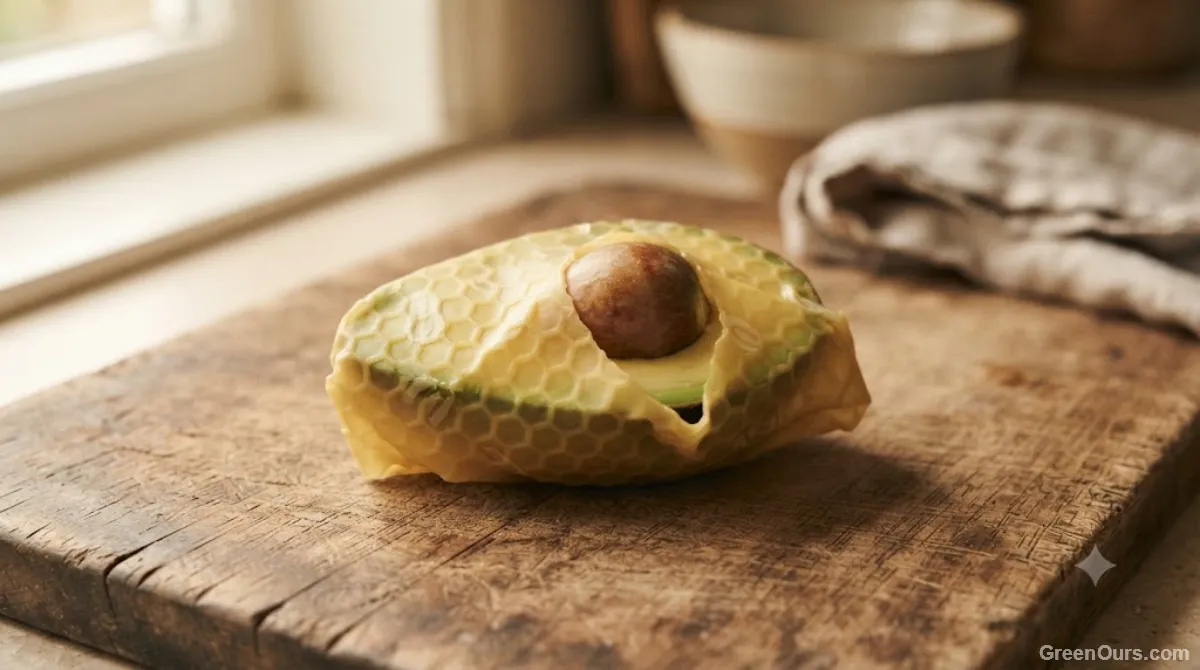
Beeswax wraps lose their tackiness over time, but a few minutes in a warm oven (turned off, just residual heat) softens the wax enough to re-mold them. Most people throw them out before trying this.
Silicone Covers: Where They Excel
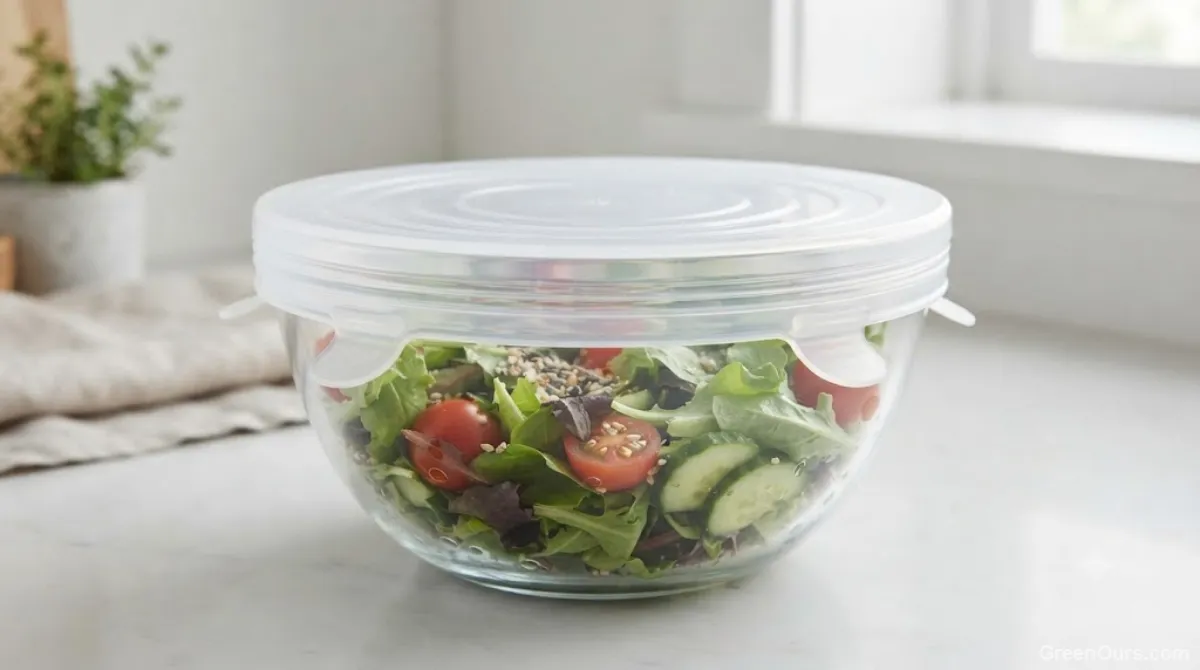
Silicone lids and stretch covers do the opposite job well: they seal. Stretched over a bowl, a cut melon, or the top of a mason jar, silicone creates a tighter seal than beeswax can offer, since wax wrap edges rely on gentle pressure and conforming, not tension. The seal quality depends on the cover design and how well it fits the surface, but a well-fitting silicone cover generally provides significantly better airtightness than fabric wrapping.
That matters most for wet or liquid-adjacent food — soup, sauce, marinating meat, anything you're worried about tipping. It also matters for the fridge in general, where a tighter seal slows moisture loss and keeps odors from spreading between containers. If you've ever opened the fridge to find your leftover curry has flavored everything around it, this is the fix.
Side-by-Side Comparison
Here's how they stack up across the most common kitchen scenarios:
| Use Case | Beeswax Wraps | Silicone Covers |
|---|---|---|
| Irregular shapes (cut fruit, cheese) | Excellent — wraps conform naturally | Good — but may not seal completely |
| Covering bowls | Good — works best on simple lids | Excellent — stretches to fit |
| Liquids & soups | Poor — doesn't create a reliable seal | Excellent — tight seal prevents spills |
| Raw meat prep | Not recommended — hard to sanitize | Better suited — cleanable, heat-safe |
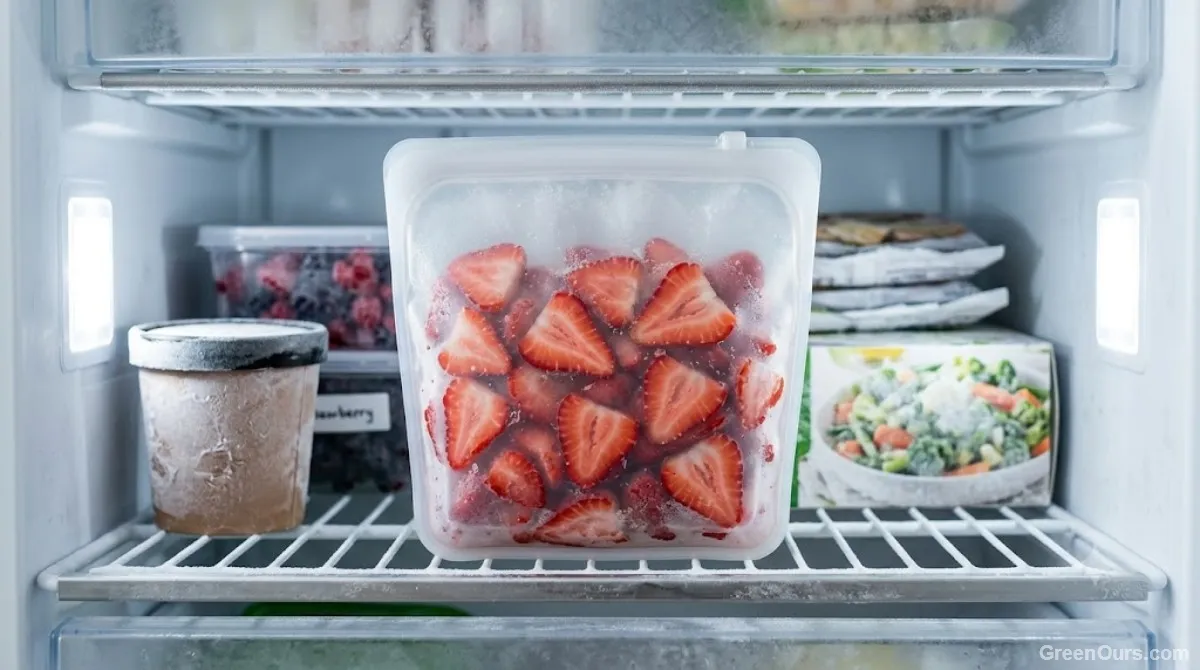
| Freezer storage | Generally unsuitable — wax can become brittle | Excellent — flexes with frozen food expansion |
| Hand washing only | Yes — cool/warm water only | Usually — most are dishwasher-safe |
| Dishwasher safe | No — hot water melts wax coating | Usually — check individual product specs |
| Storage footprint | Very small — folds flat | Moderate — needs a drawer or bin |
| Typical lifespan | Variable — often 6–18 months with regular use | Several years — resistant to wear |
The Cleaning Reality Check
Here's where I have to be honest about the part that almost made me give up on beeswax wraps entirely: they cannot go anywhere near hot water. A quick rinse in cool or lukewarm water with a little dish soap and a soft cloth is the intended cleaning routine — hot water melts the wax coating, and the dishwasher is not an option.
Silicone, by contrast, is much more forgiving. Most silicone covers are dishwasher-safe (check your specific product's guidelines), survive boiling water, and if one ever picks up a stubborn smell — garlic is the usual culprit — a baking soda soak usually sorts it out. If low-effort cleaning is what you're after, silicone is the practical choice without much of a contest.
How Long Does Each One Actually Last?
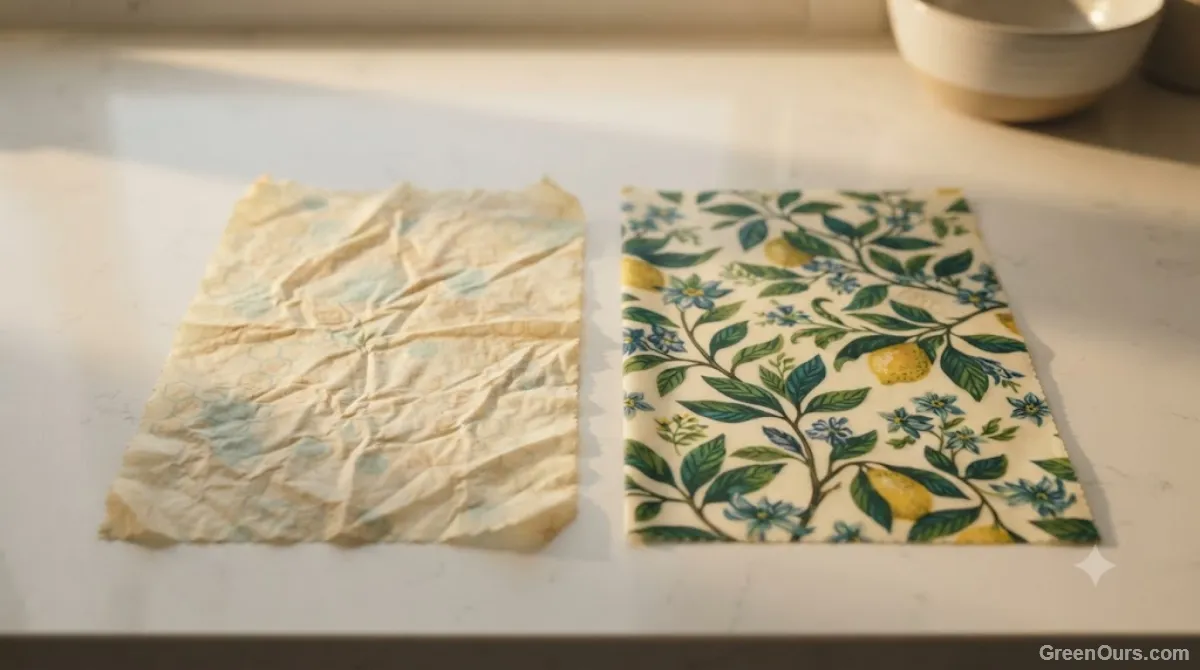
Beeswax wraps have a real shelf life — typical lifespan claims from manufacturers range from about 6 to 18 months of regular use, though this varies significantly based on frequency, washing care, and product quality. You'll notice it first as a duller color and a slightly stiff, less tacky feel. Some people report getting longer life by refreshing them in a low oven (as the tip above mentions).
Silicone covers, meanwhile, typically resist significant wear for several years as long as you're not exposing them to heat above their rated limit or storing them folded under weight for extended periods — that's the main thing that can warp their shape and affect the seal.
Which One Fits Your Kitchen?
The honest answer depends entirely on how you cook and what you store. Here's how to figure it out:
Choose Beeswax Wraps If:
- You pack a lot of lunches and regularly wrap sandwiches, produce, or cheese
- You're wrapping foods with irregular shapes that a flat lid wouldn't seal against
- You want something with a minimal storage footprint
- You don't mind hand-washing small items in cool water
Choose Silicone Covers If:
- You cook in batches and freeze leftovers frequently
- You often store soups, sauces, marinades, or other liquids
- You want the convenience of dishwasher cleaning
- You prefer products that last several years without replacement
- You handle raw meat prep and want something easily sanitizable
Consider Both If:
- Your kitchen involves both everyday wrapping (sandwiches, produce) and storage of liquids/leftovers
- You have space and want to use the right tool for the right job
For what it's worth, having a small amount of both — two or three beeswax wraps for produce and sandwiches, a handful of silicone lids in different sizes for bowls and jars — has been the solution that actually fits how I cook. Neither one needs to replace plastic wrap entirely on day one. Progress here looks like fewer boxes of cling film in the cupboard, not zero.
Curious about your next low-waste kitchen swap?
Explore more honest kitchen product comparisonsWhichever one you try first, give it a real month in your actual routine before deciding it's not for you. Most of the frustration people have with either product comes down to using it for the wrong job — not the product itself letting them down.