
Before you shop, it's worth asking what problem you're actually trying to solve. Is your current bin falling apart? Are you constantly buying liners that don't fit? Or are you hoping a new can will somehow make you compost more? That last one is a mindset shift, not a product feature, and no bin can do it for you. The features below matter because they remove friction from habits you already want to build — not because they replace the habit itself.
The Feature That Actually Reduces Waste: Built-In Separation
If there's one feature worth paying extra for in an eco friendly kitchen trash can, it's a built-in compost or recycling compartment. Not a separate bin you have to remember to use across the kitchen — one that's right there, in the same unit, so sorting becomes the path of least resistance instead of an extra decision every time you're holding a banana peel. Worth saying upfront, though: the compartment only helps if the separated material actually has somewhere useful to go, so it's worth checking what your local pickup or drop-off actually accepts before assuming the bin itself is doing the work.
I switched to a can with a small divided compost caddy last year, and the difference wasn't dramatic willpower. It was proximity. When the compost slot is six inches from the regular slot, you use it. When it's a separate countertop bin you have to walk to, you don't, not on a Tuesday night when you're exhausted and just want the peel gone.
Some bins split that compartment even further, giving you a dry slot for coffee grounds and eggshells and a separate lined slot for wetter scraps. That distinction matters more than it sounds like it should — in my experience, mixing wet and dry compost is often what makes a countertop bin start smelling within a couple of days, and smell is one of the most common reasons people quietly give up on composting.
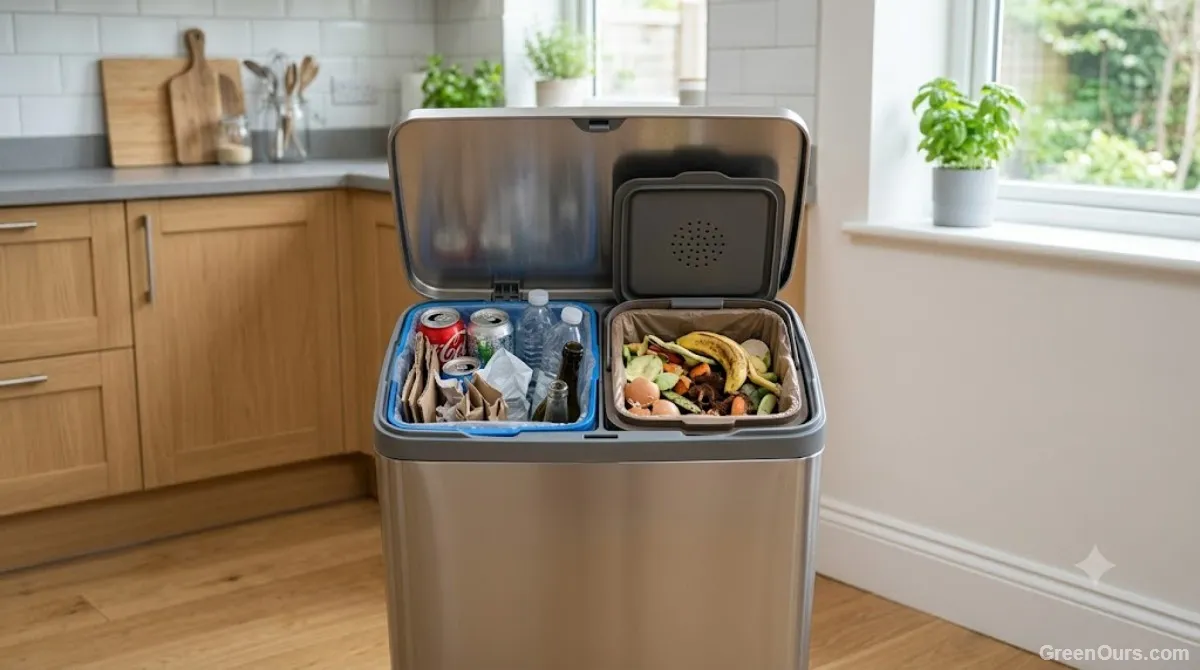
Look for a compost compartment with its own lid and enough capacity that you're not emptying it daily — anything too small just turns into its own kind of friction.
Durability: Why the Cheap Option Usually Costs More
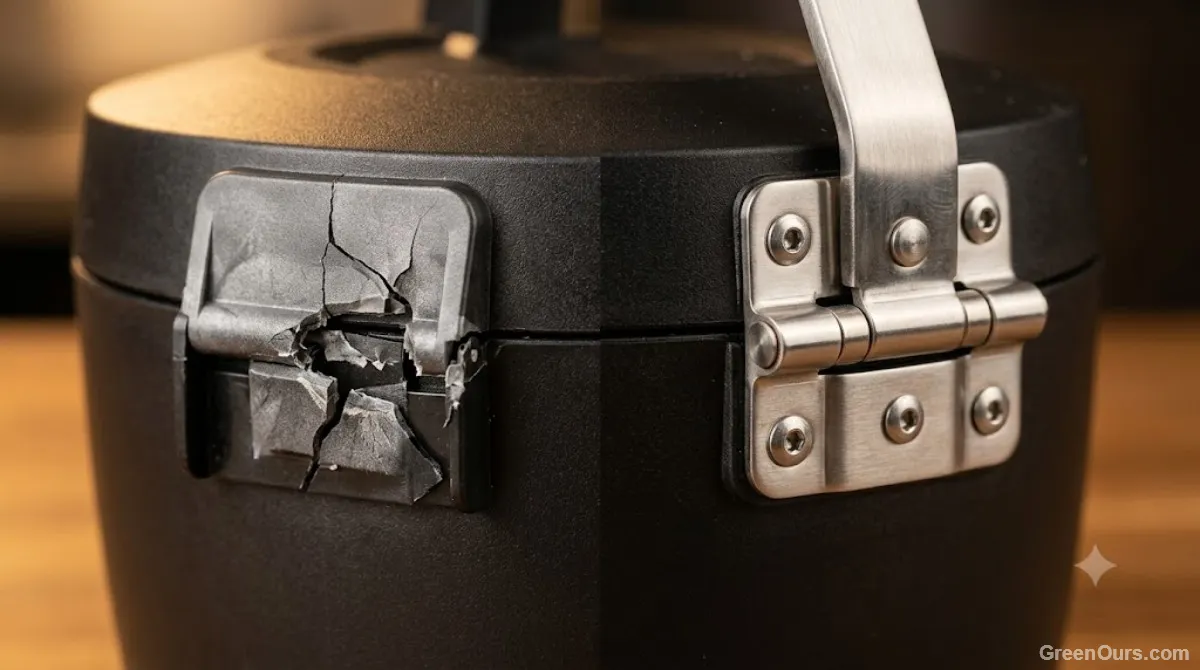
Here's something nobody tells you when you're comparing a $20 bin to a $70 one: the $20 bin isn't actually cheaper. It's cheaper until the foot pedal snaps in eight months, or the lid hinge cracks, and you're back at the store buying another $20 bin. I've done this math the hard way, more than once.
And it's not just the sticker price you're weighing — cheap bins can disappear from store shelves within a year or two, which means when a part does fail, you may not be able to order a replacement pedal. You're back to buying the whole unit again, and the packaging waste that comes with it undercuts whatever 'eco' claim got you to buy it in the first place.
The lid is usually the first thing to fail
Soft-close lids and foot pedals are the moving parts, and moving parts are what break. A stainless steel or reinforced polymer hinge holds up far longer than the thin plastic ones bundled into budget models. If you can only upgrade one component, make it this.
Material tells you more than the price tag does
In my experience, stainless steel tends to resist odor absorption better and holds up well near stove heat. Recycled or reinforced plastic can work too, but check that it's rated for daily foot-pedal use, not just described as 'durable' in the listing.
Warranty length is worth checking too — it's not proof of durability, but it can be a useful signal. A manufacturer willing to back a hinge or pedal mechanism for five years or more is worth a second look; a 90-day warranty on a $70 bin makes me wonder how long they actually expect it to last.
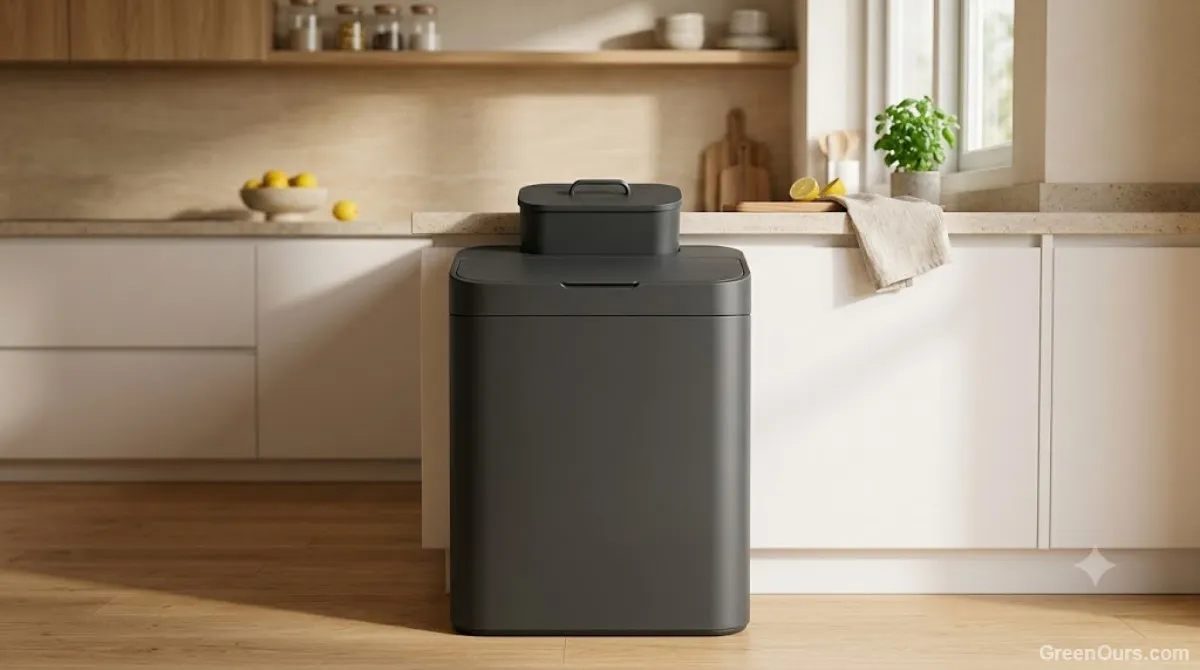
If your current bin is beyond repair, these are the kinds of features worth prioritizing:
More on building a low-waste kitchen without buying everything newEasy to Clean Means You'll Actually Keep It Clean
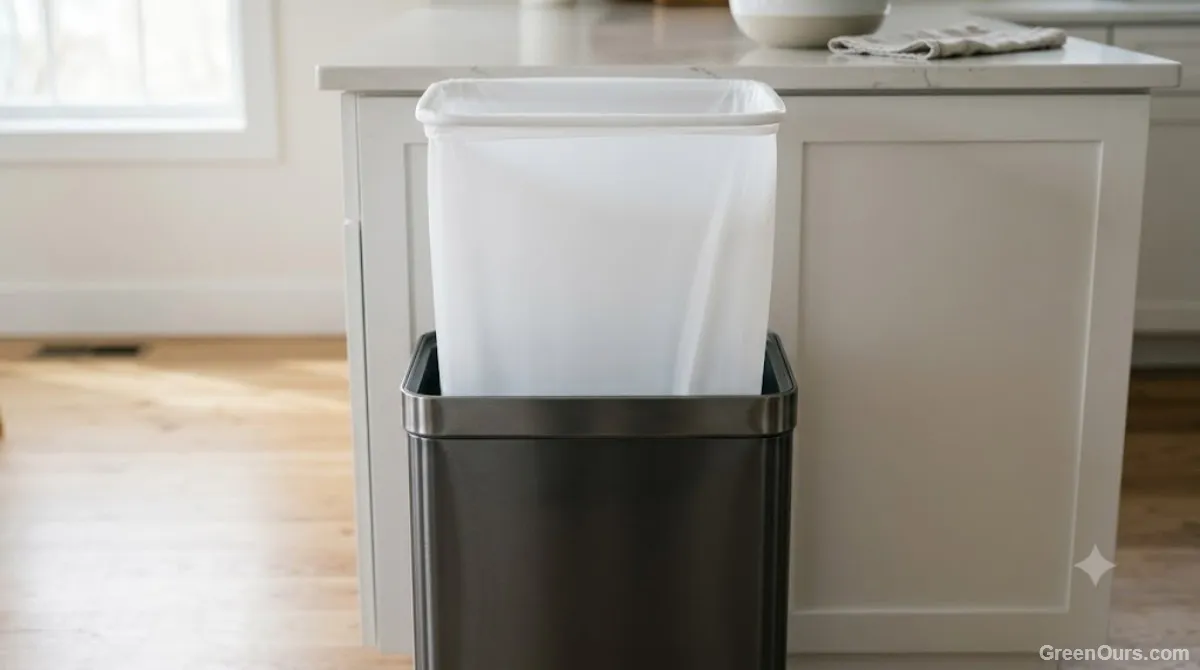
A trash can with ridges, seams, or a textured interior looks nice in a product photo and is miserable to actually wipe down. Grime settles into every groove, and eventually you just stop trying. A smooth interior with a removable, dishwasher-safe insert takes the whole task from a chore you avoid to something you do without thinking about it.
This matters more than it sounds like it should, because a trash can you're willing to clean is a trash can that doesn't smell — and a bin that doesn't smell is one you're not tempted to replace out of frustration a year in.
Odor-resistant liners help here too, but they're a supplement, not a substitute — a bin with genuinely smooth walls needs less deodorizing effort than one with ridges trapping residue no liner fully covers.
The Upgrade Trap: When You Don't Need a New Can at All
Not every worn-out bin needs replacing. If your current can's only problem is a missing liner clip or a loose pedal spring, a $6 replacement part fixes it. Buying an entirely new unit because of one broken piece is the opposite of what an eco-friendly kitchen is supposed to be about. Check if the manufacturer sells parts before you check out for a whole new bin.
If you do need a replacement, look for one with a manufacturer repair program or replaceable parts listed on the product page. That single detail tells you more about whether this purchase will last than any marketing copy will.
I've replaced a foot pedal spring on my own can twice now, each time for under ten dollars and about five minutes with a screwdriver. It's not glamorous, but it's the kind of unglamorous maintenance that actually keeps things out of landfills — which, funnily enough, is the whole point of buying 'eco-friendly' in the first place.
Before you buy, run through a short checklist:
- Replaceable parts
- Strong hinge and pedal mechanism
- Smooth, easy-clean interior
- Appropriate capacity
- Useful waste separation
- Long warranty or repair support
- A design you'll actually use every day
None of this requires the fanciest bin on the shelf. It just requires picking one built to actually hold up, and using the compartment that makes sorting effortless instead of one more thing to remember. That's the whole point — less waste, not more stuff.
More honest looks at everyday kitchen swaps:
Recycled Trash Bags: Do They Actually Cut Waste?