
Why the Mop Cabinet Feels Like a Guilt Trip
Somewhere along the way, mopping stopped being a chore and became a referendum on your values. Disposable pad boxes remind you they're "convenient." Reusable pad packaging reminds you they're "sustainable." Nobody tells you what happens after the first month, which is usually where the real answer lives.
Most of us didn't pick our mop system through careful research. We bought whatever mop was on the shelf when the old one broke, and we've been buying refills for that exact system ever since. Switching systems entirely feels like a bigger decision than it needs to be, so let's actually break it down.
I used to think the guilt was a personal failing, like I was uniquely bad at making the eco-friendly choice stick. Then I asked a few friends what was actually under their sink, and it turned out almost nobody had thought it through either. We just inherited a mop system from whoever set up the house before us and kept feeding it refills. That's not a character flaw. It's just what happens when nobody hands you the real comparison before you buy.
How the Two Systems Actually Work
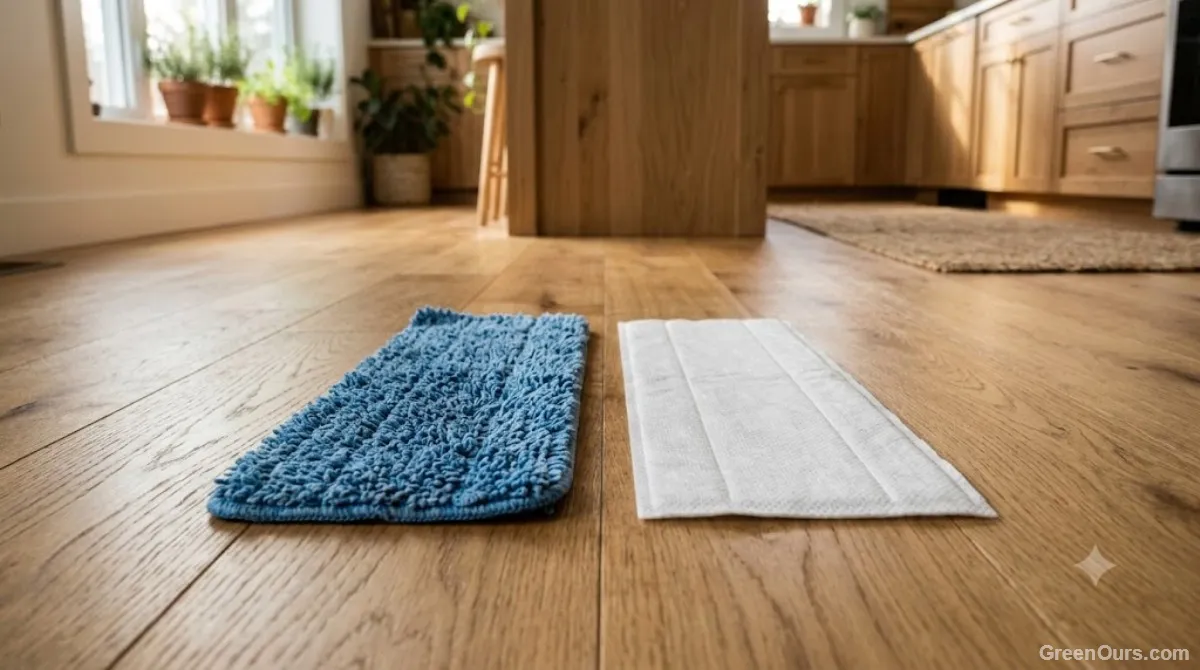
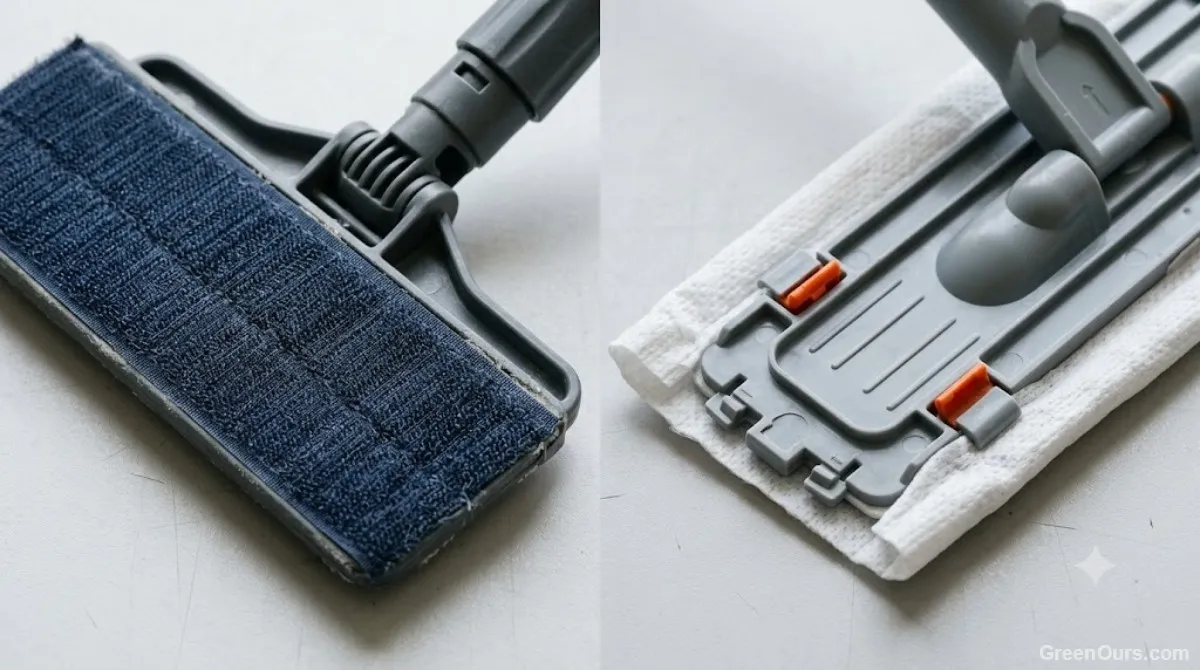
Disposable mop refills are usually a dry or pre-moistened pad that snaps onto a plastic tray, gets used once, and goes in the trash. The convenience is real: no washing, no storage, no smell if you toss it right away.
The tray-and-snap design is basically universal across brands at this point, which is part of why switching feels so low-risk if you're just testing the waters — you're not committing to new hardware, only a different refill.
Thickness matters more than the packaging lets on, too. Disposable pads are thin by design — they're meant to soak up one mess and get tossed, so manufacturers keep the material minimal to keep the box light and the price low. That's fine for a quick spill, but it means you'll go through two or three pads in a row if you're covering an entire kitchen floor after dinner.
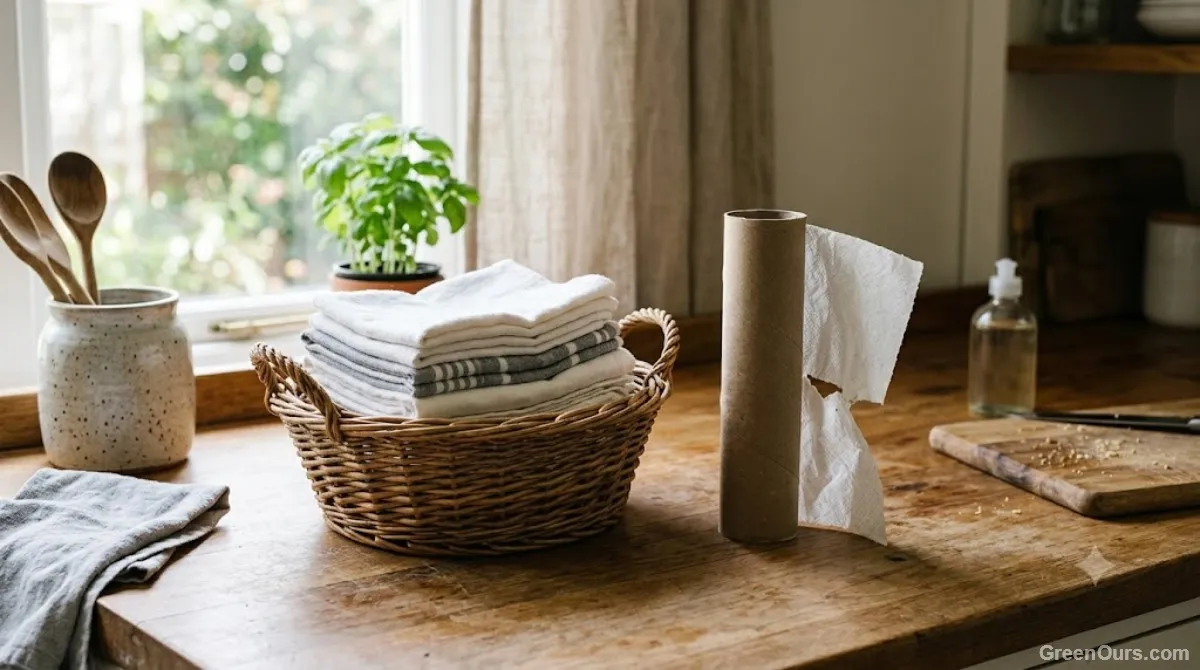
Reusable mop pads attach with velcro strips or fabric pockets to a flat mop head. You use them, rinse or wash them, and use them again. The upfront cost is higher, but there's no recurring refill purchase — at least not for a while.
The velcro attachment matters more than it sounds like it would. Cheaper reusable pads use a thin strip that wears out and starts sliding around mid-mop, which is more annoying than any disposable pad has ever been. Spend the extra few dollars on a pad with a full velcro backing, not just two small tabs.
One thing worth checking before you buy: mop head shapes aren't universal the way tray-and-snap systems are. A rectangular reusable pad won't fit a triangular mop head, and vice versa, so measure what you already own before ordering a three-pack of replacement pads online.
What Changes When You Switch: Cost and Mess
Cost Over Time
A box of disposable refills typically covers a handful of uses before you're back at the store. Over a year of weekly mopping, that adds up to real money, even if each individual box feels cheap. A reusable pad costs more on day one but doesn't need replacing nearly as often, so the math tips in its favor once you get past the first few months.
Rough numbers, for the household of two with the muddy dog: I was spending close to what a decent reusable pad costs every two months on disposable refills alone. The reusable pad paid for itself before the first season was over, and everything after that is basically free cleaning, minus a little detergent and water.
Break it down further and it's not a close call. A three-pack of disposable refill boxes runs somewhere around fifteen to twenty dollars and lasts maybe six weeks in a household that mops weekly. Multiply that out over a year and you're looking at well over a hundred dollars spent on pads that go straight in the trash. A good reusable pad costs a fraction of that once, and the only recurring cost is whatever detergent you're already buying for regular laundry.
Cleaning Performance
Here's where I'll be honest instead of encouraging: disposable pads are genuinely better at one-and-done spot cleaning, especially for sticky spills where you don't want to touch the mess twice. Reusable pads are better at whole-floor cleaning and pick up more debris per pass, but they need to be rinsed mid-job for anything beyond light dust.
On a floor that's genuinely dirty — after a dog walk in the rain, say — I'll rinse a reusable pad two or three times before I'm done with one room. That's not really a flaw, but it is a step disposable pads skip entirely, and if you're mopping at the end of a long day, that extra trip to the sink is real friction.
Maintenance Reality
This is the part nobody puts on the box. Reusable pads need to be washed after every use, ideally air-dried fully before storage, or they start to smell like a gym bag. If you're not going to actually do that step, the reusable pad stops being the better option pretty quickly.
I throw mine in with a regular laundry load rather than hand-washing, which keeps this from feeling like one more chore. The one rule I actually stick to is skipping fabric softener — it coats the fibers and makes the pad worse at picking up dirt, which defeats the entire point.
Air-drying takes longer than most people expect, especially in a humid bathroom or a laundry room with no airflow. I hang mine over the shower rod instead of leaving it balled up in a hamper, and that one habit has done more to prevent the gym-bag smell than any detergent swap ever did.
The Real Lifespan Difference
A decent microfiber mop pad lasts somewhere between six months and two years, depending on how often you wash it and whether you're throwing it in a dryer on high heat, which wears down the fibers faster than air drying does. It won't clean quite as well in month ten as it did in month one, but it's still doing more work than a fresh disposable pad going straight to landfill.
Mine is at the ten-month mark now, and it's noticeably less plush than when I bought it. It still works. It just needs an extra pass in high-traffic spots instead of one confident swipe. That's a fair trade for not throwing away a pad every single week.
How fast a pad wears out really depends on what's on your floor. Households with pets, kids, or a lot of foot traffic through a mudroom will burn through a pad faster than someone mopping an apartment kitchen once a week. If your floors see heavy daily use, budget for replacing the pad closer to the six-month mark rather than assuming it'll stretch to two years.
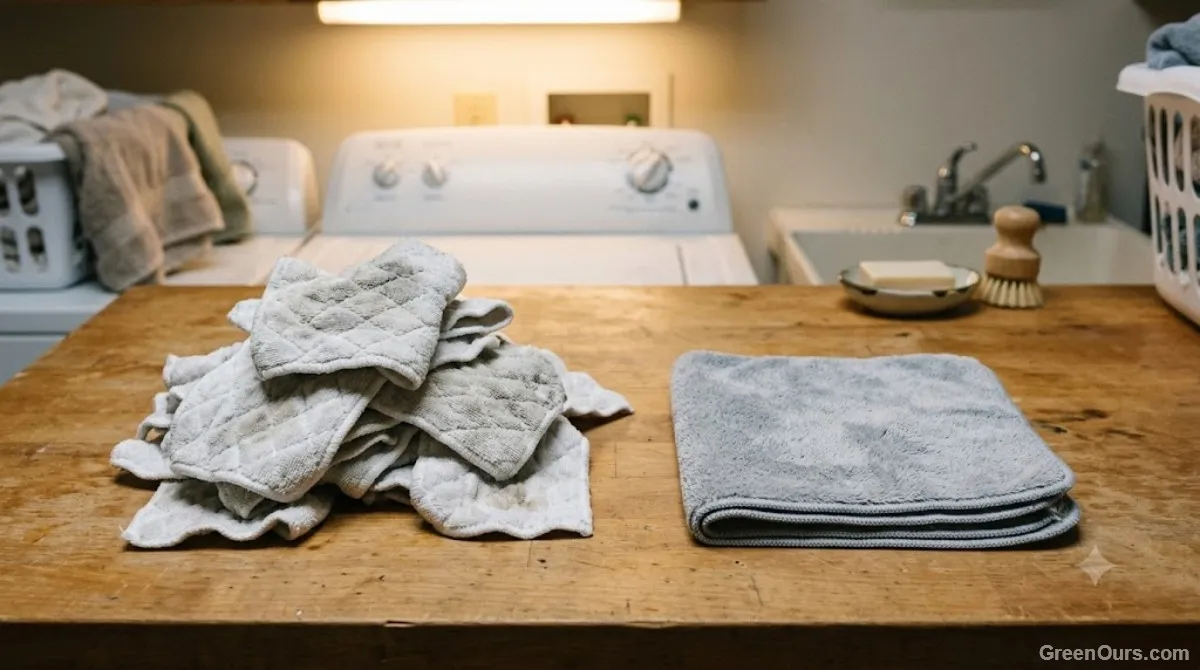
If your reusable pad starts leaving streaks instead of picking up dirt, it's not broken — it's just due for a proper wash cycle with a stain-stripping detergent, not just a rinse under the tap.
The Waste Math, Without the Judgment
A household mopping once a week goes through roughly 50 disposable pads a year. One reusable pad, replaced annually at most, replaces all of that. That's the clearest version of the comparison, and it holds up even accounting for the water and detergent used to wash it.
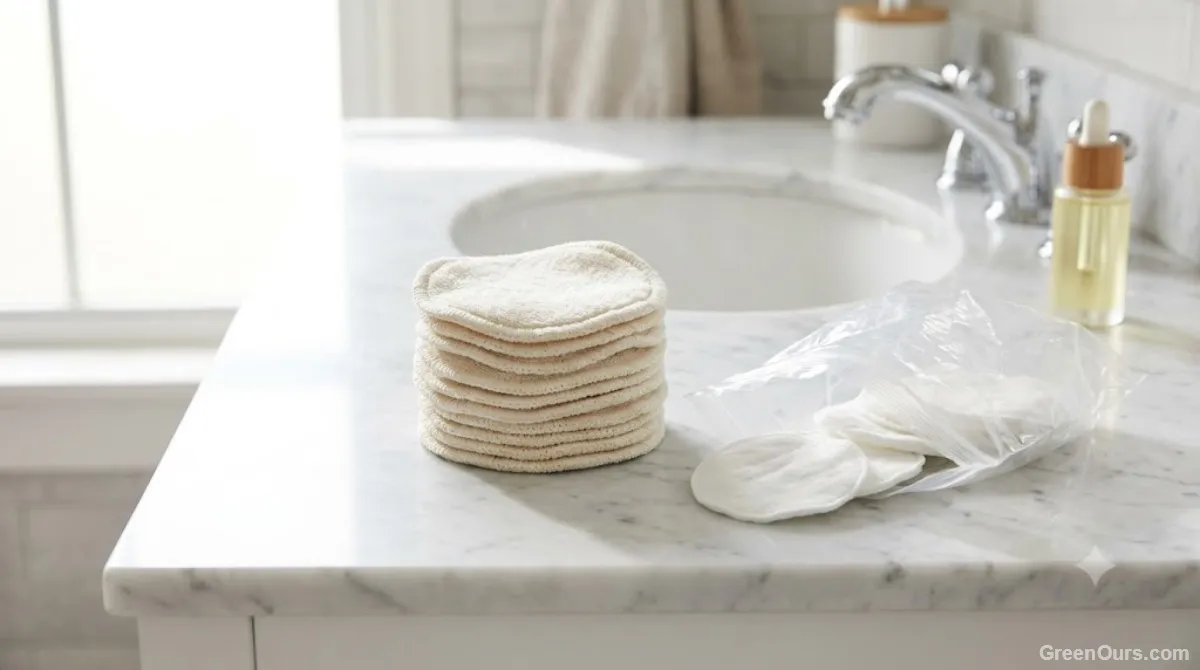
Line up a year of reusable pads against a year of disposable refills and the packaging difference alone is hard to ignore — fifty individually wrapped pads and their cardboard box, versus one pad and the small bag it shipped in. That's before you even get to what actually ends up in the trash.
What doesn't hold up is the idea that switching solves waste on its own. If you're mopping with a reusable pad but still spraying a disposable-cartridge cleaning solution every time, you've only fixed half the problem. The pad is one piece of a bigger cleaning routine, not a complete answer by itself.
So, Which One Should You Get?
If you mop often and don't mind an extra load of laundry, reusable pads are the better long-term choice — cheaper eventually, and genuinely less waste going out with the trash. If you mop rarely, or you're dealing with a specific mess you don't want to touch twice, keeping a small box of disposables on hand for those moments isn't a failure. It's just realistic.
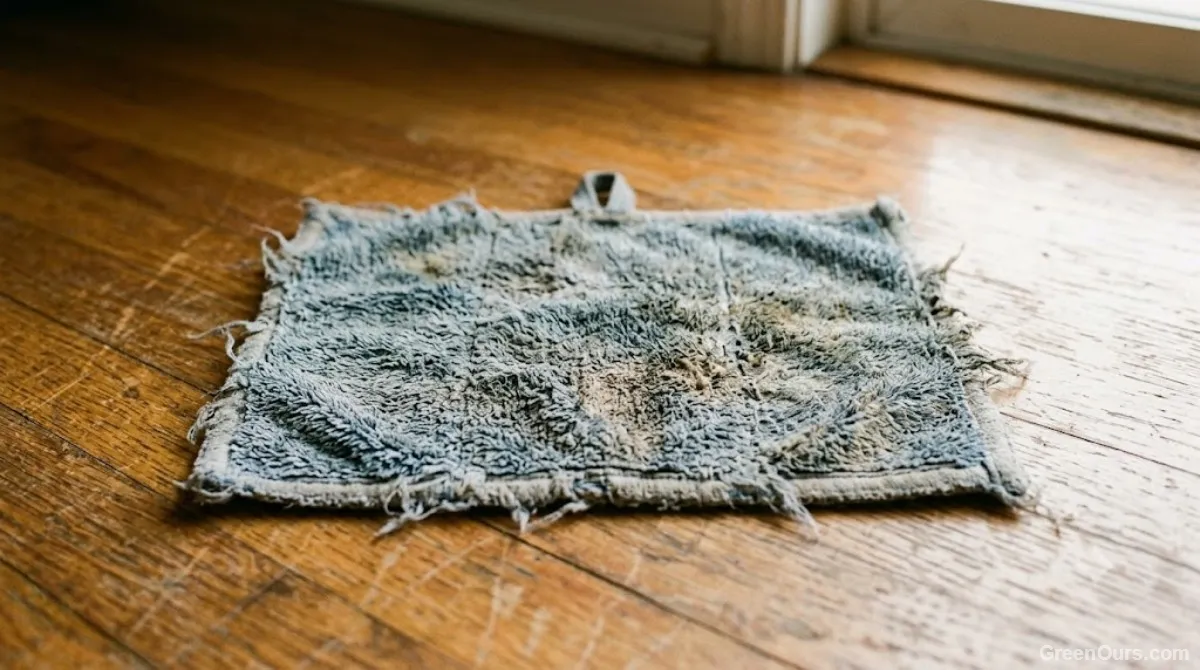
Pick the system you'll actually keep using.
I still keep one box of disposable pads in the closet for the days I don't have it in me to wash anything else. The reusable pad handles almost everything now, but the goal was never perfection — it was a system I'd actually keep using. That's the only kind of sustainable that sticks.