
The Time Trap Most Eco Advice Sets
Most sustainability content pictures a person with a spare Saturday afternoon. Someone fermenting their own hot sauce, hand-sewing patches onto jeans, driving across town to the one refill store that stocks oat milk in bulk. That's a hobby, not a habit, and treating it like a starting point is exactly why so many people try one overwhelming swap, burn out in a week, and quietly go back to disposable everything.
The habits that survive contact with a real week are the ones that remove a step instead of adding one. That's the filter I use now before I try anything new: does this make my Tuesday easier, or does it just make my Instagram look better?
If a sustainable swap requires a special trip, a new skill, or daily upkeep, it's not a habit yet — it's a project. Save it for when you actually have the bandwidth, and start with something that removes a step instead.
Habits That Cut Decisions, Not Corners
The biggest time drain in most kitchens isn't cooking. It's deciding what to cook, four times a day, while standing in front of an open fridge door. Batching solves two problems at once: less food waste, and far fewer decisions.
Cook Twice a Week Instead of Seven Times
I cook two big batches — usually a grain, a protein, and a roasted vegetable tray — and mix and match them for lunches and dinners across the week. It cuts my grocery trips roughly in half, which means less food bought on impulse and forgotten in the crisper drawer three weeks later.
Keep a Standing Grocery List
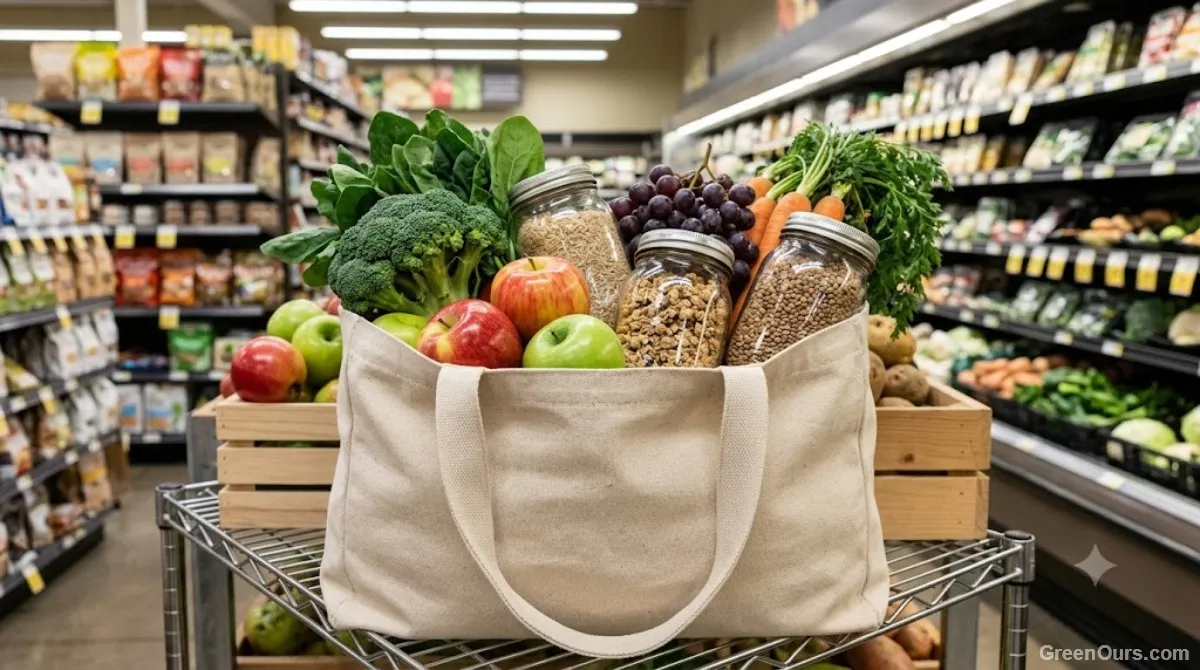
Instead of building a list from scratch every week, I keep a running one on my phone with the ten things I always buy. I add or cross off as needed. It sounds small, but it's cut my shopping time by a good ten minutes and stopped the habit of buying duplicate jars of things I already had.
The Shopping Trip You Can Skip Entirely
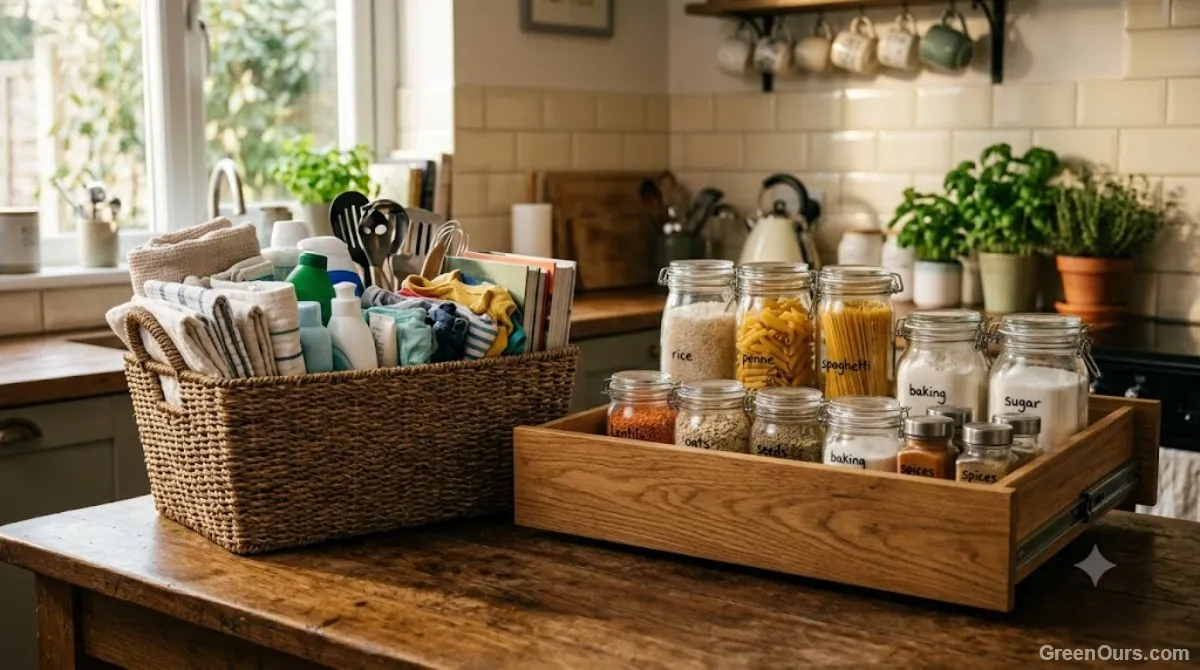
Here's a habit that gets filed under sustainability but is really just logistics: setting up refills on the household basics you buy without thinking — dish soap, laundry detergent, toilet paper, coffee. A recurring delivery of concentrated refills or bulk packaging means fewer last-minute pharmacy runs when you realize you're out of soap at nine at night.
It also breaks the habit of over-buying single-use plastic bottles because you grabbed whatever was closest on a rushed errand. Less packaging, fewer decisions, one less stop on your errands list.
What Happens to the Time You Get Back
This is the part that surprised me. I didn't start any of this to reclaim time — I started it to make less trash. But fewer decisions during the week meant fewer evenings spent standing in the kitchen at seven p.m. trying to figure out dinner from nothing, and fewer weekends lost to a big multi-stop errand run.
That time didn't disappear. It went to actual rest — the kind where you're not mentally running a to-do list in the background. If sustainable living has a real selling point beyond the environmental one, it's that a simpler system frees up more headspace than a complicated one ever will.
The One Swap Worth Making This Week
You don't need to overhaul your routine to feel the difference. Pick one recurring decision — what's for dinner, what you're out of, what you keep rebuying — and remove it instead of trying to remember it better. Set up the standing list. Batch two meals. Put the refill order on autopilot.
More low-effort ways to simplify your week.
None of this makes me a perfect environmentalist, and I've stopped pretending it does. What it's given me is a week with fewer small, tiring decisions in it — which, it turns out, was the thing I actually wanted all along.