
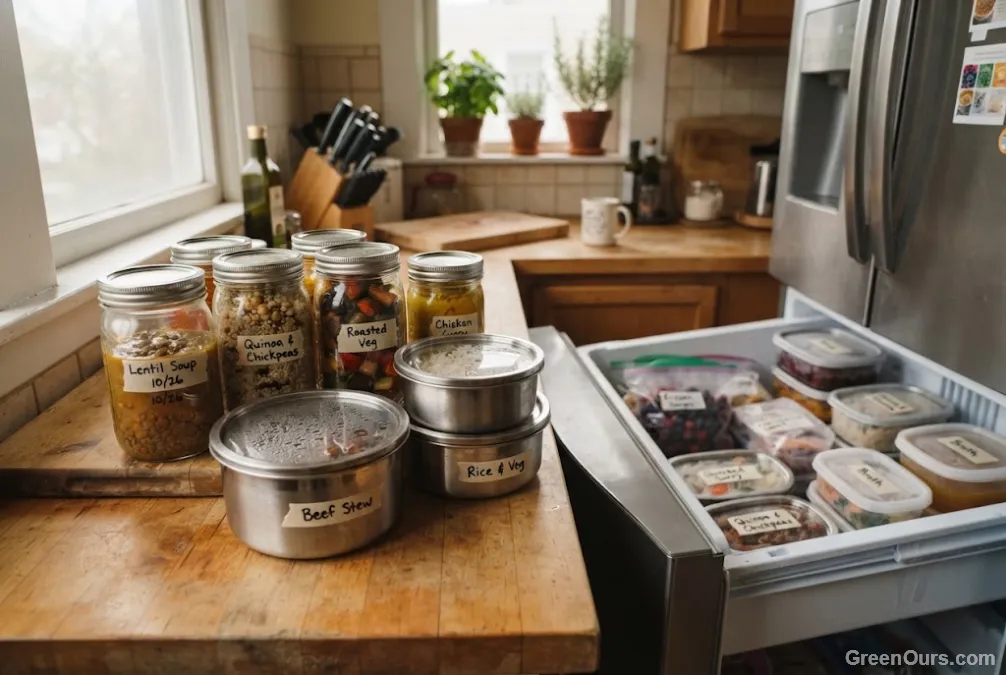
Let's start with the fear itself, because it's a completely reasonable one. Glass expands when the liquid inside it freezes, and if there's nowhere for that expansion to go, something has to give. That "something" is usually the jar, and usually at 2am when you're trying to get dinner out for the next day. The fix, though, turns out to be almost embarrassingly simple.
Why Glass Jars Crack (and How to Stop It Happening to Yours)
The single biggest reason jars crack in the freezer is overfilling. Liquids expand by roughly ten percent as they freeze, so any jar filled right to the rim is setting itself up to fail. Leave at least an inch of headspace for anything mostly liquid — soups, stocks, sauces — and closer to an inch and a half if you're freezing something dense like a stew or a batch of chili.
Shape matters just as much as the fill line. Straight-sided jars, the kind without a shoulder that curves inward near the top, give the ice room to push upward instead of outward against glass that's already narrowing. Wide-mouth mason jars are the easiest to find secondhand, but any straight-sided jar you're already rinsing out from store-bought sauce or pickles does exactly the same job for free.
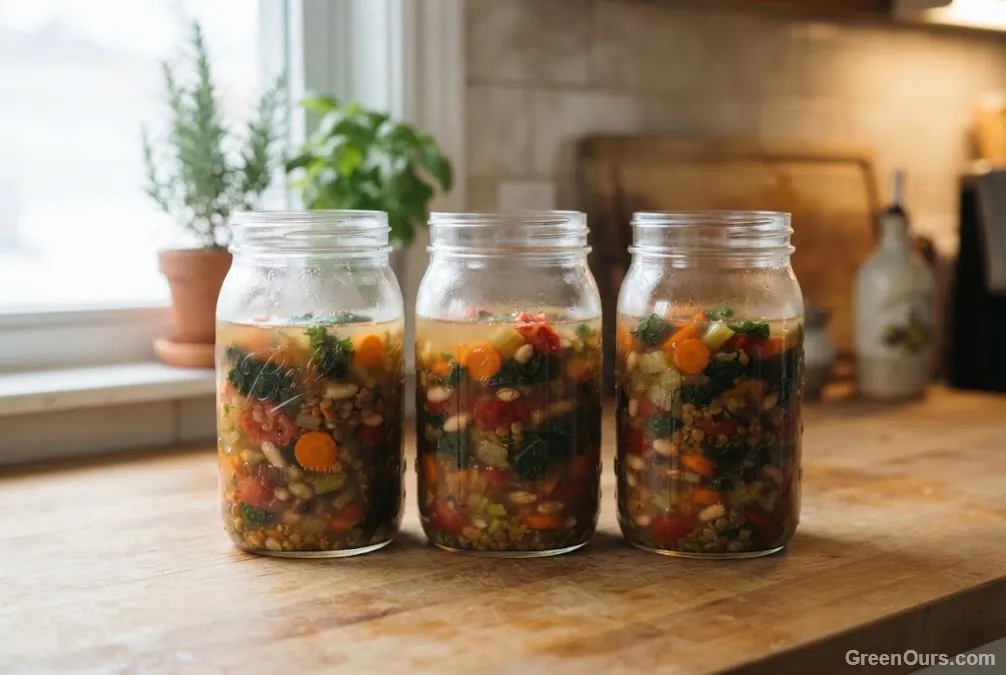
Let jars cool to room temperature before they go anywhere near the freezer. A hot jar hitting cold air is a bigger crack risk than the freezing itself — give it twenty minutes on the counter first.
Metal Containers: The Zero-Waste Workhorse You're Probably Ignoring
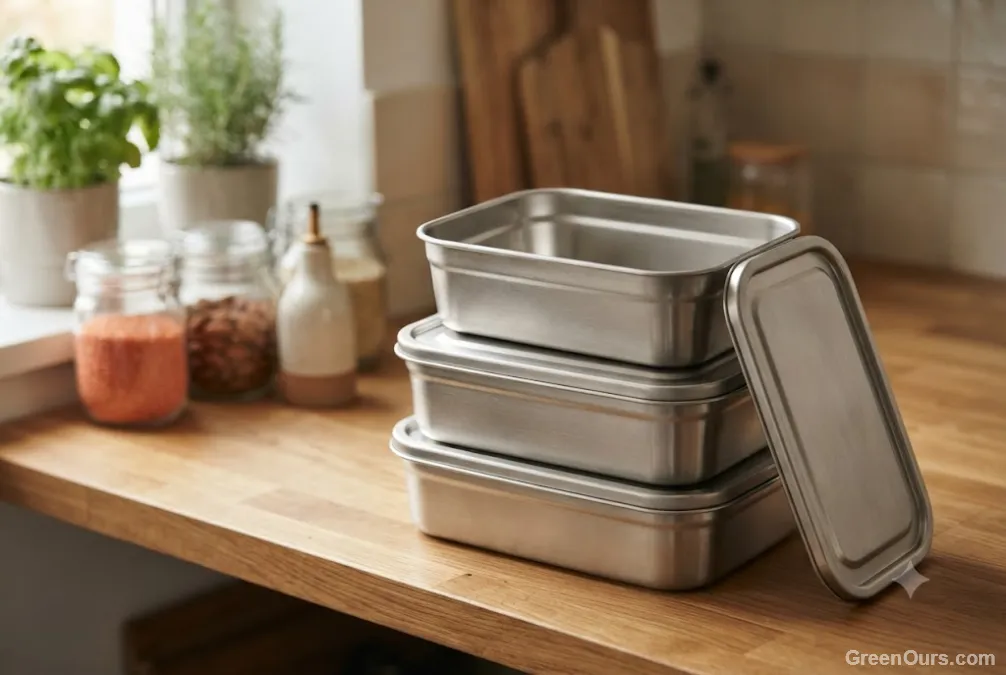
If glass still makes you nervous, stainless steel deserves way more credit than it gets. It doesn't crack, doesn't stain, doesn't hold onto smells the way plastic does after a few rounds of curry, and it lasts for decades if you take care of it. Stackable steel tins with lids are brilliant for portioned leftovers, and older steel tiffin-style containers work just as well for soups and stews you're freezing in bulk.
The one thing worth knowing: label steel containers on the lid, not the side, since you can't see through metal to identify what's inside once it's frosted over. A strip of masking tape and a pencil note does the job without adding anything you'll need to throw away later.
Upcycling Tricks Using What's Already in Your Kitchen
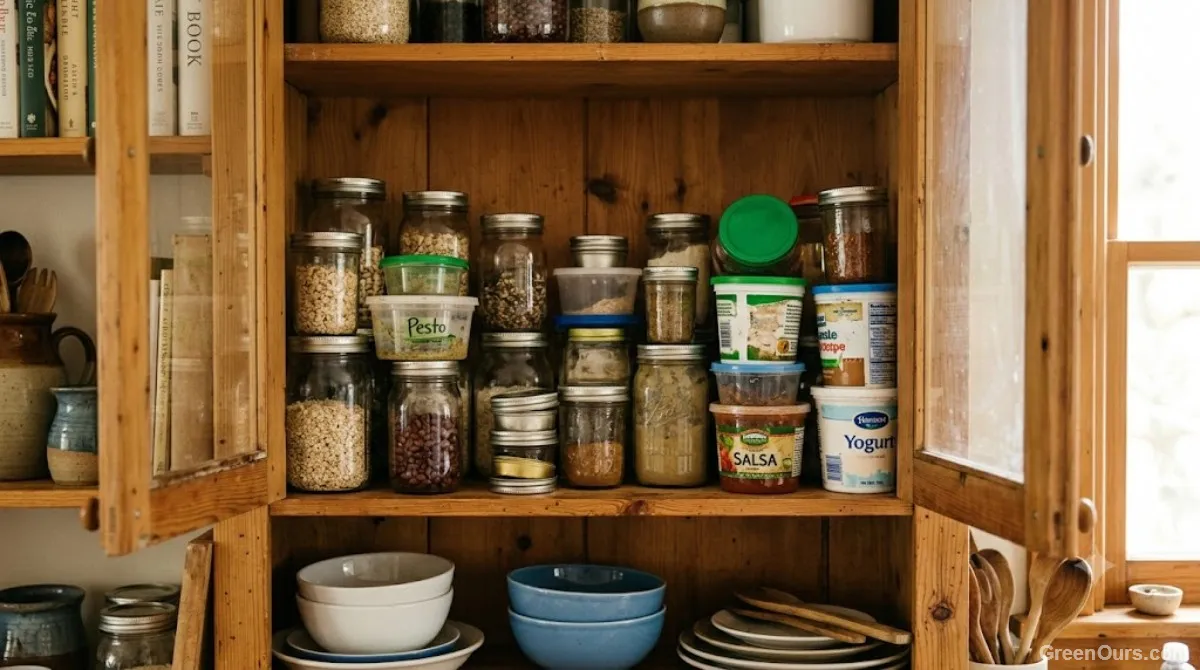
Before you buy anything new, take stock of what you're already about to throw in the recycling. Yogurt tubs, butter containers, and ice cream tubs are freezer-safe by design — that's often exactly what they were built for. Wash them well, let the lids dry fully, and reuse them for precisely the kind of food they used to hold.
Bread Bags and Produce Bags
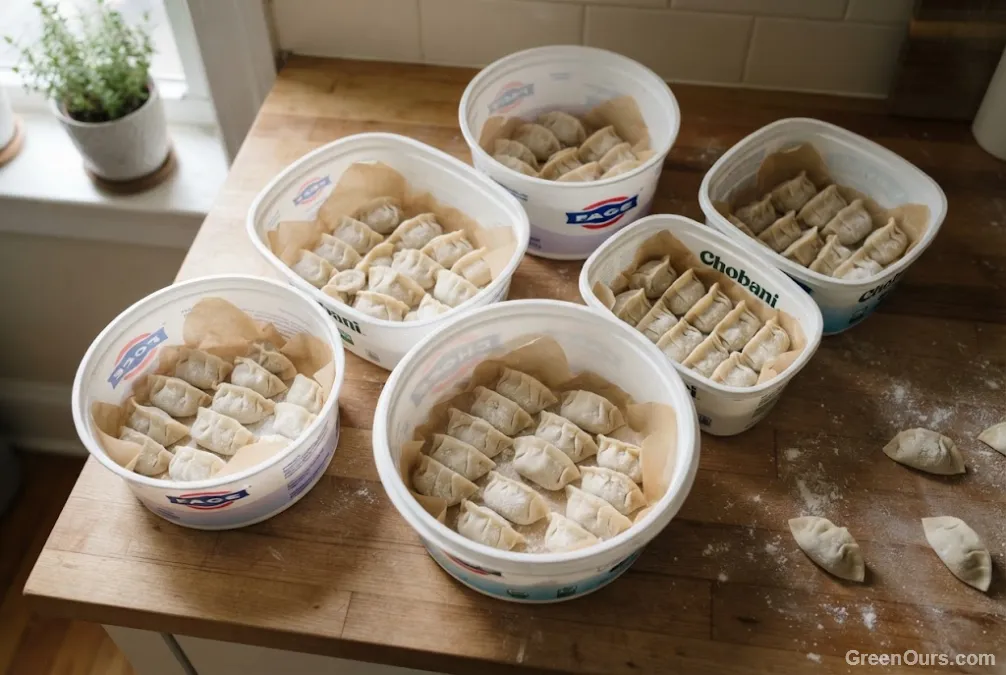
Rinsed-out bread bags and the cloth or mesh bags produce sometimes comes in can go a surprisingly long way for freezing bread, dumplings, or berries in a single layer before you transfer them to a rigid container for long-term storage.
Parchment and Paper
A layer of parchment paper between patties, dumplings, or portions of cookie dough stops everything from freezing into one solid block, which means you can pull out exactly what you need instead of defrosting the whole batch just to get at one piece.
Keeping Freezer Burn Away Without Plastic Wrap
Freezer burn isn't really about the cold — it's about air. Any exposed surface loses moisture to the freezer's dry air over time, and that's what leaves the grey, leathery patch on a chicken breast or the frosty crust on a bag of berries. The fix isn't plastic wrap, it's simply cutting out the air space in the first place.
Press a layer of parchment or wax paper directly against the surface of soups and sauces before sealing the lid on top. For solid foods, packing containers close to full — leaving only the headspace glass or liquids genuinely need — removes most of the air pocket that causes the problem to begin with. And a tight-fitting lid always beats a loose one, no matter what material it's made from.
Write the date on everything, even when you're sure you'll remember. Most freezer burn happens to food that sat forgotten for four months, not food that was frozen badly.
What Actually Belongs in the Freezer Versus the Fridge
Not everything needs the deep freeze, and knowing the difference saves you from unnecessary jar-juggling. Bread, batch-cooked grains, soups, stocks, and portioned meat all freeze beautifully in glass or steel. High-water vegetables like cucumber, lettuce, and whole tomatoes turn to mush on thawing and are better used fresh or cooked down into a sauce first. If you're genuinely not sure, freeze one small test portion before committing your whole harvest or grocery haul to a jar.
If You Only Do One Thing
Start with the jars you already own. Don't rush out to buy a full set of steel tins or a cupboard of matching glass containers — just leave proper headspace on the next thing you freeze and see how it holds up. That one habit solves the cracking problem entirely, and everything else on this list is genuinely just extra credit.
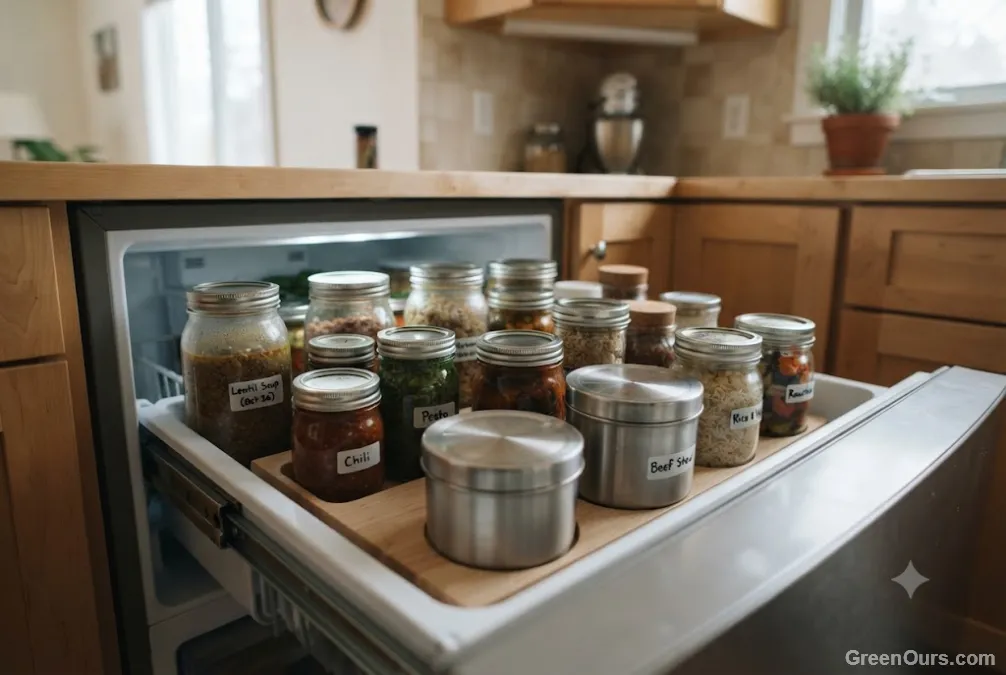
Start with the jars you already own, and leave the headspace.
You don't need a spotless, fully stocked zero-waste kitchen to make any of this work — you just need a few jars, a bit of headspace, and the willingness to stop reaching for the roll of plastic wrap out of habit. That's genuinely the whole trick, and it took me exactly two broken jars to learn it.