
Why Wrapping Paper Is Sneakier Waste Than You Think
Wrapping paper looks harmless. It's paper, right? Paper is recyclable. Except most gift wrap is coated, foiled, glittered, or laminated in ways that make it useless to your local recycling stream, and once it's got tape stuck all over it, even plain paper usually gets pulled and landfilled anyway. Multiply that by every birthday, holiday, and baby shower in a given year, and you're looking at a genuinely large pile of single-use material that existed for about ninety seconds of unwrapping joy.
I'm not telling you this to make you feel bad about the wrapping paper in your closet right now — use it up, it's already made. This is about what you reach for next.
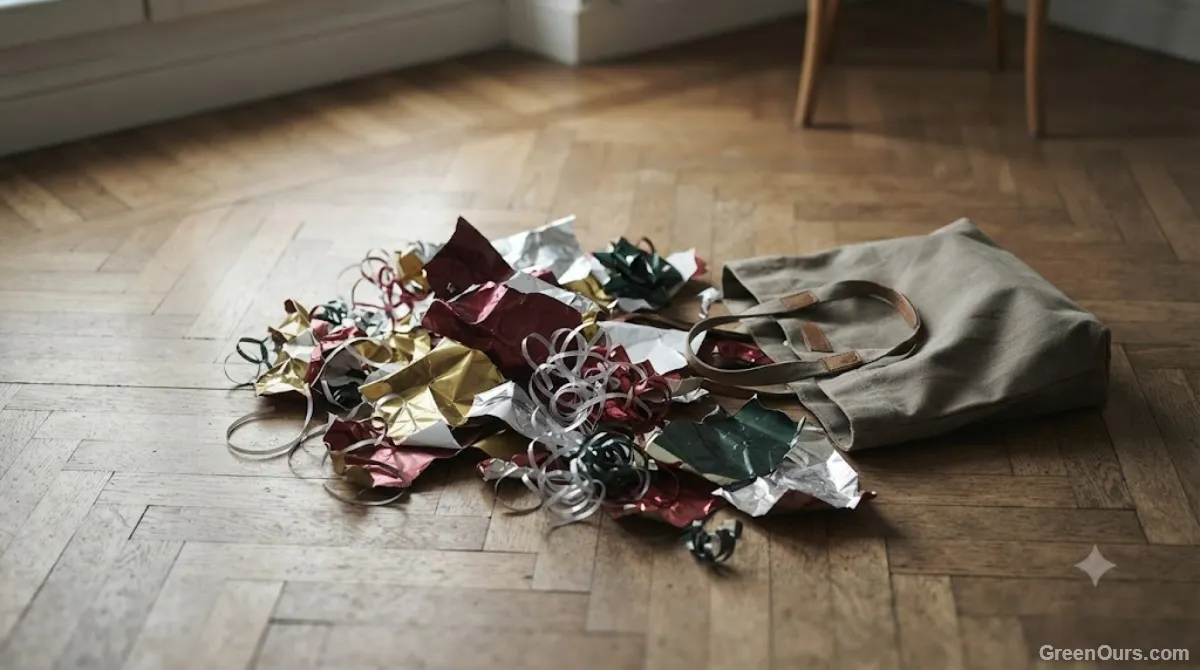
If you can scrunch a piece of paper into a ball and it stays crumpled, it's likely recyclable. If it springs back open, it's probably coated or foiled — and headed for the trash either way.
What Actually Goes in a Reusable Wrapping Kit
You don't need to buy a single new item to start this. Walk through your own house first — you'll be surprised what already qualifies.
Fabric You Already Have
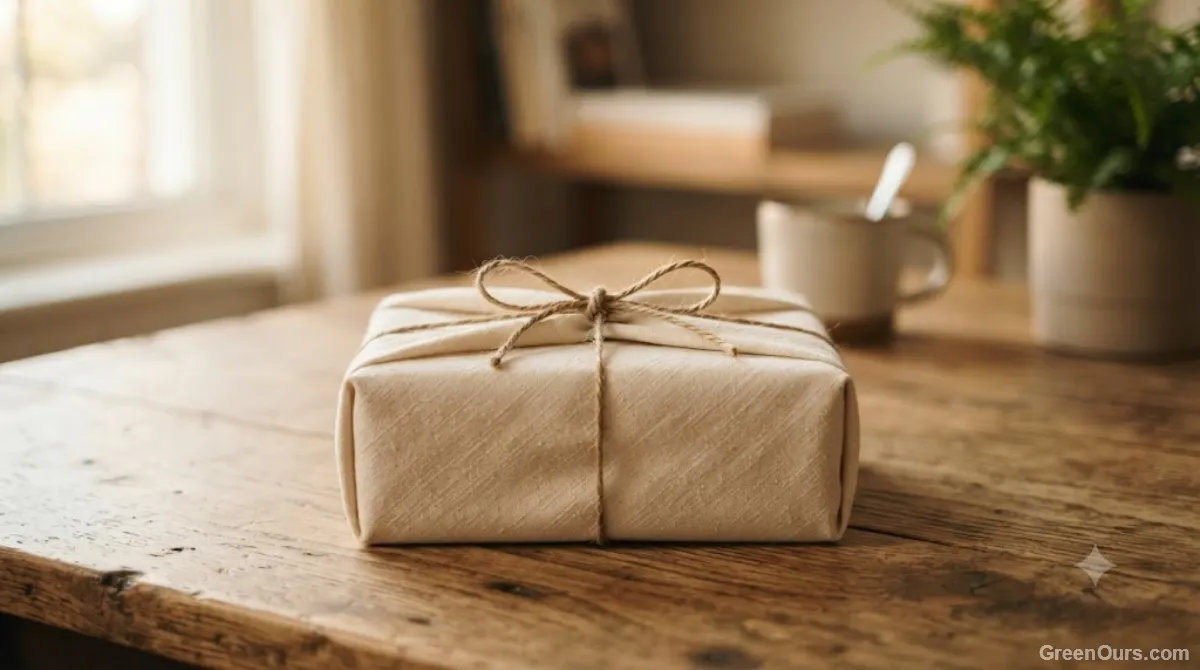
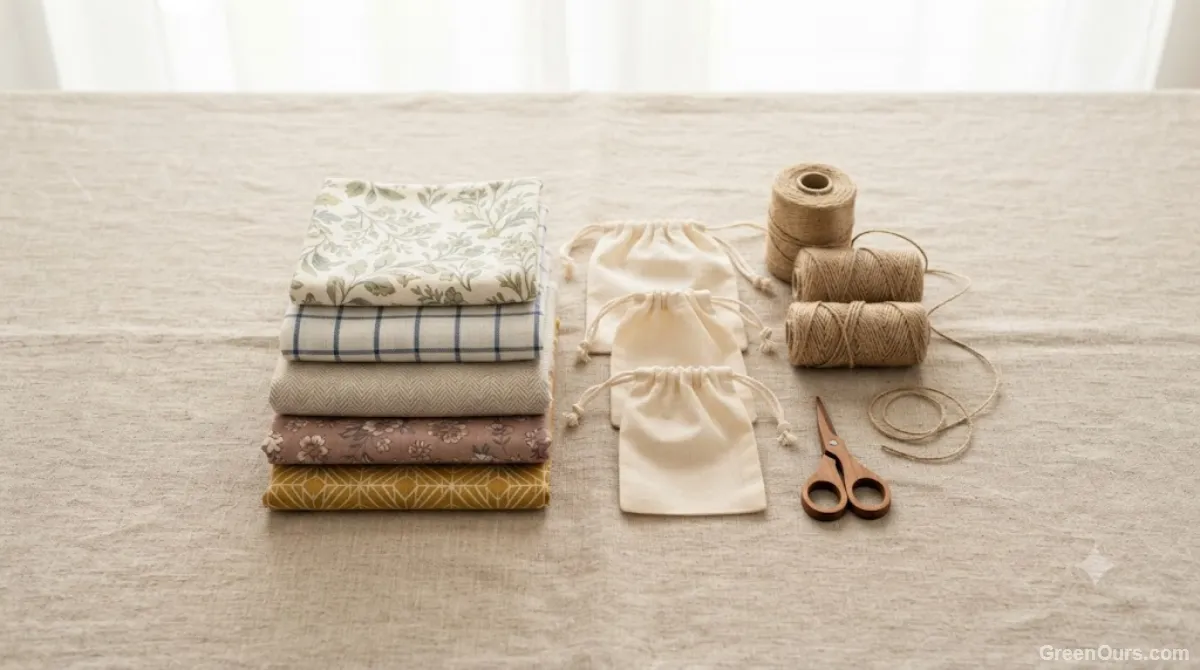
Scarves, cloth napkins, old pillowcases, and even fabric remnants from a sewing project all work as wrapping cloth using a simple technique called furoshiki — essentially, folding and tying fabric around a gift instead of taping paper to it. You don't need to learn anything fancy. A square of fabric, folded corner to corner over a box and knotted at the top, looks more considered than most store-bought paper ever did.
Bags, Tins, and Boxes With a Second Life
Cloth gift bags get reused constantly once someone starts giving them, and they're worth collecting rather than buying new. Old tins, sturdy shoeboxes, and mason jars all make good containers for small gifts too — save a few of the nicer ones instead of recycling them the next time they come through your kitchen.
Ribbon, String, and the Finishing Touches
This is the part people usually get stuck on, because ribbon feels disposable by nature. It doesn't have to be. Cotton twine, leftover yarn, and even shoelaces tie a bow just fine, and they hold up to being untied and reused far better than thin synthetic ribbon does. If you do buy ribbon, look for cotton or paper varieties — they'll survive several rounds of gift-giving instead of fraying after one.
Save the nice ribbon too. Anyone who's ever carefully untied a bow instead of cutting it open already understands this instinct — that ribbon is worth keeping.
Making Reused Materials Feel Intentional, Not Recycled
The worry I hear most is that a reused wrapping kit will look thrown-together next to a gift wrapped in glossy new paper. In practice, it's usually the opposite. A fabric-wrapped gift tied with twine and a sprig of rosemary or a dried orange slice reads as thoughtful, not frugal. People notice the effort of a knot and a natural accent far more than they notice paper.
A small trick that helps: keep one or two "nice" fabric pieces in the kit specifically for gifts that matter more, and save the plainer scraps for everyday wrapping. It keeps the whole system feeling considered instead of like you're just using up leftovers.
Storing Your Kit So You'll Actually Reach for It
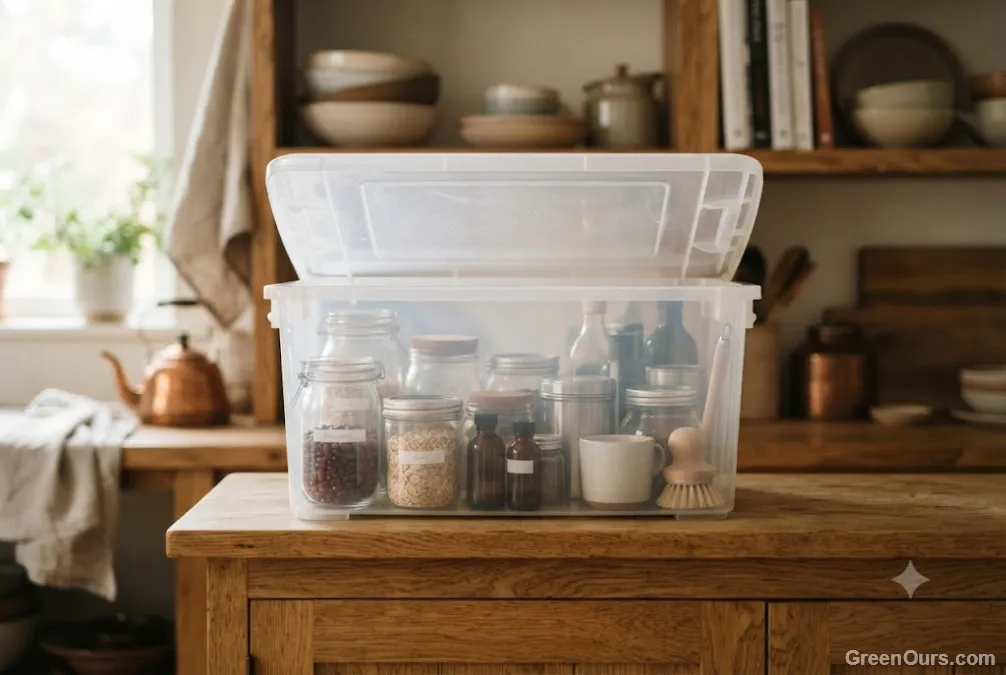
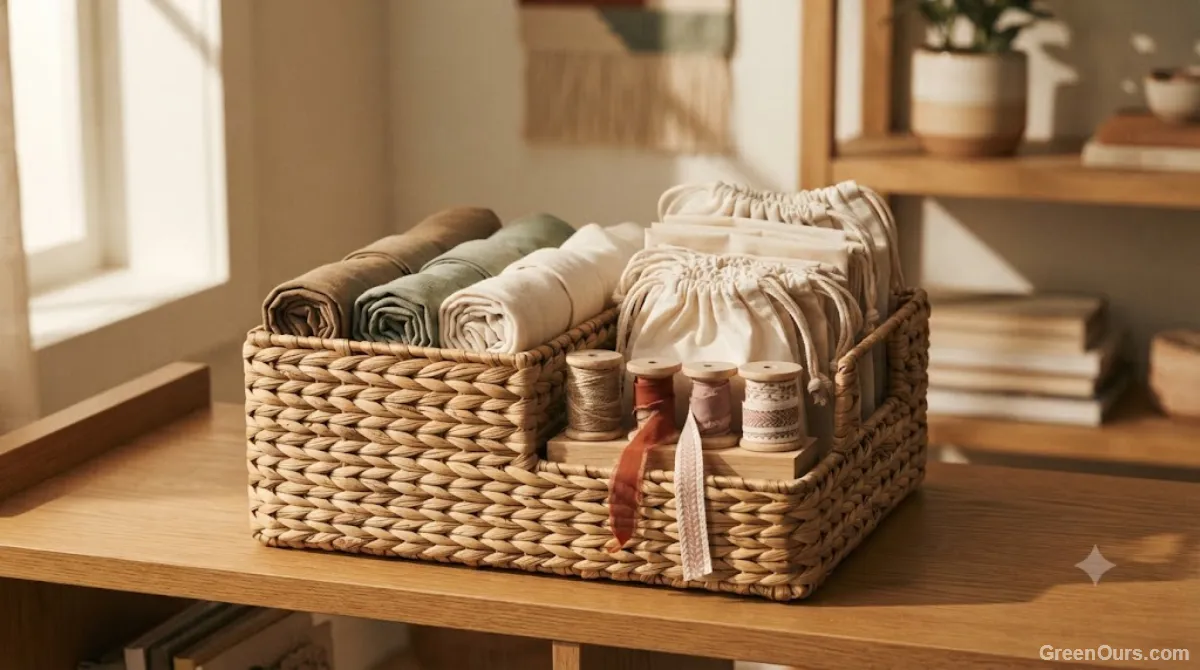
A wrapping kit only works if you can find it when you need it — otherwise you're back to buying a roll of paper at the last minute out of pure convenience. One labeled bin, drawer, or tote is enough. Sort loosely by fabric, ribbon, and containers so you're not digging through everything at ten at night before a birthday party the next morning.
None of this asks you to be perfect at gift wrapping, or even particularly crafty. It just asks you to keep a few things instead of throwing them out, and to reach for them instead of the store shelf next time. The kit gets better every year you add to it, which is more than I can say for a roll of paper that ends up in the bin before the candles are even lit.
More zero-waste home swaps worth trying:
10 Easy Swaps to Start Today