
Your Entryway Is a Chokepoint, Not Just a Landing Spot
Most zero-waste advice focuses on what happens once something is already inside your home — how to store it, recycle it, repurpose it. That's useful, but it's also downstream thinking. The entryway is upstream. It's the one place every single item passes through before it becomes your problem to manage.
You don't need a mudroom, a built-in bench, or a matching set of labeled bins to make this work. You need a habit of pausing at the door, even for three seconds, and asking whether the thing in your hand actually needs to come any further.
The Junk Mail Problem (And Why Redirecting It Beats Recycling It)
I used to feel virtuous about recycling my junk mail. Then I did the math: recycling something you never wanted in the first place is still waste, just waste with a slightly cleaner conscience. The better move is stopping it before it reaches your mailbox.
Most catalog and coupon-mailer companies have an opt-out process, and a growing number of national mail-preference services let you register once and cut volume across dozens of senders at a time. It takes maybe twenty minutes total, spread across a few weeks as requests process, and the drop-off is noticeable within a month or two.
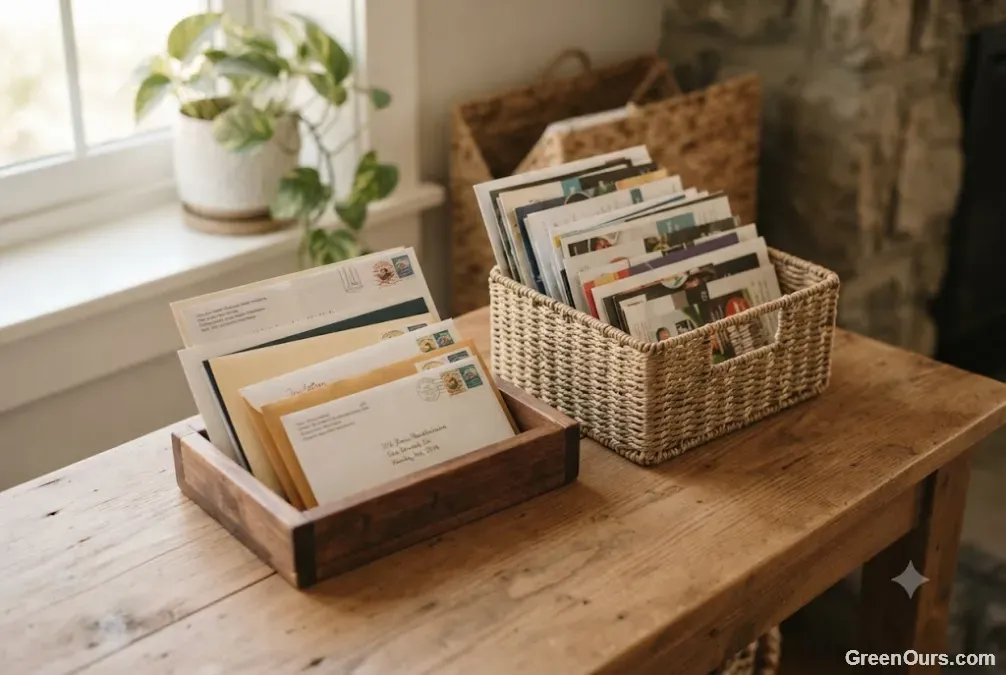
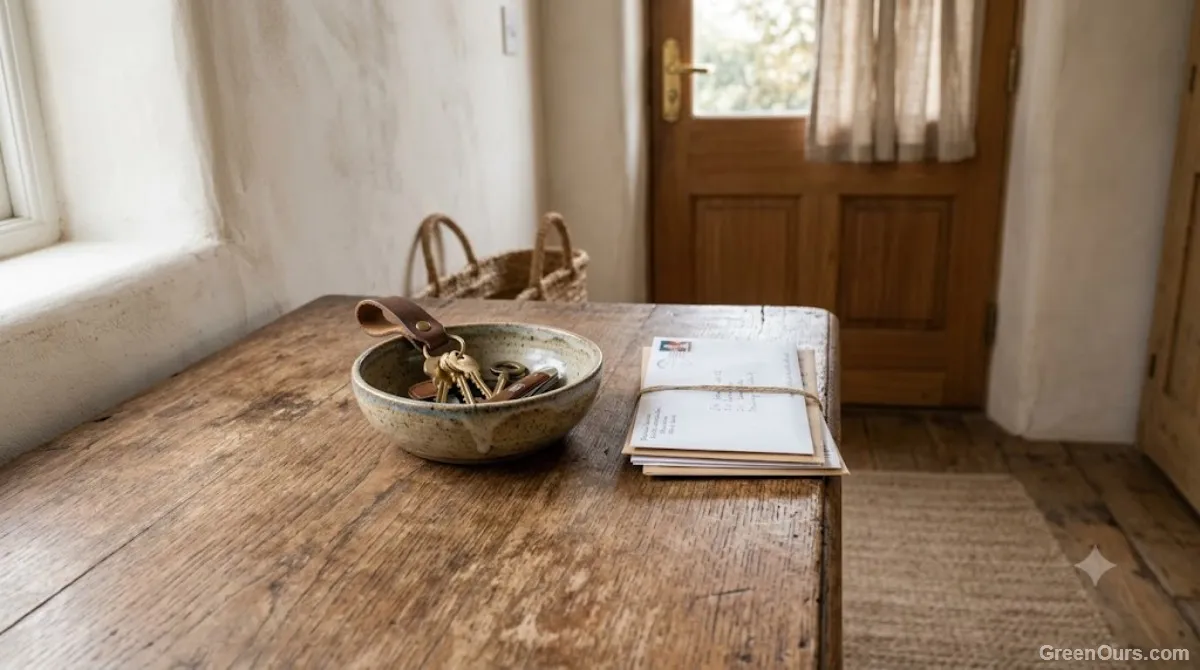
For what still slips through, keep a small tray or shallow bowl — something you already own — right by the door. Mail gets sorted the moment it's set down: recycling goes straight into a bag by the exit, real mail goes into the tray. Nothing gets a chance to migrate to the kitchen counter and become a permanent fixture.
Shoes: The Silent Clutter Machine
Shoes are sneaky. One pair by the door feels reasonable. Five pairs feels like everyone in the house has given up on the idea of a closet entirely.
The rotation matters more than the container. Rain boots and snow boots earn a permanent spot near the door during their season and get relocated once the weather shifts. Everything else cycles back to its actual home after use. It sounds almost too simple, but the habit of putting shoes away rather than storing them at the door is the actual fix — no purchase required.
You don't need a shoe rack to solve this. A simple rule — only the shoes you'd wear in the next 48 hours live by the door, everything else goes back to a closet — does more than any storage product ever will.
Shopping Bags and Packaging That Sneak Past the Door
Here's an honest confession: I own more reusable shopping bags than I could ever need, and I still sometimes end up with a plastic one at checkout because every single reusable bag was folded up in a drawer three rooms away.
The fix wasn't buying fewer bags — I already had plenty. It was hanging them on a hook by the door, visible and grabbable on the way out, instead of storing them somewhere "tidy." Tidy and accessible are not the same thing, and for a habit like this, accessible wins every time.
The same logic applies to delivery boxes and packaging. Keep a designated spot near the entry — a single flattened box works fine — where incoming boxes get broken down immediately instead of stacking up until they become their own piece of furniture. If you reuse packaging for shipping or storage, a small labeled section of that same spot keeps the useful stuff separate from what's headed straight to recycling.
What Actually Belongs by Your Door
Not everything needs a system. Keys, a single tray for outgoing mail, a hook for bags, and a rotating pair or two of shoes — that's genuinely most of what an entryway needs to function well. Anything beyond that is usually clutter wearing an organizational disguise.
If you're tempted to buy a basket, a bin, or an over-the-door organizer to solve an entryway problem, pause first. Walk through your house and see what you already have that could do the job — a bowl from the cupboard, a hook from another room, a shoebox lid. The goal isn't a Pinterest-perfect entryway. It's one that stops things from piling up without adding more stuff to the pile.
If You Only Change One Habit This Week
Pick the junk mail opt-out. It's the one habit that requires zero ongoing effort once it's set up, and it stops clutter before it even reaches your hands. Everything else on this list is a small daily choice, but this one just quietly keeps working in the background.
More easy zero-waste swaps for your home.
None of this needs to be perfect to work. Some weeks the shoe pile will win, and that's fine — the point isn't a flawless entryway, it's one that resets easily instead of slowly burying you in things you never meant to keep.