
Why Moisture Meters Drift Over Time
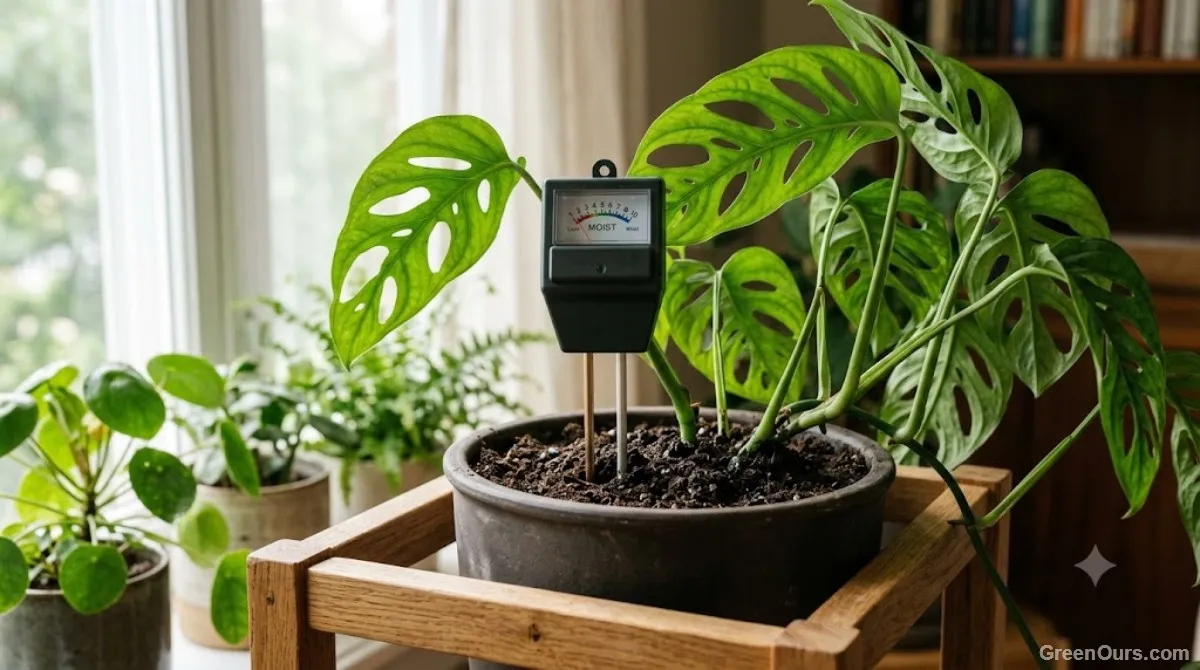
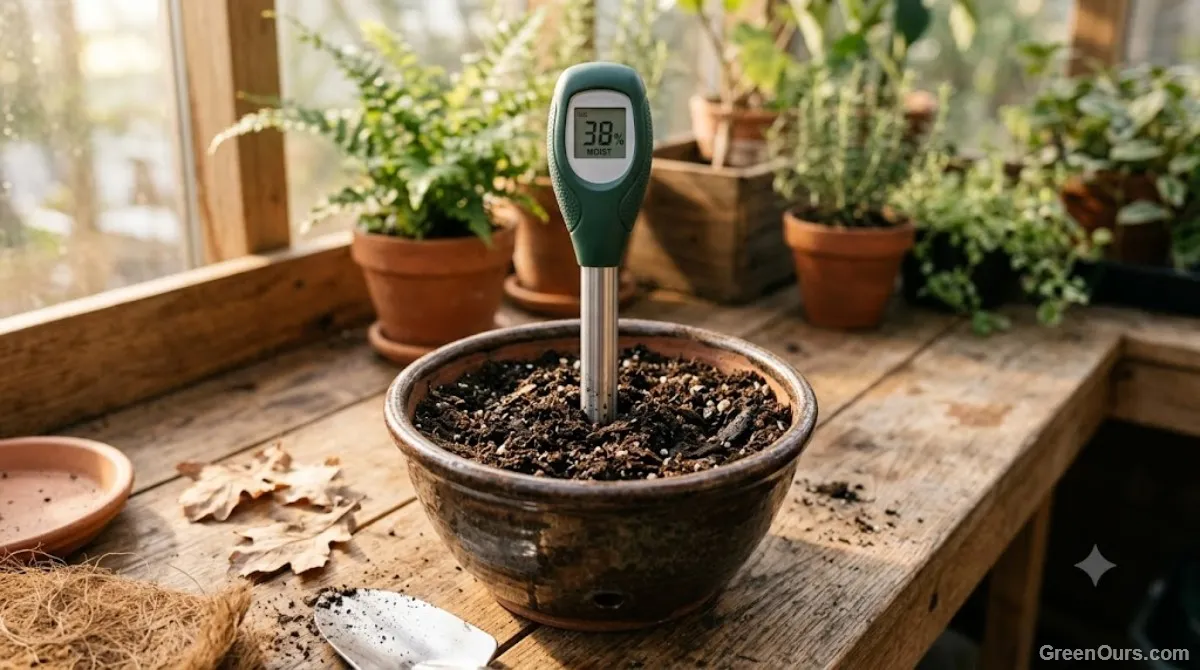
Most analog soil moisture meters don't measure water directly. They measure electrical conductivity between two metal probes, and that reading depends on a small galvanic reaction happening in the soil. Over time, that reaction corrodes the probe tips. A few months of regular use is enough to build a thin oxide layer on the metal, and that layer changes how the probe reads the same soil.
Fertilizer residue speeds this up. Salts from liquid feeds and slow-release granules build up around the probe tips, especially if you insert the meter in the same spot every time. Hard tap water leaves mineral deposits too. None of this is a manufacturing defect — it's simple wear, and it means a meter that was accurate at purchase can drift by one or two points on a typical 1–10 scale within three or four months of steady use.
Temperature plays a role too. Conductivity readings shift slightly in cold soil versus warm soil, which is why a meter calibrated in summer can read a touch low when winter temperatures drop, even in identical moisture conditions. This isn't drift in the traditional sense — it's a known limitation of conductivity-based sensors — but it's worth accounting for if you're comparing readings across seasons.

What a Moisture Meter Actually Measures — and What It Can't
Because these meters read conductivity, not water content, the number on the dial is only meaningful relative to a specific soil. Sandy soil and a peat-heavy potting mix hold electricity differently even at identical water content, so the same reading can mean two very different moisture levels depending on what's in the pot.
There's also a depth limit. Most consumer probes reach four to six inches, which tells you nothing about moisture sitting below the root zone in a large container. And a probe inserted right after watering will often read high near the surface while the lower soil is still dry — the reading reflects where the tip sits, not the whole pot.
Compacted soil compounds the problem. Tightly packed particles hold more surface contact with the probe, which can register as a higher moisture reading even when the actual water content is unchanged. If you've recently repotted or top-dressed with fresh soil, expect readings to run slightly different until the mix settles.
Quick gut check: if a fresh reading feels off, pull the probe, wipe it dry, and reinsert it two inches away. A one-point swing between two nearby spots is normal. Anything larger points to an inconsistent watering pattern — or a probe that needs calibration.
The Two-Point Calibration Method
Calibration doesn't require special equipment. It just requires two known reference points: completely dry soil and fully saturated soil from the same mix you're actually growing in.
Testing the Dry End
Take a sample of your potting mix and spread it out to air-dry for 48 hours, or dry it in a low oven for 20–30 minutes until it's crumbly and cool. Insert the probe fully. A properly working meter should read 1 to 2 on a standard 1–10 dial. Anything reading 3 or higher on bone-dry soil means the probe has drifted and needs cleaning, or the reading needs a downward adjustment.
Testing the Wet End
Saturate a sample of the same mix with water until it pools on the surface, then let it drain for 10 minutes so you're testing field capacity, not standing water. Insert the probe. It should read 9 or 10. A meter that tops out at 7 on saturated soil is undercounting moisture across its entire range, not just at the wet end.
Checking the Midpoint
For a fuller picture, test one more sample at roughly 50% saturation — half the water needed to reach field capacity. A working meter should land close to 5 or 6. If the dry and wet ends check out but the midpoint is noticeably off, the probe is likely nonlinear across its range, which is common in older or budget meters and worth knowing before you rely on it for precise watering decisions.
Write down the offset for each end. If dry soil reads 3 instead of 1, subtract 2 from every future reading in that mix. It's not elegant, but it works, and it's more reliable than trusting a number that was never accurate to begin with.
Verifying Readings Against Real Soil Conditions
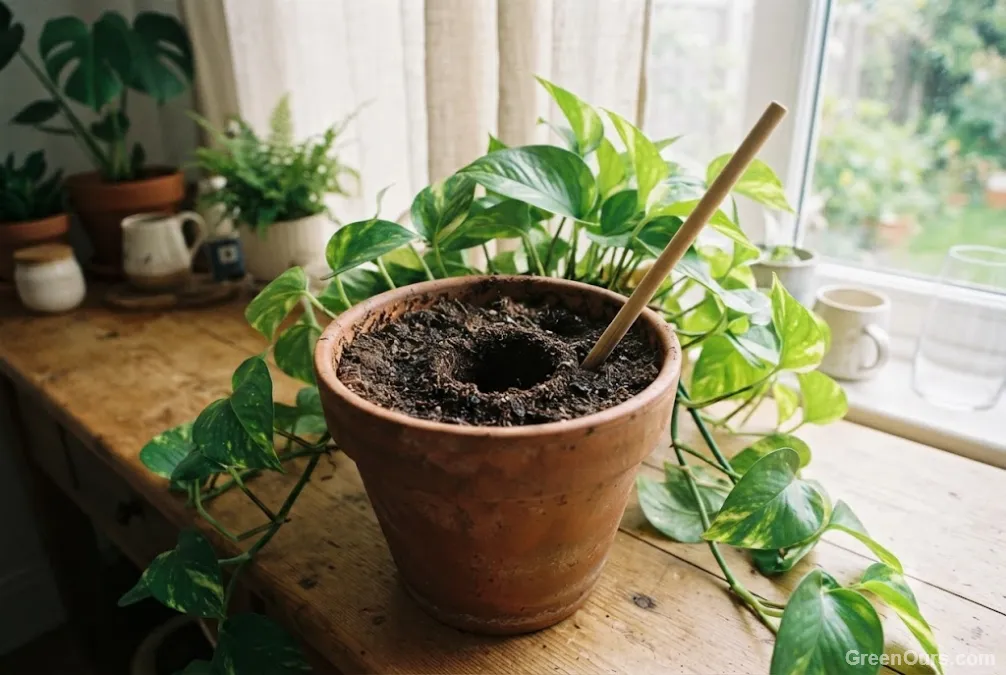
A calibrated meter still benefits from a second check, especially in containers where soil settles unevenly. Push a finger into the soil two to three inches down at the same spot you tested. Dry, crumbly soil that resists your finger should correspond to a low reading. Cool, tacky soil that clings to your skin should correspond to a high one.
Weight is another reliable cross-check. Lift the pot after watering, then lift it again once the meter reads dry. The difference should be noticeable — a plant pot that feels just as heavy dry as it did wet usually means the probe isn't reaching moisture that's still sitting lower in the container.
Test more than one spot before trusting a single number. Soil near the pot's edge dries faster than soil at the center, and a probe pushed against the container wall will consistently read lower than one placed mid-pot. Average two or three insertion points for anything larger than a 6-inch container.
If you own more than one meter, don't expect them to agree exactly, even when both are calibrated. Manufacturing tolerances mean a one-point difference between two units in the same soil is normal. What matters is consistency within a single meter over time, not agreement between different tools.
Maintenance That Extends Probe Life
Cleaning the Probes
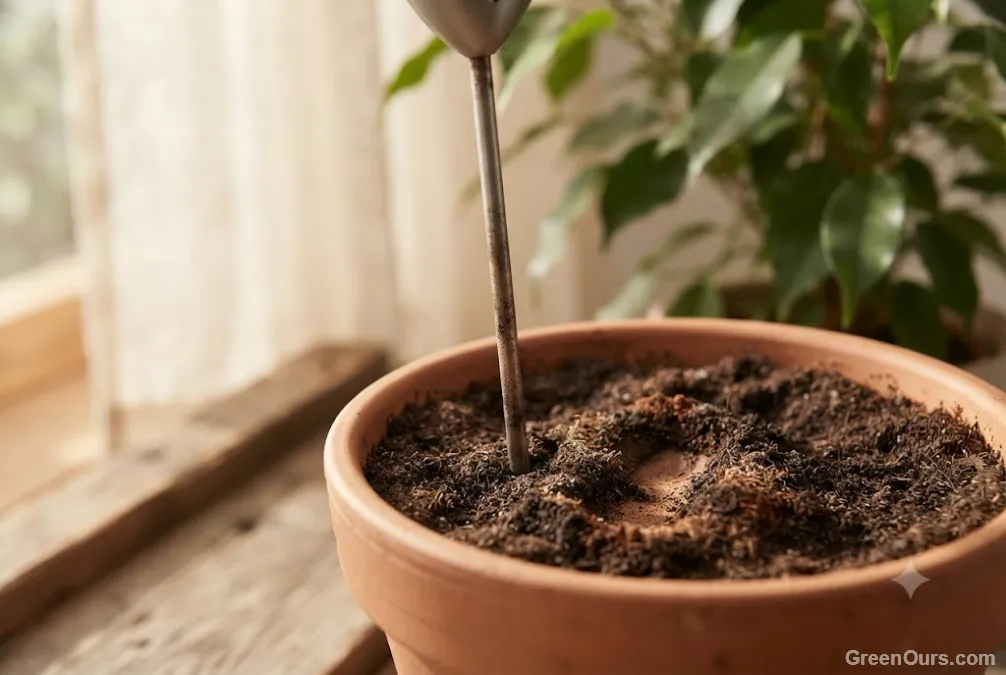
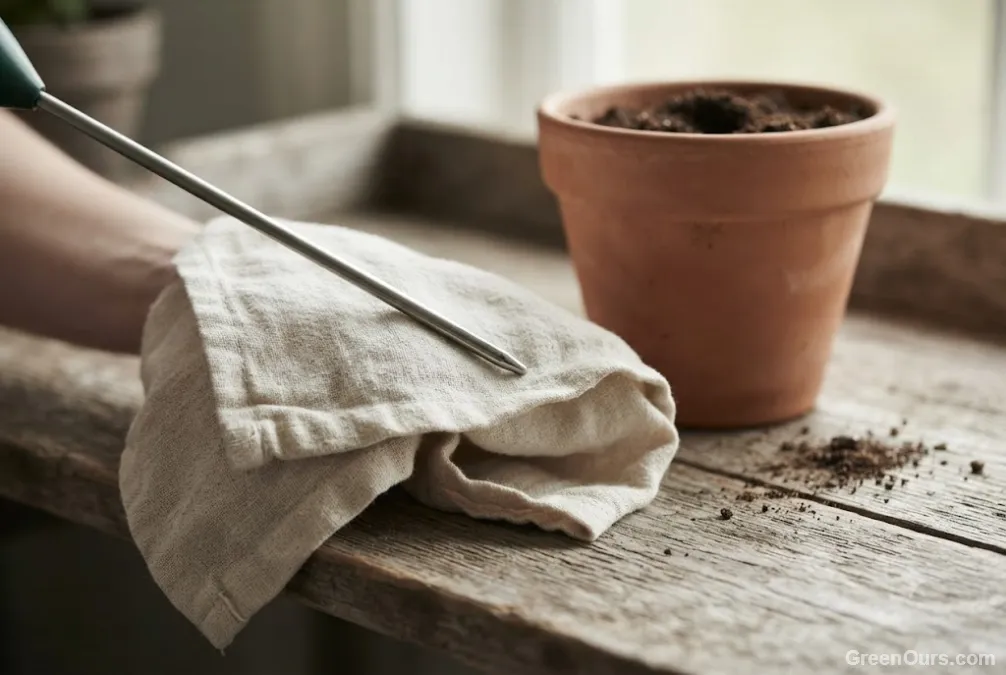
Rinse the probe tips in clean water after every use and dry them completely before storing the meter. A soft cloth or an old toothbrush removes mineral crust without scratching the metal. Never use abrasive pads — scratches create more surface area for corrosion to take hold.
Storage Between Waterings
Don't leave the probe inserted in soil between checks. Constant contact with moist soil accelerates the same galvanic reaction that causes drift, shortening the meter's usable life by months. Store it dry, probe-down in a drawer or pouch, away from direct sun that can warp cheaper plastic housings.
Battery and Digital Display Checks
Digital moisture meters with battery-powered displays need a separate check. A dimming or flickering screen often signals a low battery long before the sensor itself fails, and a battery running low can distort the displayed number even when the probe is reading correctly. Replace batteries at the first sign of display inconsistency rather than assuming the sensor is at fault.
When to Recalibrate — and When to Replace
Recalibrate every two to three months if you're using the meter regularly, and immediately after any reading that seems implausible — a sudden jump from 3 to 8 overnight with no watering usually means a fouled probe, not a thirsty plant.
Replace the meter once cleaning stops fixing the offset, once the needle sticks or lags, or once you can see visible pitting on the probe tips. At that point, you're not measuring soil anymore — you're measuring the wear on the tool itself.
What to Do Next
A moisture meter earns its place next to your watering can only when you trust the number it gives you. Calibrate it against your actual soil, check it against your fingers occasionally, and treat the probe like the wearable part it is. Do that, and the readings stop being a guess and start being data you can act on.