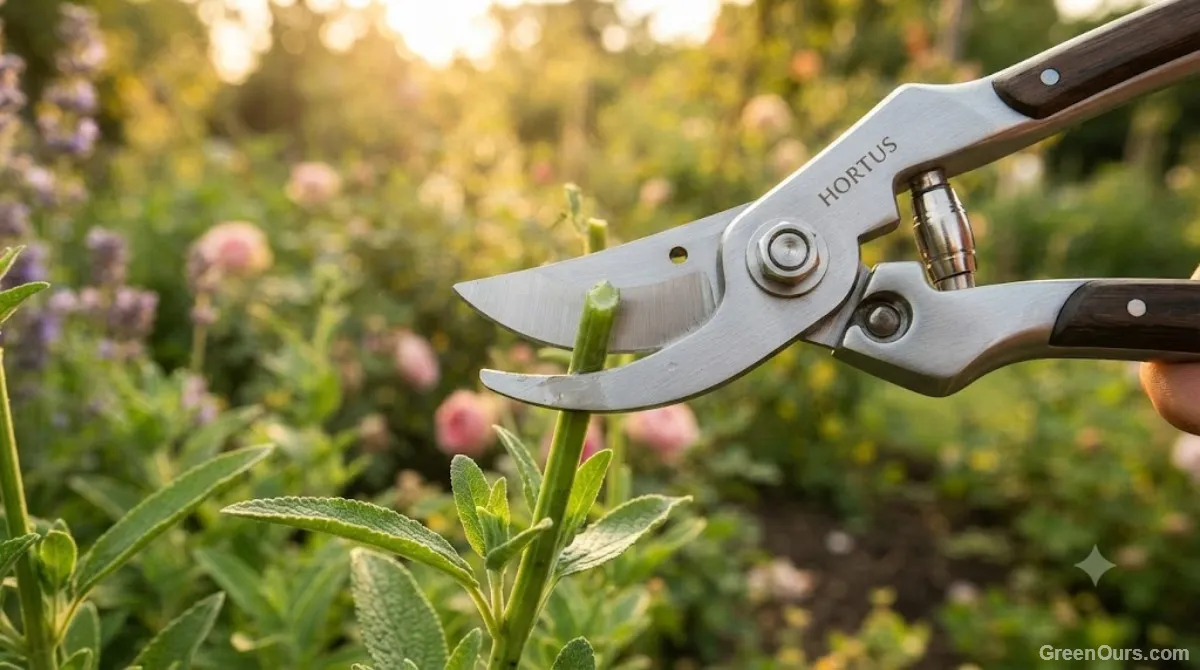

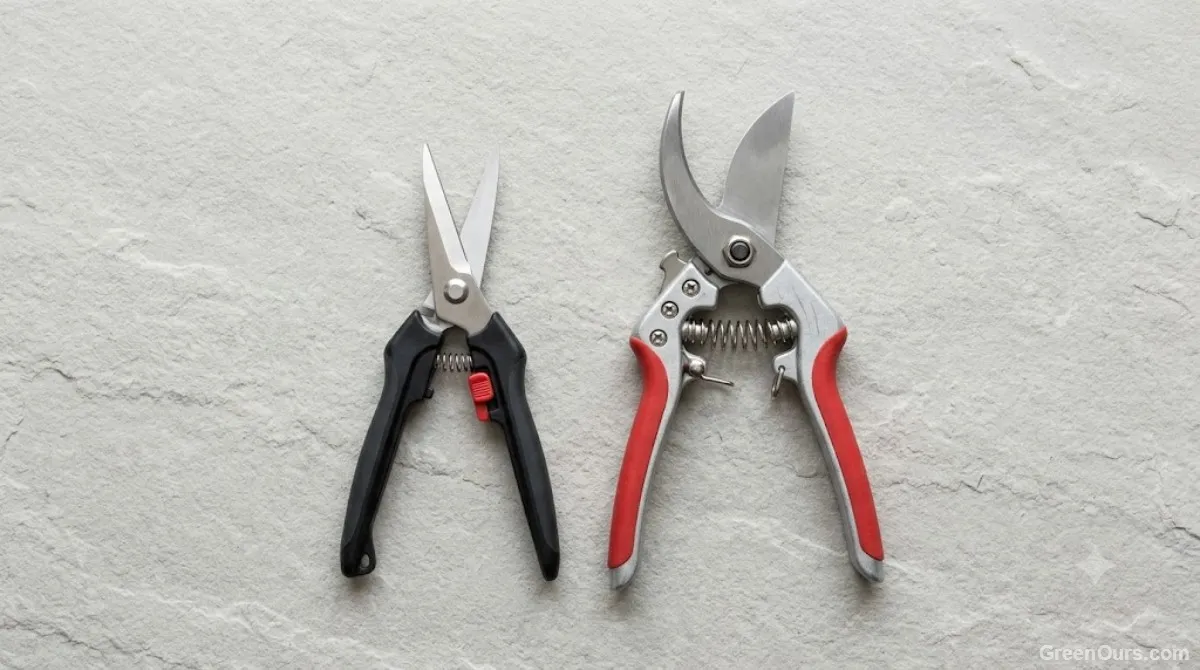
Why Blade Size Determines What You Can Cut
Blade length sets the ceiling and floor of what a pruner can handle cleanly. Micro pruners typically run a blade edge of 1.5 to 2.5 centimeters, paired with a narrow, low-profile tip. Standard bypass pruners run 3 to 4.5 centimeters, built for a cutting capacity of up to 2 centimeters in diameter on live wood.
That difference isn't just size. Shorter blades concentrate force over a smaller contact area, which is exactly what a stem under 4 millimeters thick needs — enough sharpness and control to sever the tissue without crushing the cells around the cut. Push a standard pruner onto that same thin stem and the wider blade tends to pinch before it slices, leaving a bruised, ragged edge that heals slower and opens the door to disease.
Run a micro pruner against a woody 1.5-centimeter stem, on the other hand, and you're asking a tool built for finesse to do a capacity job. The blade will struggle, the spring will fatigue faster, and you'll likely end up forcing the cut — which is how micro pruner tips chip or bend.
Match blade length to stem diameter, not to the plant's overall size. A six-foot ficus with pencil-thin new growth still calls for a micro pruner on those tips.
Precision vs Power: The Core Tradeoff
Every pruner design is a tradeoff between control and capacity. Understanding where each tool sits on that spectrum tells you more than any spec sheet when comparing micro pruners vs standard pruners.
Micro Pruners: Built for Control
Micro pruners favor accuracy. The narrow blade tip lets you see exactly where the cut lands, which matters when you're working a millimeter from a node or bud. Spring tension is lighter, so the tool responds to small hand movements instead of requiring a full squeeze. That's the point — control over force.
The tradeoff: limited cutting capacity, typically under 6 millimeters, and blades that dull faster because there's less steel absorbing the wear per cut.
Standard Pruners: Built for Power
Standard bypass pruners favor throughput. Heavier springs and wider blades let you cut through thicker, tougher stems in fewer motions, with less hand fatigue across a long pruning session. They're the right call whenever the job is volume — clearing dead growth, cutting back a woody houseplant, or working through multiple stems in sequence.
The tradeoff: less precision. On stems under 4 millimeters, the extra blade width makes clean, exact placement harder, and the cutting force is more likely to crush rather than slice.
Maintenance and Blade Life
Micro pruners need more frequent attention. Their thin blades lose their edge faster — expect to sharpen every 15 to 20 uses if you're working with fibrous or sappy stems. Sap buildup on a narrow blade also affects precision immediately, since there's less surface area to compensate for a sticky edge. Wipe the blade with isopropyl alcohol after every session, not just when you remember.
Standard pruners hold an edge longer, generally 40 to 60 cuts between sharpenings, because the thicker steel resists wear better. They're more forgiving of inconsistent maintenance, though a dull standard blade will still crush stems instead of cutting them — the same failure mode as a dull micro blade, just slower to arrive.
Both tools need the pivot joint oiled periodically. A stiff pivot on a micro pruner is worse than on a standard pruner, since it directly undermines the fine control the tool exists for.
Which Tool for Which Plant
Plant type isn't really the deciding factor — stem diameter and required precision are. But mapped to common houseplants, the pattern holds consistently.
Orchids and Delicate Stems
Orchid flower spikes and root tips call for micro pruners without exception. Cuts need to land precisely above a node, and the tissue is thin enough that a standard blade's crush risk is unacceptably high. A clean micro pruner cut here heals in days; a crushed one can invite rot.
Bonsai and Fine Detail Work
Bonsai maintenance is almost entirely micro pruner territory — fine branch tips, foliage pads, and structural refinement all depend on precision over capacity. A dedicated bonsai shear, a variant of the micro pruner category, is worth the investment if you're maintaining more than one tree.
Herbs and Soft-Stemmed Houseplants
Basil, mint, pothos tips, and similar soft growth sit in a middle zone. Micro pruners give cleaner cuts, but a sharp standard pruner will still perform acceptably here, since the stem tissue is soft enough that crushing risk is lower than with woody or fibrous plants.
When Standard Pruners Still Win
Anything woody, anything thick, and anything requiring repeated cuts across a session favors standard pruners. Established ficus, rubber plants, woody rosemary, and general deadheading across a large collection all move faster and with less hand strain under a standard blade. Don't reach for a micro pruner out of habit if the job is volume, not precision.
Buying Considerations
If you're only buying one tool, base the decision on your collection's dominant stem type, not on the plant with the highest maintenance demands. A collection of mostly woody houseplants with one orchid still leans standard pruner, with micro shears added later as a second purchase.
Check for full-tang steel construction on either type — cast or stamped blades lose their edge faster and aren't worth the lower price. Spring-loaded return action reduces hand fatigue on both tools, but matters more on standard pruners given the higher force per cut.
Most plant owners who stick with this long enough end up owning both. The question isn't which tool wins — it's which cut you're making right now, and whether the blade in your hand matches it.