
What's Actually Happening When Water Runs Straight Through
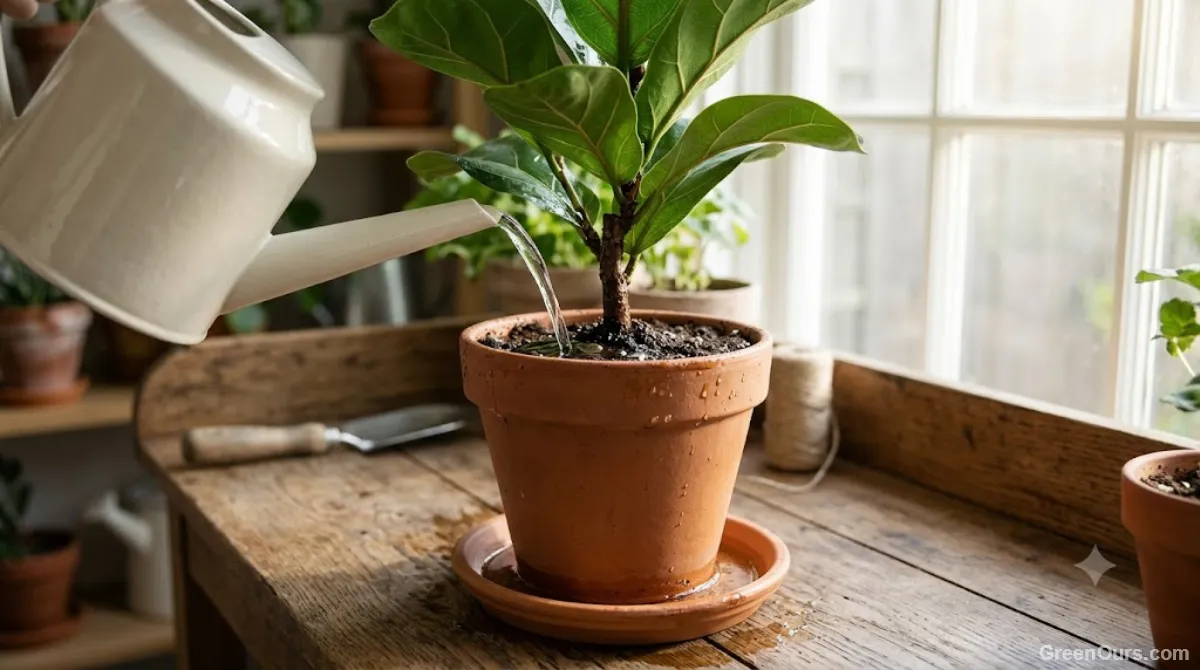
When water runs out of drainage holes immediately, it usually follows the path of least resistance. In a healthy pot, that path runs evenly down through the soil, around root hairs, and out the drainage holes after saturating the mix. In a problem pot, that path is a shortcut — a gap, a channel, or a crack — and the soil next to it never gets touched.
This is called channeling. It happens in two main places: between the root ball and the pot wall, or through fissures inside a root ball that's dried out and pulled away from itself. Once a channel exists, water keeps using it every time. Pouring more water in doesn't widen the channel's reach — it just runs the same shortcut faster.
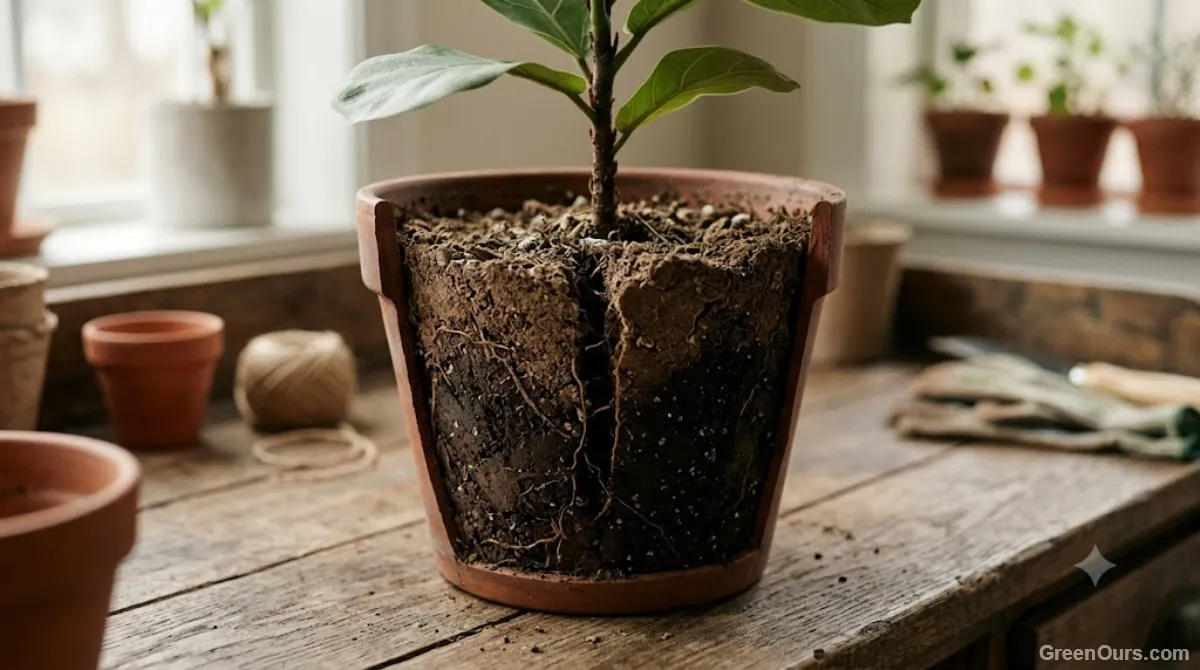
Check for channeling before you check anything else. Push a finger straight down 2 inches near the center of the pot, not the edge. If it's bone dry there while water drained out fast, you've confirmed the problem.
Three Causes Behind the Shortcut
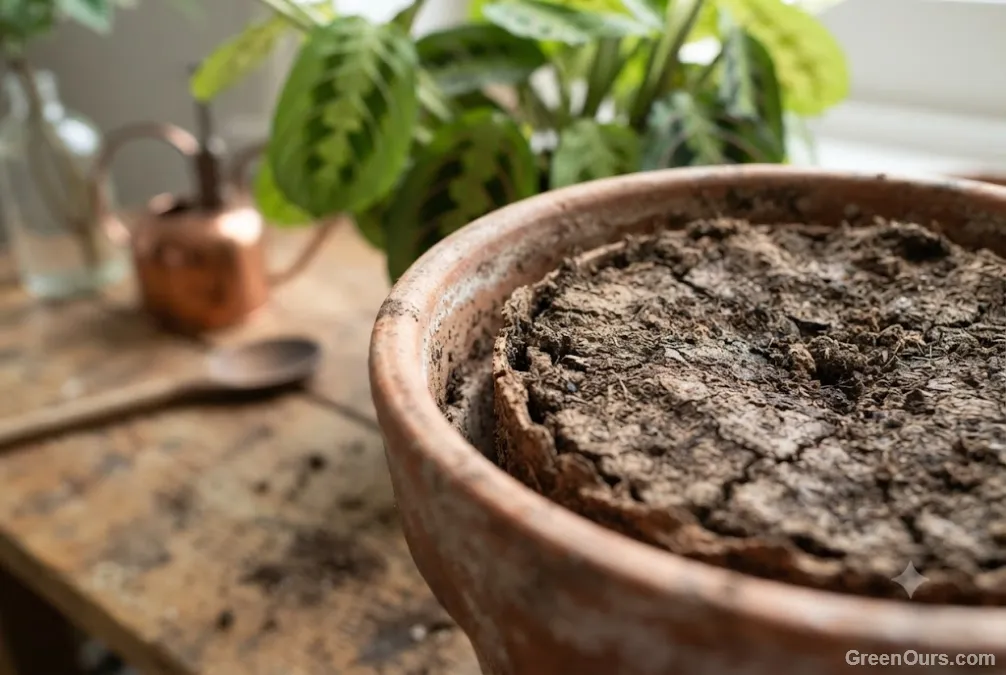
Soil That's Shrunk Away From the Pot
Potting mix loses volume as it dries, especially mixes heavy in peat or coco coir. As it shrinks, it pulls inward and leaves a thin gap running down the inside of the pot. Water poured at the surface finds that gap immediately and rides it straight to the bottom.
A Root-Bound, Compacted Root Mass
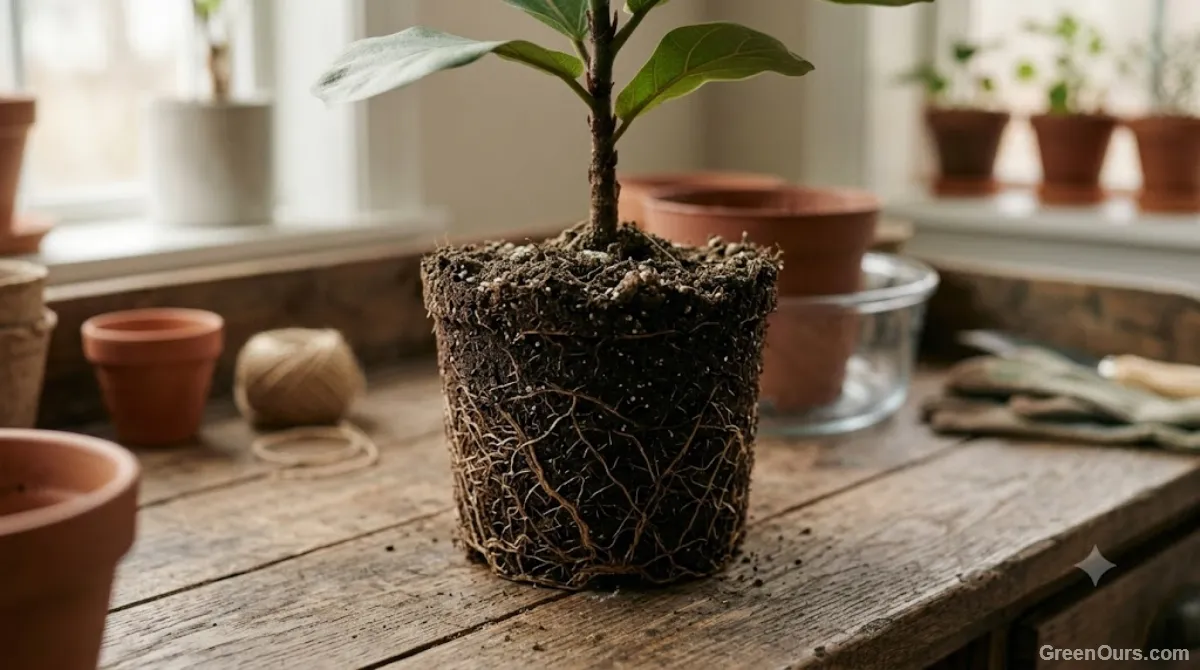
In a root-bound plant, roots form a dense wall around the inside of the pot. That wall can be more permeable than the compacted soil at the center, so water moves down the outer edge and never reaches the middle, where a large share of the active roots sit.
Watering Too Fast for the Mix to Absorb
Pouring a full stream from a watering can in 3 or 4 seconds doesn't give dry soil time to rehydrate. Dry organic matter resists water on contact — a property called hydrophobicity — until it's had time to soften. Fast pouring pushes water past the soil before that softening happens.
Fixing It: The Bottom-Soak Method
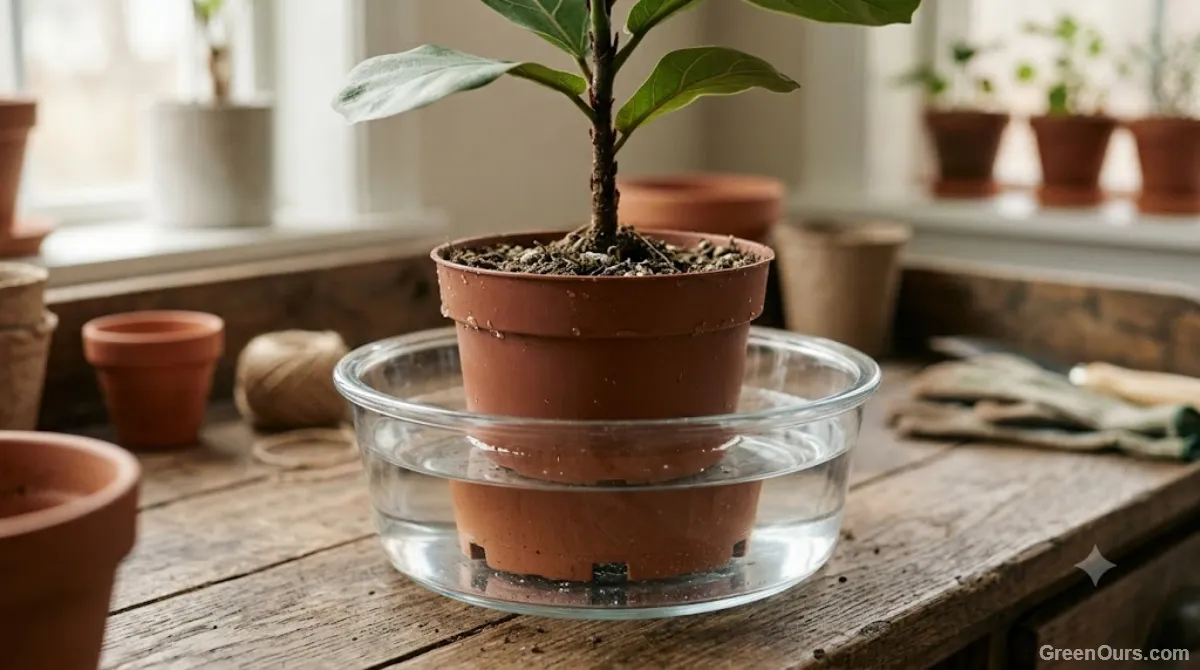
- Move the pot into a basin, sink, or tray filled with 2–3 inches of room-temperature water.
- Let the pot sit for 20–30 minutes. Water will draw upward through the drainage holes and rehydrate the mix from the bottom, bypassing surface channels entirely.
- Lift the pot out and let it drain fully for 15 minutes before returning it to its tray or saucer.
- Once rehydrated this way, resume top watering — but water slowly, in two or three passes rather than one continuous pour, letting each pass soak in for 30 seconds before adding more.
Rebuilding Soil Structure So It Holds Water
Amend the Mix, Don't Just Rewater It
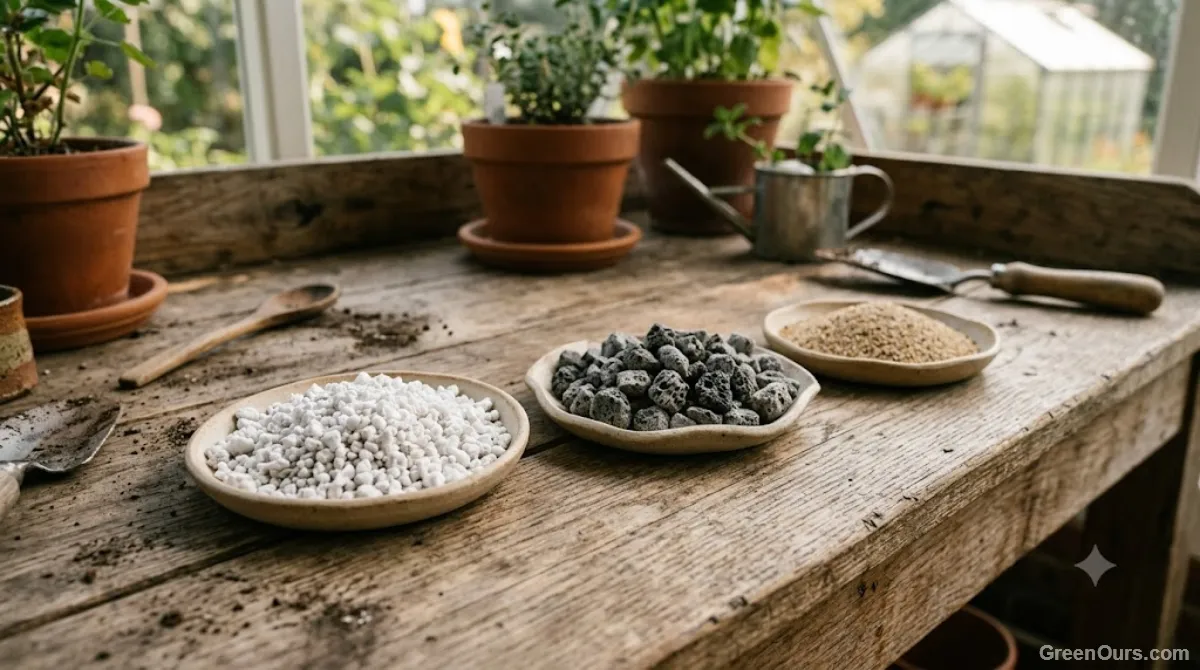
If channeling keeps recurring in the same pot, the mix itself has lost structure. Work in perlite or pumice at roughly 20% of the total volume next time you repot. These materials create pockets that hold moisture without compacting, which reduces the shrink-and-pull-away cycle that starts channeling in the first place.
Check the Fit Between Root Ball and Pot
A root ball that's shrunk noticeably smaller than the pot itself will always be prone to gap-channeling. If you can see daylight between the soil and the pot wall when you look down from above, that's your answer. Either size down the pot or top up the gap with fresh, pre-moistened mix pressed firmly against the wall.
Confirming the Roots Are Actually Wet
Fast drainage alone doesn't tell you anything reliable. Two better checks:
Weight test: Lift the pot immediately after watering, then again 2 hours later. A properly hydrated pot will feel noticeably heavier right after watering. If the weight barely changes, the water passed through without being absorbed.
Skewer test: Insert a wooden skewer 3–4 inches into the center of the mix, away from the edges. Leave it for 10 minutes, then pull it out. Damp soil clings to the wood. A clean, dry skewer after a full watering confirms channeling is still happening.
When Repotting Is the Real Fix
Bottom-soaking and slower pours solve channeling caused by shrinkage or fast pouring. They don't solve a genuinely root-bound plant. If roots are visible circling the surface, emerging from drainage holes, or you can't get a skewer past the first inch without hitting solid root mass, repotting into a container one size up is the actual fix — not another watering technique.
Read our latest watering and soil guides.
Fast drainage isn't a green flag by itself. Confirm the roots got wet before you trust it. Once channeling is fixed, most plants stop showing the underwatering symptoms that started this whole investigation in the first place.