
Why Tomatoes Are More Forgiving Than You Think
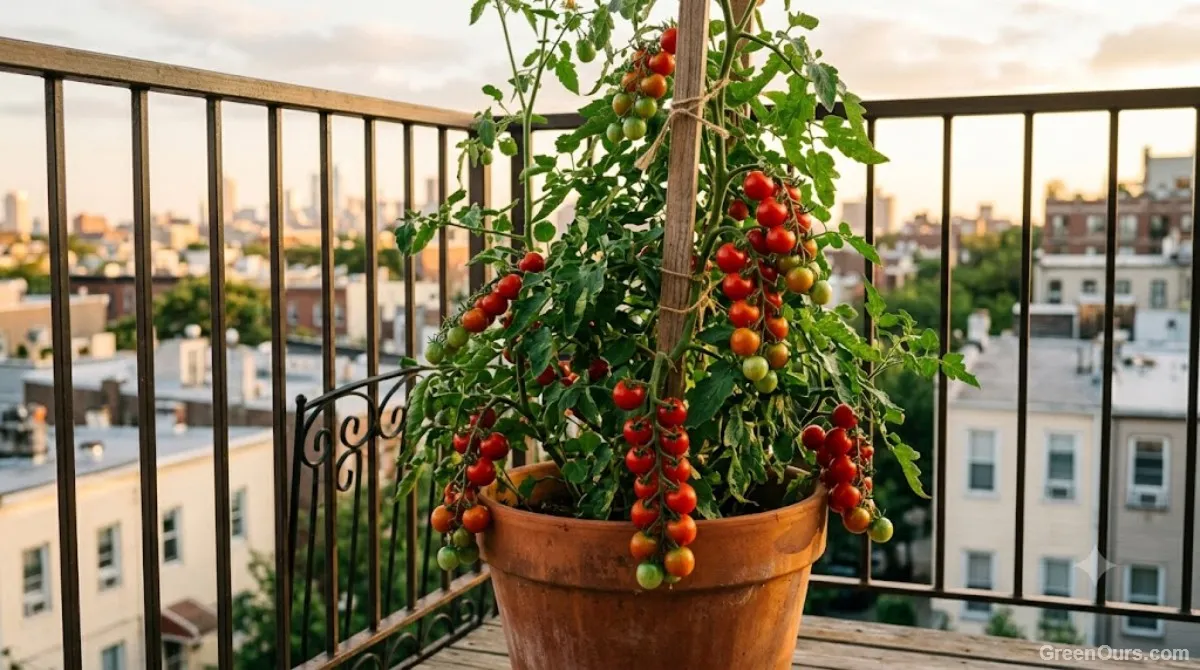
Tomatoes have a reputation for being fussy, but that mostly comes from people growing the wrong variety in the wrong container. A plant bred to sprawl six feet across a garden bed was never going to thrive in a 10-inch pot — that's not the tomato's fault, and it's not yours either.
Match the plant to the space, and tomatoes become one of the more forgiving vegetables you can grow. They'll tell you what they need through their leaves — curling, yellowing, or drooping are signals, not mysteries — so you don't need years of experience to read one. You just need to know what to look for.
Choosing a Container That Sets You Up to Succeed
This is the single decision that matters most, and it's the one people rush through. A tomato's roots need real depth and volume to support a full season of fruiting, so size isn't a place to cut corners.
Look for at least 5 gallons for compact varieties, closer to 10 for anything larger, with a minimum depth of 12 inches. Drainage holes aren't optional — without them, roots sit in water and rot no matter how carefully you water.
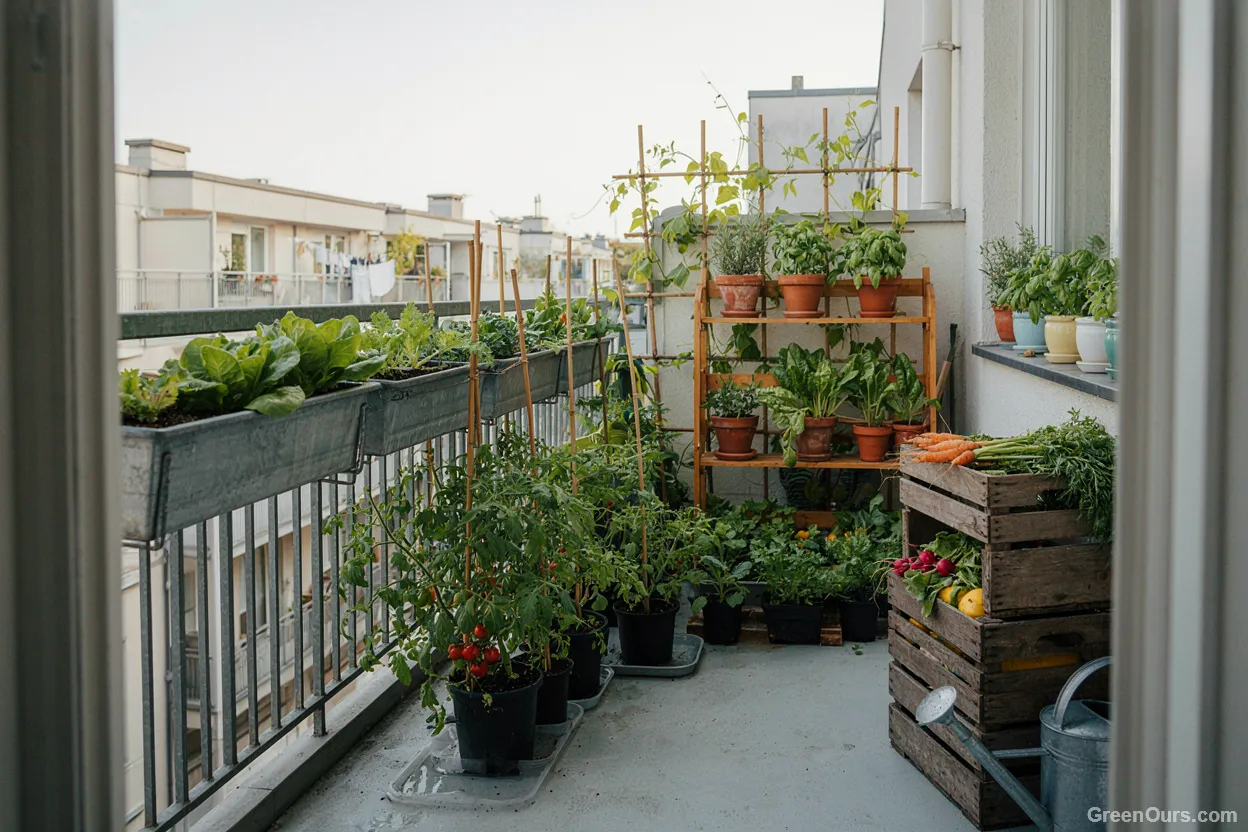
Fabric grow bags drain well and let roots breathe, though they dry out faster than plastic or ceramic. A glazed pot or drilled plastic tub works just as well — just avoid very dark containers in full sun, which can overheat the roots. And plan on one plant per container; two sharing a pot will compete for water and nutrients all season.
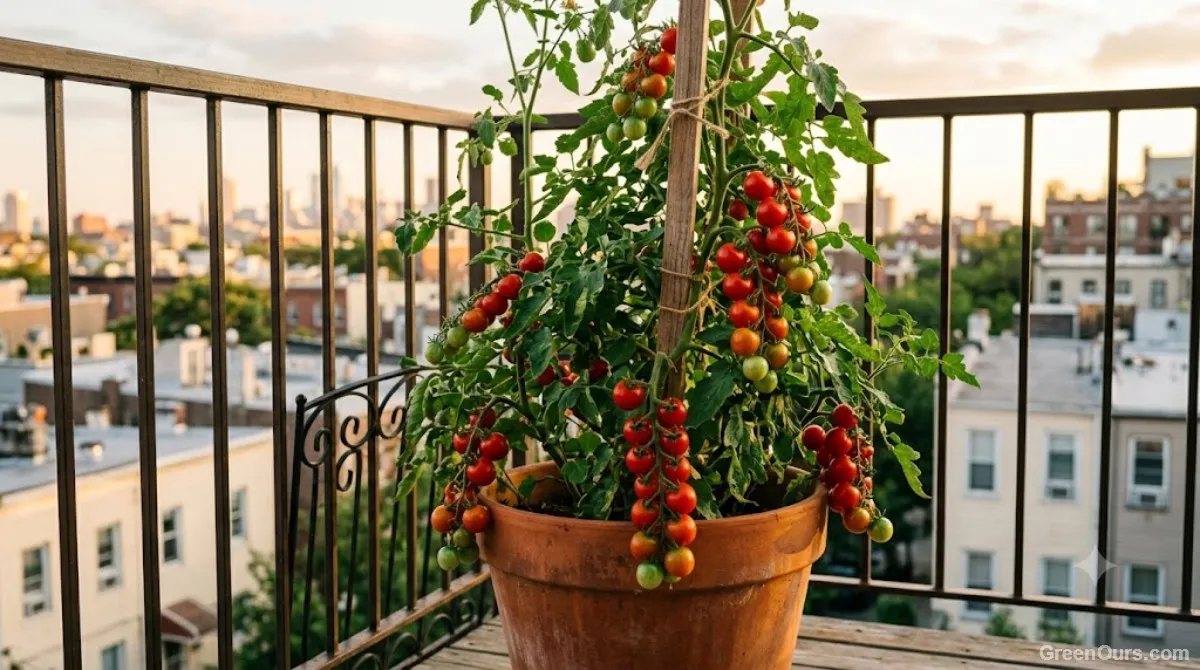
If you can only get one thing right, get the container size right. An undersized pot is the number one reason small-space tomatoes stall out or drop their fruit early.
Choosing the Right Variety for Small Spaces
Not all tomatoes are built for containers. Look for varieties labeled compact, dwarf, patio, bush, or container-suitable. Determinate varieties are often the best fit — they have a naturally compact, finite growth habit and produce much of their crop over a shorter window. A few compact indeterminate varieties work too, given a taller cage.
'Bush Early Girl' and 'Tiny Tim' are both determinate, bred for pots and patios, and stay under three feet tall. 'Tumbling Tom' is actually indeterminate despite its compact reputation, so it keeps producing — and sprawling a little more — over a longer season. If you fall for a full-size heirloom, it's not impossible in a container, but expect a lot more vine to manage.
Potting Mix and Planting
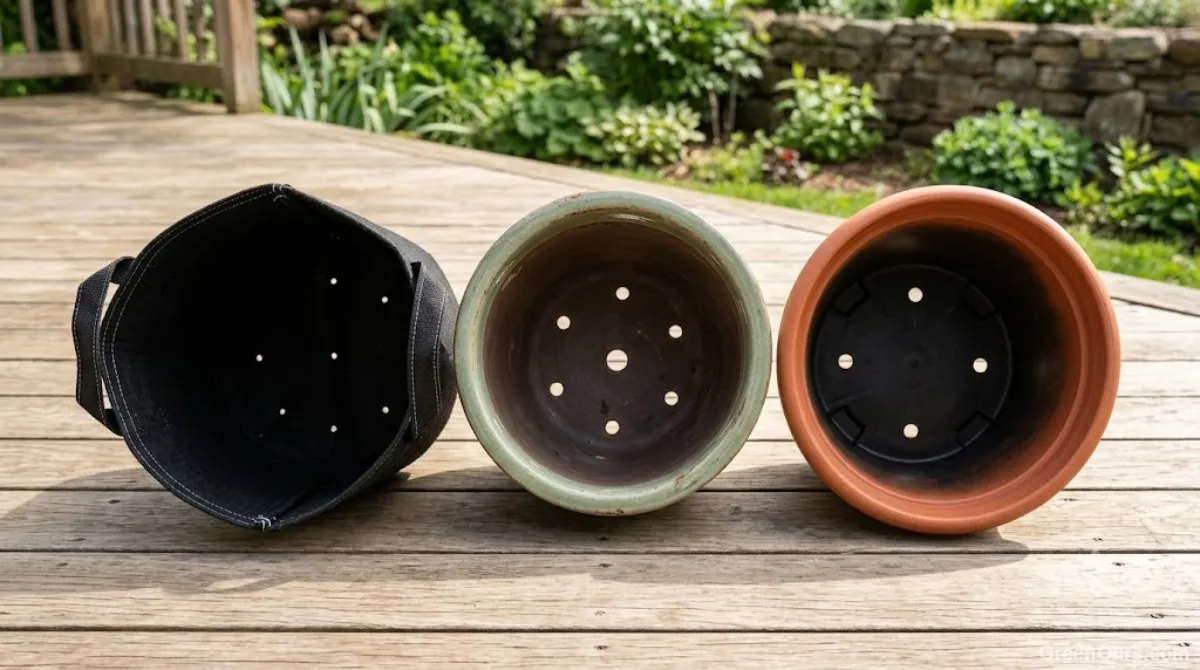
Skip the garden soil — it compacts in a container and often carries weed seeds or pests you don't want on a balcony. A quality potting mix formulated for containers or vegetables stays light and drains freely, which is what tomato roots need.
When you plant, bury the stem a little deeper than it sat in its nursery pot, up to the first set of true leaves — tomatoes root along a buried stem, giving the plant a sturdier start. Water it in well, and don't worry if it looks a little sleepy for the first few days.
How Much Sunlight Your Tomato Actually Needs
Tomatoes want at least 6 to 8 hours of direct sun a day, and that's not a flexible number — meaningfully less, and the plant will struggle to set and ripen fruit no matter which variety you choose.
Track your space for a day before you plant. Morning sun that fades by early afternoon is common on balconies, and it's easy to misjudge how much light a spot gets until you watch a full cycle. A movable container on a small wheeled stand lets you chase the sun if you're working with a partly shaded corner.
Watering Container Tomatoes
This is probably the single most important habit you'll build. Container soil dries out much faster than garden soil, especially in summer heat, so watering on a rigid schedule is a common way to under- or overwater without realizing it.
Check by feeling an inch below the surface, or lift the pot — a noticeably lighter container is usually asking for water. Water slowly and thoroughly until it drains from the bottom, rather than a quick splash that only wets the surface.
In hot weather, check daily — an exposed balcony in full sun can dry a container out in a single afternoon. Wilting in the cool morning is a real sign of stress; a little afternoon droop in peak heat is often normal.
Water deeply and evenly rather than a little every day. Shallow, frequent watering encourages roots to stay near the surface, which actually makes the plant more vulnerable to heat stress, not less.
Feeding Your Tomato Through the Season
Container soil has a limited nutrient supply, and regular watering washes it away faster than it would in the ground — skipping fertilizer entirely is a common, easy-to-fix mistake.
Start with a quality potting mix, then follow the label on a fertilizer made for tomatoes or container vegetables — strength and release rate vary enough that a flat every-two-weeks rule isn't safe for every product. As a general pattern, expect to feed every few weeks once the plant is actively growing and fruiting, tapering off later in the season.
Pruning and Support Basics
Pinching Suckers
Suckers are the small shoots that grow between the main stem and a branch. If your variety benefits from pruning, pinch them off while they're small to keep the plant's energy on fruit rather than foliage. Don't assume every compact or determinate plant needs heavy pruning, though — many bush varieties need very little, so check your variety's habit first.
Staking Early
Even compact varieties benefit from a stake or small cage, and it's easier to install one when the plant is young than to wrestle it in later. Push the stake in at planting time, a few inches from the stem, so you're not disturbing established roots down the line.
Common Tomato Problems to Watch For
Even a well-tended container tomato runs into the occasional issue. Here's a quick reference for what you might see.
- Yellow leaves — could be natural aging on lower leaves, a watering inconsistency, or a nutrient shortfall worth addressing with your next feeding.
- Flowers but no fruit — often related to temperature swings or pollination conditions rather than anything you did wrong.
- Blossom-end rot — a dark, sunken patch on the fruit's underside, usually tied to inconsistent watering rather than a simple calcium deficiency.
- Cracked tomatoes — typically follows a dry spell suddenly interrupted by heavy watering or rain.
- Wilting — check soil moisture and the root zone before assuming the plant just needs more water.
Common Mistakes to Avoid
Watering on a rigid schedule instead of checking the soil tops the list — container soil dries out unevenly depending on heat and wind, so the calendar is a far less reliable guide than your finger.
And the most common mistake of all is giving up after one underwhelming plant. Tomatoes have a real learning curve, and the second attempt is almost always better than the first.
Knowing When to Harvest
Color is your best guide — wait until the fruit takes on its variety's ripe color and gives slightly to gentle pressure. Picking a touch early and finishing ripening on a windowsill beats leaving fruit on the vine too long, where it's more likely to crack or draw pests.
As the season winds down, any green tomatoes still on the vine can usually be harvested and ripened indoors rather than left to a cold snap. For varieties that keep producing, picking regularly actually encourages more fruit.
What to Do Next
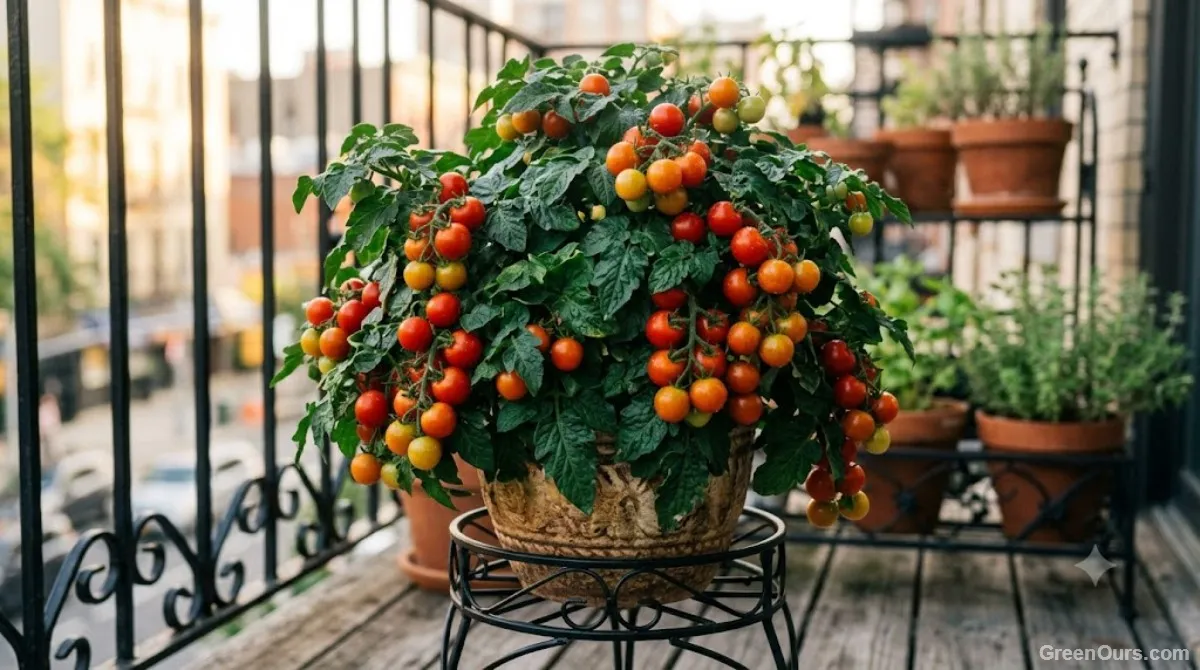
Start with the container — get that one decision right and most of what follows gets easier. Pick a compact variety suited to your light, water by feel instead of habit, and don't panic over the first yellow leaf or dry-spell crack you spot.
You don't need a garden to grow something worth eating. A single well-chosen container, a variety suited to your space, and a little attention through the season is genuinely enough. By the time you're pulling warm tomatoes off your own balcony, the space you started with won't feel small at all.
If growing tomatoes in a small space has you hooked, container gardening opens up plenty of other vegetables too.