
The Myth That Eco-Friendly Mornings Take More Time
Most of the guilt around sustainable living comes from a false assumption: that doing better means doing more. More steps, more products, more time you don't have. That assumption is why so many people try one ambitious morning routine, burn out in a week, and quietly decide sustainability just isn't for them.
In reality, most of your morning is already a sequence of small decisions — what you reach for, what you rinse and put back, what you throw away without a second thought. An eco-friendly morning routine isn't a new routine at all. It's the same one, with a few of those automatic decisions nudged in a different direction.
You don't need to redesign your morning. You need to notice the three or four moments in it where you're currently choosing convenience out of habit, not necessity — and start there.
Waking Up Without the Guilt Trip
Let's start before your feet even hit the floor. There's a whole corner of the internet insisting you need a sunrise alarm clock, a gratitude app, and fifteen minutes of stretching before you're allowed to check your phone. Skip it if it's not you.
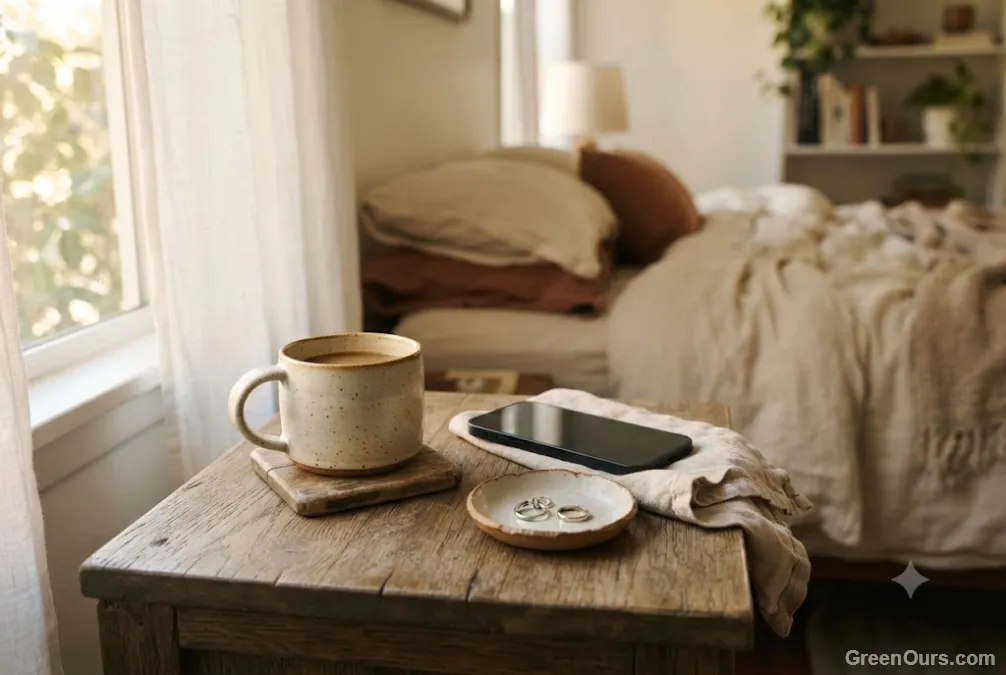
The only genuinely useful shift here is small: if you're someone who reaches for your phone first thing, that's fine — just notice you don't need to also reach for a disposable anything in those first few minutes. That's really it. The eco-friendly part of waking up is doing exactly what you already do, minus one unnecessary throwaway item.
Bathroom Swaps That Fit Into What You're Already Doing
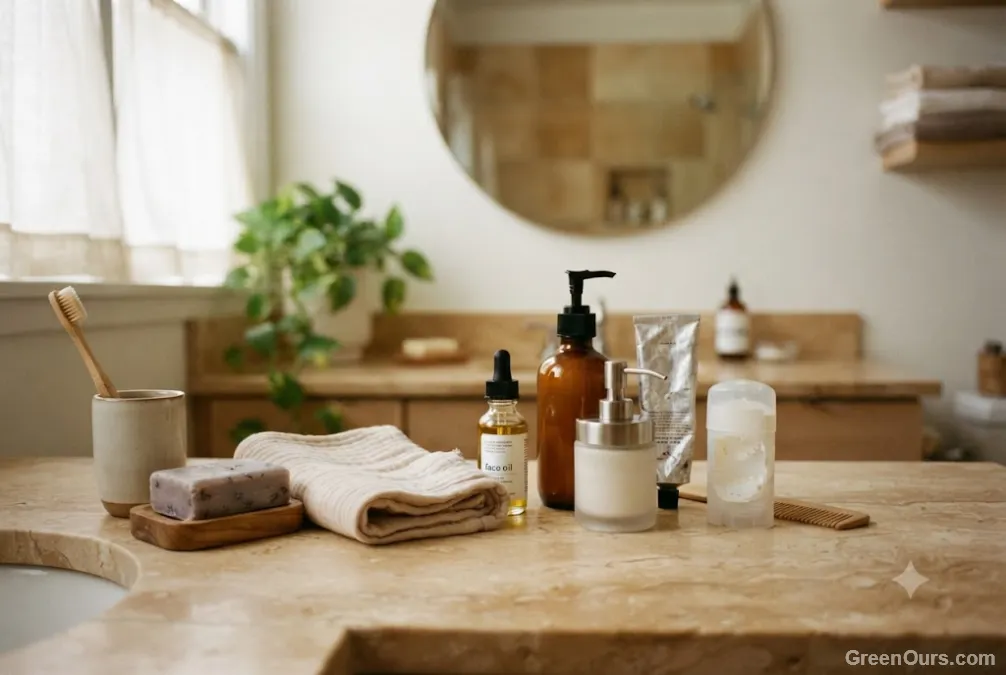
Your bathroom counter is where the most disposable habits hide, mostly because they're invisible once they become routine. You're not choosing plastic on purpose every morning — you're just reaching for whatever's already there.
Brushing and Washing
You don't have to overhaul your whole bathroom this weekend. Pick the one product you replace most often — that's usually where a swap has the biggest impact, because it's the one you're rebuying constantly anyway. For a lot of people, that's a toothbrush or a bar of soap instead of a bottle. The habit doesn't change. Only the object in your hand does.
Skincare Without the Extra Steps
If your skincare routine is already three products deep, resist the urge to add a fourth "sustainable" one just to feel better about it. The most eco-friendly version of your skincare routine is usually the one you already have, minus anything you bought because an ad told you your routine was incomplete.
Coffee, Tea, and Breakfast Without the Extra Trash
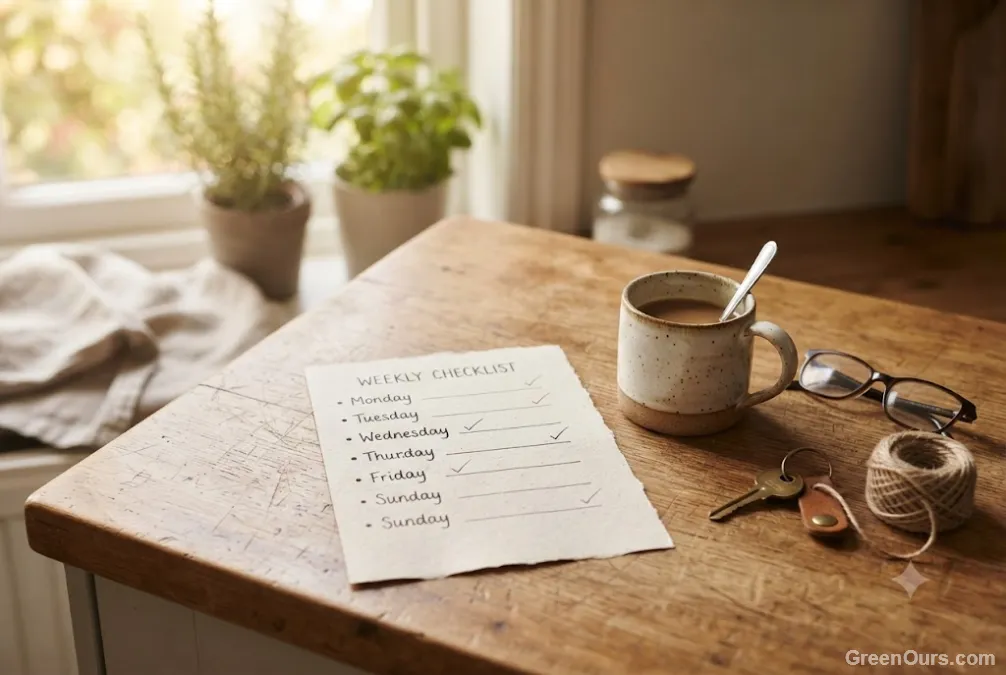
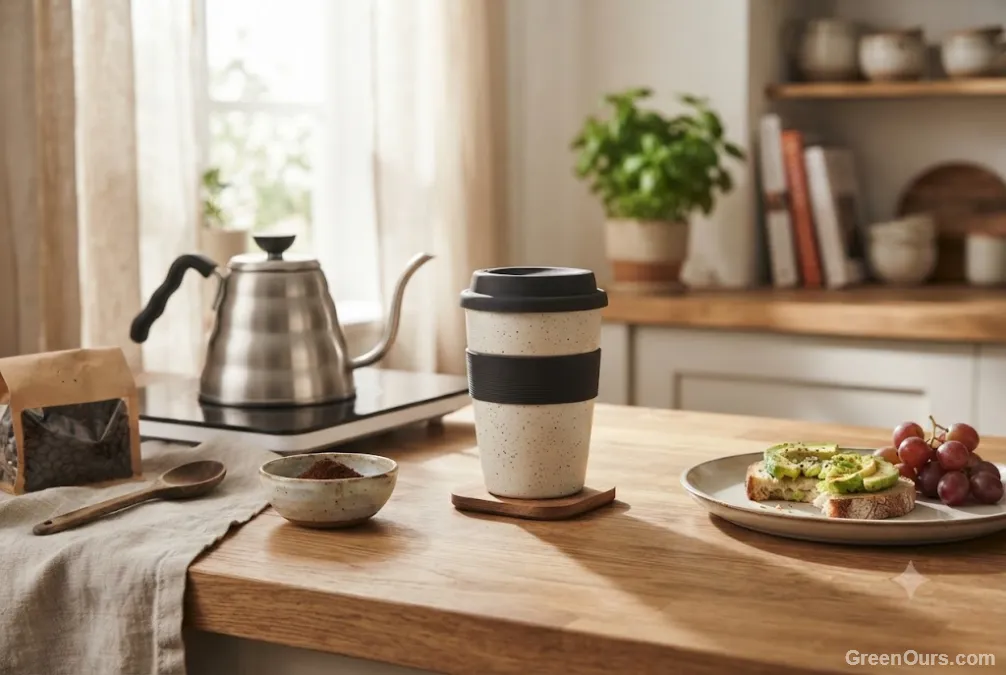
Here's an honest confession: for years, I told myself I'd bring a reusable cup to the coffee shop "starting tomorrow." Tomorrow became a running joke with myself. What actually worked wasn't willpower — it was leaving the cup by my keys instead of in a cabinet. The swap only sticks when it's easier than the habit it's replacing.
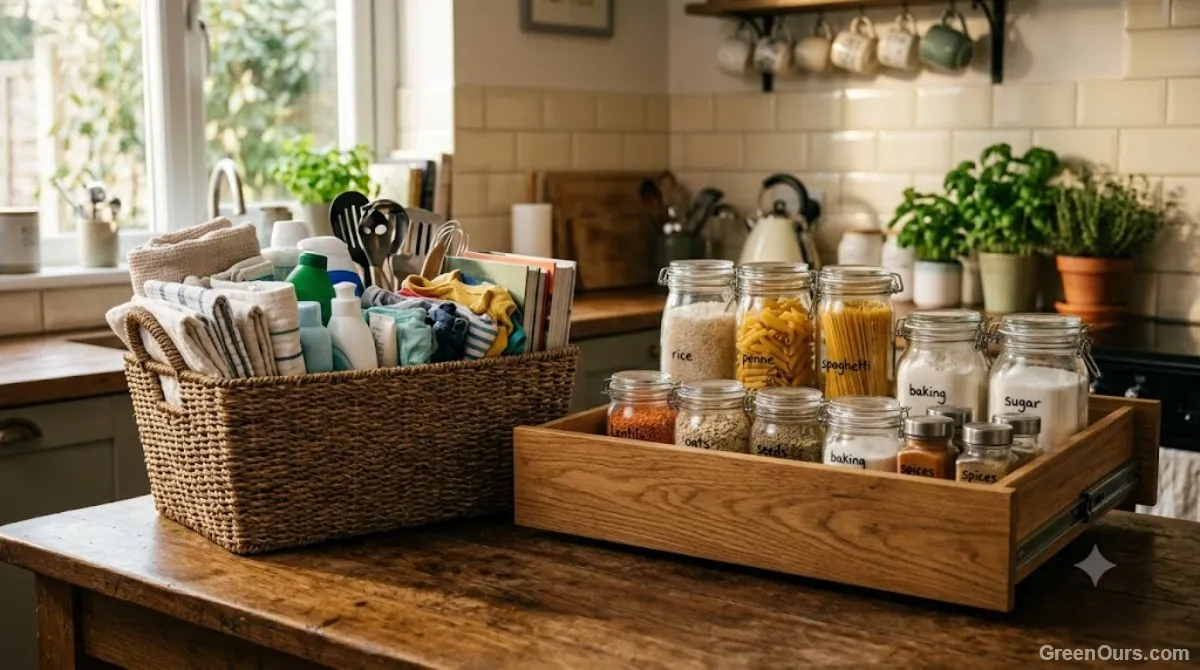
Same goes for breakfast. If you're someone who eats standing at the counter, you're probably already using a plate and a mug from your own cupboard, not disposables — which means most of the "waste" in a typical breakfast isn't the meal itself. It's packaging from single-serve items bought for convenience. Buying the version of your usual breakfast that isn't individually wrapped is a five-second decision at the grocery store, not a morning-routine overhaul. That's exactly how an eco friendly morning routine becomes something you can actually maintain.
What Actually Makes a Difference vs. What's Just Noise
Not every swap is worth the mental energy, and it's okay to say that out loud. A reusable coffee cup you use daily matters more than a bamboo toothbrush you forget to replace on schedule and end up throwing in the trash anyway. The habits that make an actual difference are the ones repeated hundreds of times a year — brushing, washing, drinking your coffee — not the one-off purchases that look good on a shelf.
If you're choosing where to put your attention, put it toward whatever you touch every single morning without exception. That's where small changes compound. Everything else is optional, and treating it as optional is what keeps this sustainable in the long run — pun intended.
If You Only Change One Thing
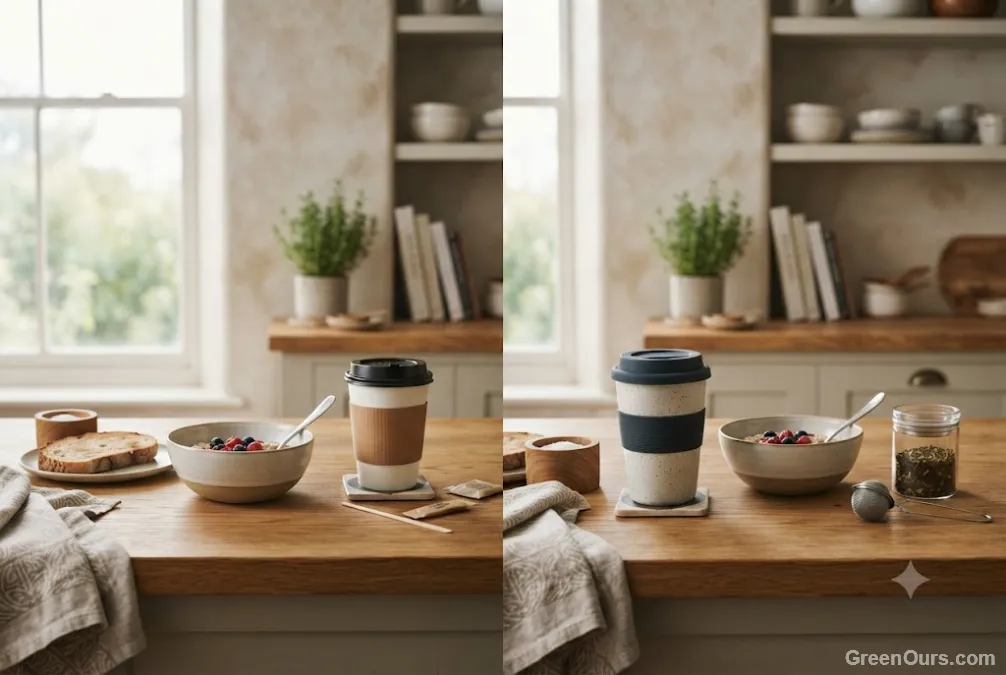
If this whole article feels like too much to hold onto, keep just this: pick the one disposable item that's part of your morning without fail, and swap it for a reusable version you actually like using. Not the one that's trendiest. The one you'll reach for on a groggy Tuesday without having to think about it.
Your morning routine doesn't need to become a statement. It just needs to keep working for you on the days you're rushing out the door with wet hair and one shoe untied — which, honestly, is most days. Start with the one habit you'll actually keep, and let the rest catch up whenever it catches up.
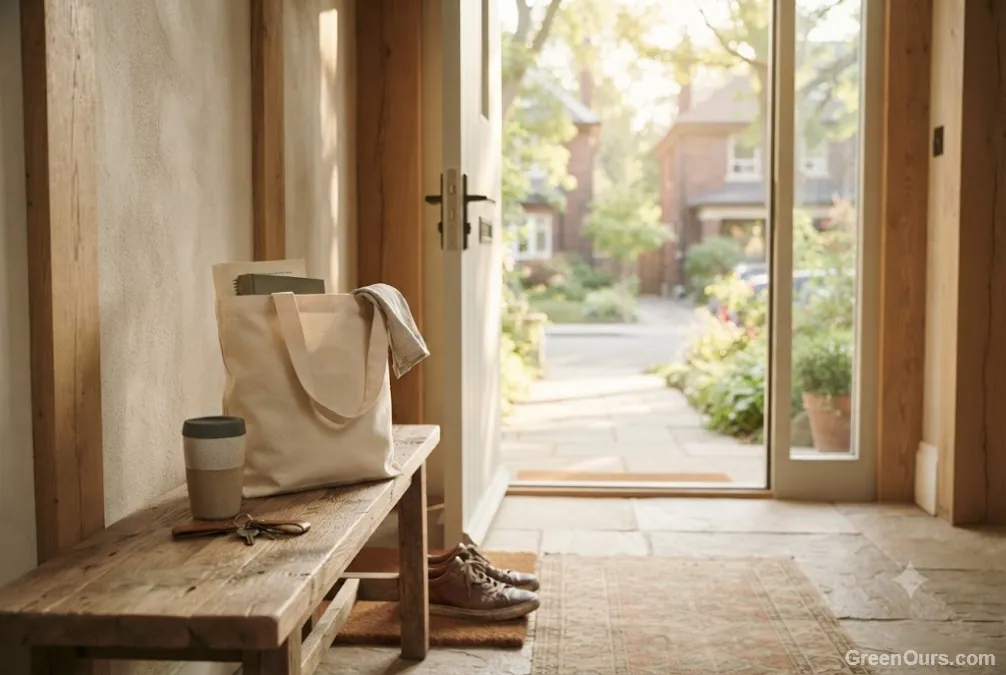
Small swaps, no extra alarm required.